Part I — The Birth and Growth of the Series (#1–#16, 1557–1827)
Eclipses #1 and #2 (1557–1575) predate the Gregorian calendar reform of October 15, 1582. Dates in this article use the proleptic Gregorian calendar — the standard convention of most astronomical software. The Julian calendar, in use at the time, gives dates 10 days earlier (e.g., "May 23, 1557" Gregorian = "May 13, 1557" Julian). NASA's Five Millennium Canon of Eclipses uses the Julian calendar for pre-1582 dates. Planetary positions and aspects are identical — only the date label differs.
How to Read the Charts and Tables
The Charts — Two Zodiacs in One Wheel
Each chart displays two concentric rings:
- Outer ring — The standard Western Tropical Zodiac (Aries, Taurus, Gemini, etc.). This is identical to what any Western astrologer works with. The planetary positions, degrees, and aspects are computed from high-precision ephemeris data used worldwide.
- Inner ring — The Aditya Zodiac, a recovered Vedic framework that maps 12 solar deities (the Adityas) to the tropical wheel with a 30° shift. This is NOT the same as sidereal astrology (which shifts ~23° based on precession) — the Aditya shift is a full sign. In practice: Aryama begins where Aries begins (0°), Mitra where Taurus begins (30°), and so on — each Aditya sign is offset by one sign from its tropical equivalent. For a full explanation of this system, see The New Zodiac — Aditya Zodiac.
Any Western astrologer can read these charts using the outer ring alone. The planetary placements, house cusps, and aspects are standard tropical. The Aditya names on the inner ring add a layer of Vedic interpretation but do not change the underlying astronomy.
Adding full Western tropical interpretations alongside the Aditya readings would have doubled the length of an already massive document. If there is enough demand for it, I could produce a Western-only companion for the sake of comparative research. For now, other articles on this site already test and compare both zodiacs — see Blind Analysis: Pisces-Fire — Tropical vs Aditya Zodiac Comparison for a detailed side-by-side comparison.
The Tajika Aspect Tables
Tajika astrology is a branch of astrology with Turkish and Persian roots that was preserved and developed in India (the name itself comes from the Persian word Tajik). Despite its Eastern transmission, Tajika uses the exact same aspects as Western astrology — conjunction, opposition, trine, square, sextile — with the same geometric angles. A Western astrologer will recognize every aspect in these tables immediately.
What Tajika adds beyond standard Western practice:
- Varupa (VR) strength — A precise numerical score from 0 to 60 measuring how strong an aspect is. It combines two factors: how close the aspect is to exact (tighter = stronger) and the relative orb of the planets involved. A Sun-Moon opposition at 0.1° scores 59.7 VR (nearly perfect). A Mars-Jupiter square at 8.5° scores 22.1 VR (weak). Think of it as a percentage: 60 VR = 100% strength, 30 VR = 50%, etc.
- Applying vs Separating — Whether the aspect is still forming (applying, getting stronger) or has already peaked and is dissolving (separating). Applying aspects have more forward momentum.
- Relationship classification — Tajika categorizes planetary pairs as Openly Friendly, Secretly Friendly, Neutral, Secretly Inimical, or Openly Inimical. This is derived from the aspect type itself: trines and sextiles produce friendly relationships, squares and oppositions produce inimical ones, with "openly" vs "secretly" adding a layer based on the specific geometric angle. It's essentially adding semantic meaning to the aspects Western astrologers already use — not a separate dignity system.
- Yogas (combinations) — Tajika identifies specific planetary configurations as named yogas (Ithasala, Ishrafa, Kamboola, etc.) that carry particular meanings. These are not used in the tables below but appear in the statistical analysis sections.
In short: If you can read a Western aspect table, you can read a Tajika table. The VR score is just a precise way of saying "how tight is this aspect," and the relationship column adds semantic labels to the aspect types you already know (trine = friendly, square = inimical, etc.).
Eclipse #1 — May 23, 1557 (Penumbral) — THE BIRTH OF THE SERIES
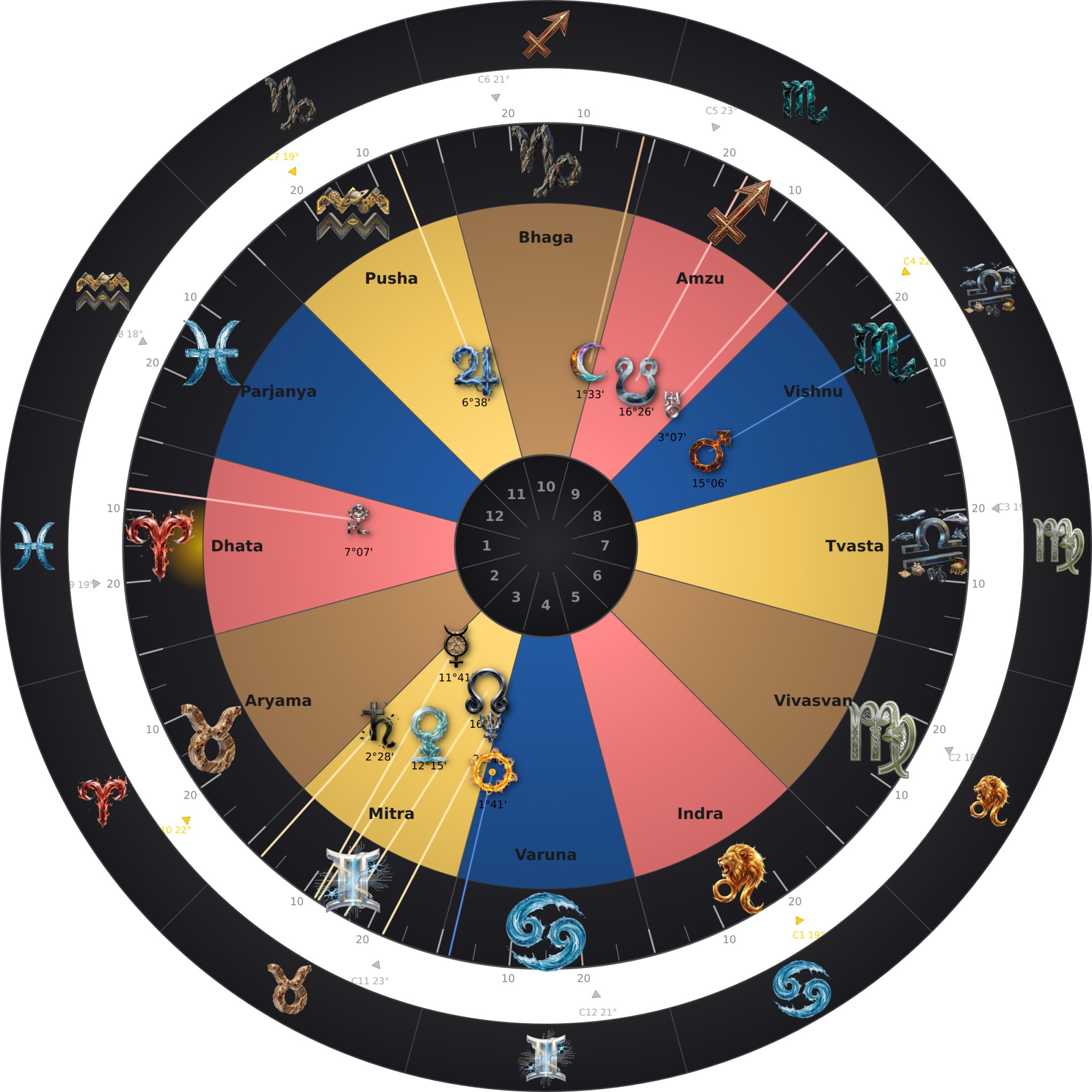
Tajika Aspects (21 within orb, 5 involve Sun/Moon)
| Pair | Aspect | Dist | Strength | Orb | Status | Relationship |
|---|---|---|---|---|---|---|
| Sun-Moon | ☍ Opposition | 0.1° | 59.7 VR (100%) | 13.5° | Applying | Openly Inimical |
| Mercury-Venus | ☌ Conjunction | 0.6° | 58.9 VR (98%) | 7.0° | Applying | Openly Inimical |
| Saturn-Uranus | ☍ Opposition | 0.6° | 58.7 VR (98%) | 8.5° | Applying | Openly Inimical |
| Moon-Neptune | ☍ Opposition | 9.4° | 41.3 VR (69%) | 10.0° | Separating | Neutral |
| Sun-Neptune | ☌ Conjunction | 9.5° | 41.0 VR (68%) | 11.5° | Separating | Neutral |
| Jupiter-Saturn | △ Trine | 4.2° | 40.8 VR (68%) | 9.0° | Applying | Openly Friendly |
| Jupiter-Pluto | ✶ Sextile | 0.5° | 39.6 VR (66%) | 8.5° | Separating | Secretly Friendly |
| Uranus-Pluto | △ Trine | 4.0° | 39.0 VR (65%) | 8.0° | Separating | Openly Friendly |
| Mercury-Jupiter | △ Trine | 5.0° | 37.4 VR (62%) | 8.0° | Separating | Openly Friendly |
| Jupiter-Venus | △ Trine | 5.6° | 36.6 VR (61%) | 8.0° | Separating | Openly Friendly |
| Mars-Jupiter | □ Square | 8.5° | 22.1 VR (37%) | 8.5° | Separating | Secretly Inimical |
| Moon-Pluto | □ Square | 5.6° | 20.6 VR (34%) | 10.0° | Applying | Secretly Inimical |
| Ascendant-Mars | □ Square | 3.9° | 18.3 VR (30%) | 8.5° | — | Secretly Inimical |
| Sun-Pluto | □ Square | 5.4° | 14.1 VR (24%) | 11.5° | Applying | Secretly Inimical |
| Ascendant-Mercury | ✶ Sextile | 7.4° | 11.2 VR (19%) | 8.0° | — | Secretly Friendly |
| Ascendant-Venus | ✶ Sextile | 6.8° | 11.1 VR (19%) | 8.0° | — | Secretly Friendly |
| Venus-Pluto | ✶ Sextile | 5.1° | 10.9 VR (18%) | 7.5° | Separating | Secretly Friendly |
| Mercury-Pluto | ✶ Sextile | 4.6° | 10.8 VR (18%) | 7.5° | Separating | Secretly Friendly |
| Jupiter-Uranus | ✶ Sextile | 3.5° | 10.6 VR (18%) | 8.5° | Applying | Secretly Friendly |
| Ascendant-Neptune | ✶ Sextile | 3.1° | 9.0 VR (15%) | 8.5° | — | Secretly Friendly |
| Saturn-Pluto | ✶ Sextile | 4.6° | 8.5 VR (14%) | 8.5° | Applying | Secretly Friendly |
Window: April 23 – June 23, 1557
The first eclipse of Saros 133 — a penumbral whisper so faint no one alive would have noticed it. Yet the world it was born into was one of the most tension-saturated moments of the sixteenth century.
Philip II in London — A King Pressing for War
On May 23, 1557, King Philip II of Spain was physically present in London, at the court of his wife Queen Mary I of England. He had arrived on March 20 — his second and final visit to England — sailing to Greenwich where Mary met him with a 32-gun salute. He had come with a single purpose: drag England into the war against France.
The continent was dominated by the struggle between the House of Habsburg (controlling Spain, the Holy Roman Empire, Naples, the Low Countries, and vast American territories) and the Kingdom of France under Henry II. The Italian War of 1551–1559 had technically been paused by the Truce of Vaucelles in February 1556, but by 1557 the peace was already in ruins. Pope Paul IV, a fanatically anti-Spanish Neapolitan, had allied with France and deliberately provoked Philip II. Philip's viceroy of Naples, the Duke of Alba, responded by invading the Papal States. France sent an army across the Alps. By spring 1557, that French force was bogged down in Italy trying to relieve the besieged Pope.
Philip spent weeks working his queen, her council, and English nobles. The council resisted — they knew England's treasury was exhausted, harvests had been bad, and French trade was vital. But Philip was persuasive and patient. Within weeks, England would formally declare war on France — a decision that, within one year, would cost England Calais, its last continental possession held since 1347.
The Stafford Affair — A Doomed Rebellion
Exactly one month before the eclipse — on April 23, 1557 — Thomas Stafford had appeared off the Yorkshire coast with two ships, 32 followers (some English exiles, some French soldiers), and a wild proclamation. He landed at Scarborough on a market day, overwhelmed the skeleton garrison at the crumbling castle, and declared Mary I had forfeited her throne by surrendering England to Spain.
The revolt lasted barely days. But its consequences were enormous. The French connection — Stafford had crossed from Dieppe, almost certainly with French backing — gave Mary the justification she needed.
On May 28, 1557 — five days after the eclipse — Thomas Stafford was beheaded at Tower Hill. He was buried at St. Peter ad Vincula, the Tower chapel where Anne Boleyn and Catherine Howard already lay. He was about 24 years old. His execution was not just a punishment. It was the trigger that opened England's war with France.
Bloody Mary's Fires — A Kingdom Burning Its Own People
The England of May 1557 was an exhausted, frightened, and divided nation. Mary I had returned England to Rome and enforced it with fire. Between 1555 and 1558, approximately 287 Protestant men and women were burned alive at the stake — a number that shocked even Catholic Europe. The persecutions had resumed at Canterbury in January 1557, with six burned simultaneously.
On June 22, 1557 — within the eclipse window — Richard Woodman and nine others were burned together at Lewes, Sussex. Ten people at once — the largest group burning ever in England. Woodman was an ironmaster, a literate, stubborn man who reportedly harangued his examiners with scripture and refused every offer of mercy.
Protestant communities gathered in secret, passed manuscripts of William Tyndale's English Bible among themselves, hid books banned since Mary's accession, and lived in fear of denunciation. Hundreds had fled to exile communities in Frankfurt, Strasbourg, Geneva, and Zürich — the Marian Exiles, who would return under Elizabeth to reshape English religion permanently.
Mary herself was ill. She was 41 years old, suffering from what historians believe may have been uterine or ovarian cancer. Her two phantom pregnancies had broken her spirit. Philip's visit offered hope of another pregnancy, but it would not come. Mary was dying by degrees, and England was being governed by a woman whose body was failing while her policies were tearing the country apart.
The First Sovereign Default in Modern History
On May 23, 1557, the most powerful empire on earth was also, technically, broke. Philip II had declared bankruptcy in January 1557 — stopping all payments on his debts. The Spanish Crown had been borrowing at breakneck pace to fund its wars — from the Fugger banking dynasty of Augsburg, from Genoese merchant-bankers, from Flemish creditors.
The Fuggers were devastated. They had lent vast sums directly AND invested in Spanish mining concessions (including the mercury mines at Almadén, processing the silver flooding in from Peru and Mexico). More than half their outstanding claims — over 1.5 million ducats — were tied to Spain. Philip's bankruptcy effectively ended the Fugger dynasty as a financial power. The Genoese bankers moved in, becoming Spain's new creditors and restructuring European finance for a generation.
The paradox of 1557 Spain: the richest empire in the world, drowning in debt.
The Birth of Copyright — The Stationers' Company Charter
On May 4, 1557 — nineteen days before the eclipse — Queen Mary I granted a royal charter to the Worshipful Company of Stationers, giving them an absolute monopoly over the English printing trade. No one outside the Company could legally publish. The Company had the power to seize and destroy unlicensed books and prosecute unauthorized printers.
Mary's motivation was naked political control — the Reformation had spread through printed books. But the act of registration — recording who had the right to print a specific text — evolved into the concept of intellectual property. The phrase "stationer's copyright" is the direct ancestor of modern copyright law. Mary's censorship apparatus, designed to strangle Protestant print culture, accidentally created one of the most important legal concepts in Western civilization.
Macau — Europe Plants a Flag in China
On the other side of the world, the Portuguese were granted permanent settlement rights at Macau by the Ming court — the first European territorial foothold on the Chinese mainland. The breakthrough came because of pirates. The Wokou — a complex mix of Japanese raiders, Chinese smugglers, and multinational maritime desperados — had been terrorizing the Chinese coast. Portuguese cannon and naval firepower helped the Ming suppress pirate nests. The Ming court, grateful and pragmatic, offered the Portuguese a lease on the Macau peninsula for an annual rent of 500 taels of silver.
Macau became the entrepot through which Chinese silk, porcelain, and spices flowed to Europe, and through which American silver flowed to China. The Portuguese presence would last 442 years, ending only in 1999.
Bayinnaung's Bell — The World's Greatest Conqueror You've Never Heard Of
On May 23, 1557 — the exact eclipse date — King Bayinnaung of the Toungoo Dynasty of Burma dedicated a massive bronze bell at the Shwezigon Pagoda in Bagan. The bell weighed 7,560 pounds and bore a 43-line inscription in Burmese, 35 lines in Mon, and 5 lines in Pali, recording the first six years of his reign. The UNESCO-registered inscription is the only contemporary source using his famous title: "Conqueror of the Ten Directions."
Bayinnaung was arguably the greatest conqueror in Southeast Asian history, assembling the largest empire in Southeast Asian history — encompassing most of present-day Myanmar, the Shan States, Lan Na (northern Thailand), Lan Xang (Laos), Manipur, and the Ayutthaya Kingdom. In January 1557, he had launched a campaign with 36,000 men, 1,200 horses, 60 war elephants, and 180 war boats. The Shan principalities fell one by one.
The world's most successful conqueror of 1557 was not Philip II or Henry II. It was Bayinnaung, and almost nobody in Europe knew he existed.
Ivan the Terrible Looks West
On April 2, 1557, the Treaty of Novgorod between Russia and Sweden came into force. Ivan IV was 26 years old, having already conquered Kazan (1552) and Astrakhan (1556). The treaty secured his western flank. Within a year, Ivan would invade Livonia, triggering a 25-year war that would reshape the entire Baltic world.
Ivan's demand that Swedish envoys "kiss the cross" and be refused access to the Tsar himself expressed his entire worldview: Russia as the successor to Byzantium, the Third Rome, whose Tsar was the only legitimate Christian emperor. This was the seed of Russian imperial ideology for centuries.
The 1557 Influenza Pandemic
The spring of 1557 was also the beginning of a global health catastrophe. A new strain of influenza — probably originating in Asia — was spreading west along Mediterranean trade routes. It would reach Europe in June, compounding severe famine from 1556–1557 that had already left populations malnourished. Armies massing for war were vectors of transmission. The pandemic persisted in waves for four years, reaching the Americas where indigenous populations had no immunity.
Eclipse #2 — June 3, 1575 (Penumbral)
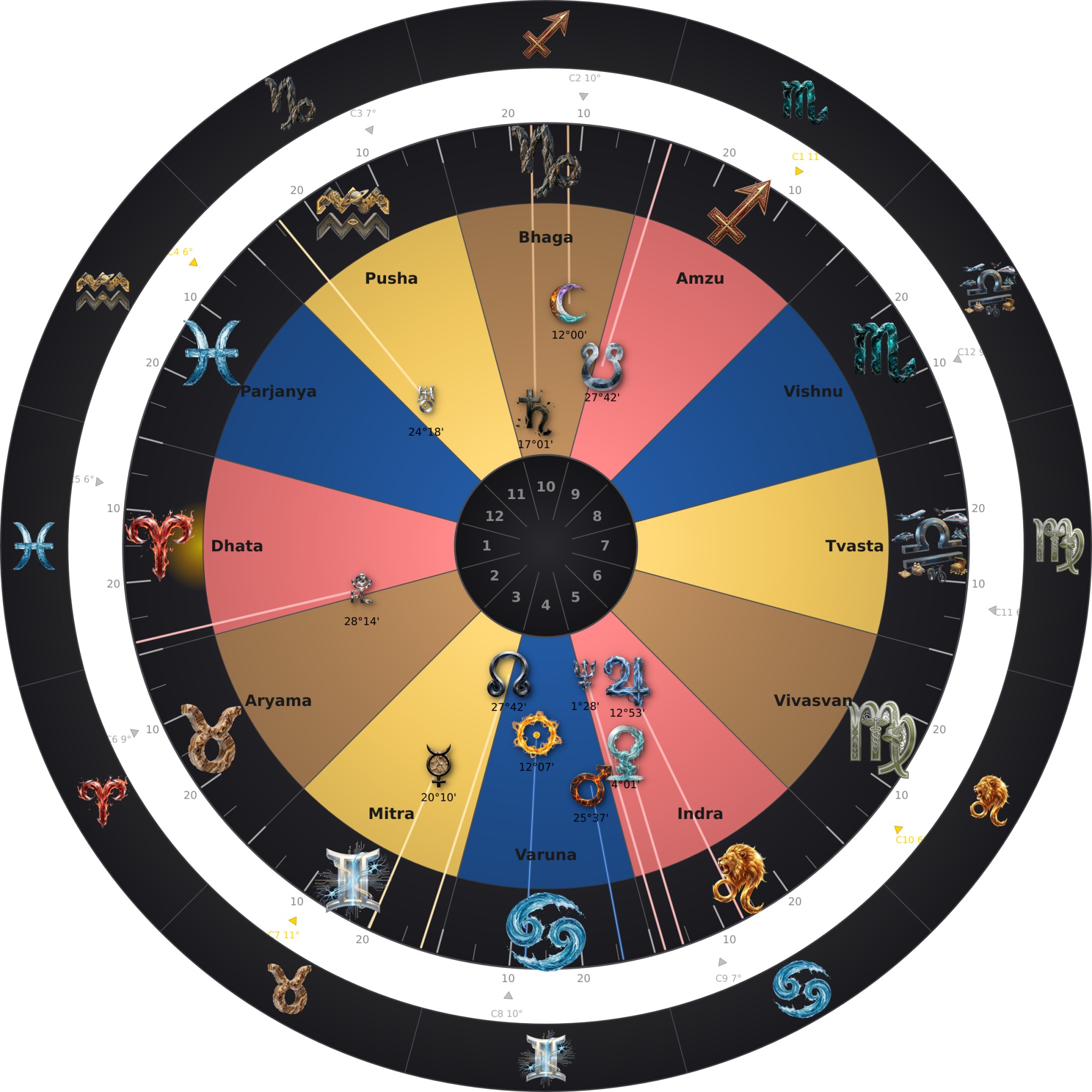
Tajika Aspects (13 within orb, 3 involve Sun/Moon)
| Pair | Aspect | Dist | Strength | Orb | Status | Relationship |
|---|---|---|---|---|---|---|
| Sun-Moon | ☍ Opposition | 0.1° | 59.7 VR (100%) | 13.5° | Applying | Openly Inimical |
| Venus-Neptune | ☌ Conjunction | 2.5° | 54.9 VR (92%) | 7.5° | Separating | Openly Inimical |
| Sun-Saturn | ☍ Opposition | 4.9° | 50.2 VR (84%) | 12.0° | Applying | Openly Inimical |
| Moon-Saturn | ☌ Conjunction | 5.0° | 50.0 VR (83%) | 10.5° | Applying | Openly Inimical |
| Mars-Neptune | ☌ Conjunction | 5.8° | 48.3 VR (80%) | 8.0° | Applying | Neutral |
| Ascendant-Jupiter | △ Trine | 1.8° | 43.2 VR (72%) | 9.0° | — | Openly Friendly |
| Mercury-Uranus | △ Trine | 4.1° | 40.9 VR (68%) | 7.5° | Applying | Openly Friendly |
| Uranus-Pluto | ✶ Sextile | 3.9° | 36.7 VR (61%) | 8.0° | Separating | Secretly Friendly |
| Ascendant-Venus | △ Trine | 7.1° | 34.3 VR (57%) | 8.0° | — | Openly Friendly |
| Mercury-Jupiter | ✶ Sextile | 7.3° | 30.3 VR (50%) | 8.0° | Separating | Secretly Friendly |
| Venus-Pluto | □ Square | 5.8° | 20.8 VR (35%) | 7.5° | Separating | Openly Friendly |
| Neptune-Pluto | □ Square | 3.2° | 18.2 VR (30%) | 8.0° | Separating | Openly Friendly |
| Mars-Pluto | □ Square | 2.6° | 14.6 VR (24%) | 8.0° | Applying | Secretly Inimical |
Window: May 3 – July 3, 1575
-
Battle of Nagashino, Japan (June 28): Oda Nobunaga and Tokugawa Ieyasu crushed the Takeda clan using 3,000 musketeers in coordinated volleys — the first large-scale use of firearms in Japanese warfare. This battle broke the Takeda, accelerated the collapse of the Ashikaga Shogunate, and set Japan on the path toward unification and ultimately the Tokugawa era.
-
Spain declares bankruptcy (1575): Philip II defaulted again, causing unpaid Spanish troops in the Netherlands to mutiny — directly triggering the catastrophic Sack of Antwerp in November 1576 ("Spanish Fury"), which killed up to 17,000 civilians and united the Dutch provinces against Spain.
Eclipse #3 — June 13, 1593 (Penumbral)
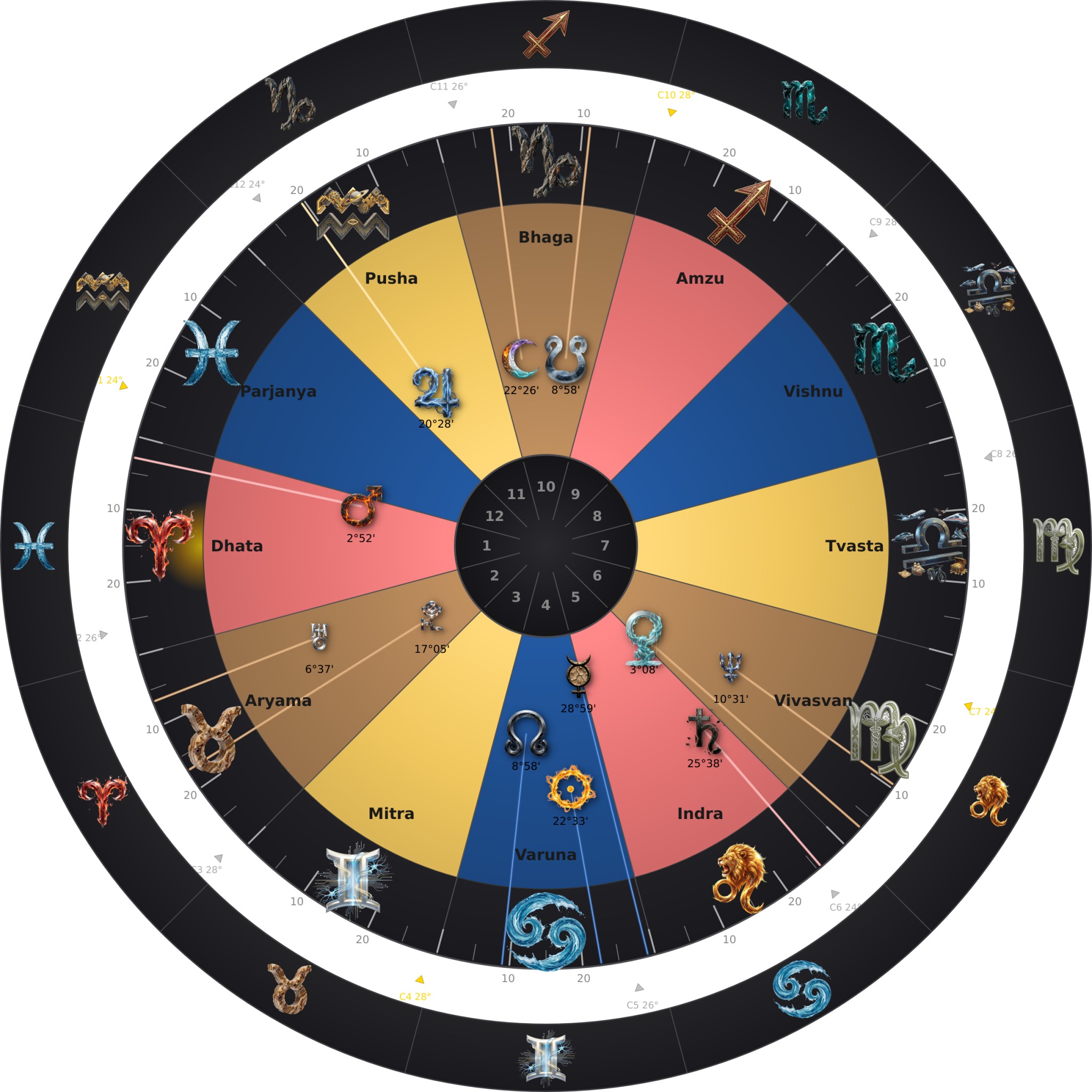
Tajika Aspects (18 within orb, 8 involve Sun/Moon)
| Pair | Aspect | Dist | Strength | Orb | Status | Relationship |
|---|---|---|---|---|---|---|
| Sun-Moon | ☍ Opposition | 0.1° | 59.8 VR (100%) | 13.5° | Applying | Openly Inimical |
| Jupiter-Saturn | ☍ Opposition | 5.2° | 49.7 VR (83%) | 9.0° | Separating | Openly Inimical |
| Sun-Mercury | ☌ Conjunction | 6.4° | 47.1 VR (79%) | 11.0° | Applying | Openly Inimical |
| Moon-Mercury | ☍ Opposition | 6.6° | 46.9 VR (78%) | 9.5° | Applying | Openly Inimical |
| Venus-Neptune | ☌ Conjunction | 7.4° | 45.2 VR (75%) | 7.5° | Applying | Openly Inimical |
| Venus-Saturn | ☌ Conjunction | 7.5° | 45.0 VR (75%) | 8.0° | Separating | Neutral |
| Ascendant-Sun | △ Trine | 1.7° | 43.3 VR (72%) | 12.0° | — | Openly Friendly |
| Venus-Uranus | △ Trine | 3.5° | 41.5 VR (69%) | 7.5° | Applying | Openly Friendly |
| Mars-Mercury | △ Trine | 3.9° | 41.1 VR (68%) | 7.5° | Separating | Secretly Inimical |
| Moon-Pluto | △ Trine | 5.4° | 39.6 VR (66%) | 10.0° | Separating | Openly Friendly |
| Uranus-Neptune | △ Trine | 3.9° | 39.1 VR (65%) | 8.0° | Separating | Openly Friendly |
| Neptune-Pluto | △ Trine | 6.6° | 38.4 VR (64%) | 8.0° | Applying | Openly Friendly |
| Ascendant-Mercury | △ Trine | 4.7° | 38.0 VR (63%) | 8.0° | — | Openly Friendly |
| Sun-Mars | △ Trine | 10.3° | 34.7 VR (58%) | 11.5° | Applying | Secretly Inimical |
| Ascendant-Pluto | ✶ Sextile | 7.2° | 30.4 VR (51%) | 8.5° | — | Secretly Friendly |
| Jupiter-Pluto | □ Square | 3.4° | 17.8 VR (30%) | 8.5° | Applying | Secretly Inimical |
| Sun-Pluto | ✶ Sextile | 5.5° | 10.9 VR (18%) | 11.5° | Separating | Secretly Friendly |
| Ascendant-Moon | ✶ Sextile | 1.9° | 10.3 VR (17%) | 10.5° | — | Secretly Friendly |
Window: May 13 – July 13, 1593
-
Battle of Sisak (June 22): Habsburg forces decisively defeated the Ottoman Empire in Croatia, triggering the outbreak of the Long Turkish War (1593–1606), a 13-year conflict that reshaped Central Europe and exhausted both empires.
-
Henry IV of France converts to Catholicism (July 25 — just outside window, but the political pressure dominated the entire period): The Protestant king abjured his faith at the Basilica of Saint-Denis to claim the French throne — "Paris is well worth a Mass." This act ended the French Wars of Religion's deadlock and eventually led to the Edict of Nantes (1598).
Eclipse #4 — June 25, 1611 (Penumbral)
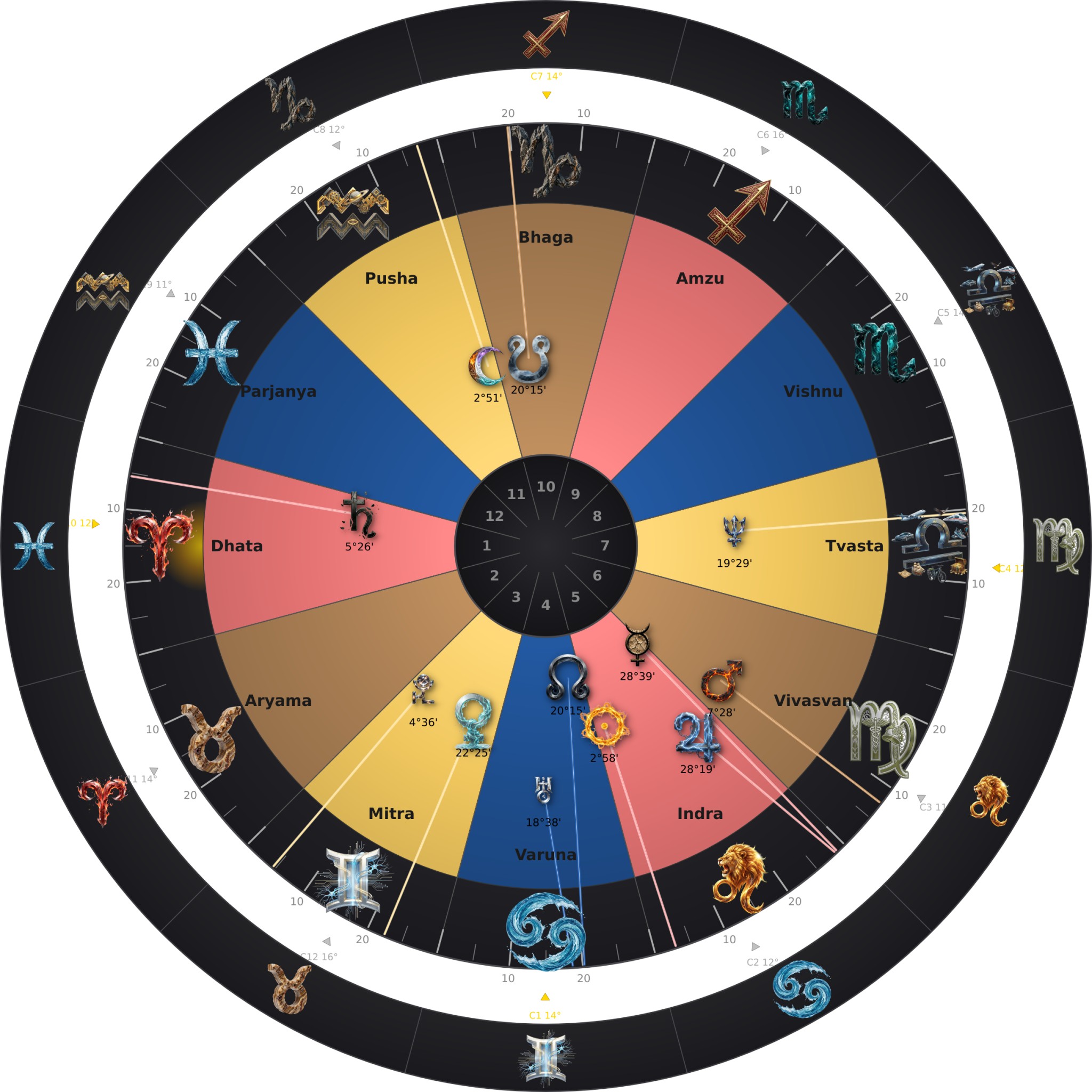
Tajika Aspects (17 within orb, 5 involve Sun/Moon)
| Pair | Aspect | Dist | Strength | Orb | Status | Relationship |
|---|---|---|---|---|---|---|
| Sun-Moon | ☍ Opposition | 0.1° | 59.8 VR (100%) | 13.5° | Applying | Openly Inimical |
| Mercury-Jupiter | ☌ Conjunction | 0.3° | 59.3 VR (99%) | 8.0° | Separating | Openly Inimical |
| Ascendant-Uranus | ☌ Conjunction | 3.6° | 52.9 VR (88%) | 8.5° | — | Openly Inimical |
| Sun-Saturn | △ Trine | 2.5° | 42.5 VR (71%) | 12.0° | Applying | Openly Friendly |
| Moon-Pluto | △ Trine | 1.7° | 42.4 VR (71%) | 10.0° | Applying | Openly Friendly |
| Venus-Neptune | △ Trine | 2.9° | 42.1 VR (70%) | 7.5° | Separating | Openly Friendly |
| Saturn-Pluto | ✶ Sextile | 0.8° | 38.9 VR (65%) | 8.5° | Applying | Secretly Friendly |
| Moon-Saturn | ✶ Sextile | 2.6° | 37.8 VR (63%) | 10.5° | Applying | Secretly Friendly |
| Ascendant-Mars | ✶ Sextile | 7.6° | 29.9 VR (50%) | 8.5° | — | Secretly Friendly |
| Ascendant-Neptune | □ Square | 4.4° | 19.4 VR (32%) | 8.5° | — | Secretly Inimical |
| Mars-Pluto | □ Square | 2.9° | 17.9 VR (30%) | 8.0° | Separating | Secretly Inimical |
| Uranus-Neptune | □ Square | 0.8° | 15.8 VR (26%) | 8.0° | Applying | Secretly Inimical |
| Mercury-Pluto | □ Square | 6.0° | 14.0 VR (23%) | 7.5° | Applying | Secretly Friendly |
| Jupiter-Pluto | □ Square | 6.3° | 14.0 VR (23%) | 8.5° | Applying | Secretly Friendly |
| Mercury-Venus | ✶ Sextile | 6.2° | 11.0 VR (18%) | 7.0° | Applying | Secretly Friendly |
| Jupiter-Venus | ✶ Sextile | 5.9° | 11.0 VR (18%) | 8.0° | Applying | Secretly Friendly |
| Sun-Pluto | ✶ Sextile | 1.6° | 9.5 VR (16%) | 11.5° | Applying | Secretly Friendly |
Window: May 25 – July 25, 1611
-
King James Bible published (May 1611): The Authorized Version was released, becoming the foundational text of Protestant English-speaking civilization. Its influence on English language, law, and culture is immeasurable.
-
Henry Hudson set adrift (June 22): After a mutiny on Hudson Bay, explorer Henry Hudson, his son, and seven crew were abandoned at sea and never seen again.
-
Sweden captures Novgorod from Russia (July 17): Swedish forces took the major Russian city during Russia's catastrophic "Time of Troubles." Gustav II Adolf — one of the most consequential military commanders of the 17th century — ascended the Swedish throne this same year, beginning Sweden's imperial century.
Eclipse #5 — July 5, 1629 (Penumbral)
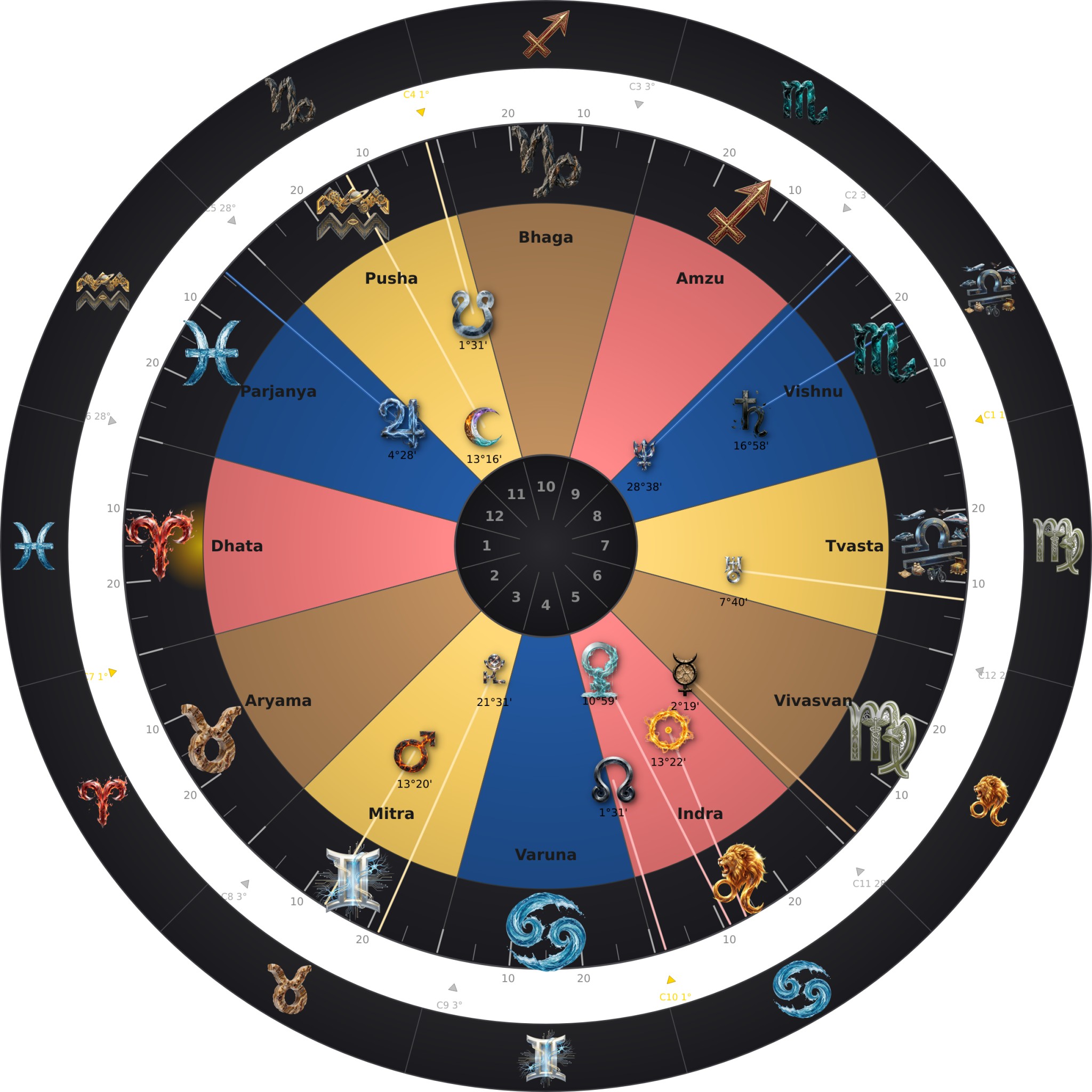
Tajika Aspects (20 within orb, 11 involve Sun/Moon)
| Pair | Aspect | Dist | Strength | Orb | Status | Relationship |
|---|---|---|---|---|---|---|
| Sun-Moon | ☍ Opposition | 0.1° | 59.8 VR (100%) | 13.5° | Applying | Openly Inimical |
| Mercury-Jupiter | ☍ Opposition | 2.1° | 55.7 VR (93%) | 8.0° | Applying | Openly Inimical |
| Moon-Venus | ☍ Opposition | 2.3° | 55.4 VR (92%) | 9.5° | Separating | Openly Inimical |
| Sun-Venus | ☌ Conjunction | 2.4° | 55.2 VR (92%) | 11.0° | Applying | Openly Inimical |
| Moon-Mars | △ Trine | 0.1° | 44.9 VR (75%) | 10.0° | — | Openly Friendly |
| Ascendant-Jupiter | △ Trine | 3.1° | 40.3 VR (67%) | 9.0° | — | Openly Friendly |
| Mars-Uranus | △ Trine | 5.7° | 39.3 VR (66%) | 8.0° | Separating | Openly Friendly |
| Mars-Venus | ✶ Sextile | 2.3° | 36.9 VR (62%) | 7.5° | Applying | Secretly Friendly |
| Moon-Uranus | △ Trine | 5.6° | 36.6 VR (61%) | 10.0° | Separating | Openly Friendly |
| Venus-Uranus | ✶ Sextile | 3.3° | 35.6 VR (59%) | 7.5° | Separating | Secretly Friendly |
| Moon-Pluto | △ Trine | 8.3° | 32.6 VR (54%) | 10.0° | Applying | Openly Friendly |
| Sun-Uranus | ✶ Sextile | 5.7° | 32.4 VR (54%) | 11.5° | Separating | Secretly Friendly |
| Venus-Saturn | □ Square | 6.0° | 21.0 VR (35%) | 8.0° | Applying | Secretly Inimical |
| Jupiter-Neptune | □ Square | 5.8° | 20.8 VR (35%) | 8.5° | Applying | Openly Friendly |
| Sun-Saturn | □ Square | 3.6° | 18.6 VR (31%) | 12.0° | Applying | Secretly Inimical |
| Mercury-Neptune | □ Square | 3.7° | 18.1 VR (30%) | 7.5° | Separating | Secretly Friendly |
| Moon-Saturn | □ Square | 3.7° | 14.4 VR (24%) | 10.5° | Applying | Secretly Inimical |
| Sun-Mars | ✶ Sextile | 0.0° | 10.0 VR (17%) | 11.5° | — | Secretly Friendly |
| Ascendant-Mercury | ✶ Sextile | 1.0° | 9.7 VR (16%) | 8.0° | — | Secretly Friendly |
| Sun-Pluto | ✶ Sextile | 8.1° | 7.3 VR (12%) | 11.5° | Applying | Secretly Friendly |
Window: June 5 – August 5, 1629
-
Peace of Alais signed (June 28): Cardinal Richelieu concluded the final Huguenot military defeat. The Huguenots lost all political, territorial, and military rights while retaining religious freedom. This ended 70 years of French religious civil wars and cemented royal absolutism — the direct precursor to Louis XIV's absolute monarchy.
-
Quebec surrendered to England (July 19): Samuel de Champlain surrendered the French colony to English forces during the Anglo-French War. New France temporarily fell under English control (later returned by treaty).
-
Thirty Years' War at peak intensity (1629): The midpoint of Europe's defining catastrophe. The Edict of Restitution (March 1629), Emperor Ferdinand II's most aggressive Catholic reclamation order, alienated Protestant princes and drew Sweden into the war.
Eclipse #6 — July 16, 1647 (Penumbral)
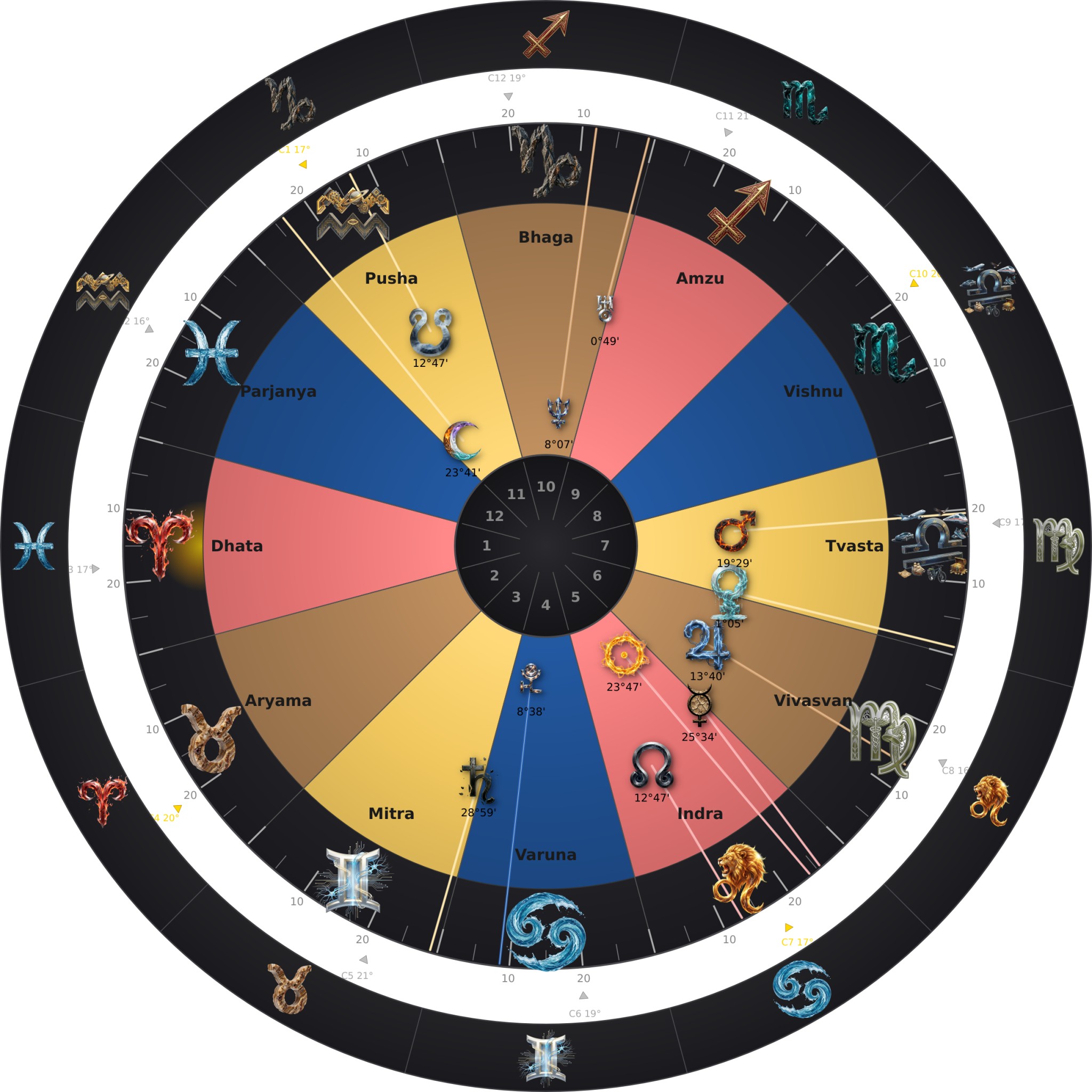
Tajika Aspects (24 within orb, 11 involve Sun/Moon)
| Pair | Aspect | Dist | Strength | Orb | Status | Relationship |
|---|---|---|---|---|---|---|
| Sun-Moon | ☍ Opposition | 0.1° | 59.8 VR (100%) | 13.5° | — | Openly Inimical |
| Neptune-Pluto | ☍ Opposition | 0.5° | 58.9 VR (98%) | 8.0° | Separating | Openly Inimical |
| Sun-Mercury | ☌ Conjunction | 1.8° | 56.4 VR (94%) | 11.0° | Separating | Openly Inimical |
| Saturn-Uranus | ☍ Opposition | 1.8° | 56.3 VR (94%) | 8.5° | Applying | Neutral |
| Moon-Mercury | ☍ Opposition | 1.9° | 56.2 VR (94%) | 9.5° | Applying | Openly Inimical |
| Ascendant-Moon | ☌ Conjunction | 6.2° | 47.6 VR (79%) | 10.5° | — | Openly Inimical |
| Ascendant-Sun | ☍ Opposition | 6.3° | 47.4 VR (79%) | 12.0° | — | Openly Inimical |
| Uranus-Neptune | ☌ Conjunction | 7.3° | 45.4 VR (76%) | 8.0° | Separating | Openly Inimical |
| Uranus-Pluto | ☍ Opposition | 7.8° | 44.4 VR (74%) | 8.0° | Separating | Openly Inimical |
| Ascendant-Mars | △ Trine | 2.0° | 43.0 VR (72%) | 8.5° | — | Openly Friendly |
| Jupiter-Neptune | △ Trine | 5.6° | 39.4 VR (66%) | 8.5° | Separating | Openly Friendly |
| Moon-Mars | △ Trine | 4.2° | 38.7 VR (64%) | 10.0° | Separating | Openly Friendly |
| Mercury-Uranus | △ Trine | 5.3° | 37.1 VR (62%) | 7.5° | Applying | Neutral |
| Moon-Saturn | △ Trine | 5.3° | 37.0 VR (62%) | 10.5° | Applying | Openly Friendly |
| Sun-Uranus | △ Trine | 7.0° | 34.4 VR (57%) | 11.5° | Applying | Neutral |
| Sun-Mars | ✶ Sextile | 4.3° | 34.3 VR (57%) | 11.5° | Separating | Secretly Friendly |
| Venus-Neptune | □ Square | 7.0° | 22.0 VR (37%) | 7.5° | Applying | Secretly Inimical |
| Venus-Saturn | □ Square | 2.1° | 17.1 VR (28%) | 8.0° | Separating | Openly Friendly |
| Venus-Uranus | □ Square | 0.3° | 15.2 VR (25%) | 7.5° | Separating | Secretly Inimical |
| Jupiter-Pluto | ✶ Sextile | 5.0° | 10.8 VR (18%) | 8.5° | Separating | Secretly Friendly |
| Mercury-Saturn | ✶ Sextile | 3.4° | 8.9 VR (15%) | 8.0° | Applying | Secretly Friendly |
| Sun-Saturn | ✶ Sextile | 5.2° | 8.3 VR (14%) | 12.0° | Applying | Secretly Friendly |
| Mars-Mercury | ✶ Sextile | 6.1° | 8.0 VR (13%) | 7.5° | Separating | Secretly Friendly |
| Moon-Uranus | ✶ Sextile | 7.1° | 7.6 VR (13%) | 10.0° | Applying | Neutral |
Window: June 16 – August 16, 1647
-
Masaniello assassinated — on the exact eclipse date (July 16): A fishmonger named Masaniello had led a massive popular uprising against Spanish taxation in Naples starting July 7. On July 16 — the day of the eclipse — he was assassinated by his own allies. This was one of the largest urban revolts of the 17th century, terrifying European aristocracies.
-
King Charles I seized by the New Model Army (June 4): Cornet Joyce seized the king from Parliamentary custody and delivered him to the army radicals — the pivotal turning point leading directly to Charles I's trial and execution in 1649, the first execution of an English monarch.
-
Battle of Dungan's Hill (August 8): English Parliamentary forces crushed the Irish Confederate Catholic army, breaking Irish military power and opening Ireland to the Cromwellian conquest and mass dispossessions of the 1650s.
Eclipse #7 — July 27, 1665 (Penumbral)
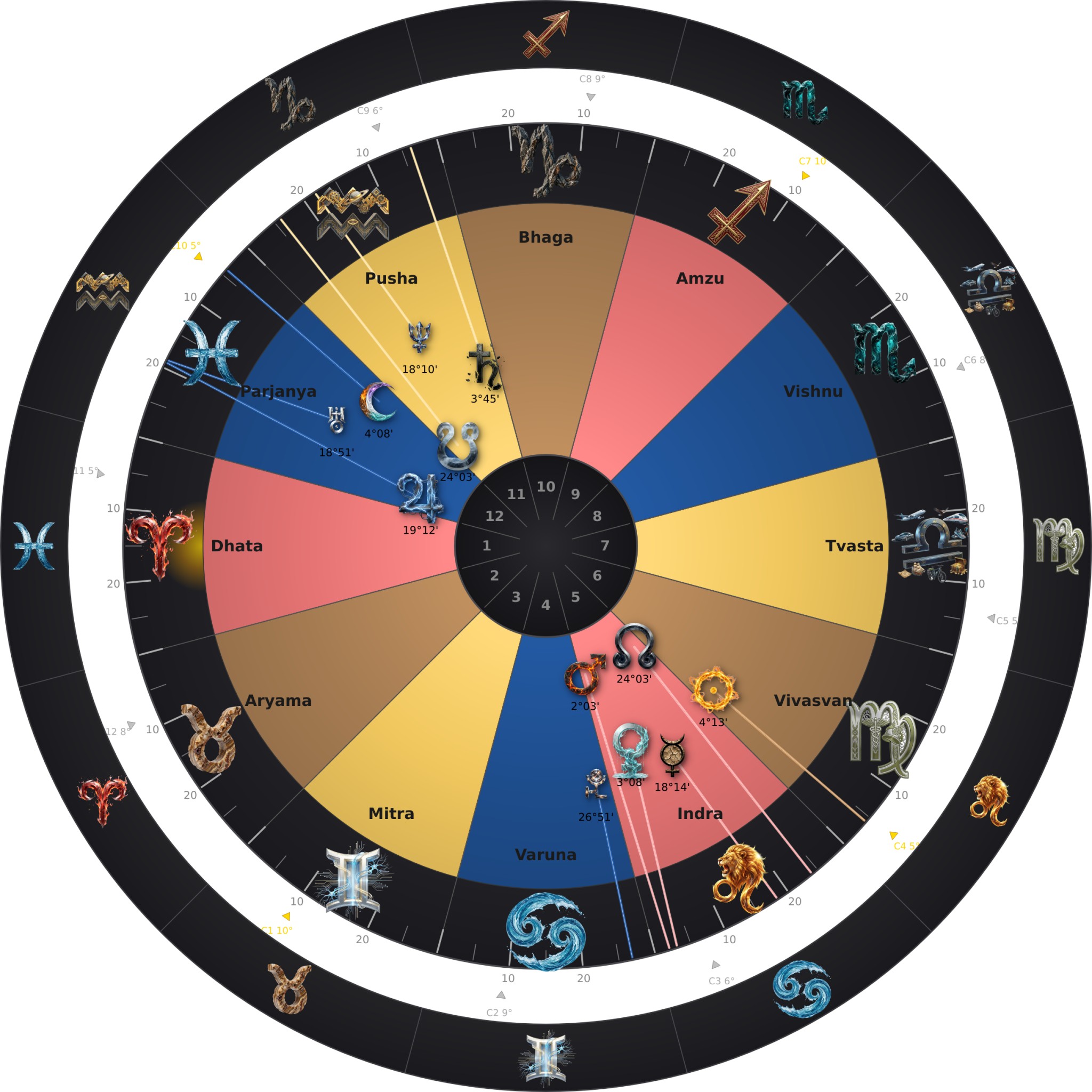
Tajika Aspects (18 within orb, 3 involve Sun/Moon)
| Pair | Aspect | Dist | Strength | Orb | Status | Relationship |
|---|---|---|---|---|---|---|
| Mercury-Neptune | ☍ Opposition | 0.1° | 59.9 VR (100%) | 7.5° | — | Openly Inimical |
| Sun-Moon | ☍ Opposition | 0.1° | 59.8 VR (100%) | 13.5° | — | Openly Inimical |
| Jupiter-Uranus | ☌ Conjunction | 0.4° | 59.3 VR (99%) | 8.5° | Applying | Openly Inimical |
| Venus-Saturn | ☍ Opposition | 0.6° | 58.7 VR (98%) | 8.0° | Applying | Openly Inimical |
| Mars-Venus | ☌ Conjunction | 1.1° | 57.8 VR (96%) | 7.5° | Applying | Openly Inimical |
| Mars-Saturn | ☍ Opposition | 1.7° | 56.6 VR (94%) | 8.5° | Applying | Openly Inimical |
| Mars-Pluto | ☌ Conjunction | 5.2° | 49.6 VR (83%) | 8.0° | Separating | Neutral |
| Venus-Pluto | ☌ Conjunction | 6.3° | 47.4 VR (79%) | 7.5° | Separating | Neutral |
| Saturn-Pluto | ☍ Opposition | 6.9° | 46.2 VR (77%) | 8.5° | Applying | Neutral |
| Ascendant-Neptune | △ Trine | 7.9° | 37.1 VR (62%) | 8.5° | — | Openly Friendly |
| Ascendant-Saturn | △ Trine | 6.5° | 35.2 VR (59%) | 9.0° | — | Openly Friendly |
| Jupiter-Pluto | △ Trine | 7.6° | 33.5 VR (56%) | 8.5° | Separating | Openly Friendly |
| Ascendant-Mercury | ✶ Sextile | 8.0° | 33.4 VR (56%) | 8.0° | — | Secretly Friendly |
| Ascendant-Venus | ✶ Sextile | 7.1° | 30.5 VR (51%) | 8.0° | — | Secretly Friendly |
| Ascendant-Mars | ✶ Sextile | 8.2° | 29.0 VR (48%) | 8.5° | — | Secretly Friendly |
| Ascendant-Moon | □ Square | 6.1° | 21.1 VR (35%) | 10.5° | — | Secretly Inimical |
| Ascendant-Sun | □ Square | 6.0° | 20.0 VR (33%) | 12.0° | — | Secretly Inimical |
| Ascendant-Jupiter | □ Square | 8.9° | 13.5 VR (22%) | 9.0° | — | Secretly Inimical |
Window: June 27 – August 27, 1665
-
Great Plague of London — Peak Mortality (July–August 1665): The plague reached catastrophic levels: 17,036 deaths in July alone, peaking at 31,159 in August, with a single week recording 7,165 dead. Nearly a quarter of London's population was wiped out over 18 months.
-
Battle of Lowestoft (June 13): The English navy delivered the worst defeat in Dutch naval history during the Second Anglo-Dutch War — 17 ships lost, 2,000–2,500 killed. This established England as an emerging maritime superpower.
-
Newton's Annus Mirabilis (August 1665): Cambridge University closed due to plague; Isaac Newton, age 22, retreated to his family estate at Woolsthorpe Manor where he developed calculus, the concept of gravity, and early optics research. Arguably the most scientifically productive forced isolation in history.
Eclipse #8 — August 7, 1683 (Partial, mag. 0.094) — First Partial Eclipse
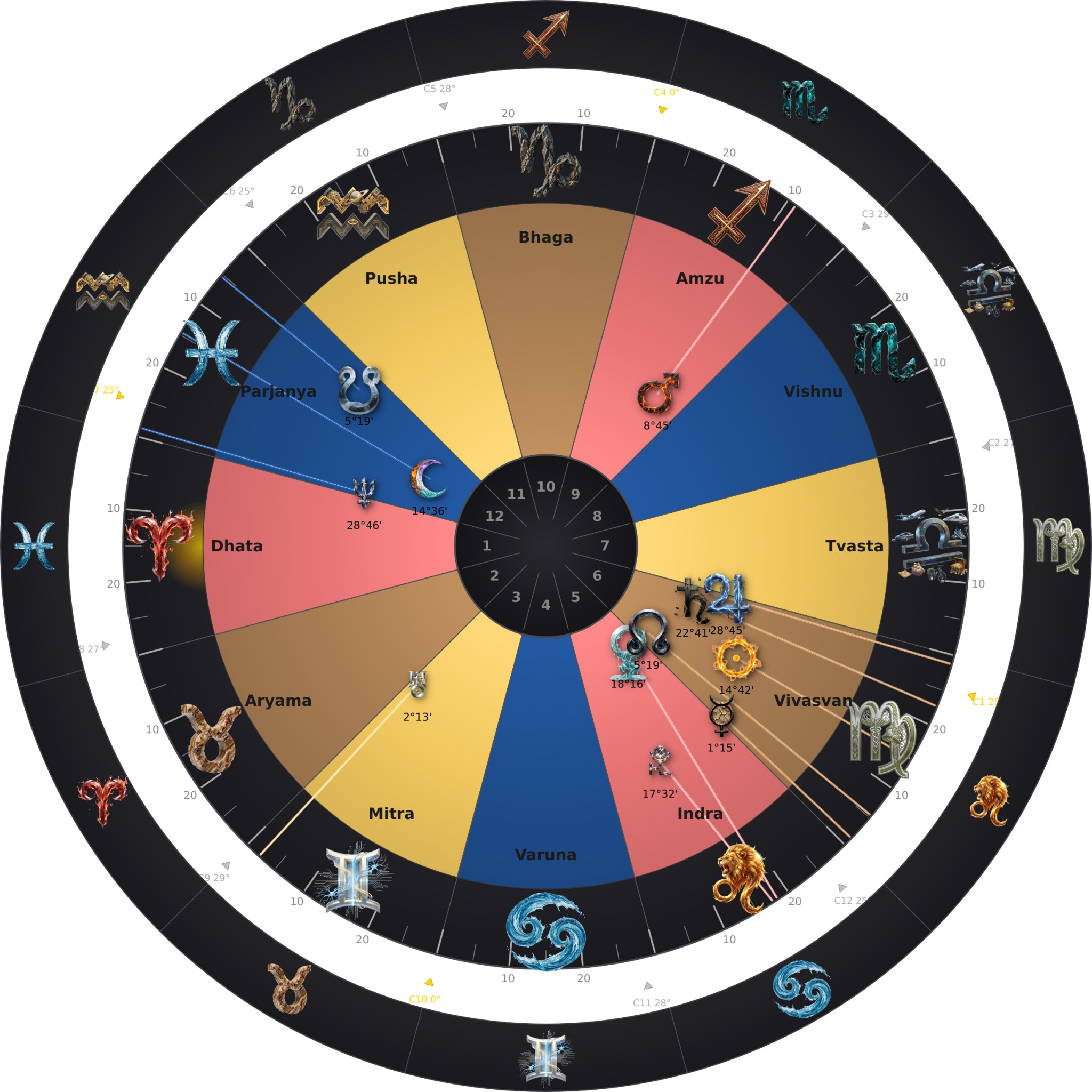
Tajika Aspects (19 within orb, 6 involve Sun/Moon)
| Pair | Aspect | Dist | Strength | Orb | Status | Relationship |
|---|---|---|---|---|---|---|
| Jupiter-Neptune | ☍ Opposition | 0.0° | 60.0 VR (100%) | 8.5° | — | Openly Inimical |
| Sun-Moon | ☍ Opposition | 0.1° | 59.8 VR (100%) | 13.5° | — | Openly Inimical |
| Venus-Pluto | ☌ Conjunction | 0.7° | 58.5 VR (98%) | 7.5° | Separating | Openly Inimical |
| Ascendant-Jupiter | ☌ Conjunction | 3.0° | 53.9 VR (90%) | 9.0° | — | Openly Inimical |
| Ascendant-Saturn | ☌ Conjunction | 3.0° | 53.9 VR (90%) | 9.0° | — | Openly Inimical |
| Ascendant-Neptune | ☍ Opposition | 3.0° | 53.9 VR (90%) | 8.5° | — | Openly Inimical |
| Jupiter-Saturn | ☌ Conjunction | 6.1° | 47.9 VR (80%) | 9.0° | Separating | Openly Inimical |
| Saturn-Neptune | ☍ Opposition | 6.1° | 47.9 VR (80%) | 8.5° | Applying | Openly Inimical |
| Mars-Uranus | ☍ Opposition | 6.5° | 46.9 VR (78%) | 8.0° | Separating | Openly Inimical |
| Sun-Saturn | ☌ Conjunction | 8.0° | 44.0 VR (73%) | 12.0° | Applying | Openly Inimical |
| Moon-Saturn | ☍ Opposition | 8.1° | 43.8 VR (73%) | 10.5° | Applying | Openly Inimical |
| Jupiter-Uranus | △ Trine | 3.5° | 41.5 VR (69%) | 8.5° | Applying | Secretly Inimical |
| Ascendant-Uranus | △ Trine | 6.5° | 38.5 VR (64%) | 8.5° | — | Secretly Inimical |
| Ascendant-Sun | ☌ Conjunction | 11.0° | 38.0 VR (63%) | 12.0° | — | Openly Inimical |
| Mars-Mercury | □ Square | 7.5° | 22.5 VR (38%) | 7.5° | Separating | Secretly Inimical |
| Moon-Mars | □ Square | 5.9° | 20.9 VR (35%) | 10.0° | Separating | Secretly Inimical |
| Sun-Mars | □ Square | 5.9° | 20.0 VR (33%) | 11.5° | Separating | Secretly Inimical |
| Mercury-Uranus | □ Square | 1.0° | 14.8 VR (25%) | 7.5° | Separating | Secretly Inimical |
| Uranus-Neptune | ✶ Sextile | 3.5° | 10.6 VR (18%) | 8.0° | Separating | Secretly Inimical |
Window: July 7 – September 7, 1683
The series crosses its first threshold — the Moon finally enters Earth's umbral shadow.
- Ottoman Siege of Vienna (July 14 – September 12, 1683): The Ottoman army of ~150,000 arrived outside Vienna on July 14. Emperor Leopold I fled with 60,000 citizens. After two months of siege, King John III Sobieski of Poland led the largest cavalry charge in history — 18,000 Polish Winged Hussars — at the Battle of Kahlenberg on September 12, crushing the Ottoman army. The high-water mark of Ottoman expansion into Europe. The Ottomans never again threatened Vienna or advanced further west. This battle permanently shifted the balance of power in Europe.
Eclipse #9 — August 18, 1701 (Partial, mag. 0.235)
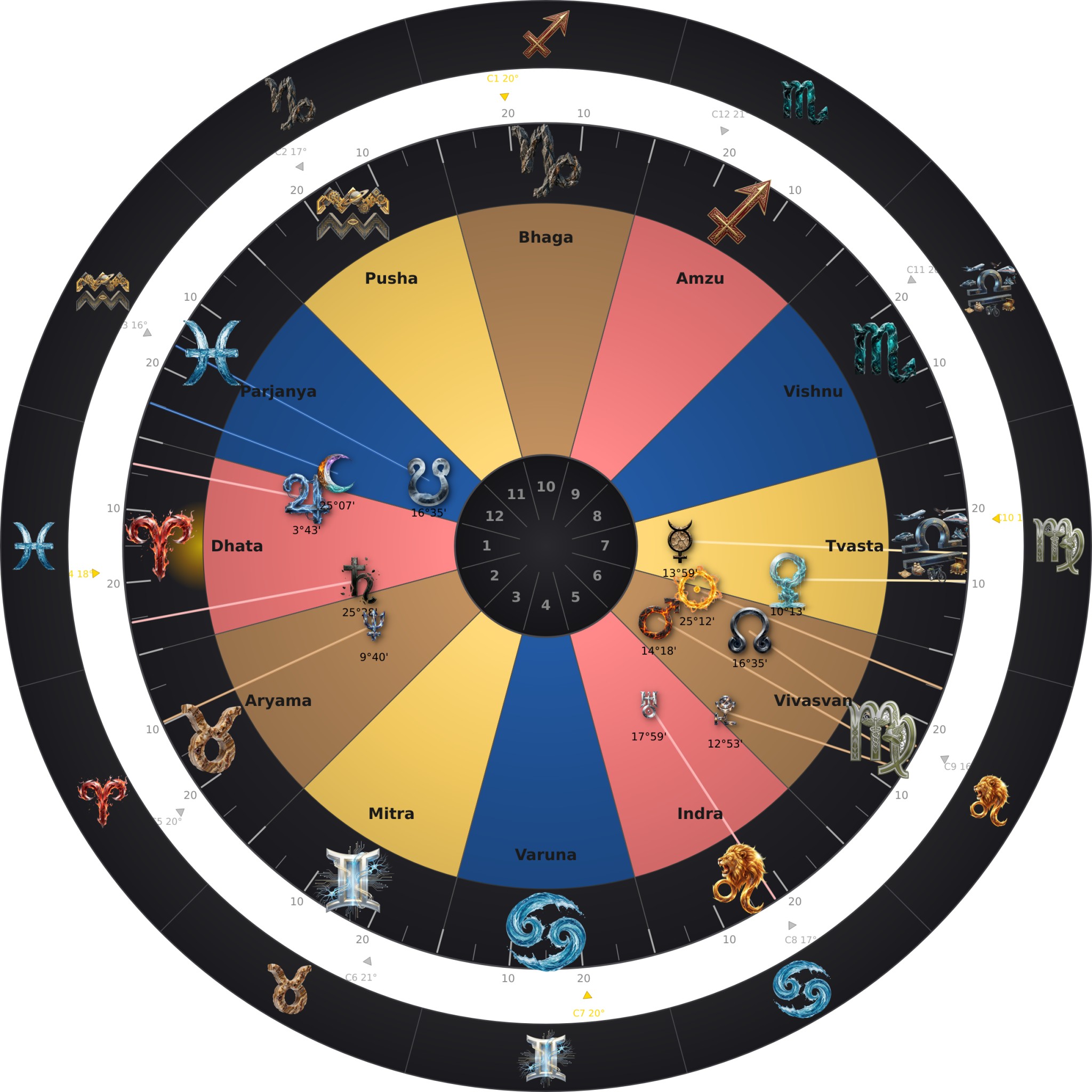
Tajika Aspects (17 within orb, 6 involve Sun/Moon)
| Pair | Aspect | Dist | Strength | Orb | Status | Relationship |
|---|---|---|---|---|---|---|
| Sun-Moon | ☍ Opposition | 0.1° | 59.8 VR (100%) | 13.5° | — | Openly Inimical |
| Mars-Pluto | ☌ Conjunction | 1.4° | 57.2 VR (95%) | 8.0° | Separating | Openly Inimical |
| Mercury-Venus | ☌ Conjunction | 3.8° | 52.5 VR (87%) | 7.0° | Applying | Openly Inimical |
| Jupiter-Venus | ☍ Opposition | 6.5° | 47.0 VR (78%) | 8.0° | Separating | Openly Inimical |
| Sun-Jupiter | ☍ Opposition | 8.5° | 43.0 VR (72%) | 12.0° | Applying | Neutral |
| Moon-Jupiter | ☌ Conjunction | 8.6° | 42.8 VR (71%) | 10.5° | Applying | Neutral |
| Ascendant-Sun | △ Trine | 4.7° | 40.3 VR (67%) | 12.0° | — | Openly Friendly |
| Neptune-Pluto | △ Trine | 3.2° | 40.2 VR (67%) | 8.0° | Separating | Openly Friendly |
| Sun-Mars | ☌ Conjunction | 10.9° | 38.2 VR (64%) | 11.5° | Separating | Openly Inimical |
| Mars-Neptune | △ Trine | 4.6° | 38.1 VR (63%) | 8.0° | Separating | Openly Friendly |
| Saturn-Uranus | △ Trine | 7.5° | 37.5 VR (62%) | 8.5° | Applying | Openly Friendly |
| Ascendant-Moon | ✶ Sextile | 4.7° | 36.1 VR (60%) | 10.5° | — | Secretly Friendly |
| Ascendant-Mars | △ Trine | 6.2° | 35.7 VR (60%) | 8.5° | — | Openly Friendly |
| Ascendant-Pluto | △ Trine | 7.6° | 33.6 VR (56%) | 8.5° | — | Openly Friendly |
| Ascendant-Mercury | □ Square | 6.5° | 21.5 VR (36%) | 8.0° | — | Secretly Inimical |
| Ascendant-Saturn | □ Square | 5.0° | 20.0 VR (33%) | 9.0° | — | Secretly Inimical |
| Mercury-Uranus | ✶ Sextile | 4.0° | 8.7 VR (14%) | 7.5° | Separating | Secretly Friendly |
Window: July 18 – September 18, 1701
-
Grand Alliance formed — War of the Spanish Succession begins (September 7): England, the Dutch Republic, Austria, Prussia, and most German states signed the Treaty of the Hague, formalizing their alliance against France. Historians call this "the first world war of modern times" — fought across Europe, sea lanes, and colonial territories. It ended French hegemony and launched Britain as the dominant global power.
-
Act of Settlement (June 12, context for window): Parliament barred Catholics from the British throne, ensuring Protestant succession. This law — still in force today — created the Hanoverian succession and the foundation of the modern British constitutional monarchy.
-
Kingdom of Prussia established (January 1701): The Elector of Brandenburg was crowned Frederick I, King of Prussia — birth of the state that would dominate European politics for 250 years and ultimately unify Germany.
Eclipse #10 — August 29, 1719 (Partial, mag. 0.364)
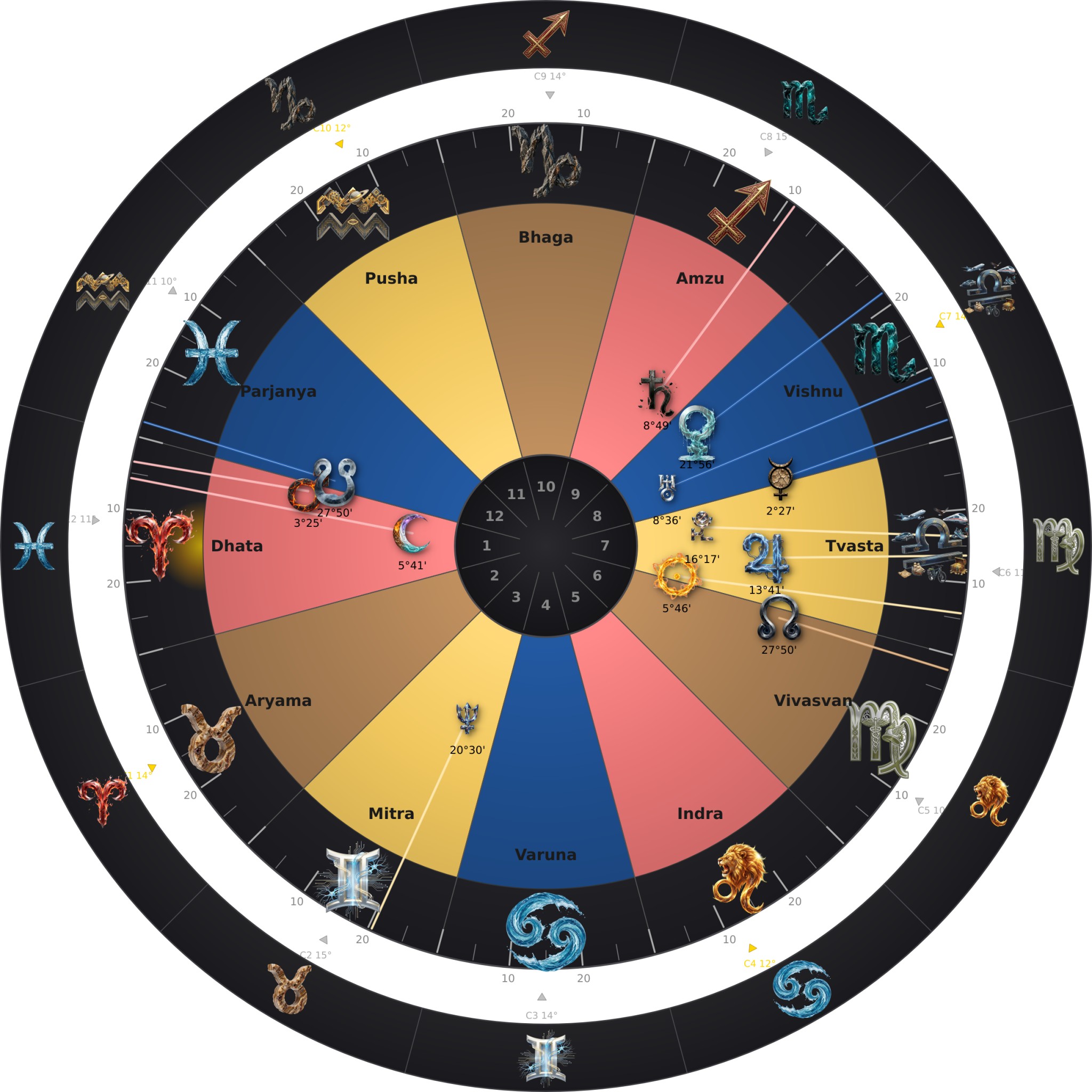
Tajika Aspects (17 within orb, 8 involve Sun/Moon)
| Pair | Aspect | Dist | Strength | Orb | Status | Relationship |
|---|---|---|---|---|---|---|
| Sun-Moon | ☍ Opposition | 0.1° | 59.9 VR (100%) | 13.5° | — | Openly Inimical |
| Moon-Mars | ☌ Conjunction | 2.3° | 55.4 VR (92%) | 10.0° | Separating | Openly Inimical |
| Sun-Mars | ☍ Opposition | 2.4° | 55.3 VR (92%) | 11.5° | Separating | Openly Inimical |
| Jupiter-Pluto | ☌ Conjunction | 2.6° | 54.8 VR (91%) | 8.5° | Applying | Openly Inimical |
| Ascendant-Uranus | ☍ Opposition | 5.9° | 48.1 VR (80%) | 8.5° | — | Openly Inimical |
| Mercury-Uranus | ☌ Conjunction | 6.1° | 47.7 VR (80%) | 7.5° | Applying | Openly Inimical |
| Ascendant-Venus | ☍ Opposition | 7.4° | 45.2 VR (75%) | 8.0° | — | Openly Inimical |
| Sun-Jupiter | ☌ Conjunction | 7.9° | 44.2 VR (74%) | 12.0° | Applying | Openly Inimical |
| Moon-Jupiter | ☍ Opposition | 8.0° | 44.0 VR (73%) | 10.5° | Applying | Openly Inimical |
| Moon-Saturn | △ Trine | 3.1° | 41.9 VR (70%) | 10.5° | Applying | Openly Friendly |
| Neptune-Pluto | △ Trine | 4.2° | 40.8 VR (68%) | 8.0° | Applying | Openly Friendly |
| Mars-Saturn | △ Trine | 5.4° | 39.6 VR (66%) | 8.5° | Separating | Openly Friendly |
| Sun-Pluto | ☌ Conjunction | 10.5° | 39.0 VR (65%) | 11.5° | Applying | Openly Inimical |
| Jupiter-Neptune | △ Trine | 6.8° | 38.2 VR (64%) | 8.5° | Applying | Openly Friendly |
| Sun-Saturn | ✶ Sextile | 3.0° | 37.5 VR (62%) | 12.0° | Applying | Secretly Friendly |
| Jupiter-Saturn | ✶ Sextile | 4.9° | 33.5 VR (56%) | 9.0° | Separating | Secretly Friendly |
| Saturn-Pluto | ✶ Sextile | 7.5° | 7.5 VR (12%) | 8.5° | Applying | Secretly Friendly |
Window: July 29 – September 29, 1719
-
Russia raids the Swedish coast (July–August 1719): Russia's Baltic fleet pillaged Swedish territory. On August 13, Crown Prince Frederick defended Stockholm from Admiral Apraksin's fleet at the Battle of Staket. This campaign broke Swedish dominance of the Baltic and announced Russia as the new northern superpower under Peter the Great.
-
Jacobite Rising of 1719 collapses (aftermath in window): The Spanish-backed attempt to restore the Stuart claimant was crushed at Glen Shiel (June 10). The rising's failure definitively ended any realistic prospect of a Stuart restoration.
-
Liechtenstein declares independence (September 23): The Principality formally separated from the Holy Roman Empire — birth of one of Europe's smallest and longest-surviving sovereign states.
Eclipse #11 — September 9, 1737 (Partial, mag. 0.483)
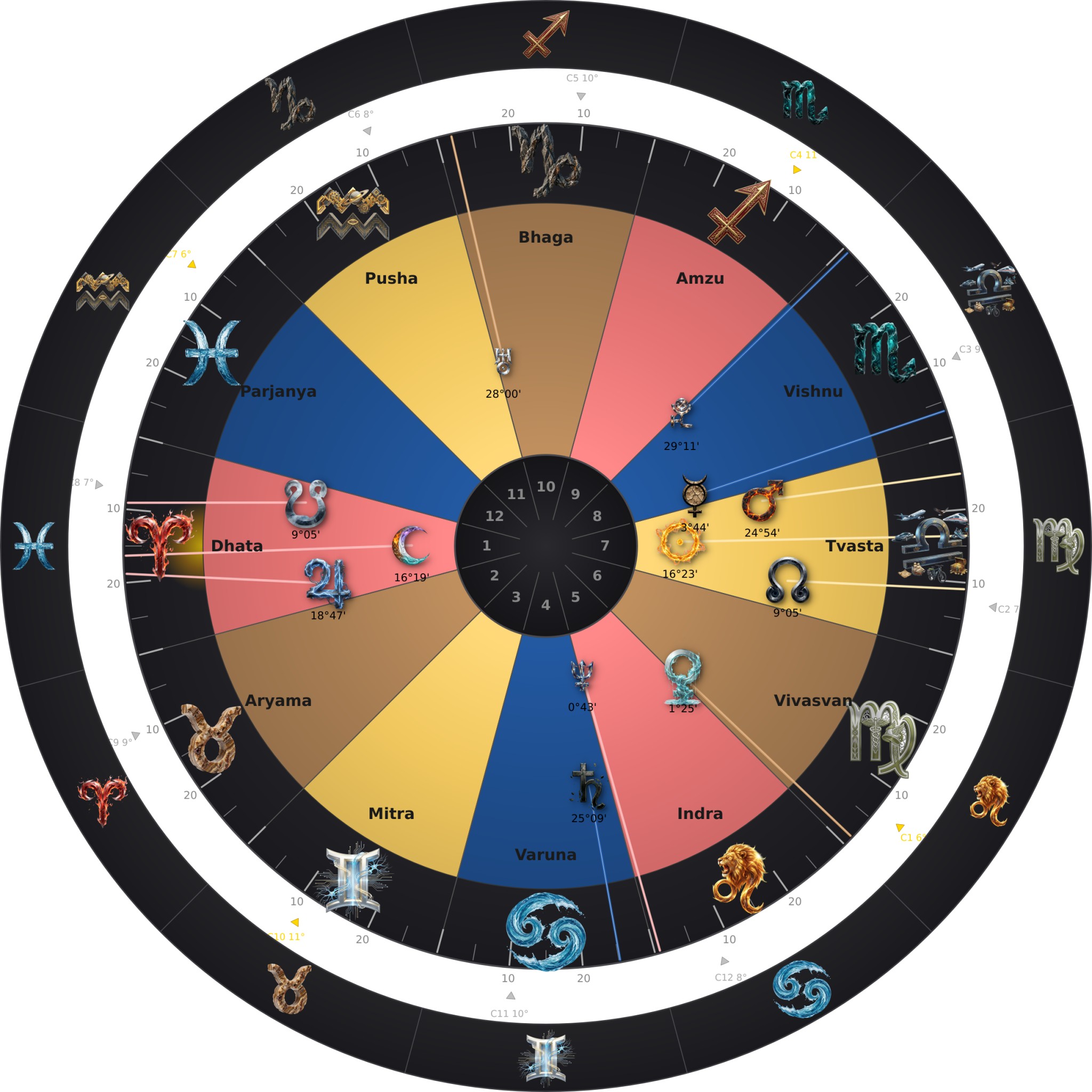
Tajika Aspects (26 within orb, 7 involve Sun/Moon)
| Pair | Aspect | Dist | Strength | Orb | Status | Relationship |
|---|---|---|---|---|---|---|
| Sun-Moon | ☍ Opposition | 0.1° | 59.9 VR (100%) | 13.5° | — | Openly Inimical |
| Sun-Jupiter | ☍ Opposition | 2.4° | 55.2 VR (92%) | 12.0° | Applying | Openly Inimical |
| Moon-Jupiter | ☌ Conjunction | 2.5° | 55.1 VR (92%) | 10.5° | Applying | Openly Inimical |
| Uranus-Neptune | ☍ Opposition | 2.7° | 54.5 VR (91%) | 8.0° | Separating | Neutral |
| Saturn-Uranus | ☍ Opposition | 2.8° | 54.3 VR (91%) | 8.5° | Applying | Openly Inimical |
| Ascendant-Venus | ☌ Conjunction | 5.4° | 49.3 VR (82%) | 8.0° | — | Openly Inimical |
| Saturn-Neptune | ☌ Conjunction | 5.6° | 48.9 VR (82%) | 8.5° | Applying | Neutral |
| Mars-Jupiter | ☍ Opposition | 6.1° | 47.8 VR (80%) | 8.5° | Separating | Openly Inimical |
| Neptune-Pluto | △ Trine | 1.5° | 43.5 VR (72%) | 8.0° | Applying | Secretly Inimical |
| Sun-Mars | ☌ Conjunction | 8.5° | 43.0 VR (72%) | 11.5° | Applying | Openly Inimical |
| Moon-Mars | ☍ Opposition | 8.6° | 42.9 VR (71%) | 10.0° | Applying | Openly Inimical |
| Saturn-Pluto | △ Trine | 4.0° | 39.0 VR (65%) | 8.5° | Applying | Openly Friendly |
| Ascendant-Mercury | ✶ Sextile | 3.0° | 36.0 VR (60%) | 8.0° | — | Secretly Friendly |
| Moon-Saturn | □ Square | 8.8° | 23.8 VR (40%) | 10.5° | Applying | Secretly Inimical |
| Jupiter-Saturn | □ Square | 6.4° | 21.4 VR (36%) | 9.0° | Separating | Secretly Inimical |
| Ascendant-Pluto | □ Square | 7.6° | 21.3 VR (36%) | 8.5° | — | Secretly Friendly |
| Mercury-Uranus | □ Square | 5.7° | 19.8 VR (33%) | 7.5° | Separating | Secretly Friendly |
| Mars-Uranus | □ Square | 3.1° | 18.1 VR (30%) | 8.0° | Applying | Secretly Inimical |
| Mercury-Neptune | □ Square | 3.0° | 18.0 VR (30%) | 7.5° | Separating | Secretly Inimical |
| Venus-Pluto | □ Square | 2.2° | 16.9 VR (28%) | 7.5° | Separating | Secretly Friendly |
| Mars-Saturn | □ Square | 0.3° | 15.0 VR (25%) | 8.5° | Applying | Secretly Inimical |
| Mars-Neptune | □ Square | 5.8° | 14.0 VR (23%) | 8.0° | Applying | Secretly Friendly |
| Sun-Saturn | □ Square | 8.8° | 13.5 VR (23%) | 12.0° | Applying | Secretly Inimical |
| Mercury-Venus | ✶ Sextile | 2.3° | 10.4 VR (17%) | 7.0° | Separating | Secretly Friendly |
| Uranus-Pluto | ✶ Sextile | 1.2° | 9.6 VR (16%) | 8.0° | Separating | Secretly Friendly |
| Mars-Venus | ✶ Sextile | 6.5° | 7.8 VR (13%) | 7.5° | Separating | Neutral |
Window: August 9 – October 9, 1737
-
Battle of Banja Luka (August 4): An Austrian army invading Ottoman Bosnia was routed. Austria's overconfident entry into the Russo-Turkish War began a catastrophic reversal that ended with Austria surrendering Balkan territory in the Peace of Belgrade (1739). The Ottomans' survival in the Balkans was secured for another century.
-
Calcutta Cyclone (October 11): A supercyclone struck the Bengal coast near Calcutta, generating a 10–13 meter storm surge. Modern estimates place the death toll at 25,000–45,000. One of the deadliest tropical cyclones in recorded Indian history.
-
Kamchatka Megathrust Earthquake (October 17): Estimated magnitude 8.3–9.3, generating tsunamis up to 60 meters high across the Pacific. One of the largest earthquakes in recorded history.
Eclipse #12 — September 20, 1755 (Partial, mag. 0.589)
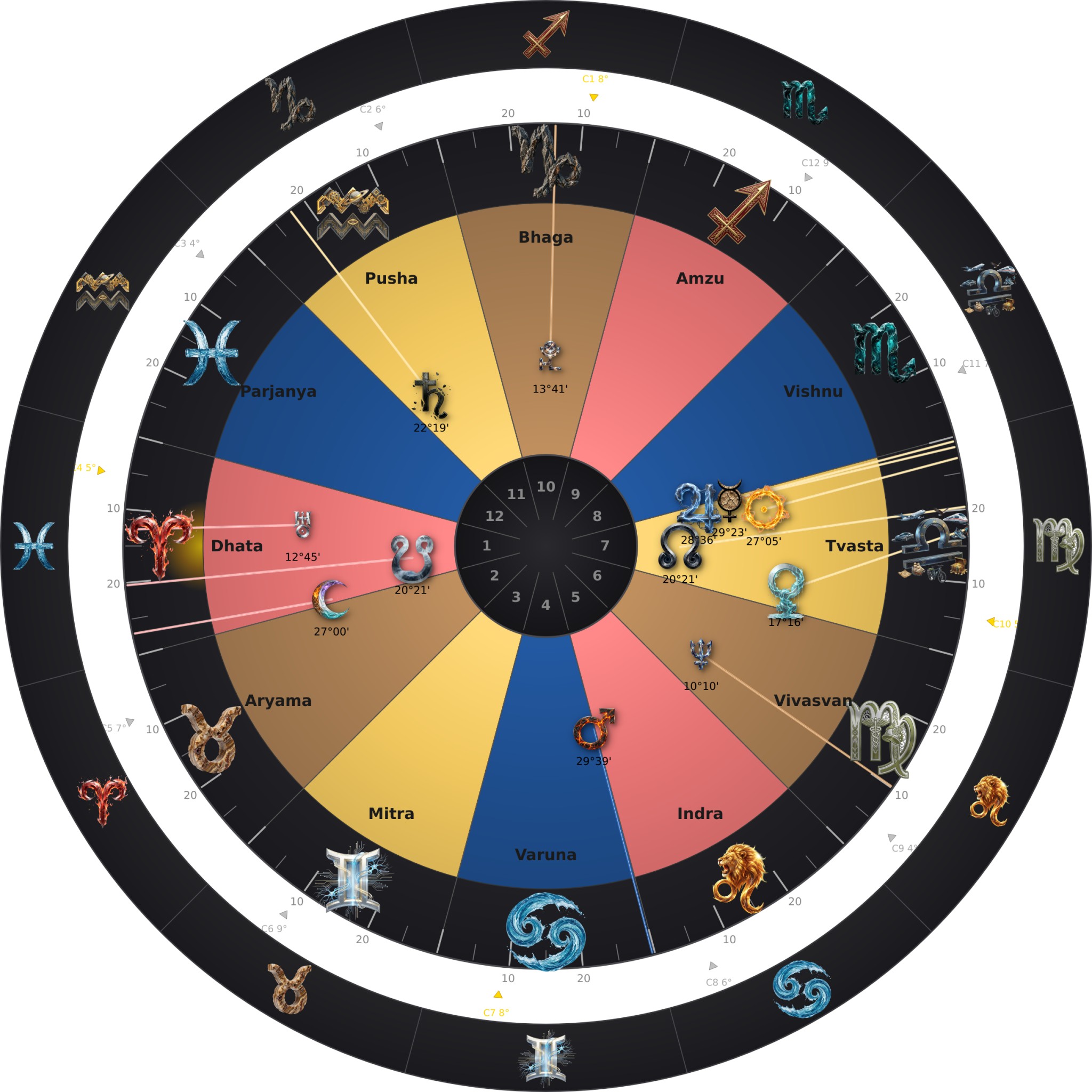
Tajika Aspects (23 within orb, 10 involve Sun/Moon)
| Pair | Aspect | Dist | Strength | Orb | Status | Relationship |
|---|---|---|---|---|---|---|
| Sun-Moon | ☍ Opposition | 0.1° | 59.9 VR (100%) | 13.5° | — | Openly Inimical |
| Mercury-Jupiter | ☌ Conjunction | 0.8° | 58.4 VR (97%) | 8.0° | Separating | Openly Inimical |
| Sun-Jupiter | ☌ Conjunction | 1.5° | 56.9 VR (95%) | 12.0° | Applying | Openly Inimical |
| Moon-Jupiter | ☍ Opposition | 1.6° | 56.8 VR (95%) | 10.5° | Applying | Openly Inimical |
| Sun-Mercury | ☌ Conjunction | 2.3° | 55.4 VR (92%) | 11.0° | Separating | Openly Inimical |
| Moon-Mercury | ☍ Opposition | 2.4° | 55.3 VR (92%) | 9.5° | Applying | Openly Inimical |
| Venus-Uranus | ☍ Opposition | 4.5° | 51.0 VR (85%) | 7.5° | Separating | Openly Inimical |
| Ascendant-Pluto | ☌ Conjunction | 4.6° | 50.9 VR (85%) | 8.5° | — | Openly Inimical |
| Ascendant-Neptune | △ Trine | 1.0° | 44.0 VR (73%) | 8.5° | — | Openly Friendly |
| Sun-Venus | ☌ Conjunction | 9.8° | 40.4 VR (67%) | 11.0° | Applying | Openly Inimical |
| Sun-Saturn | △ Trine | 4.8° | 40.2 VR (67%) | 12.0° | Separating | Openly Friendly |
| Neptune-Pluto | △ Trine | 3.5° | 39.7 VR (66%) | 8.0° | Applying | Openly Friendly |
| Jupiter-Saturn | △ Trine | 6.3° | 38.7 VR (64%) | 9.0° | Separating | Openly Friendly |
| Mercury-Saturn | △ Trine | 7.1° | 37.9 VR (63%) | 8.0° | Separating | Openly Friendly |
| Venus-Saturn | △ Trine | 5.1° | 37.4 VR (62%) | 8.0° | Applying | Openly Friendly |
| Ascendant-Uranus | □ Square | 3.6° | 18.6 VR (31%) | 8.5° | — | Secretly Inimical |
| Venus-Pluto | □ Square | 3.6° | 18.0 VR (30%) | 7.5° | Separating | Secretly Inimical |
| Moon-Mars | □ Square | 2.6° | 17.6 VR (29%) | 10.0° | Applying | Secretly Inimical |
| Mars-Jupiter | □ Square | 1.0° | 15.9 VR (26%) | 8.5° | Separating | Secretly Inimical |
| Mars-Mercury | □ Square | 0.3° | 15.2 VR (25%) | 7.5° | Applying | Secretly Inimical |
| Uranus-Pluto | □ Square | 0.9° | 14.8 VR (25%) | 8.0° | Separating | Secretly Inimical |
| Sun-Mars | □ Square | 2.6° | 14.6 VR (24%) | 11.5° | Applying | Secretly Inimical |
| Moon-Saturn | ✶ Sextile | 4.7° | 10.8 VR (18%) | 10.5° | Separating | Secretly Friendly |
Window: August 20 – October 20, 1755
-
Acadian Expulsion (August–October 1755): British authorities systematically deported approximately 10,000 French-speaking Acadians from Nova Scotia — over 1,100 in October alone. This ethnic cleansing reshaped the demographic map of North America. The Acadian diaspora gave rise to Cajun culture in Louisiana.
-
French and Indian War escalation (1755): Following Braddock's defeat in July, French prestige surged among Native American tribes, triggering widespread frontier raids across Pennsylvania, Virginia, and Maryland. This escalation led directly to the full Seven Years' War.
-
The Great Lisbon Earthquake (November 1, 1755 — 11 days past window): 30,000–90,000 killed, 85% of Lisbon destroyed. Though just outside the window, it defines this year's catastrophic arc.
Eclipse #13 — September 30, 1773 (Partial, mag. 0.683)
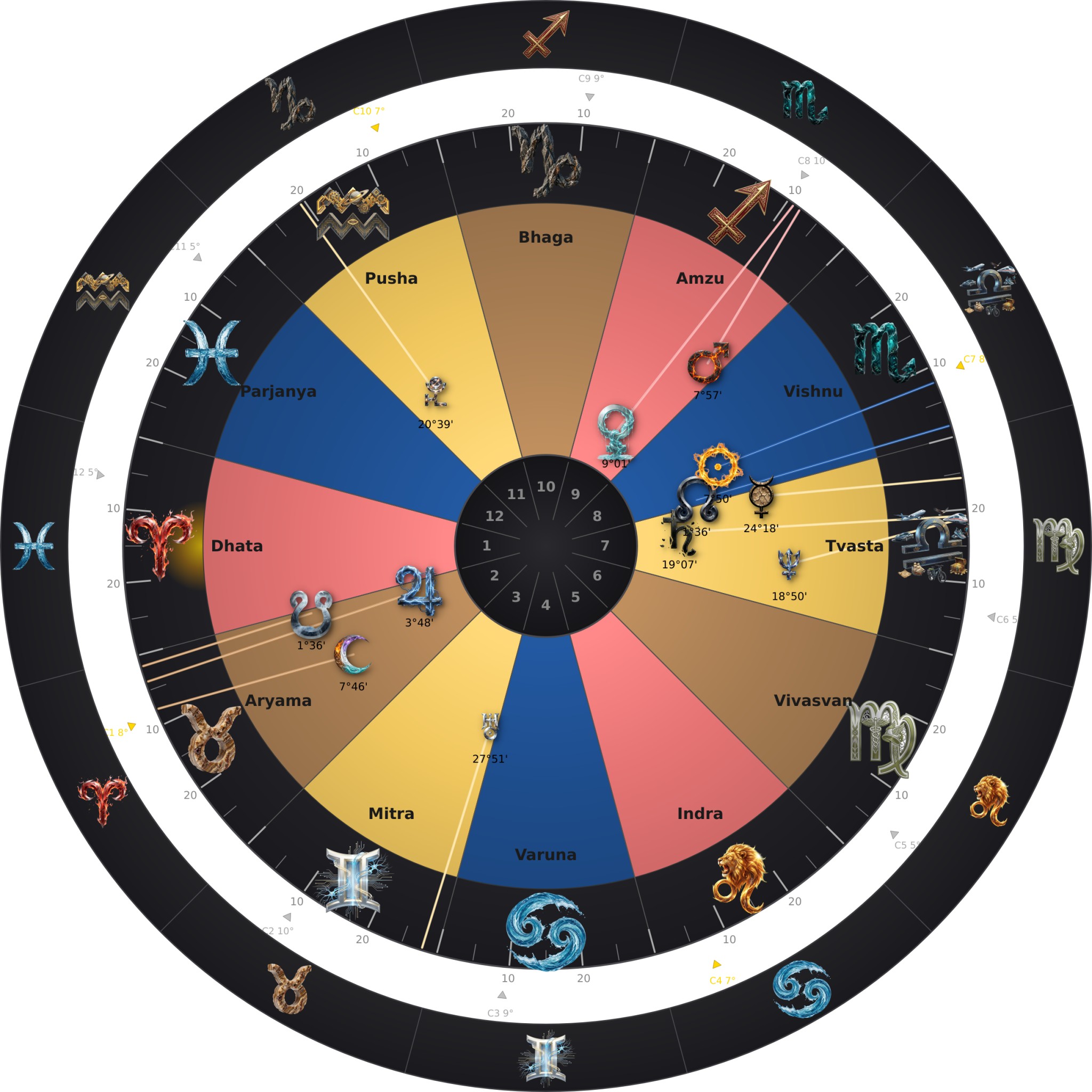
Tajika Aspects (18 within orb, 7 involve Sun/Moon)
| Pair | Aspect | Dist | Strength | Orb | Status | Relationship |
|---|---|---|---|---|---|---|
| Sun-Moon | ☍ Opposition | 0.1° | 59.9 VR (100%) | 13.5° | — | Openly Inimical |
| Saturn-Neptune | ☌ Conjunction | 0.3° | 59.4 VR (99%) | 8.5° | Separating | Openly Inimical |
| Ascendant-Sun | ☍ Opposition | 0.8° | 58.4 VR (97%) | 12.0° | — | Openly Inimical |
| Ascendant-Moon | ☌ Conjunction | 0.9° | 58.3 VR (97%) | 10.5° | — | Openly Inimical |
| Mars-Venus | ☌ Conjunction | 1.1° | 57.9 VR (96%) | 7.5° | Separating | Openly Inimical |
| Moon-Jupiter | ☌ Conjunction | 4.0° | 52.0 VR (87%) | 10.5° | Separating | Openly Inimical |
| Sun-Jupiter | ☍ Opposition | 4.0° | 51.9 VR (87%) | 12.0° | Separating | Openly Inimical |
| Ascendant-Jupiter | ☌ Conjunction | 4.8° | 50.3 VR (84%) | 9.0° | — | Openly Inimical |
| Mercury-Saturn | ☌ Conjunction | 5.2° | 49.6 VR (83%) | 8.0° | Separating | Openly Inimical |
| Mercury-Neptune | ☌ Conjunction | 5.5° | 49.0 VR (82%) | 7.5° | Separating | Openly Inimical |
| Saturn-Pluto | △ Trine | 1.5° | 42.7 VR (71%) | 8.5° | Applying | Openly Friendly |
| Neptune-Pluto | △ Trine | 1.8° | 42.3 VR (70%) | 8.0° | Applying | Openly Friendly |
| Mercury-Uranus | △ Trine | 3.5° | 41.5 VR (69%) | 7.5° | Applying | Openly Friendly |
| Mercury-Pluto | △ Trine | 3.7° | 41.3 VR (69%) | 7.5° | Separating | Openly Friendly |
| Uranus-Pluto | △ Trine | 7.2° | 34.2 VR (57%) | 8.0° | Applying | Openly Friendly |
| Jupiter-Uranus | ✶ Sextile | 5.9° | 32.1 VR (54%) | 8.5° | Applying | Neutral |
| Sun-Uranus | △ Trine | 10.0° | 30.0 VR (50%) | 11.5° | Separating | Neutral |
| Moon-Uranus | ✶ Sextile | 9.9° | 26.8 VR (45%) | 10.0° | Separating | Neutral |
Window: August 30 – October 30, 1773
-
Pugachev's Rebellion begins (September 17): Yemelyan Pugachev, a Cossack claiming to be Tsar Peter III, launched the largest peasant revolt in Russian history. By October 5 he had laid siege to Orenburg and spread rebellion across the Urals. It required two years and a major military campaign to suppress, shaking Catherine the Great's reign.
-
Tea Act fallout accelerates (autumn 1773): Parliament's Tea Act triggered escalating colonial unrest. The October window saw intense organizing by the Sons of Liberty, building toward the Boston Tea Party on December 16.
-
Suppression of the Jesuits (July 21): Pope Clement XIV formally dissolved the Society of Jesus, expelling and imprisoning Jesuit missionaries worldwide. Mass arrests across Europe and Latin America dominated discourse through autumn.
Eclipse #14 — October 12, 1791 (Partial, mag. 0.762)
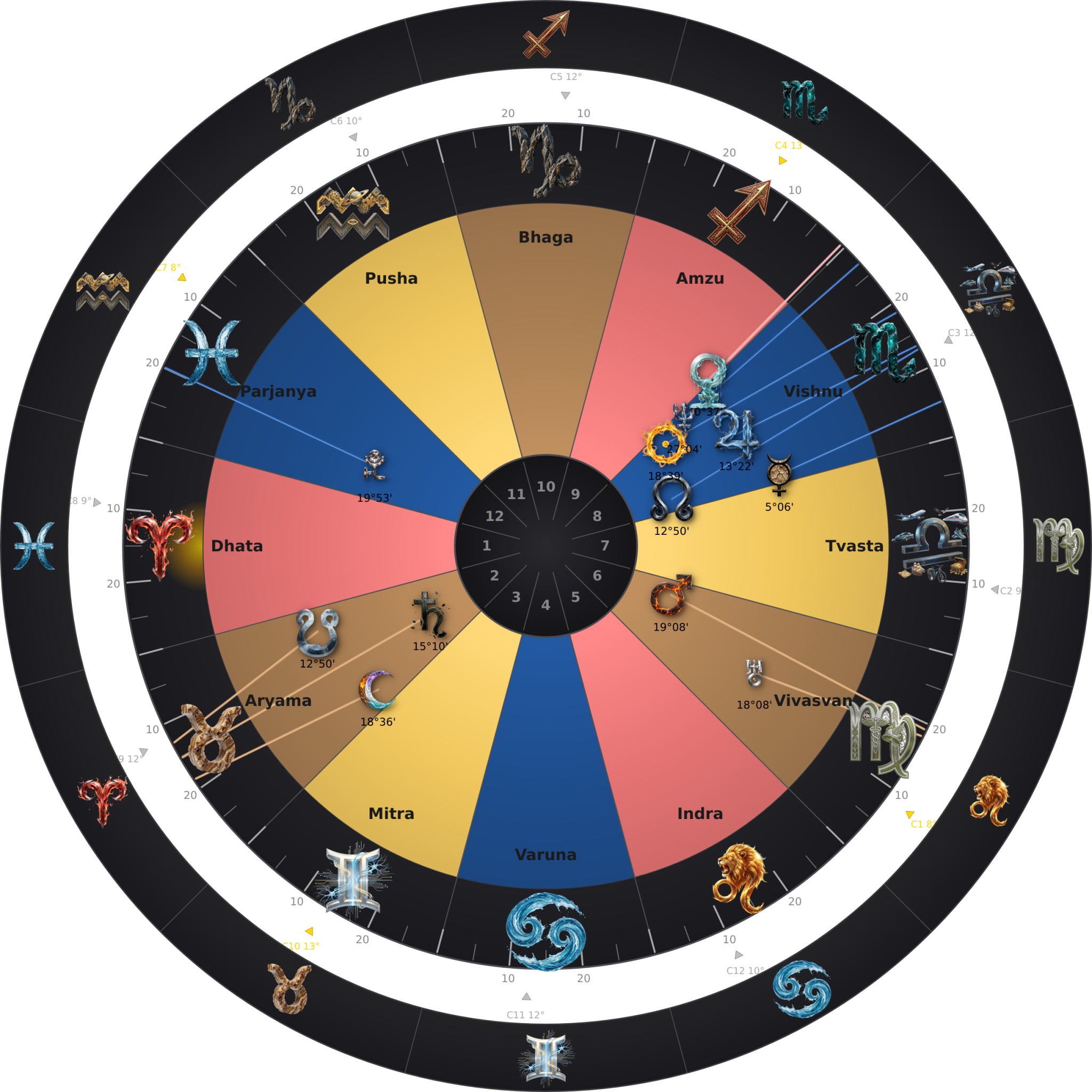
Tajika Aspects (31 within orb, 15 involve Sun/Moon)
| Pair | Aspect | Dist | Strength | Orb | Status | Relationship |
|---|---|---|---|---|---|---|
| Sun-Moon | ☍ Opposition | 0.1° | 59.9 VR (100%) | 13.5° | — | Openly Inimical |
| Mars-Pluto | ☍ Opposition | 0.7° | 58.5 VR (98%) | 8.0° | Applying | Openly Inimical |
| Mars-Uranus | ☌ Conjunction | 1.0° | 58.0 VR (97%) | 8.0° | Separating | Openly Inimical |
| Uranus-Pluto | ☍ Opposition | 1.7° | 56.5 VR (94%) | 8.0° | Applying | Openly Inimical |
| Jupiter-Saturn | ☍ Opposition | 1.8° | 56.4 VR (94%) | 9.0° | Applying | Openly Inimical |
| Moon-Saturn | ☌ Conjunction | 3.4° | 53.1 VR (89%) | 10.5° | Separating | Openly Inimical |
| Sun-Saturn | ☍ Opposition | 3.5° | 53.0 VR (88%) | 12.0° | Separating | Openly Inimical |
| Venus-Neptune | ☌ Conjunction | 3.6° | 52.9 VR (88%) | 7.5° | Applying | Neutral |
| Moon-Jupiter | ☍ Opposition | 5.2° | 49.5 VR (83%) | 10.5° | Separating | Openly Inimical |
| Sun-Jupiter | ☌ Conjunction | 5.3° | 49.4 VR (82%) | 12.0° | Separating | Openly Inimical |
| Moon-Uranus | △ Trine | 0.5° | 44.5 VR (74%) | 10.0° | Separating | Openly Friendly |
| Moon-Mars | △ Trine | 0.5° | 44.2 VR (74%) | 10.0° | Applying | Openly Friendly |
| Sun-Neptune | ☌ Conjunction | 8.4° | 43.2 VR (72%) | 11.5° | Applying | Openly Inimical |
| Sun-Pluto | △ Trine | 1.2° | 43.2 VR (72%) | 11.5° | Applying | Openly Friendly |
| Moon-Neptune | ☍ Opposition | 8.5° | 43.1 VR (72%) | 10.0° | Applying | Openly Inimical |
| Saturn-Uranus | △ Trine | 3.0° | 40.6 VR (68%) | 8.5° | Separating | Openly Friendly |
| Mars-Saturn | △ Trine | 4.0° | 39.0 VR (65%) | 8.5° | Separating | Openly Friendly |
| Ascendant-Saturn | △ Trine | 6.3° | 38.7 VR (64%) | 9.0° | — | Openly Friendly |
| Neptune-Pluto | △ Trine | 7.2° | 37.8 VR (63%) | 8.0° | Separating | Openly Friendly |
| Ascendant-Jupiter | ✶ Sextile | 4.5° | 36.2 VR (60%) | 9.0° | — | Secretly Friendly |
| Ascendant-Moon | △ Trine | 9.8° | 35.2 VR (59%) | 10.5° | — | Openly Friendly |
| Jupiter-Pluto | △ Trine | 6.5° | 35.2 VR (59%) | 8.5° | Applying | Openly Friendly |
| Ascendant-Mercury | ✶ Sextile | 3.8° | 35.0 VR (58%) | 8.0° | — | Secretly Friendly |
| Mars-Neptune | ✶ Sextile | 7.9° | 33.4 VR (56%) | 8.0° | Applying | Secretly Friendly |
| Mars-Jupiter | ✶ Sextile | 5.8° | 32.3 VR (54%) | 8.5° | Separating | Secretly Friendly |
| Ascendant-Sun | ✶ Sextile | 9.8° | 31.8 VR (53%) | 12.0° | — | Secretly Friendly |
| Sun-Uranus | ✶ Sextile | 0.5° | 10.1 VR (17%) | 11.5° | Separating | Secretly Friendly |
| Sun-Mars | ✶ Sextile | 0.5° | 9.8 VR (16%) | 11.5° | Applying | Secretly Friendly |
| Moon-Pluto | ✶ Sextile | 1.3° | 9.6 VR (16%) | 10.0° | Applying | Secretly Friendly |
| Jupiter-Uranus | ✶ Sextile | 4.8° | 8.4 VR (14%) | 8.5° | Applying | Secretly Friendly |
| Saturn-Pluto | ✶ Sextile | 4.7° | 8.4 VR (14%) | 8.5° | Separating | Secretly Friendly |
Window: September 12 – November 12, 1791
-
Haitian Revolution (August 22 – escalating through window): The massive slave uprising in Saint-Domingue was in full violent acceleration. Within weeks, 100,000 enslaved people joined the revolt; 4,000 colonists were killed, 180 sugar plantations burned. This ultimately produced the only successful slave revolution in history and the first Black republic.
-
French Legislative Assembly convenes (October 1): The new constitutional monarchy established by France's revolutionary Constitution of 1791 began operating. This experiment lasted less than a year before the monarchy collapsed entirely.
-
US Bill of Rights ratified (December 15 — ratification in motion October–November): The first 10 amendments to the US Constitution enshrining freedom of speech, press, and religion became law.
Eclipse #15 — October 23, 1809 (Partial, mag. 0.828)
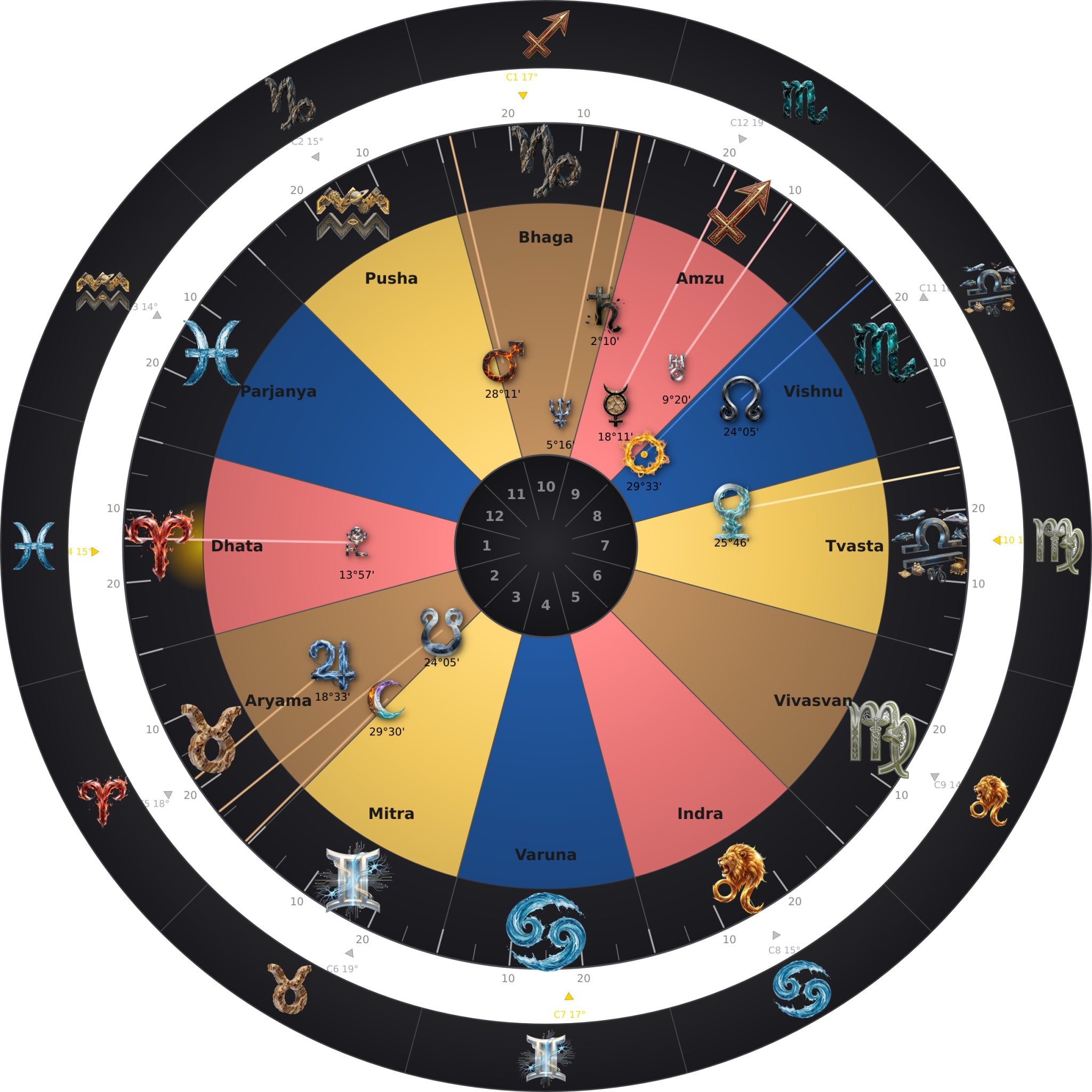
Tajika Aspects (15 within orb, 7 involve Sun/Moon)
| Pair | Aspect | Dist | Strength | Orb | Status | Relationship |
|---|---|---|---|---|---|---|
| Sun-Moon | ☍ Opposition | 0.1° | 59.9 VR (100%) | 13.5° | — | Openly Inimical |
| Saturn-Neptune | ☌ Conjunction | 3.1° | 53.8 VR (90%) | 8.5° | Applying | Openly Inimical |
| Ascendant-Jupiter | △ Trine | 0.5° | 44.2 VR (74%) | 9.0° | — | Openly Friendly |
| Moon-Mars | △ Trine | 1.3° | 43.0 VR (72%) | 10.0° | Separating | Openly Friendly |
| Mercury-Pluto | △ Trine | 4.2° | 40.8 VR (68%) | 7.5° | Applying | Openly Friendly |
| Sun-Uranus | ☌ Conjunction | 9.8° | 40.4 VR (67%) | 11.5° | Applying | Neutral |
| Moon-Uranus | ☍ Opposition | 9.8° | 40.3 VR (67%) | 10.0° | Applying | Neutral |
| Sun-Mars | ✶ Sextile | 1.4° | 38.2 VR (64%) | 11.5° | Separating | Secretly Friendly |
| Uranus-Pluto | △ Trine | 4.6° | 38.1 VR (64%) | 8.0° | Applying | Openly Friendly |
| Sun-Jupiter | ☍ Opposition | 11.0° | 38.0 VR (63%) | 12.0° | Separating | Openly Inimical |
| Venus-Saturn | ✶ Sextile | 6.4° | 34.7 VR (58%) | 8.0° | Applying | Secretly Inimical |
| Ascendant-Pluto | □ Square | 4.1° | 18.4 VR (31%) | 8.5° | — | Secretly Inimical |
| Mars-Venus | □ Square | 2.4° | 17.4 VR (29%) | 7.5° | Applying | Secretly Inimical |
| Ascendant-Venus | □ Square | 7.8° | 13.7 VR (23%) | 8.0° | — | Secretly Inimical |
| Ascendant-Sun | ✶ Sextile | 11.5° | 6.2 VR (10%) | 12.0° | — | Secretly Friendly |
Window: September 23 – November 23, 1809
-
Treaty of Schönbrunn (October 14): Napoleon forced Austria to sign one of the most punishing treaties of the Napoleonic Wars — Austria lost Illyria, Salzburg, West Galicia, and Tarnopol. 3.5 million subjects stripped away, forced to join the Continental System.
-
Assassination attempt on Napoleon (October 12): Frederick Staps, a young German student, attempted to stab Napoleon during a military review at Schönbrunn Palace. Captured, tried, and executed within days.
-
Battle of Ocaña (November 19): French forces annihilated a Spanish army — killing or capturing 20,000. This opened Andalusia to French conquest and nearly crushed Spanish resistance in the Peninsular War.
-
Meriwether Lewis dies (October 11): The explorer of the Lewis and Clark Expedition died under mysterious circumstances at age 35.
Eclipse #16 — November 3, 1827 (Partial, mag. 0.881)
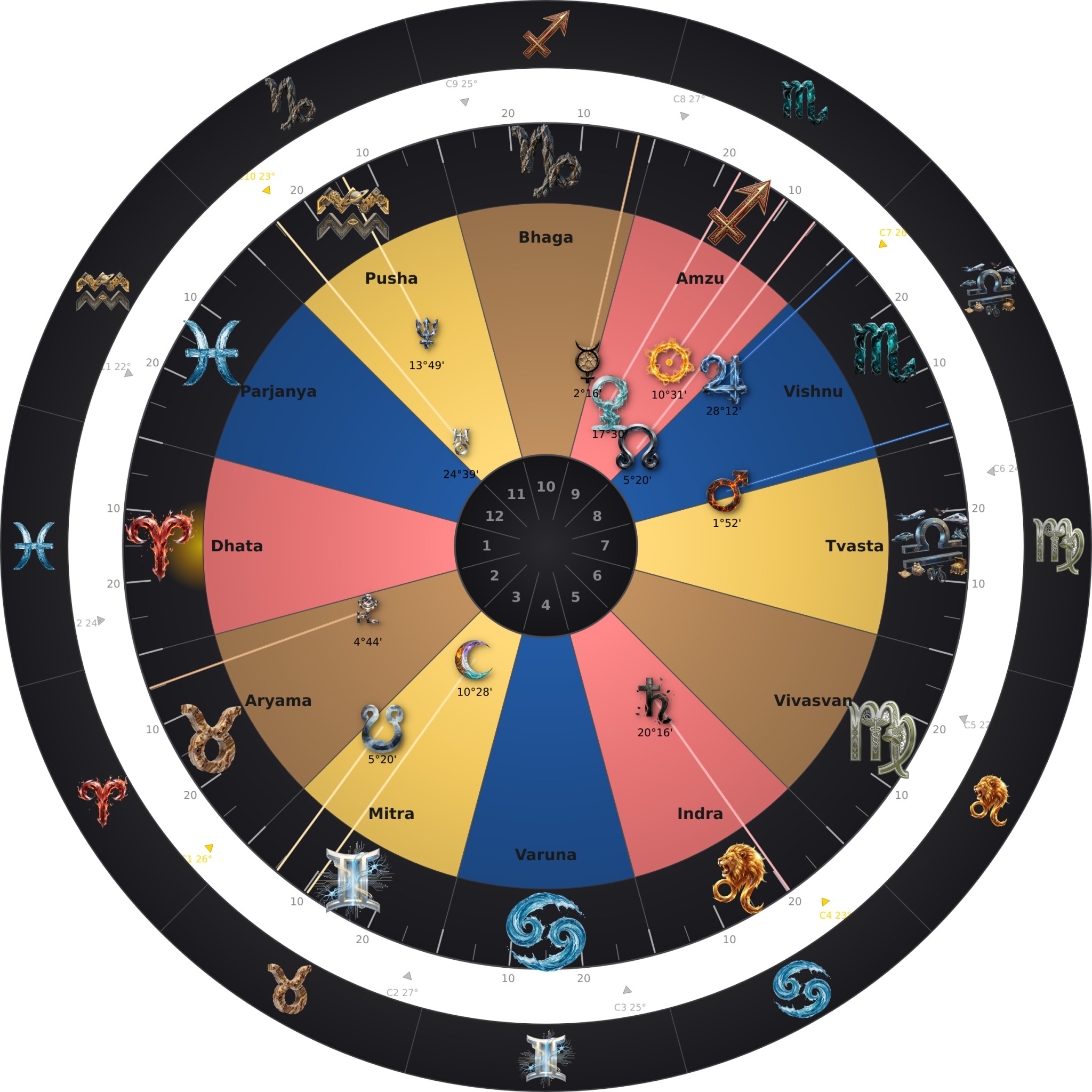
Tajika Aspects (21 within orb, 7 involve Sun/Moon)
| Pair | Aspect | Dist | Strength | Orb | Status | Relationship |
|---|---|---|---|---|---|---|
| Sun-Moon | ☍ Opposition | 0.0° | 59.9 VR (100%) | 13.5° | — | Openly Inimical |
| Ascendant-Jupiter | ☍ Opposition | 1.2° | 57.7 VR (96%) | 9.0° | — | Openly Inimical |
| Mars-Pluto | ☍ Opposition | 2.9° | 54.3 VR (90%) | 8.0° | Applying | Openly Inimical |
| Saturn-Uranus | ☍ Opposition | 4.4° | 51.2 VR (85%) | 8.5° | Separating | Openly Inimical |
| Saturn-Neptune | ☍ Opposition | 6.4° | 47.1 VR (78%) | 8.5° | Applying | Openly Inimical |
| Sun-Venus | ☌ Conjunction | 7.0° | 46.0 VR (77%) | 11.0° | Separating | Openly Inimical |
| Moon-Venus | ☍ Opposition | 7.0° | 45.9 VR (76%) | 9.5° | Applying | Openly Inimical |
| Venus-Saturn | △ Trine | 2.8° | 42.2 VR (70%) | 8.0° | Applying | Openly Friendly |
| Moon-Neptune | △ Trine | 3.4° | 41.6 VR (69%) | 10.0° | Applying | Openly Friendly |
| Mercury-Pluto | △ Trine | 2.5° | 41.3 VR (69%) | 7.5° | Applying | Openly Friendly |
| Mars-Mercury | ✶ Sextile | 0.4° | 39.7 VR (66%) | 7.5° | Separating | Secretly Friendly |
| Mars-Uranus | △ Trine | 7.2° | 37.8 VR (63%) | 8.0° | Separating | Secretly Inimical |
| Sun-Neptune | ✶ Sextile | 3.3° | 37.2 VR (62%) | 11.5° | Applying | Secretly Friendly |
| Sun-Saturn | △ Trine | 9.8° | 35.2 VR (59%) | 12.0° | Applying | Openly Friendly |
| Venus-Neptune | ✶ Sextile | 3.7° | 35.1 VR (58%) | 7.5° | Separating | Secretly Friendly |
| Venus-Uranus | ✶ Sextile | 7.1° | 34.0 VR (57%) | 7.5° | Applying | Secretly Friendly |
| Moon-Saturn | ✶ Sextile | 9.8° | 31.8 VR (53%) | 10.5° | Applying | Secretly Friendly |
| Jupiter-Saturn | □ Square | 7.9° | 22.9 VR (38%) | 9.0° | Separating | Secretly Inimical |
| Ascendant-Saturn | □ Square | 6.8° | 20.6 VR (34%) | 9.0° | — | Secretly Inimical |
| Jupiter-Uranus | □ Square | 3.5° | 18.0 VR (30%) | 8.5° | Separating | Secretly Inimical |
| Ascendant-Uranus | □ Square | 2.4° | 17.4 VR (29%) | 8.5° | — | Secretly Inimical |
Window: October 3 – December 3, 1827
-
Battle of Navarino (October 20): A combined British, French, and Russian fleet destroyed the Ottoman-Egyptian navy — the last major battle fought entirely by sailing ships. The destruction of the Ottoman fleet made Greek independence virtually inevitable. Within 5 years Greece was a recognized independent nation.
-
French political upheaval (November 24): Elections saw the Ultraroyalists lose their majority (233 to 180 seats). This marked the beginning of the unraveling that led to the July Revolution of 1830 and the end of the Bourbon Restoration.
-
"Socialist" coined (November 1827): Robert Owen first used the word in his periodical The Co-operative Magazine — launching a political vocabulary that would define the next two centuries.