What if Pisces is Actually a Fire Sign?

Before You Read This
Bryan Cranston is a Pisces. Emily Blunt is a Pisces. Jon Hamm is a Pisces. Oscar Isaac, Jensen Ackles, Daniel Kaluuya, Sidney Poitier, Sean Astin — all Pisces.
Western astrology says Pisces is a Water sign: sensitive, receptive, intuitive, emotional.
We ran 117 independent AI analyses of their most famous characters — blind, no zodiac information given — and 65% scored as Fire-dominant. Not Water. Fire.
Fourteen of those actors scored Fire on every single role we tested.
Either Hollywood systematically typecast every Pisces actor into atypically un-Piscean roles for 80 years — or Pisces might not be a Water sign.
If you're a Pisces who has always felt misrepresented by the dreamy, passive stereotype — this might explain why. And if you don't feel fiery at all — if you're more quiet, protective, nurturing — that's Fire too. Fire isn't only aggression and explosions. It's also a warm presence that sustains, protects, and carries others. Think of a hearth, not just a volcano.
What is the Aditya Zodiac?
In Western astrology, Pisces is a Water sign — associated with sensitivity, intuition, emotional depth, and receptivity. This is the system most people know.
The Aditya Zodiac proposes something different. In this system, each zodiac sign is mapped to one of 12 ancient Vedic solar deities called Adityas, and the elemental assignments shift by one position. Under this framework, Pisces maps to Dhata — the first Aditya, associated with Fire: direct action, creative force, identity building, and sustained effort. In essence, the theory is that Dhata is the "real Aries" — the true starting point of the zodiac — and that what we call Pisces carries the energy of a Fire sign, not Water.
This is a substantial claim. If true, it would mean that millions of people have been reading themselves through the wrong elemental lens.
To understand the full Aditya Zodiac system and how each sign maps to its Aditya, visit the complete Aditya Zodiac page. You can also try the Aditya calculator to see your own chart in this system.
A Personal Note from the Author
I consider the Aditya Zodiac to be one of the most important discoveries in modern astrology. But I want to be honest about what that means.
This is a personal belief. Many astrologers will disagree with me — perhaps most of them — even when presented with what I see as compelling evidence. And that is fine. There is still a real possibility that this system is incomplete, or that what is presented here captures only a fraction of a much larger picture. I do not claim to have the final answer.
I think of astrology the way I think of science: it can improve. Our knowledge is not meant to stay the same forever — it evolves as we learn more. This research is one step. Many others will follow, whether from me, from my teacher, or from the broader astrology community. What matters is that we keep asking the questions.
Some people will never accept a shifted zodiac. They will prefer the traditional system, and they have every right to. Discovery is not the same as certainty. What I offer here is data and a hypothesis — not a verdict.
What is a Blind Analysis?
Imagine asking 117 different people — each in a separate room, knowing nothing about the experiment — to read about a fictional character and decide which of two personality descriptions fits better. None of them know the personality descriptions represent "Fire" and "Water." None of them know what the other 116 people said. When 76 of 117 independently reach the same conclusion, that pattern is meaningful — regardless of whether you believe in astrology.
That is exactly what this report did, using 117 independent AI agents instead of people. Each agent analyzed one character role, completely blind to the hypothesis being tested. For the full technical methodology — how the profiles were coded, how bias was controlled, and what quality standards were enforced — see the Appendix: Methodology & Technical Details at the end of this document.
Are YOU a Pisces? Before reading further, try the Aditya Calculator and see which element dominates YOUR chart. It takes 30 seconds. You might find out you're not the Water sign you always thought.
Executive Summary
| Metric | Result |
|---|---|
| Fire roles (Aditya prediction: Pisces = Dhata = Fire) | 65.0% (76 of 117) |
| Water roles (Tropical prediction: Pisces = Water) | 35.0% (41 of 117) |
| Fire-majority careers (2/3 or 3/3 Fire) | 69.2% of actors (27 of 39) |
| Pure Fire careers (3/3 roles = Fire) | 14 actors (35.9%) |
| Pure Water careers (3/3 roles = Water) | 4 actors (10.3%) |
| Random baseline (2-element) | 50% / 50% |
Summary: Across 117 independently analyzed character roles, Pisces-born actors' on-screen behavioral patterns aligned with Fire (direct action, identity protection, sustained effort) at nearly twice the rate of Water (indirection, receptivity, connection-seeking). This 65/35 split, combined with 14 actors showing unanimous Fire alignment across all 3 roles, is consistent with the Aditya Zodiac prediction that Pisces maps to Dhata (Fire), not Water.
Note: The birth chart pie charts in this report display element distributions computed by Lorris Turpin's astrology software, Varuna360. A lighter version of this calculator is available on this website.
What element does YOUR chart show under the Aditya system? People who thought they were "mostly Water" sometimes discover they are Fire-dominant. People with 4 planets in Pisces might find those 4 planets counting as Fire, not Water. Try the Aditya Calculator → — then come back and read these actor analyses knowing your own result.
Fourteen actors. Zero exceptions. Every character they played — across every genre, every decade — the blind agent scored Fire. One of them played the most beloved gentle character in all of fantasy fiction. The agents still scored him Fire.
Before you scroll to find the 3/3 Fire actors: who would you guess? The obvious choices are the action stars, the tough-guy roles. But some of the names in that column will surprise you.
Career Pattern Distribution
| Pattern | Count | % of 39 Actors | Actors |
|---|---|---|---|
| 3/3 Fire | 14 | 35.9% | Jon Hamm, Jensen Ackles, Emily Blunt, Common, Victor Garber, Sean Astin, Bryan Cranston, Elliot Page, Oscar Isaac, Rachel Weisz, Daniel Kaluuya, Olivia Wilde, Wanda Sykes, Sidney Poitier |
| 2/3 Fire | 13 | 33.3% | Javier Bardem, Daniel Craig, Marsha Warfield, Bruce Willis, Alan Rickman, Miles Teller, Bryce Dallas Howard, Julie Bowen, Kevin Connolly, Ali Larter, Rebel Wilson, Alan Tudyk, Catherine O'Hara |
| 1/3 Fire | 8 | 20.5% | Laura Prepon, Johnny Knoxville, Elizabeth Taylor, Dakota Fanning, Spike Lee, Jordan Peele, Rashida Jones, Glenn Close |
| 0/3 Fire | 4 | 10.3% | Sophie Turner, Sharon Stone, Robert Sean Leonard, William H. Macy |
Note: Sophie Turner, Sharon Stone, William H. Macy, and Robert Sean Leonard scored Water across all three roles. The Aditya system predicts a distribution, not unanimity. 30% Water-majority actors is part of the data. The fact that we report them here is the point: this is not cherry-picked.
Fire-Majority vs Water-Majority
| Category | Count | Percentage |
|---|---|---|
| Fire-majority (2/3 or 3/3 Fire) | 27 | 69.2% |
| Water-majority (2/3 or 3/3 Water) | 12 | 30.8% |
Every actor entry in this report includes a YouTube link to a scene. Before you read the AI's analysis, watch the clip. Ask yourself: is this character driven by action and identity, or by emotion and connection? Then read the score. Come back after watching three. See if you agree or disagree with the AI agents.
Full Per-Actor Analyses
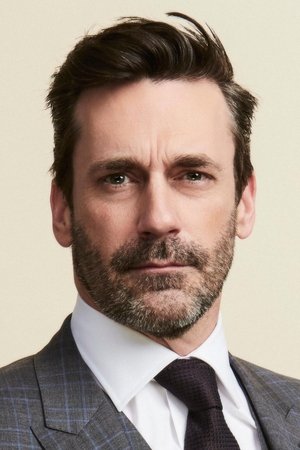
Jon Hamm (Born March 10, 1971) — 3/3 F
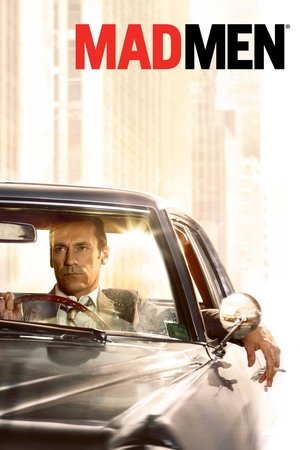
Role 1: Don Draper — Mad Men (2007-2015)
Watch scene — Don Draper masterfully rebrands a slide projector as 'The Carousel,' evoking powerful nostalgia to win over clients.
The Story:
Don Draper begins the series as the creative director at Sterling Cooper, a Manhattan advertising agency in the early 1960s. His entire existence is built on one of the most aggressive acts of identity fabrication in television drama: during the Korean War, Dick Whitman — a boy born in a brothel to a prostitute mother who died giving birth to him, raised by an abusive alcoholic father and a cold stepmother — switched dog tags with his dead commanding officer and became Don Draper. He then spent years constructing himself through relentless effort, climbing from poverty and illegitimacy to become one of the most admired advertising minds in New York. In the workplace, Don is a creative engine: he generates iconic campaigns through sheer brilliance and force of will, most famously rechristening the Kodak slide projector "The Carousel" in a pitch that reframes a product as a vessel for human memory. He leads, pitches, conquers clients, dominates rooms, and wills ideas into existence. He seduces women serially — not from emotional hunger but from a conquistador drive to take and possess. He handles professional threats through strategic counter-moves: when Pete Campbell attempts to blackmail him with knowledge of Dick Whitman, Don coldly neutralizes it rather than fleeing. He drinks whiskey hard and alone or aggressively in the company of men. His wounds are concrete and survival-based — abandonment through total lack of support or protection, not absence of warmth. He responds to pain by working harder, drinking harder, running to the next conquest. When his constructed world collapses across the later seasons — losing his agency, his marriages, his footing — he does not dissolve; he drives west, strips himself to nothing, and ultimately creates again, sitting at a meditation retreat not to receive peace but to generate the Coke "Hilltop" campaign. Even his surrender is an act.
Key Quotes:
-
"What you call love was invented by guys like me, to sell nylons." — Pilot episode. Don reduces emotional experience to a manufactured commodity he controls and deploys. This is a Fire statement of dominance and creative conquest: he does not receive love, he engineers it as a tool. The drive is to CREATE and CONTROL, not to receive or feel.
-
"If you don't like what's being said, change the conversation." — This is tactical indirection in the Fire mode — strategic, logical, coming from the HEAD. It is not emotional evasion but calculated reframing. He uses misdirection as a weapon of control, not as a cry for connection.
-
"Nostalgia — it's delicate, but potent... a twinge in your heart far more powerful than memory alone." — The Kodak Carousel pitch, Season 1 finale. Don deploys emotional language as a professional instrument — he CREATES meaning from nothing, manufactures feeling, and sells it. He accesses emotion not to be moved by it but to engineer it into product. The creative act is Fire at its most sophisticated.
How much Fire:
- Identity as the core battle. Dick Whitman did not wait for a better life or manipulate someone else into providing one. He physically took a dead man's identity, walked into a new world, and built himself from nothing through sustained effort across decades. The entire character is a Fire act writ large: the self is a construction made by doing, not by receiving.
- Creative genius as defining trait. Don's excellence is entirely effort-and-intelligence-based. He is not naturally charming in the Water sense of effortless allure. He works. He sits alone and generates ideas. He dominates pitches through strategic narrative construction. The profile defines: "CREATES things — art, plans, strategies, solutions. Creativity IS this profile." Don Draper is this definition.
- Conquest pattern in relationships. Don sleeps with a large number of women throughout the series. The profile is explicit: "A character who sleeps with hundreds of partners = CONQUERING them = this profile." His sexuality is territorial and acquisitive, not a desperate search for warmth or connection. He pursues, takes, and moves on. The method may borrow seduction but the drive is conquest.
- Substance pattern — whiskey, hard and alone. Don drinks neat whiskey, in offices, in cars, in bars during the afternoon, as a functional constant. This matches the Fire substance signature exactly: harsh, strong alcohol as a survival test and fuel, not as comfort-seeking. His drinking is grinding and consistent — a tool to keep functioning, not to feel warm.
- Wound is abandonment through lack of support, not lack of love. His trauma traces directly to a father who beat him and never protected him, a stepmother who was contemptuous, a childhood of physical deprivation. The profile states: "'My father never supported me' = this profile's pain." His pain is concrete, physical, survival-based. He does not mourn the absence of tender feeling — he is armored against that entirely. He mourns the absence of someone who had his back.
How much Water:
- Emotional evasion through indirection in personal life. When relationships deepen, Don circles and retreats rather than confronting honestly. He deflects, compartmentalizes, and avoids. This is a secondary pattern — borrowed from Water's indirection — but it functions as a TOOL to protect identity rather than as a core way of being. The profile notes that a character working in shadows to protect something is primarily Fire using indirection as a method.
- Deep longing for authentic connection. Don's recurring grief — particularly his devastation at Anna Draper's death, the one person who knew his real self — shows a Water undercurrent: the fear of disconnection, the ache for soul-deep recognition. He does not simply want to win; there is something in him that wants to be known. This is the fracture point in his armor and the show's most genuine source of pathos.
- Narrative manipulation and emotional deployment. Don's advertising method involves reading and manipulating how people feel — a skill that borrows from Water's intuitive emotional attunement. He can sense what people want to feel and mirror it back. However, this is deployed strategically and intellectually, not received intuitively, which keeps it weighted toward Fire.
Confidence: High
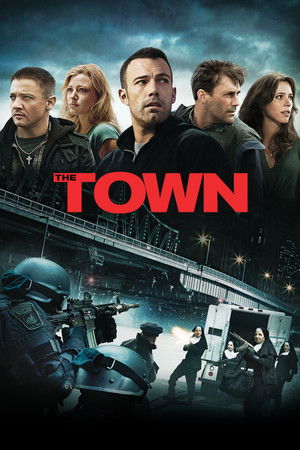
Role 2: FBI Special Agent Adam Frawley — The Town (2010)
Watch scene — FBI Agent Frawley asserts dominance through a sharp, confrontational interrogation, showcasing his unwavering authority.
The Story:
FBI Special Agent Adam Frawley is the relentless law enforcement antagonist of Ben Affleck's 2010 crime thriller. He leads the Boston Robbery Task Force and from his first appearance operates with a single consuming objective: dismantle Doug MacRay's crew of Charlestown bank robbers. Frawley is introduced scrutinizing patterns, building case files, connecting the crew to local Irish mob boss Fergus Colm, and then systematically working to bring the whole structure down. He is never passive. He wiretaps Claire Keesey's phone. He physically surveils the crew. He demands fabricated forensic evidence from subordinates — telling his team to find "something that looks like a print" from the burned getaway van, explicitly willing to stretch or break the law if it helps him justify bringing Doug's crew in for questioning. His most revealing scene is with Krista, Jem's drug-addicted sister. Frawley does not simply interrogate her — he plays her entire life back to her with cheerful precision, informing her he already knows about the oxycodone, cocaine, and alcohol in her system, the five cars registered in her name, and then delivers the decisive blow: her daughter has already been placed in a state van heading toward Social Services. He tells Krista she is "a person who's gonna need a plea agreement if you ever wanna see your kid again." He later manipulates Krista's jealousy over Doug and Claire to push her over the edge into becoming an informant. When Krista tips off the FBI about the Fenway Park heist, Frawley coordinates a massive armed perimeter — FBI SWAT, state police — and closes in for the kill. He personally engages Jem in a firefight. Doug escapes, and Frawley is left unable to prosecute — but he knows. He visits Claire at the end, making clear without sufficient evidence that he is aware she warned Doug. He does not stop.
Key Quotes:
-
"Get me something that looks like a print, because this not-fucking-around thing is about to go both ways." — Pure Fire. This is not indirect manipulation — it is a direct command, an assertion of dominance and will, spoken openly to his own team. He is willing to create action where law does not yet justify it.
-
"Right now, your daughter is sitting in the back of a state van, being driven by a stranger to the Department of Social Services... you are a person who is going to need a plea agreement if you ever want to see your kid again." — Primarily Fire — this is Frawley DOING, CREATING pressure through strategic action.
-
"I'm going to catch you." (general posture throughout film) — Classic Fire formulation. The open, unapologetic declaration of direct pursuit.
How much Fire:
- Frawley is fundamentally ACTIVE and ACTION-DRIVEN at every moment. He does not wait for evidence to materialize — he demands it be manufactured if necessary.
- He leads his team with direct authority, openly commands, and personally participates in the final Fenway Park operation — up to and including exchanging gunfire with Jem.
- His threats are OPEN. He tells Krista exactly what he knows and exactly what he will do.
- He is strategically calculating — not through intuition or consciousness, but through HEAD-based tactical analysis. This is logical-strategic thinking (Fire's form of indirection).
- His identity is staked entirely on catching these criminals. When Doug escapes, it is a wound to who he IS, not to how he feels.
How much Water:
- Frawley does use psychological indirection as an investigative tool — identifying weak links (Krista, Claire), finding soft spots in the enemy structure, and working through those vulnerable nodes rather than only confronting Doug head-on.
- His manipulation of Krista exploits emotional and maternal pain — using her jealousy over Doug and Claire, and her attachment to her daughter, to turn her. This is targeting the feeling space of another person.
- He uses information and knowledge as leverage rather than brute physical force against witnesses.
- At the end of the film, he deduces Claire warned Doug but cannot prove it — a moment of frustrated receptivity.
Confidence: High
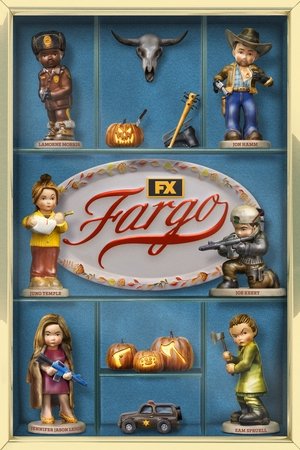
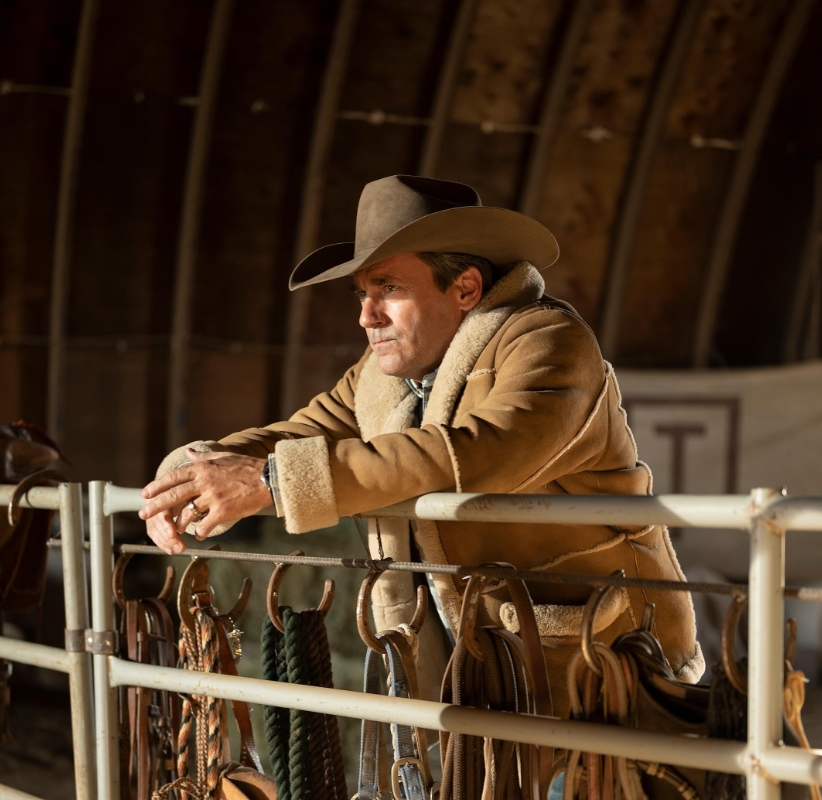
Role 3: Sheriff Roy Tillman — Fargo Season 5 (2023)
Watch scene — Sheriff Roy Tillman's menacing advance and cold stare create palpable, fiery tension, embodying pure intimidation.
The Story:
Sheriff Roy Tillman is the central antagonist of Fargo Season 5, a self-proclaimed "constitutional sheriff" of Stark County, North Dakota, who believes his elected authority places him above all other law — federal, judicial, and moral. Roy is a rancher, preacher, and patriarch who has been married three times, fathering a son (Gator) and twin daughters. His second wife Nadine escaped him years prior by reinventing herself as Dorothy Lyon and starting over in Minnesota. Roy cannot accept this. When she resurfaces through a coincidental incident, he launches a sustained, escalating campaign to recapture her — not because he needs her emotionally, but because she is HIS, and her departure is a direct assault on his identity and dominance. Throughout the season, Roy orchestrates kidnapping attempts using hired operatives, shoots attorney Danish Graves in the gut mid-sentence, kills FBI agent Witt Farr while fleeing capture, slits throats, and arms a militia. In one of the season's most iconic scenes, he walks down a hallway in slow motion set to a haunting cover of Britney Spears' "Toxic," his expression shifting from wounded to full volcanic rage. He ends the season incarcerated, defeated not by superior force but by the strategic maneuvering of Lorraine Lyon and ultimately by Dot herself in direct physical combat.
Key Quotes:
-
"I'm a sheriff of the American constitution. Bound by duty, blood, and tradition to enforce what is right and to prosecute what is wrong." — Pure Fire identity on display.
-
"Here's a question. If you're so smart... [shoots Danish Graves] ...then why are you so dead?" — Unmistakably Fire. Direct, immediate, lethal force.
-
He chokes the abusive husband half to death, then orders her to take him home, care for him, and be sexually available — Deeply unhealthy Fire expression: correction through force as a "service."
How much Fire:
- Identity is the core wound and weapon. When Dot left, it was an existential attack on his identity.
- Direct, escalating action under pressure. He shoots Danish Graves mid-conversation. He kills Witt Farr while fleeing. He physically punches a newscaster.
- The "Toxic" walk as Fire rage-building. Emotions converting directly into directed physical energy.
- Conquest as the organizing principle. His relationship to women, county, authority, and religion is fundamentally territorial.
- Protection and punishment as masculine duty. He is a broken, malignant protector whose METHOD is always active force.
How much Water:
- Hypocrisy as indirect self-presentation. Nipple piercings beneath conservative rancher image, hedonism beneath Bible-quoting.
- Religious framing as receptive justification. Uses the Bible to RECEIVE validation — absorbing divine authority as passive justification.
- The hot tub interrogation. Receiving FBI agents while lounging naked — using indifference as a power display.
Confidence: High
Career Pattern: All three roles align with Fire — direct action, identity protection, and sustained effort define Jon Hamm's on-screen behavioral signature across diverse characters and genres.
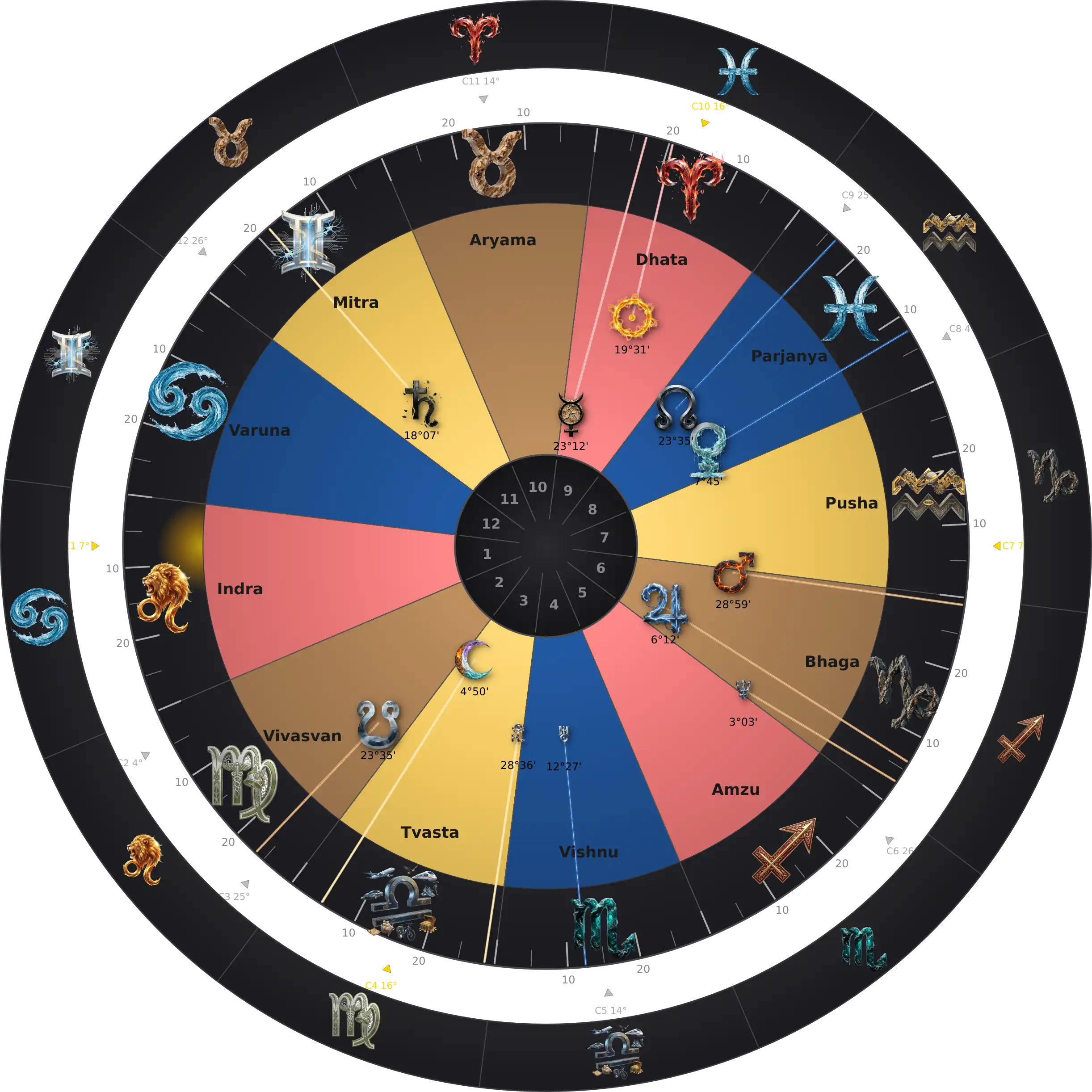
Jon Hamm — Aditya Zodiac Birth Chart Elements
Dominant Element (Aditya): Fire (31.2%)
Jon Hamm — Tropical Classic Birth Chart Elements
Dominant Element (Tropical): Water (31.2%)
Alignment Note: Agent judged 3/3 roles as Fire-dominant. Aditya birth chart shows Fire-dominant (31.2%). Tropical birth chart shows Water-dominant (31.2%). Agent results aligns with Aditya Zodiac, diverges with Tropical.
View Birth Chart — Jon Hamm
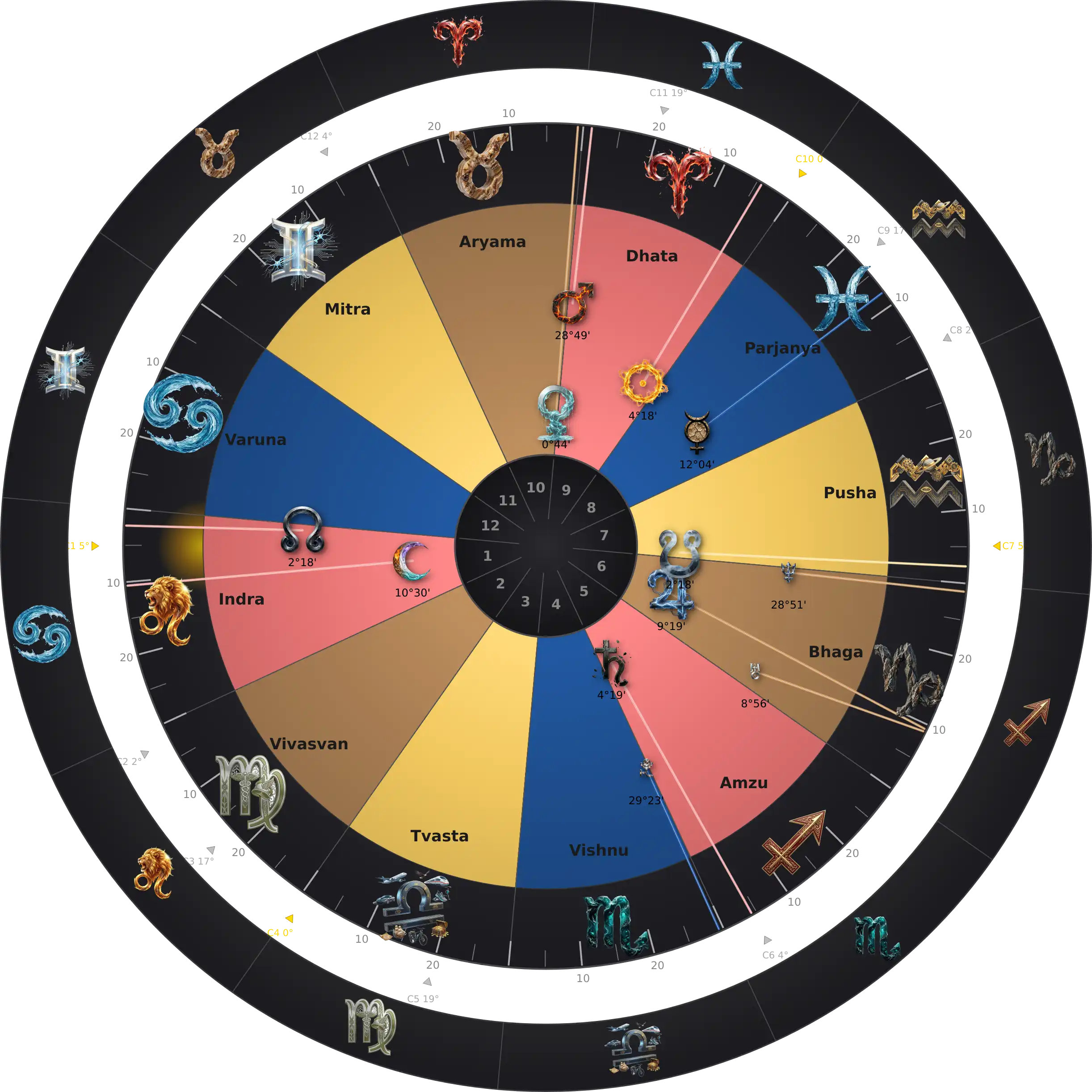
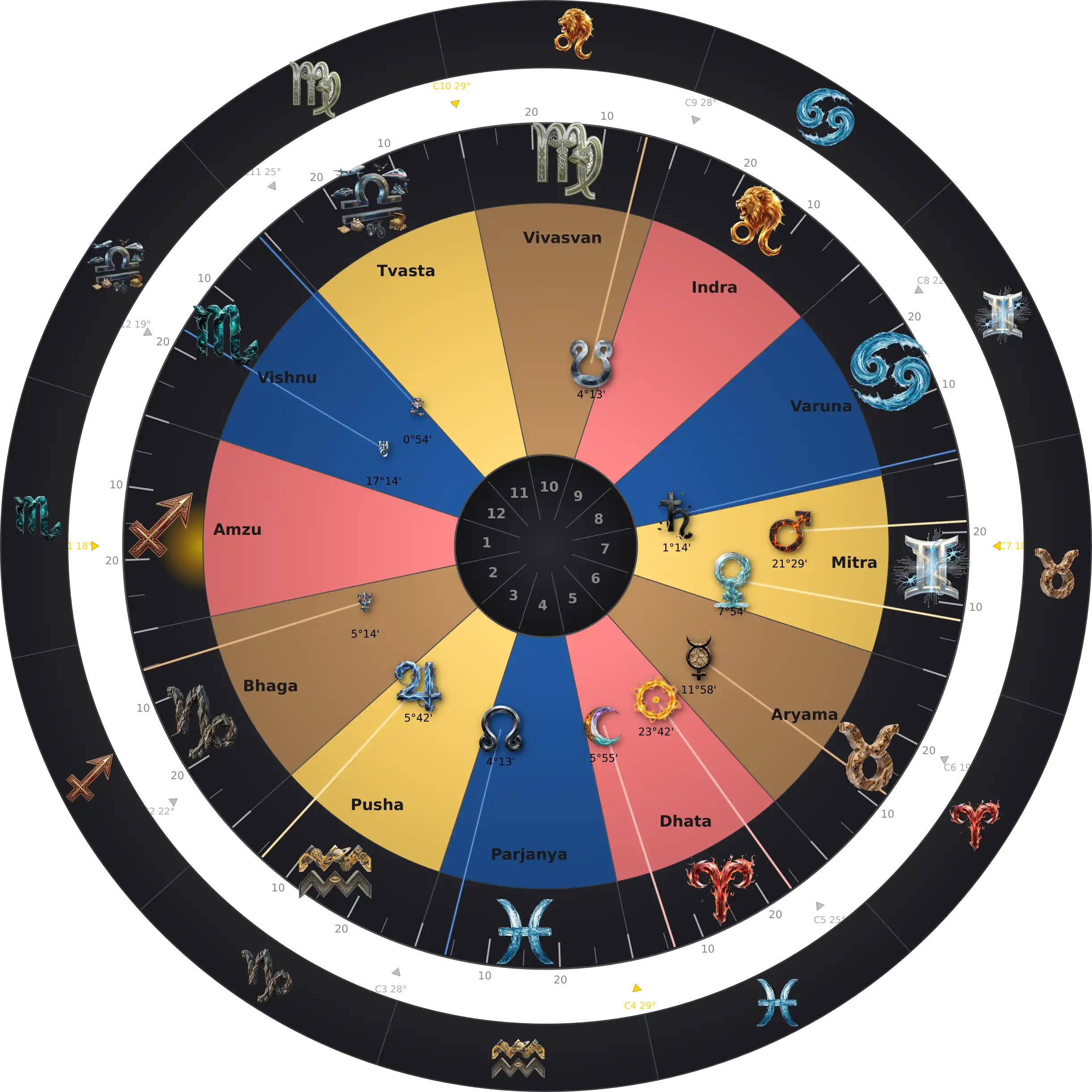
Outer wheel: Tropical Classic — Inner wheel: Aditya Zodiac
"Don Draper is not a Water character. He stole a dead soldier's identity and built himself from nothing through 20 years of relentless effort. Western astrology calls him Pisces = Water. This analysis gave him 78% Fire. Pisces might not be what we think it is." — From the Pisces blind analysis (117 characters, 39 actors)
Don Draper as a Fire character may not surprise most people. But the next entry goes deeper. Dean Winchester — a man who literally sells his soul to Hell to save his brother — scored 88% Fire. In the Aditya system, Fire is the element of the soul itself. Sacrifice for someone you love, giving yourself so another may live — that is Fire at its most essential. The Sun leads by giving, not by taking.
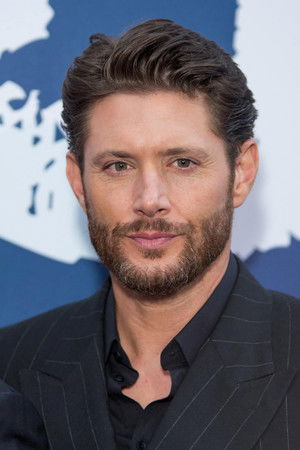
Jensen Ackles (Born March 1, 1978) — 3/3 F
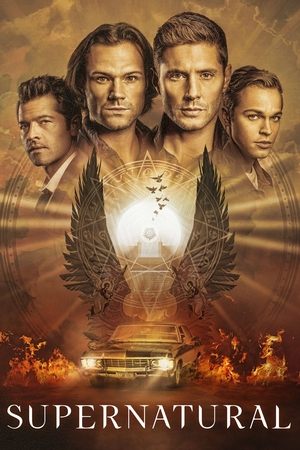
Role 1: Dean Winchester — Supernatural (2005-2020)
Watch scene — Demon Dean ruthlessly dominates Cole Trenton, showcasing fiery aggression and demonic power in a brutal alley fight.
The Story:
Dean Winchester is the older of two brothers raised by a hunter father, John Winchester, who conscripted both sons into a life of fighting supernatural threats after their mother Mary was killed by a demon when Dean was four years old. From that moment, Dean's entire existence is organized around two axes: protect Sam and kill what needs to be killed. He drives a 1967 Chevy Impala across America, hunts ghosts, demons, angels, and pagan gods, and fights face-to-face with escalating threats that include Lucifer himself. When Sam is stabbed and killed, Dean does not wait, grieve passively, or seek comfort — he goes directly to a crossroads demon, makes a deal, and sacrifices his own soul to drag Sam back from the dead, accepting a one-year countdown to Hell. He spends that year in Hell being tortured for 30 years (subjective time), then spends ten years torturing others — an act that literally breaks the first Seal of the Apocalypse. After being resurrected by the angel Castiel, he continues fighting across the Apocalypse storyline. He acquires the Mark of Cain, becomes a demon, is cured, and ultimately dies in a mundane accident — impaled by rebar during a fight — and accepts it as the ending a hunter always knew was coming.
Key Quotes:
-
"Driver picks the music, shotgun shuts his cakehole." — Establishes dominance and identity from the first episode. Fire asserting the self.
-
"You always have a choice. You can either roll over and die or you can keep fighting, no matter what." — Pure Fire. The answer to pain is always: keep acting.
-
"Once you touch that darkness, it never goes away." — Describes a concrete, grinding, permanent condition — not mood swings. Fire's consistent, enduring trauma.
How much Fire:
- Entire identity built on PROTECTION through direct effort. Sells his soul — a massive, irreversible ACT.
- Brotherhood as central relationship structure — forged through shared physical struggle, not soul-union.
- Whiskey and cheap beer — harsh alcohol, consumed in rough settings, as functional coping.
- Trauma responses consistently aggressive: Hell, Purgatory, Mark of Cain all make him MORE driven.
- Protection instinct is effortful, direct, and physical across all 15 seasons.
How much Water:
- Humor as deflection — a mildly indirect form of emotional processing.
- Food obsession — pie is his signature craving, a comfort-seeking pattern.
- Persistent fear of abandonment and disconnection — particularly in relation to Sam.
- Occasionally avoids confronting emotional truths, circling around painful subjects.
Confidence: High
Role 2: Soldier Boy — The Boys (2022-2026)
Watch scene — Soldier Boy unleashes raw power and defiance in a brutal clash against Homelander.
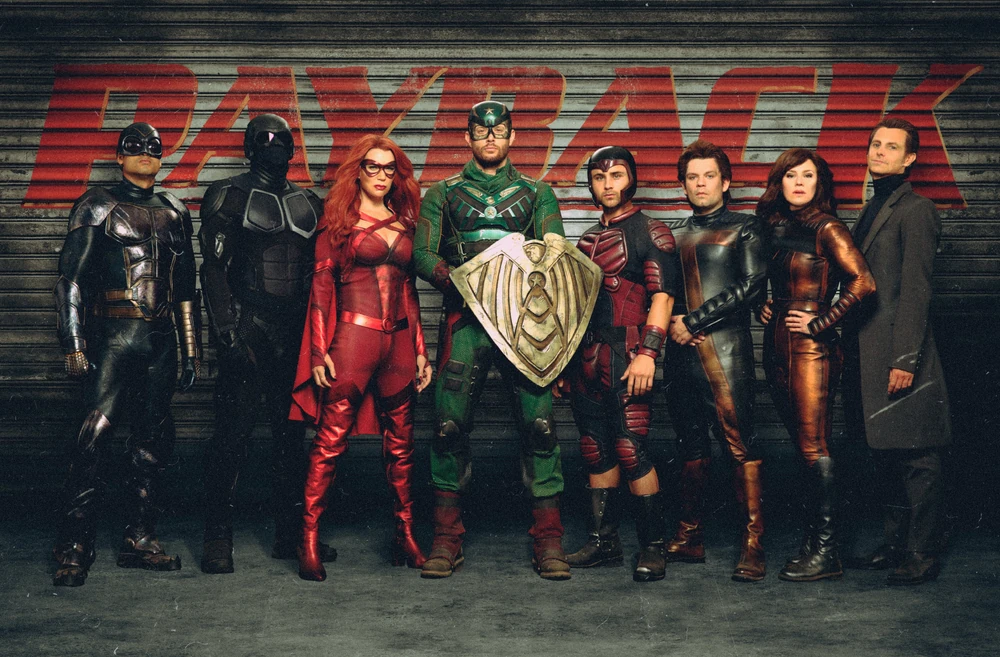

The Story:
Benjamin "Soldier Boy," born 1919 to an abusive industrialist father, volunteered as one of the first Compound V test subjects during WWII. He rose to become America's most celebrated superhero, leading the Payback team through the Cold War era. He beat, dominated, and intimidated his teammates for decades. In 1984, his team betrayed him to Soviet forces, and he spent forty years imprisoned and tortured. Freed in Season 3, Soldier Boy immediately returns to active confrontation: hunting down each Payback traitor one by one, killing Crimson Countess face-to-face, then allying with Butcher to destroy Homelander. When he learns Homelander is his biological son, he briefly entertains the idea of a father-son bond, then ultimately rejects Homelander as "weak" and chooses to fight him instead.
Key Quotes:
-
"Maybe if I'd raised you, I could've made you better. And not some weak, sniveling pussy, starved for attention." -- Measuring relationships by strength, not feeling. Fire.
-
"What father wouldn't want that for their son?" -- Talking about succession, not emotional legacy. Territorial, generational transfer of dominance.
-
He arrives at Crimson Countess's door, confronts her directly, gives her the chance to explain, then kills her. -- Zero indirection.
How much Fire:
- Direct physical confrontation as default response -- every revenge kill is face-to-face
- Identity protection as core wound -- his father told him he was a disappointment
- Superhuman strength and destructive power -- chest-blasts as pure kinetic force
- Brotherhood betrayal as the defining wound -- "my comrades abandoned me in battle"
- Consistent, grinding trauma response and tireless drive
How much Water:
- Brief relational reach toward Homelander -- the phone call acknowledging a son
- Substance abuse with possible comfort-seeking dimension
Confidence: High
Role 3: Jason Todd/Red Hood — Batman: Under the Red Hood (2010)
Watch scene — Red Hood's rage and pain explode as he finally confronts Batman, demanding justice for his death.
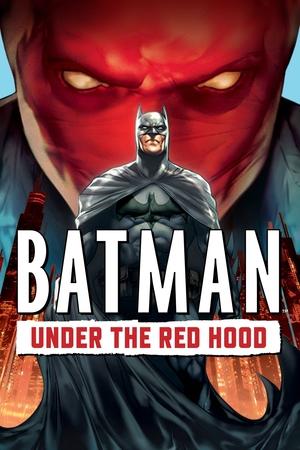
The Story:
Jason Todd was Robin until the Joker beat him to death with a crowbar and detonated a bomb. Five years later, Jason returns as the Red Hood, having spent the intervening time training, building intelligence networks, and engineering a systematic hostile takeover of Gotham's criminal underworld. He assembles the city's top drug lieutenants, presents their murdered bosses' severed heads, and makes an unambiguous proposition. He then runs a deliberate campaign to destroy Black Mask's operation. When he finally confronts Batman, his grievance is precise: Batman still lets the Joker live. In the climactic scene, Jason forces an ultimatum at gunpoint: kill the Joker or kill Jason. Batman refuses both. Jason detonates explosives. Every moment is driven by direct, physical, strategic effort.
Key Quotes:
-
"I'm controlling it. You wanna rule them by fear, but what do you do with the ones who aren't afraid? I'm doing what you won't." -- Tactical strategic reasoning through direct action.
-
"Bruce, I forgive you for not saving me. But why, why on God's earth, is he still alive?" -- The pain is "you didn't fight hard enough for me." Brotherhood betrayal, not lack of love.
-
"It's him, or me! You have to decide!" -- Direct, open confrontation at point-blank range.
How much Fire:
- Systematic criminal conquest through direct force -- severed heads, territorial takeover
- Combat skill built through years of intensive training -- effort-based, not effortless
- The wound is "you didn't act to protect me" -- concrete, survival-based
- Climactic ultimatum is fully open and direct
- Consistent, grinding drive across the entire film -- relentless forward pressure
How much Water:
- The emotional wound has a soft underside -- "I thought I'd be the last person you'd ever let him hurt"
- The Joker identity adoption -- poetic, theatrical indirection in taking his killer's alias
- Forgiveness rhetoric as verbal pivot -- briefly resembles orbiting a subject
Confidence: High
Career Pattern: All three roles align with Fire — direct action, identity protection, and sustained effort define Jensen Ackles's on-screen behavioral signature across diverse characters and genres.
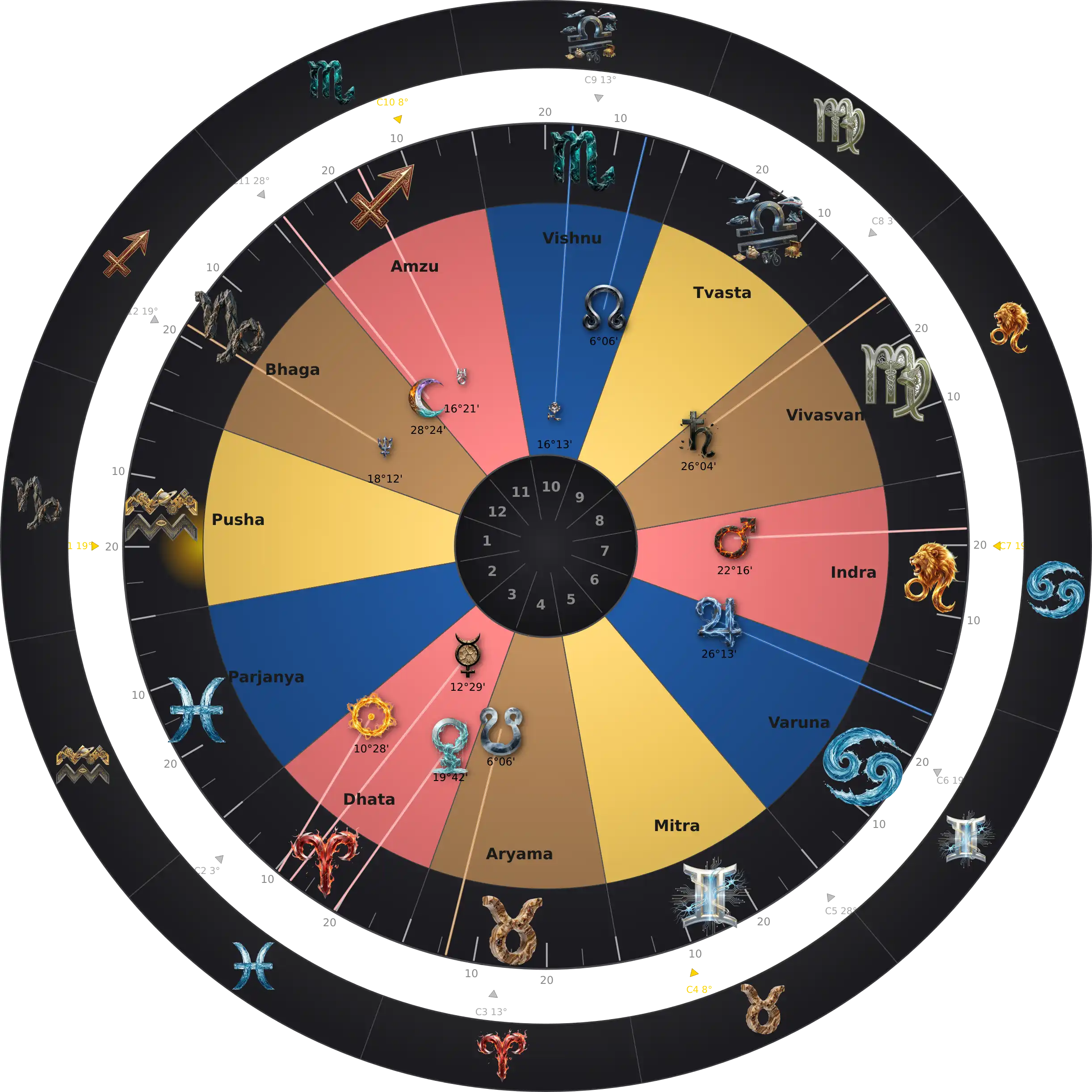
Jensen Ackles — Aditya Zodiac Birth Chart Elements
Dominant Element (Aditya): Fire (75.0%)
Jensen Ackles — Tropical Classic Birth Chart Elements
Dominant Element (Tropical): Water (75.0%)
Alignment Note: Agent judged 3/3 roles as Fire-dominant. Aditya birth chart shows Fire-dominant (75.0%). Tropical birth chart shows Water-dominant (75.0%). Agent results aligns with Aditya Zodiac, diverges with Tropical.
View Birth Chart — Jensen Ackles
Outer wheel: Tropical Classic — Inner wheel: Aditya Zodiac
Emily Blunt (Born February 23, 1983) — 3/3 F

Role 1: Lady Cornelia Locke — The English (2022)
Watch scene — A tense shootout unfolds as Cornelia and Eli escape, culminating in a surprising sniper takedown.
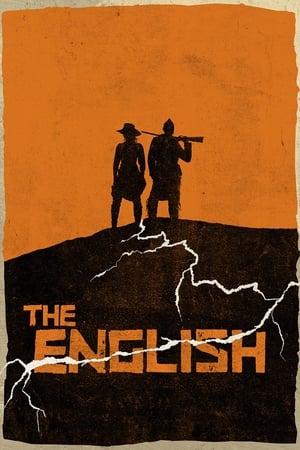
The Story:
Lady Cornelia Locke arrives in the American West of 1890 carrying an aristocratic title and an open wound. Her son — born of rape, infected with syphilis by his father, and dead at fourteen with a disfigured face — is her entire reason for being on the frontier. She has crossed an ocean and a continent to hunt down David Melmont, the man who destroyed her bloodline and exiled her from polite society through shame and disease.
From the first episode she is established as a woman in motion. She is immediately placed in physical danger, rescued by Eli Whipp, and then refuses to stop. Rather than accept Eli's limited escort, she negotiates, persuades, and insists on continuing the full journey. She acquires and learns to use firearms. She survives ambushes, frontier violence, and the brutal social machinery of the 1890s American West. When she and Eli encounter the young man White Moon, she acts to protect him — putting herself between him and danger. Throughout the series she makes active tactical decisions: when to deploy her aristocratic social position as a weapon, when to reach for a pistol, when to offer money, and when to use her foreignness as disarming camouflage.
The climactic confrontation with Melmont reveals the one thing she cannot do: she raises the gun and cannot fire. The pull of action reaches its limit at the threshold of execution, and she steps back. It is Martha Myers and ultimately Eli who finish the deed. Thirteen years later, Cornelia is dying from late-stage syphilis, her face hidden — but she is still moving, attending a show where White Moon performs. She never stops.
Key Quotes:
-
"I'm traveling without fear because I'm dead already." -- This is not passive resignation — it is radical liberation that removes all brakes on action. Because death is certain, every step forward is an act of pure Fire aggression.
-
"Without you, I'd have been killed. Right at the start. That's how we met. That's why we met. It was in the stars. And we believed in the stars. You and I." -- The "stars" reference gestures toward Water fatalism. But the framing is about survival through an inherently action-driven partnership.
-
"Sometimes you have to see a thing just to let it go." -- Captures Cornelia's entire arc — insistence on direct confrontation even when the purpose is not conquest but closure. Fire: closure through confrontation, not through withdrawal.
How much Fire:
- The core mission is sustained, tireless action across an entire continent — she goes herself rather than sending proxies.
- She acquires combat skills through effort — learns firearms, adapts to survive in a war zone with no prior experience.
- She protects actively and physically — inserts herself between threats and those she cares about.
- Her trauma response is consistent, grinding, and forward-driving — pain as relentless fuel, not oscillating waves.
- She uses strategy and social position as tactical tools, not as her identity.
How much Water:
- She cannot pull the trigger on Melmont — at the critical point, her will to act collapses.
- She frames the journey in terms of fate and cosmic connection — "It was in the stars."
- The relationship with Eli has a soul-deep connective quality beyond brotherhood.
- Her illness creates psychological distance rather than a fighting stance — she circles around secrets.
Confidence: High
Role 2: Emily Charlton — The Devil Wears Prada (2006)
Watch scene — Emily Charlton masterfully orchestrates chaos, demonstrating unwavering control and sharp efficiency amidst Miranda Priestly's arrival.

The Story:
Emily Charlton is Miranda Priestly's senior first assistant at Runway magazine — a position she has clawed her way into through relentless effort, discipline, and sacrifice. She is constantly in motion: Emily Blunt herself developed the habit of always running something in the background because she believed Emily would never stop working. Emily starves herself before Paris each year, subsisting on a single cube of cheese "right before I feel I'm going to faint." She polices Andy with direct authority ("When I am not here, you are chained to that desk!"), citing brutal cautionary tales of former assistants who lost everything. Her dream is Paris Fashion Week — the culmination of years of grinding sacrifice. Then she is hit by a taxi while rushing back to the office, breaks her leg, and Miranda replaces her with Andy. Emily's response is not depression, withdrawal, or weeping: it is rage and bitter sarcasm. She fires back at Andy with sharp verbal attacks, resents her openly, and eventually accepts Andy's peace offering of designer clothes with barely concealed fury. Emily's entire arc is built on direct action, effort-based suffering, and a fiercely protected professional identity that cannot tolerate being overtaken.
Key Quotes:
-
"I'm one stomach flu away from my goal weight." -- Fire's self-punishment-as-fuel pattern. She is disciplining her body like a soldier. Consistent, grinding, effort-based self-modification.
-
"A million girls would kill for this job." -- Direct confrontation and assertion of identity-through-position. No manipulation — she tells Andy plainly where they stand.
-
"When I am not here, Andrea, you are chained to that desk!" -- Direct authority, direct threat, direct command — backed by a concrete cautionary story about professional destruction.
How much Fire:
- Tireless action and constant movement — always doing, managing, organizing, running.
- Direct confrontation and open threats — states consequences plainly, makes resentment known without hiding it.
- Effort-based sacrifice as identity — starving herself, accepting unglamorous tasks as dues to be paid.
- Rage response to being replaced (not withdrawal) — becomes aggressively resentful and confrontational.
- Identity protection as core driver — entire self-concept built around her position as Miranda's first assistant.
- Brotherhood wound turned outward — "I earned Paris." Fury at effort not being rewarded.
How much Water:
- Minor indirect sabotage — condescension and dismissiveness as subtle workplace undermining (secondary to direct confrontation).
- Status as emotional need — devotion to Miranda has an almost worshipful, belonging-seeking quality.
- Hunger motif (barely) — food deprivation could suggest comfort-seeking but dominant frame is disciplined effort.
Confidence: High
Role 3: Rita Vrataski — Edge of Tomorrow (2014)
Watch scene — Rita Vrataski relentlessly trains Major Cage in a brutal combat simulation, showcasing her fierce willpower and combat prowess.
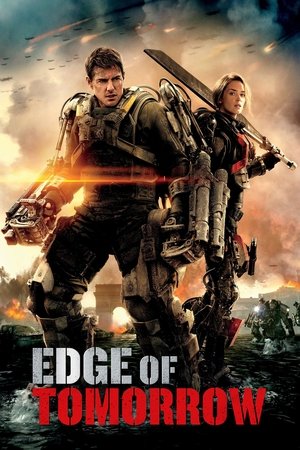
The Story:
Rita Vrataski enters the film already a legend — the "Angel of Verdun," the only soldier in human history to lead a successful offensive against the Mimics. She earned that title through the same time-loop mechanism Cage later acquires: she looped the Battle of Verdun hundreds of times, reliving death after death, until she survived it. Alone. No mentor. No partner. Pure grinding repetition through effort until victory.
When she encounters Cage, she immediately identifies what he is — not a person yet, but a tool. Her first substantive line: "Find me when you wake up." She steals his battery pack and leaves him to die without hesitation when tactically necessary. She kills him mid-loop to reset attempts — repeatedly, without visible anguish. She subjects him to grueling physical training.
Her weapon of choice is a massive helicopter rotor blade — not a firearm, not a distance weapon, but something that requires you to close the gap, swing hard, commit physically. Her emotional distance is not passivity. It is armor forged through witnessing her boyfriend die over 300 times at Verdun without being able to stop it. Her response to that wound was not withdrawal into feeling — it was intensification of mission.
When cornered by an Alpha in the final act, she kisses Cage and says "I wish I had more time to get to know you" — a moment of feeling contained within a farewell that accepts imminent death as the operational cost.
Key Quotes:
-
"Find me when you wake up." -- Direct, imperative, mission-framing. Pure action instruction. The entire Fire operating mode.
-
"Of course not. You're a weapon." -- Said when Cage asks if she thinks of him as a friend. Identity = function = action.
-
"You get injured in the field, you better make sure you die." -- Her "only rule." Cold, tactical, grounded in physical survival calculation. Fire trauma turned into operational doctrine.
How much Fire:
- Tireless action through repetition: looped Verdun alone, hundreds of times, until victory.
- Direct physical combat: fights with a massive close-range blade weapon, closes distance with enemies.
- Training through imposed suffering: breaks Cage through repeated physical damage and forced death.
- Kills Cage operationally without emotional paralysis: tactical decisions executed without hesitation.
- Identity as warrior: "You're a weapon" is how she sees herself. Her wound made her MORE driven.
- Brotherhood bond with Cage: forged through shared survival, not soul-deep connection seeking.
How much Water:
- Emotional guardedness as symptom of loss: Water-adjacent behavior, but response is more work and harder training.
- Final farewell moment: "I wish I had more time to get to know you" — the only genuine Water flicker.
Confidence: High
Career Pattern: All three roles align with Fire — direct action, identity protection, and sustained effort define Emily Blunt's on-screen behavioral signature across diverse characters and genres.
Emily Blunt — Aditya Zodiac Birth Chart Elements
Dominant Element (Aditya): Fire (62.5%)
Emily Blunt — Tropical Classic Birth Chart Elements
Dominant Element (Tropical): Water (62.5%)
Alignment Note: Agent judged 3/3 roles as Fire-dominant. Aditya birth chart shows Fire-dominant (62.5%). Tropical birth chart shows Water-dominant (62.5%). Agent results aligns with Aditya Zodiac, diverges with Tropical.
View Birth Chart — Emily Blunt
Outer wheel: Tropical Classic — Inner wheel: Aditya Zodiac
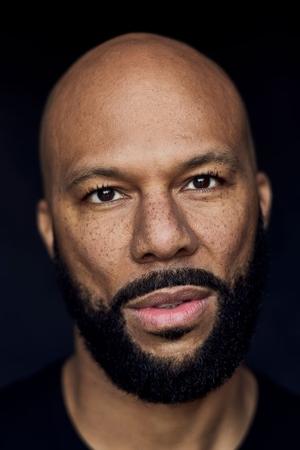
Common (Born March 13, 1972) — 3/3 F
Role 1: Elam Ferguson — Hell on Wheels (2011-2016)
Watch scene — Elam Ferguson's intense, knife-wielding confrontation with Cullen Bohannon embodies raw fire energy and defiance.
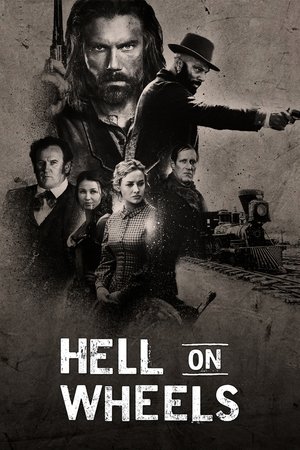
The Story:
Elam Ferguson enters Hell on Wheels as a recently freed slave and immediately begins carving out his identity through relentless direct action. He demands recognition as a walking boss, insists on equal pay, and fights Cullen Bohannon in a bare-knuckle bout to assert his standing — not through manipulation or indirection, but through physical confrontation and declared ambition. He builds a house with his own hands. He pursues leadership roles and earns the position of Chief of Railroad Police through demonstrated competence and force of will.
His relationship with Eva is driven by conquest and protection: he wants her, he claims her, he is shattered when she gives away their daughter Rose without his consent. His response is not passive grief — he travels to New York to find his child. When Psalms, his half-brother, is about to be hanged, Elam sacrifices himself to save him. When Bohannon goes missing, Elam leads an expedition to find him.
After a bear attack leaves him brain-damaged, his collapse is not emotional dissolution but the catastrophic destruction of the self that drove him — he becomes a "walking time bomb," still physically violent but stripped of the identity that gave his violence meaning. Bohannon ends his life in a mercy killing, then digs the grave alone.
Key Quotes:
-
"I'm a free man." — Repeated assertion. Classic Fire: identity protection through declaration. Not asking for freedom — claiming it.
-
"Friends always." — Said to Bohannon after years of competing, fighting, and saving each other. Brotherhood forged through shared physical struggle and mutual protection.
-
(To Gregory Toole after a standoff): Tactical feint executed with lethal precision — Fire using strategic indirection as a tool.
How much Fire:
- Direct physical confrontation as the primary mode of conflict resolution.
- Identity protection as the deepest drive — insists on recognition at every level.
- Brotherhood as the primary relational bond — the Elam-Bohannon relationship.
- Protection through tireless action: builds a house, travels to New York, leads rescue expeditions.
- Trauma produces aggression and identity collapse, not mood swings.
How much Water:
- Attachment to Eva carries emotional desperation and fear of connection.
- His love for Rose (his daughter) is a feeling-based motivation — pain of disconnection.
- Brain-damaged regression temporarily resembles receptive fragility.
Confidence: High
Role 2: James Bevel — Selma (2014)
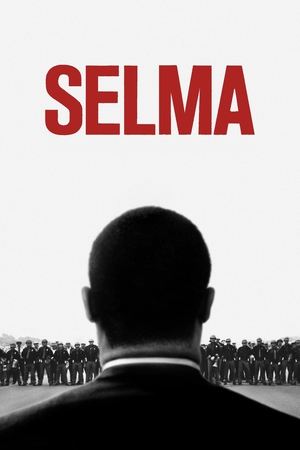
The Story:
James Bevel, as portrayed by Common in Ava DuVernay's Selma (2014), is a man defined by sustained, strategic action in service of a collective cause. He is not merely present at the margins of events — he is one of the primary architects of the Selma-to-Montgomery voting rights marches. In the film, Bevel functions as a field strategist, advising Martin Luther King Jr. to move forward with the march specifically in response to the murder of Jimmie Lee Jackson. He is the one who calls the community to act, who converts grief into coordinated forward motion.
The character's entire behavioral posture is grounded in effort-sustained engagement. He organizes, he persuades, he shows up in the most difficult moments — including accompanying King to the morgue to confront the Cager Lee family's grief directly after Jimmie Lee Jackson's death. He does not circle around that pain or offer only emotional presence. He witnesses it, processes it, and converts it into a strategic imperative: we march. This is the hallmark of Fire — action as the vehicle for conviction.
Bevel operates within a brotherhood structure: the SCLC inner circle is a fraternal, strategically bonded collective that supports one another through shared effort. According to both the film's representation and Common's own interviews about the role, Bevel viewed the movement as a calling — a mission demanding total participation. His nonviolence is not passivity. It is a disciplined, effort-based, tactically governed method: trained, prepared, and forcefully maintained under pressure.
Key Quotes:
-
"We march." — Bevel's response after Jimmie Lee Jackson's murder, transforming grief into direct collective action. Pure Fire — converting pain into forward momentum.
-
Common (interview): Bevel was "one of the real-life superheroes of Selma" — a strategist who made King's campaign executable. The language of superhero-level action, strategy, and execution is Fire language.
-
Historical record: Bevel initiated the 1963 Birmingham Children's Crusade, the 1965 Selma movement, and the 1966 Chicago housing movement. Three large-scale strategic mobilizations — Fire's consistency and tireless drive.
How much Fire:
- Converts grief into direct action: After Jackson's murder, proposes the march rather than staying in mourning.
- Strategic architect, not merely supporter: initiator and planner of the marches.
- Brotherhood bonds within SCLC: forged through shared struggle and collective mission.
- Disciplined nonviolence as effort-based training: intensive preparation to withstand violence.
- Sustained engagement across years and campaigns: tireless action across multiple cities.
How much Water:
- Faith-based receptivity: understood his role as divinely called and spiritually received.
- Nonviolence as indirection: absorbing violence and redirecting its moral weight.
- Supporting role: amplifying King's leadership rather than dominating the frame.
Confidence: Medium
Role 3: Cassian — John Wick: Chapter 2 (2017)
Watch scene — Common's character unleashes relentless aggression in a brutal subway knife fight, embodying the untamed power of fire.
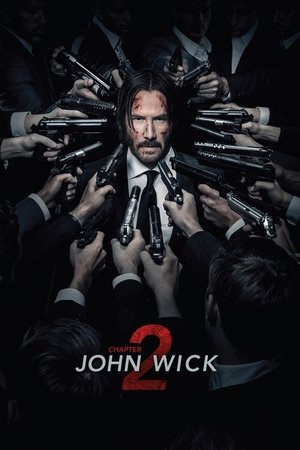
The Story:
Cassian is the chief bodyguard and head of security for Gianna D'Antonio, leader of the Camorra syndicate. He is introduced accompanying Gianna to her coronation in the catacombs of Rome — a professional operative at the peak of his role, disciplined, watchful, and physically imposing. When John Wick infiltrates the event, Cassian is momentarily separated by duty. He returns to find Gianna dead. His reaction is immediate and visceral: genuine distress, then action.
What follows is one of the film's most extraordinary sequences: Cassian chases John through Rome in a car chase, then engages him in close-quarters combat, crashing through a plate-glass window into the Rome Continental. The Continental's rules halt the killing, and the two men sit together at the bar — Cassian pays for the drink, saying "call it a professional courtesy." He tells John he understands the Marker forced the act, but that he cannot let it go unanswered. He promises a clean, quick death.
In New York their paths cross again. The final confrontation is in the subway — a grinding, exhausting hand-to-hand melee. John ends it by driving a knife into Cassian's aorta and delivering the line back: "Consider this a professional courtesy." Cassian, in pain, produces a small wry smile. He accepts it. Every decision Cassian makes is through direct physical confrontation, tireless pursuit, and disciplined professional obligation.
Key Quotes:
-
"An eye for an eye, John. You know how it goes." -- Open, direct declaration of intent. No ambiguity. No indirection. The hallmark of Fire.
-
"I'm going to kill you." / "I know." -- Makes his threat openly, calmly, face to face. Does not scheme in shadows.
-
"Call it a professional courtesy." -- Cassian's code includes respect for competence and the rules of their world. Effort-based, honor-based.
How much Fire:
- Entire arc defined by direct action: bodyguard work, car chase, physical combat across two cities.
- Trained extensively in multiple martial arts: effort-based skill, competence built through years of relentless discipline.
- Matches John Wick in direct hand-to-hand combat: holds his own against the film's apex predator.
- Professional honor code: brotherhood code of a warrior, not soul-connection love.
- Pursuit is relentless and consistent: hunts directly, across cities, refusing to stop.
How much Water:
- Genuine emotional depth in grief over Gianna — attachment that went beyond professional.
- The wry smile at the subway's poetic symmetry — a flash of aesthetic appreciation.
- Capacity for understanding beyond pure action — comprehends the world's meaning, not just mechanics.
Confidence: High
Career Pattern: All three roles align with Fire — direct action, identity protection, and sustained effort define Common's on-screen behavioral signature across diverse characters and genres.
Common — Aditya Zodiac Birth Chart Elements
Dominant Element (Aditya): Fire (37.5%)
Common — Tropical Classic Birth Chart Elements
Dominant Element (Tropical): Water (37.5%)
Alignment Note: Agent judged 3/3 roles as Fire-dominant. Aditya birth chart shows Fire-dominant (37.5%). Tropical birth chart shows Water-dominant (37.5%). Agent results aligns with Aditya Zodiac, diverges with Tropical.
View Birth Chart — Common
Outer wheel: Tropical Classic — Inner wheel: Aditya Zodiac
Javier Bardem (Born March 1, 1969) — 2/3 F
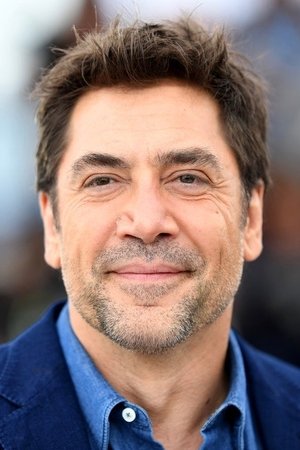
Role 1: José Menéndez — Monsters (2024)
Watch scene (0:49) — José Menéndez, with fiery intensity, confronts his son Erik, asserting his dominance and control.
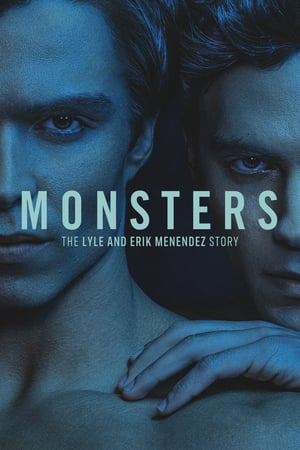
The Story:
José Menéndez as portrayed by Javier Bardem in Ryan Murphy's 2024 Netflix series is one of the most concentrated expressions of Fire in its most corrupted, pathological form. José is a Cuban immigrant who fled the revolution with nothing and clawed his way to the top of the American entertainment industry — becoming a vice president at RCA Records through relentless drive, ambition, and work. That origin story is pure Fire: sustained effort over years, identity forged through conquest of adversity, a man who defines himself entirely by what he achieves and what he dominates.
The character's controlling behavior toward his sons is framed not as softness or emotional need (which would suggest Water), but as a direct, crushing force. He exploits Erik's tennis talent by grinding him under pressure — demanding peak performance as a measure of dominance. He threatens his sons' lives when Lyle confronts him. When Kitty attempts to stand against him, he gaslights and overrides her — not through absence or silence, but through active verbal and psychological FORCE applied directly. Bardem described the character as someone who "really thinks and feels that he's absolutely right all the time, and that has to be obeyed by others." This is quintessential unhealthy Fire: an entitled identity that cannot share power, cannot negotiate, and cannot bend.
The significant Water component comes from his use of manipulation — not the direct frontal attack of raw Fire, but a calculated exploitation of others' weak points. He gaslights Kitty, he turns situations around on those who confront him, and the show depicts him working through indirection at times. However, these manipulative tactics serve his core drive: the preservation and expansion of his control, his identity, his conquest — all Fire goals executed occasionally through Water methods. The distinction the profiles make is crucial here: the METHOD may borrow from Water, but the CORE DRIVE is Fire.
His relationship to his own Cuban trauma — the loss, the exile, the humiliation of arriving with nothing — is expressed through the Fire template: he responded not by grieving or seeking comfort, but by WORKING HARDER, by conquering the American market, by making himself untouchable through achievement.
Key Quotes:
-
"I think that I didn't hit you hard enough. So as a father, that is my fault. And I'm sorry." Profile commentary: This quote is a masterpiece of distorted Fire logic. The "apology" is not emotional repair (Water) — it is a reassertion of FORCE as the correct tool. His regret is not that he harmed his son, but that the force was insufficient. He frames parenting as a physical effort problem requiring more action. This is unhealthy Fire incapable of self-examination.
-
"This commanding man that really thinks and feels that he's absolutely right all the time, and that has to be obeyed by others." (Bardem's description) Profile commentary: The word "obeyed" is the key. This is conquest-based authority — the Fire need to TAKE and HOLD territory, here applied to family as a dominion. No healthy Water energy produces the demand to be obeyed; Water seeks connection and resonance, not obedience.
-
(On exploitation of Erik's tennis): His grinding of Erik under pressure to excel. Profile commentary: Effort-based extraction from others is Fire behavior — he does not nurture Erik's talent with warmth and presence (Water). He DRIVES it, squeezes it, weaponizes it for ambition. This is effort-based caregiving in its most pathological inversion: effort-based exploitation.
How much Fire:
- Relentless ambition as identity: José's entire self is built on conquest of American success from zero. The Cuban immigrant who arrived with nothing and made himself powerful through decades of relentless work is the Fire origin story compressed into one biography. His identity IS his achievement — the classic Fire equation.
- Direct domination of household: He threatens, controls, and commands through force and authority, not through emotional manipulation or indirect schemes. When confronted (by Lyle, by Kitty), he escalates force rather than retreating or deflecting.
- Protection-as-conquest: The "tiger father" pressure on his sons' tennis and careers reads as Fire's pathological expression of the drive to create and control outcomes through effort — he cannot simply love without DOING something dominating.
- Consistent, grinding behavioral pattern: Bardem describes José as sometimes "over the top and loud" but fundamentally consistent in his demand for obedience. This consistency — the steady pressure that never switches off — is Fire's behavioral signature. There are no Water mood-wave fluctuations; José is constant.
- Trauma processed through action and dominance: His response to Cuban exile was to WORK, to CONQUER, to become unbeatable. He did not seek comfort, nurturing, or connection to fill the wound. He built a fortress of success instead — the Fire wound response.
How much Water:
- Indirect manipulation and gaslighting: His ability to turn a direct confrontation around on the confronter — making Kitty doubt herself, making Lyle's challenge become a threat against Lyle — shows Water's shadow skill: working from the shadows, striking at weak points indirectly.
- The predatory dimension: The abuse allegations, if accepted as the show's framing, involve an indirect violation — one that operates in secrecy, in hidden domestic space, away from public view. Hidden violation is Water's shadow behavior, not Fire's open fight.
- Shame and inner awkwardness alongside the commanding exterior: Bardem notes that José is sometimes portrayed as "very inner awkward or shame," particularly through different perspectives in the narrative. This internal register — the hidden shame versus the commanding public face — has a Water undercurrent.
- Using others as instruments: His treatment of Kitty, his sons, and associates instrumentally — profit-oriented, manipulative of people around him as tools for his ambition — blends Water's indirect relational tactics into the Fire dominance structure.
Confidence: High
Role 2: Anton Chigurh — No Country for Old Men (2007)
Watch scene — Anton Chigurh's chilling coin toss at a gas station asserts his terrifying, arbitrary authority over a terrified clerk.
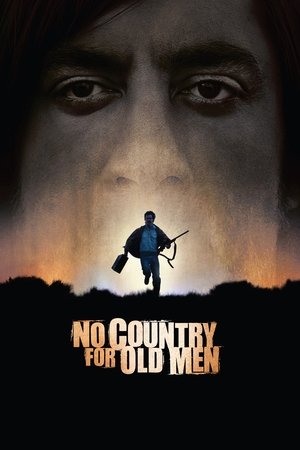
The Story:
Anton Chigurh is one of cinema's most analyzed antagonists — a professional hitman in the Coen Brothers' 2007 adaptation of Cormac McCarthy's novel who relentlessly pursues Llewelyn Moss across West Texas after Moss steals a briefcase of drug money. What makes Chigurh distinctive is not his violence alone, but the directness, consistency, and active ferocity with which he pursues every objective.
At every turn, Chigurh acts. He does not wait, manipulate from the shadows, or work through intermediaries. He personally strangles a deputy in the opening scene using the chain of his handcuffs — pure physical effort and direct force. He personally tracks Moss through motel registers, transponder signals, and methodical police-style investigation. He personally performs surgery on his own wound after being shot, stealing antibiotics, stitching himself up, and returning immediately to the hunt. He personally kills Carson Wells when Wells tries to negotiate. He personally fulfills his threat against Carla Jean Moss even after the briefcase has already been recovered — because he said he would and his word, as he states, "is not dead." Every act is direct, effortful, self-reliant, and CONSISTENT.
The philosophical coin-toss element — which might superficially suggest passivity, indirection, or receptivity (Water territory) — is actually the opposite on closer examination. Chigurh uses the coin toss as a STATEMENT of his worldview, an intellectual framework he deploys with active authority. He does not wait for fate to come to him. He IS the instrument of fate that arrives at others' doors. His identity is built around what he DOES, what he IS, and the force he EXERTS on the world. This is foundationally Fire: a character defined entirely by action, identity, and direct confrontation.
Key Quotes:
-
"What's the most you ever lost on a coin toss?" — Chigurh does not charm this man or manipulate him emotionally. He seizes control of the entire interaction through sheer presence and force of will, then structures a test the man never agreed to. This is direct DOMINANCE, not indirection. Fire.
-
"I have no enemies. I don't permit such a thing." — This is the definition of Fire identity-protection: he does not allow threats to his operational self to exist. He acts pre-emptively to eliminate anyone who could become a problem. Active, direct, identity-grounded.
-
"Well, I got here the same way the coin did." — Chigurh presents himself as a force equivalent to fate, unstoppable and already in motion. Yet he drove there. He knocked on the door. He made a promise and drove hundreds of miles to fulfill it. The metaphysics may invoke fate, but the BEHAVIOR is pure effortful, purposeful action. Fire enacted through a Water-sounding philosophical frame.
How much Fire:
- Opening scene — strangling the deputy with his own hands, in chains, through sustained physical effort. Direct physical force applied personally, close-range, body to body.
- Relentless active pursuit of Moss: actively tracks via transponder, investigates motel records, drives from location to location, and personally engages in running gun battles. Shot in the process and continues anyway.
- Self-surgery scene: shot in the leg, drives to drugstore, robs it for antibiotics, treats his own wound. Effort-based self-sufficiency and identity-preservation under pain.
- Killing Carson Wells directly in the face when Wells attempts to negotiate. Direct, frontal, no hesitation.
- Fulfilling the promise to kill Carla Jean AFTER the job is done, purely to preserve the self-concept of being someone whose word cannot be broken.
- Car accident aftermath: broken arm, deep lacerations — bribes two boys for a tourniquet, binds his own wounds, walks away. Consistent self-sufficiency.
- The cattle gun requires close-range application — the most viscerally direct killing instrument imaginable.
How much Water:
- The coin toss RITUAL: the framing of life-and-death as a matter of chance gestures toward receptivity rather than pure direct agency.
- Philosophical speeches before killing: circling behavior, philosophizing, making victims confront abstract ideas — somewhat indirection-adjacent.
- The "holding" after the deputy kill: after strangling the deputy, Chigurh lay "breathing quietly, holding him" — strange, almost contemplative intimacy.
- Self-contained mystery: no personal history revealed, no origin, no allies, no human attachments. This self-contained opacity suggests a floating, unanchored quality.
Confidence: High
Role 3: Raoul Silva — Skyfall (2012)
Watch scene — Raoul Silva's chilling 'rats on an island' monologue masterfully reveals his manipulative nature and deep-seated emotional scars.

The Story:
Raoul Silva (born Tiago Rodriguez) is a former MI6 operative who was abandoned by M — his superior, whom he explicitly calls "Mother" — to five months of Chinese torture after he exceeded his operational mandate by hacking Chinese intelligence files. He bit into a cyanide capsule rather than break. The capsule failed, leaving him physically disfigured. Fifteen years later, his entire existence is organized around one thing: making M feel what abandonment feels like.
The defining behavioral signature is not rage, not direct action, and not conquest. Silva does not storm MI6's headquarters demanding a fight. He executes a layered, years-in-advance indirection campaign: he leaks NATO agent identities online to publicly humiliate M before committees, he bombs the MI6 building using cyber means, he deliberately allows himself to be captured so his laptop's malware will infect MI6's network from the inside, he engineers his own jailbreak through electronic door overrides, and he tries to orchestrate M's killing at a parliamentary hearing — surrounded by cameras and witnesses — as a piece of theater. He wants her to be seen to fail, not just to die.
At the chapel at Skyfall, when he finally reaches M, he begs her to kill them both. He holds a gun to her head but cannot fire independently. He needs her to choose death together. That is not the behavior of a direct fighter. It is the behavior of someone whose entire pain is anchored in a broken connection he cannot release — even at the final moment, he is seeking reciprocal feeling, not conquest.
Key Quotes:
-
"They start eating each other until there are only two left... Now, they only eat rat. You have changed their nature." — Pure indirect communication. Silva encodes his wound in an extended metaphor about rats, delivered slowly. Water indirection — working through layers of symbolism rather than direct statement.
-
"They kept me for five months in a room with no air. They tortured me and I protected your secrets. I protected you." — The wound is explicitly a connection wound — "I protected YOU." The pain is that M did not return love for loyalty. Water trauma: abandonment through lack of nurturing.
-
"Mommy was very bad." — The compulsive recasting of M as a mother figure reveals how completely Silva's psychology is organized around a soul-connection he cannot let go of. He is not competing to be the strongest; he is competing to be the most loved and the most wronged.
How much Fire:
- The cyanide capsule scene: biting down is a decisive physical act of self-determination. Survival-action dimension.
- The bombing of MI6 headquarters: destructive act with large-scale physical consequences.
- Hiring and commanding a private army: coordinates helicopter assault, mortar barrage, infantry charge at Skyfall.
- Personal combat capability: kills multiple guards during escape, moves with competence in close combat.
How much Water:
- Entire scheme operates through indirection — cyber attacks, malware, manipulation of Q's analysis, leaked documents, staged escape, exploiting optics at parliamentary hearing.
- Deliberately allows himself to be captured as tactical move — manufactures apparent loss to gain access he could not obtain by force.
- Emotional core is pure connection-wound trauma: "nobody loved me back after I gave everything." Calls M "Mother." Frames Bond as rival sibling.
- Cannot pull the trigger on M even when holding the gun — needs her participation in the ending. Emotional incapacity for direct closure.
- Psychological manipulation as primary weapon in every scene — reads people, finds emotional vulnerabilities, targets them precisely.
Confidence: High
Career Pattern: Two of three roles align with Fire. The exception — Raoul Silva — operates through Water-mode behavior (indirection, receptivity, connection-seeking), demonstrating range while the dominant pattern remains Fire.
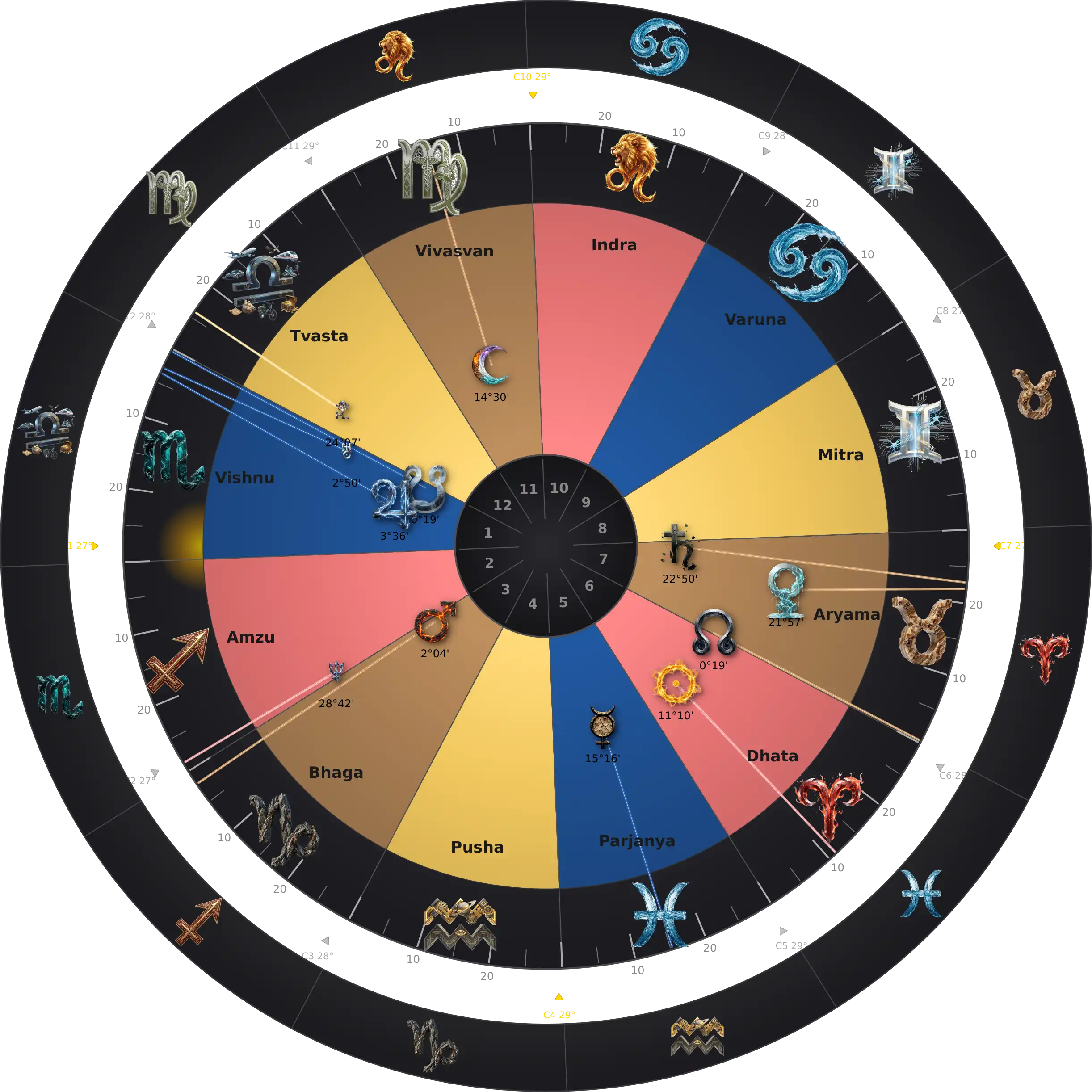
Javier Bardem — Aditya Zodiac Birth Chart Elements
Dominant Element (Aditya): Earth (56.2%)
Javier Bardem — Tropical Classic Birth Chart Elements
Dominant Element (Tropical): Fire (56.2%)
Alignment Note: Agent judged 2/3 roles as Fire-dominant. Aditya birth chart shows Earth-dominant (56.2%). Tropical birth chart shows Fire-dominant (56.2%). Agent results diverges with Aditya Zodiac, aligns with Tropical.
View Birth Chart — Javier Bardem
Outer wheel: Tropical Classic — Inner wheel: Aditya Zodiac
Daniel Craig is the study's most interesting contradiction. Bond: 82% Fire. Benoit Blanc: 70% Water. Same actor. Same Pisces birthday. Dramatically opposite results. If the AI agents were rubber-stamping everything as Fire, Blanc wouldn't have scored Water. The methodology is discriminating between character types, not just confirming the hypothesis. The explanation for why some Pisces roles go Water? It's somewhere in this document. See if you can find it.
Daniel Craig (Born March 2, 1968) — 2/3 F
Role 1: James Bond — 007 Franchise (2006-2021)
Watch scene — Bond relentlessly pursues a bomb-maker through a construction site, showcasing his brute-force determination.
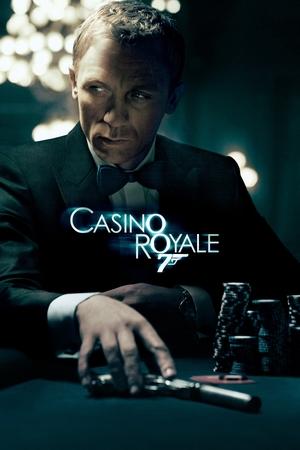
The Story:
Daniel Craig's James Bond is a textbook expression of Fire — the archetype of ACTION, DIRECT FORCE, IDENTITY, and PROTECTION THROUGH EFFORT — operating in a damaged, wounded state. From his first scene in Casino Royale (strangling a man in a bathroom, then shooting another point-blank in cold blood to earn his 00 status) to his final act in No Time to Die (staying behind on Safin's island and absorbing MI6 missiles rather than survive infected), Craig's Bond is defined entirely by what he DOES, not what he feels. The feelings are present — they are real and they matter — but they never drive the method. He fights, he runs, he shoots, he trains, he endures torture without breaking (the infamous chair scene in Casino Royale where he is beaten repeatedly and cracks jokes to Le Chiffre), he keeps going after being shot off a bridge and presumed dead, he fails fitness evaluations and then goes back to work anyway. His trauma is Fire trauma — not "nobody loved me," but "people I protected were taken from me." Vesper's death is not a wound of disconnection; it is the wound of a soldier whose mission and comrade were simultaneously destroyed by betrayal. His grief response is not withdrawal into fantasy — it is channeled into violent, grinding, relentless action across Quantum of Solace. He drinks whiskey neat and hard in rough settings. He trains his body every day. He confronts enemies face to face. He sacrifices his life by directly absorbing the consequence so that his daughter lives — the ultimate Fire act: effortful, concrete protection.
Key Quotes:
-
"The job's done and the bitch is dead." — Not indirection, not mystical acceptance — it is the soldier's brutal armor slamming back into place. The pain is real, but the response is to armor the identity and keep moving. Fire's consistent, grinding suppression-through-action.
-
"You do what I do for too long, and there won't be any soul left to salvage." — A man watching his identity corrode through sustained effort, not a man longing for soul-deep connection. The damaged identity monologue — Fire's wound.
-
"I love you... I know." — Even in his death, Bond is making an active choice, not receiving comfort. He chose the action. He stays. He dies as the consequence of doing, not as someone swept away by feeling.
How much Fire:
- Direct physical combat as the primary mode in every single film — a brawler trained in boxing, kickboxing, martial arts. Effort-based skill.
- Torture endurance in Casino Royale without breaking — confronts pain HEAD-ON, converts it into identity reinforcement.
- Grief through violent action in Quantum of Solace — hunts across three continents in driven, grinding, relentless campaign.
- Failed fitness evaluation in Skyfall — returns to work anyway. Keeps pushing despite failure.
- Fatherhood as protection through concrete sacrifice in No Time to Die — makes logical, tactical, effortful decision to absorb the missile strike.
- Drinking pattern: whiskey neat, martinis shaken not stirred, consumed in the field under pressure.
How much Water:
- Vesper grief carries forward — a connection he cannot let go of. Visits her grave in No Time to Die.
- Emotional openness with Madeleine — allows himself to love again, willing to be seen.
- Alcohol as coping through Quantum of Solace — drinking partly to fill a void left by loss of connection.
- The final sacrifice includes love as meaning — protecting that meaning, a Water undercurrent within a Fire act.
Confidence: High
Role 2: Benoit Blanc — Knives Out & Glass Onion (2019-2022)
Watch scene — Benoit Blanc masterfully unravels the complex murder mystery with flowing logic and emotional depth, revealing the truth.

The Story:
Benoit Blanc is "the world's greatest detective" and "the last of the gentleman sleuths" — but he operates nothing like the Fire archetype. He does not charge headfirst, demand, conquer, or impose. He strolls. He observes. He waits for the truth to fall at his feet.
His own manifesto confirms it: "I observe the facts without biases of the head or heart. I determine the arc's path, stroll leisurely to its terminus — and the truth falls at my feet." This is the language of receptivity, not conquest. He does not chase the answer; he creates the conditions for it to arrive.
His signature investigative tool is indirection — his exaggerated Southern drawl is deliberately deployed as misdirection. He performs buffoonery to make suspects underestimate him and lower their guard, getting them to confide willingly rather than interrogating them under pressure. This is quintessential Water: results achieved not through direct confrontation but through the skillful manipulation of perception.
In Glass Onion, his most profound insight is not a logical deduction but an intuitive revelation: "I expected complexity. I expected intelligence. But that's not what any of this is. It hides not behind complexity, but behind mind-numbing obvious clarity." He sees through the glass onion not because he out-calculated the enemy, but because he stopped being fooled by appearances — a consciousness-level breakthrough, not a tactical one.
When his method fails — such as being unable to identify the original murderer because he is "very bad at dumb things" — his setback is framed not as a wound to his identity but as a momentary gap in his perception. He adjusts by waiting and observing more, never by attacking harder. In Wake Up Dead Man, he deliberately abandons the case-closure goal entirely to show empathy — feigning confusion so a killer can confess voluntarily. A Fire detective would never surrender the win. Blanc does.
He also carries a Water wound: religion. His mother was devout, he converted to atheism, the relationship was strained, and the one thing his brilliant mind cannot solve is faith — a vast, shapeless, non-concrete mystery that defeats him precisely because it cannot be resolved through analysis or action.
Key Quotes:
-
"I observe the facts without biases of the head or heart. I stroll leisurely to the truth's terminus and it falls at my feet." — Water in pure form. "Falls at my feet" is the language of receptivity. Truth arrives to him.
-
"It hides not behind complexity, but behind mind-numbing obvious clarity. Truth is, it doesn't hide at all." — A consciousness-level insight, not a deduction. He perceives what others cannot see through the removal of self-deception. Intuition, not strategy.
-
"I like to think of my mind as a fueled-up racing car with nowhere to go." — Water suffering: he is not grinding through work to stay alive, he is paralyzed because he needs a mystery — a CONNECTION to a problem — to function. Without that connection, he is depressed and adrift.
How much Fire:
- Active protection in Glass Onion: instantly covers Helen with hot sauce to fake her death — fast, decisive physical intervention.
- Strategic planning: creates multi-step plan with Helen to expose Miles, including providing the Klear explosive.
- Persistent working: keeps pursuing truth even after solving the original puzzle.
- Meticulous confrontation with evidence: final unmasking of Miles Bron is a direct presentation of facts.
- Effort-based mentorship: coaches and empowers both Marta and Helen through active involvement.
How much Water:
- The accent as indirection: deliberately performs "Southern hokum" so suspects underestimate him and confide willingly. Never interrogates; people give themselves away.
- "Truth falls at my feet": stated method is receptive, not active. Waits for patterns to emerge.
- Empathy over closure (Wake Up Dead Man): abandons case resolution to show killer empathy. Surrenders the investigative win for the sake of connection.
- Lockdown depression: between cases, falls into depressed, rudderless state. Needs meaningful engagement to feel alive — Water disconnection-pain.
- Steps back to let others take the win: in both films, withdraws from the decisive final moment. Hands Marta the estate. Hands Helen the Klear. Prioritizes others' agency over his own triumph.
- Religion as unsolvable wound: strained relationship with religious mother, inability to "solve" faith.
- Queer identity normalized through softness: does not defend identity aggressively — simply embodies it.
Confidence: High
Role 3: Mikael Blomkvist — The Girl with the Dragon Tattoo (2011)
Watch scene (05:05) — Lisbeth exacts fiery retribution, igniting a crashed car in a powerful act of defiance.

The Story:
Mikael Blomkvist enters the film already defeated — convicted of libel for reporting he believed was true, stripped of savings, reputation, and professional standing. He does not collapse inward. He accepts exile to Hedeby Island and immediately begins working. He interviews sources, cross-references decades of family photographs, builds timelines, constructs index cards, and pursues every procedural thread with grinding consistency. When Lisbeth Salander arrives, he integrates her hacking capability into his workflow without ego — the collaboration is a tool for the investigation, not an emotional refuge. He is captured by Martin Vanger and faces torture directly; Lisbeth rescues him, but he re-enters the case almost immediately afterward. His response to near-death is to get back to work. At the film's close, he finally destroys Wennerstrom through a years-long effort of documentation and publication — the revenge is journalistic, methodical, and public. His emotional life (the affair with Erika, the brief relationship with Lisbeth) is real but consistently subordinated to the mission. The drive is always outward, always active, always building toward exposure.
Key Quotes:
-
"I was right. I just couldn't prove it." — Said about the Wennerstrom verdict. This is a Fire statement: no self-pity, no mourning, just a factual acknowledgment and implicit continuation of effort. A Water character would dwell in the wound. Blomkvist registers the loss and keeps moving.
-
(To Henrik Vanger, on accepting the case): He accepts with a full understanding that he is walking into danger, but the logic is clear — he will get the evidence against Wennerstrom he needs, and solve the Vanger mystery. This is strategic calculation, not receptive drifting. He evaluates the deal, weighs the terms, and commits to the action path.
-
(His journalism at the film's end): The final Wennerstrom exposé is published through Millennium — a public, direct strike. No hidden schemes, no poison, no sabotage from the shadows. He gathered the evidence himself, checked the sources, and published. This is Fire's mode: gather force, then apply it directly and openly.
How much Fire:
- Grinding, consistent work under humiliation. After losing the libel suit and his savings, Blomkvist does not break down, retreat into fantasy, or seek emotional comfort. He relocates to Hedeby and begins working immediately. The consistency — interviewing every Vanger family member, cataloguing every old photograph — is the hallmark of Fire's steady, driven effort.
- Direct confrontation of the mission. The investigation is pursued frontally. He interviews people, visits crime scenes, examines physical evidence, contacts sources. He does not wait for answers to appear — he digs them out through active effort. This is the opposite of Water's "things just happen" receptivity.
- Strategic, head-based thinking. When Lisbeth provides digital intelligence, Blomkvist integrates it into a logical framework. The case-solving is rational and tactical — cross-referencing photographs with Bible passages, mapping victim geography against Vanger family movements. Fire's indirection is always logical and effort-based; Blomkvist's methods match exactly.
- Response to capture and near-death. When Martin Vanger subdues and nearly kills him, Blomkvist's post-rescue behavior is not to process trauma emotionally or seek comfort. He gets back to work. The pain doesn't linger visibly. This matches Fire's pattern of consistent, driven behavior even under extreme pressure.
- Public, direct final strike. The destruction of Wennerstrom is accomplished through journalism — direct, documented, published, signed with his name. He makes no anonymous strike from the shadows. He builds his case and applies it openly. This is exactly Fire's healthy expression: direct confrontation after sustained effort.
How much Water:
- Sexual/romantic receptivity. Blomkvist is consistently the one who is approached or drawn in — Erika Berger is the one who manages the emotional terms of their open relationship, and Lisbeth initiates their sexual encounter. His romantic behavior is accepting rather than conquering. This is one genuine Water marker.
- Functioning partly in shadow. He operates in a remote, isolated setting, working outside mainstream journalism. There is some indirection in how he circles the Vanger family (gathering peripheral evidence before confronting suspects) — though this is strategic rather than consciousness-based indirection, it gives a surface appearance of circling.
- Emotional availability with Lisbeth. Blomkvist treats Lisbeth with unexpected gentleness and decency — he does not attempt to control or manage her. He receives her as she is. This warmth-without-imposing resonates with Water's connective quality, though it is brief and never displaces the investigative drive.
- Ends the film without full emotional resolution. When Lisbeth discards the Christmas gift after seeing him with Erika, Blomkvist is unaware of the rupture. He doesn't pursue the reconnection. This passive inability to hold the emotional thread is consistent with Water's difficulty with concrete relational action — though it could also simply be obliviousness rather than a deep Water pattern.
Confidence: The character's dominant behavioral signature across the full film is clear: sus
Career Pattern: Two of three roles align with Fire. The exception — Benoit Blanc — operates through Water-mode behavior (indirection, receptivity, connection-seeking), demonstrating range while the dominant pattern remains Fire.
Daniel Craig — Aditya Zodiac Birth Chart Elements
Dominant Element (Aditya): Earth (56.2%)
Daniel Craig — Tropical Classic Birth Chart Elements
Dominant Element (Tropical): Fire (56.2%)
Alignment Note: Agent judged 2/3 roles as Fire-dominant. Aditya birth chart shows Earth-dominant (56.2%). Tropical birth chart shows Fire-dominant (56.2%). Agent results diverges with Aditya Zodiac, aligns with Tropical.
View Birth Chart — Daniel Craig
Outer wheel: Tropical Classic — Inner wheel: Aditya Zodiac
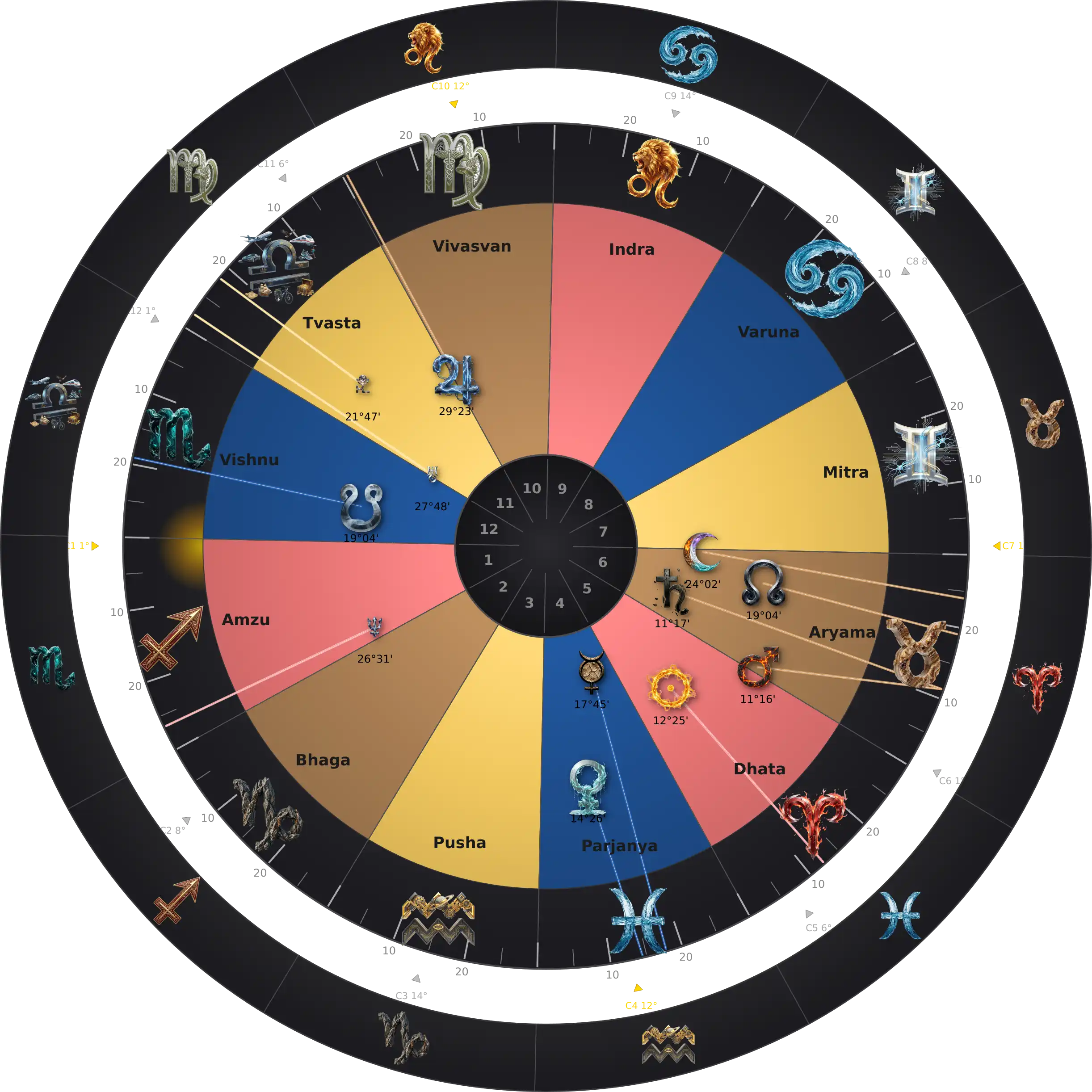
Bond = Fire. Blanc = Water. Same Pisces. Why? We're not telling you here.
Victor Garber (Born March 16, 1949) — 3/3 F
Role 1: Jack Bristow — Alias (2001-2006)
Watch scene — Jack Bristow, a cold and calculating spy, reveals his CIA affiliation to Sydney, forging a dangerous new partnership.

The Story:
Jack Bristow is one of the most unambiguous Fire characters in prestige television. He is a man defined entirely by what he DOES — and more specifically, by what he is willing to DO in the name of protecting Sydney. His love for his daughter is not expressed as warmth, presence, or emotional availability. It is expressed as sustained, exhausting, relentless ACTION across five seasons: torture, murder, deception, self-sacrifice, radiation poisoning, double-agent work maintained for decades, and ultimately blowing himself up to trap an immortal enemy so Sydney can escape.
Jack's method is indirection and deception, but the profile definitions are explicit: strategic indirection from the HEAD — logical, tactical, planned — belongs to Fire, not Water. Jack calculates outcomes using game theory, runs multi-step manipulations with complete logical architecture, and deploys personas as operational tools. There is nothing intuitive, receptive, or consciousness-based about how he operates. He does not WAIT for things to happen. He engineers them.
His emotional life is armored behind relentless effort. His pain — Laura/Irina's betrayal, losing his daughter's trust, shooting what he believed was Irina — hits him as grinding, concrete wounds that produce MORE action, not withdrawal or mood swings. He is consistent, cold, driven, and entirely impossible to stop. The profile fit is overwhelming.
Key Quotes:
"You beat death, Arvin — but you couldn't beat me." — Final words before detonating explosives to trap Sloane. Pure Fire: direct, territorial, triumphant in the act of force, not the feeling of victory.
"Sometimes a satisfying lie, Sydney, can do more good than the awful truth." — Sounds like Water indirection, but Jack is not confused or feeling his way through this. He has CALCULATED that the lie serves a strategic objective. This is tactical logic, not intuition or emotional manipulation. The deception is a tool of the Fire warrior mind.
"Just so we're clear: you report this conversation, you'll never wear a hat again." — An open threat delivered directly. Fire: "you know exactly where they stand." No hidden schemes. The menace is stated plainly, face to face.
How much Fire:
- Sustained protective action over 30+ years: Jack spent decades as a double agent, absorbing professional ruin and personal isolation, all to keep Sydney alive. This is the Fire pattern of "tireless action — works 10 years without giving up, refuses to quit" operating at maximum intensity.
- Willingness to use lethal force directly: He executed FBI mole Haladki face to face after extracting information. He killed Irina (whom he once loved) when she threatened Sydney's life. These are DIRECT confrontations with lethal outcome — the opposite of Water's poisoning-from-shadows method.
- Final self-sacrifice by detonating explosives: Walking into Rambaldi's Tomb and triggering a bomb while wounded is the ultimate Fire act — carrying Sydney to safety through his own destruction. He does not manipulate someone else into sacrificing themselves. He acts. He carries the cost.
- Radiation poisoning in Season 4: Jack deliberately walked into a radioactive zone to save Sydney's life, absorbing damage that progressively killed him. Effort-based caregiving through direct physical cost — textbook Fire.
- Strategic deception as a tactical TOOL, not an identity: Jack uses lies, aliases, and manipulation, but always through logical architecture (game theory is explicitly named in character profiles). He is not charming or hypnotic in an effortless Water way — he BUILDS the deception, calculates it, deploys it as a weapon of the mind.
How much Water:
- Withholding truth for paternalistic control: Jack's habit of keeping Sydney in the dark about her mother, her past, her missions could look like Water indirection. However, each instance traces back to a strategic calculation, not an inability to confront. He is not circling the problem — he has decided the concealment serves the objective.
- Emotional unavailability reads as Water withdrawal: Superficially, Jack's cold distance resembles Water's disconnection from direct emotional contact. But his unavailability is not mood-based — it is constant, consistent, a structural feature of how he operates. Water pain comes in waves. Jack's distance never fluctuates.
- Using proxies and deception in operations: Some missions involve Jack running manipulation through others (having Sloane act, working through Sydney). On the margin, this borrows from Water's "achieve results without direct action" palette. But the CORE motivation and design are always Jack's own strategic mind in command.
Confidence: Low
Role 2: Thomas Andrews — Titanic (1997)
The Story:
Thomas Andrews is the builder of the Titanic — the man who designed her, who knows her dimensions, load tolerances, and structural limits better than anyone alive. When the ship strikes the iceberg, Andrews does not wait, does not feel his way through the situation, and does not circle the problem. He acts immediately and with precision: he inspects the damaged compartments, runs the calculations, and delivers a verdict that is concrete, direct, and devastating. "She is made of iron, sir. I assure you, she can. And she will. It is a mathematical certainty." This is not intuition — this is analytical engineering applied with unflinching courage.
His response to the crisis that follows is relentlessly action-oriented. He moves through the ship urging passengers into lifeboats. When Officer Lightoller launches a half-filled boat, Andrews confronts him directly and with audible fury: "Rubbish! These boats were tested in Belfast with the weight of 70 men! Fill these boats, for God's sake man!" This is open, frontal confrontation — no indirection, no manipulation, no circling. He fights for lives by fighting people face-to-face.
His final state — standing alone in the smoking room, arms folded, life jacket discarded — is not passive or receptive. It is the stillness of a man who has done everything he could do. He worked until the moment he knew there was nothing left to work for. The grief he carries is not about disconnection or longing — it is the concrete, grinding weight of a builder watching his creation destroy the people he was supposed to protect. His apology to Rose — "I'm sorry I didn't build you a stronger ship" — is the wound of a craftsman who measures himself by what he made and what it failed to do. That is Fire's wound: the failure of effort, not the failure of love.
Key Quotes:
-
"It is a mathematical certainty." Profile commentary: No hedging, no softness, no circling. Direct delivery of a hard technical truth. This is Fire operating at its most lucid — analytical clarity in direct service of action. Water would find ways to soften, suggest, or let the captain draw his own conclusion.
-
"Fill these boats, for God's sake man!" Profile commentary: Open, frontal, angry confrontation with an officer who outranks him in chain of command. Fire does not sidestep authority when lives are at stake. This is direct challenge — the opposite of indirection. Water would appeal emotionally, suggest gently, or work around Lightoller through another person.
-
"I'm sorry I didn't build you a stronger ship, young Rose." Profile commentary: This line carries the specific Fire wound — the failure of what he MADE, what he DID. The apology is for the inadequacy of his creation, not for an emotional absence. Compare with Water's wound: "I'm sorry I wasn't there for you" (connection failure). Andrews' wound is entirely effort-based.
How much Fire:
- Mathematical damage assessment after the collision. Andrews does not guess or feel — he calculates. He inspects each flooded compartment, runs the arithmetic, and produces a precise verdict on survival time. This is the Fire mind: action through intelligence and analysis.
- Direct confrontation with Lightoller. He openly and angrily challenges the officer's decision to under-fill lifeboats. This is frontal combat — no manipulation, no indirection, no use of a third party to relay the message.
- Tireless urging of passengers to the lifeboats. Through the entire sinking sequence, Andrews is in motion. He does not settle into grief or paralysis until the absolute end. The consistent drive to DO something until the last moment is textbook Fire.
- His apology is a craftsman's failure, not a lover's failure. "I didn't build you a stronger ship" is the guilt of a creator whose creation failed. It locates the failure in effort and output, not in emotional connection. Fire trauma: abandonment through lack of sufficient effort or protection.
- Final stillness is exhaustion after full exertion, not receptive waiting. The smoking-room image is often read as passive acceptance, but in context it follows maximum effort. He is not receiving or drifting — he is a spent force who ran out of things to do. This is distinct from Water's characteristic "waiting for things to come."
How much Water:
- Warmth and gentleness across class lines. Andrews treats Rose and Jack with equal dignity and real human warmth. This relational quality — the capacity to connect across social hierarchy without agenda — has a soft, connective texture that leans toward Water's emotional register.
- Selective disclosure to Rose rather than public announcement. When he tells Rose the ship will sink, he chooses private, personal communication over public proclamation. This has a trace of indirection — going around rather than through. It is mild and arguably justified by crowd control logic, but it softens the pure Fire read.
- Final apology as emotional farewell. "Young Rose" carries genuine tenderness. The embrace is connective. This moment, brief as it is, resonates with the Water capacity for soul-felt connection without agenda.
Confidence: High
Role 3: Martin Stein / Firestorm — Legends of Tomorrow (2015-2017)
Watch scene — The fiery and powerful merging of Martin Stein and Jefferson Jackson to become the superhero Firestorm.

The Story:
Martin Stein is a nuclear physicist who built his entire identity around intellectual dominance. From his very first appearance, the defining act is not emotional or passive — it is direct, unilateral, and self-willed: he drugs Jefferson Jackson and physically forces him aboard the Waverider, because Stein's personal desire to join Rip Hunter's time-travel mission overrides everyone else's consent. This is not a man who waits for circumstances. This is a man who engineers them.
Throughout Legends of Tomorrow, Stein operates from a core of tireless intellectual action. He solves problems through analysis, strategy, and direct application of scientific expertise. He argues loudly when he disagrees. He openly admits to being an "insufferable know-it-all." He initially treats his accidental daughter Lily as a problem to be fixed — a timeline paradox requiring correction — rather than a connection to be felt. When he eventually accepts her, it is only after observing her scientific brilliance, a profile-Fire threshold: respect earned through demonstrated capability, not through emotional softening.
His death is the clearest distillation of the profile: shot in the back while crossing an open kill zone alone to reach a control panel. No subterfuge, no waiting for backup — a direct physical charge under enemy fire to complete the mission. He then insists Jax drink the Firestorm cure so Jax survives, spending his last breath engineering one more outcome. He does not drift into death. He directs its terms.
Key Quotes:
"I dragged you here for my own selfish reasons." (Pilot, to Jax)
- Fire commentary: This is a rare moment of self-awareness about the profile's shadow side — the inability to subordinate personal drive to others' needs. The admission itself is direct and unmediated. No manipulation, no hidden reframing. He says exactly what he did and why. That directness is the profile's DNA.
"Unlike Barry, I have the luxury of fixing my mistakes." (on restoring the original timeline, erasing Lily)
- Fire commentary: Stein's first instinct upon discovering an altered timeline is not grief or ambivalence — it is a project: fix it, restore it, reassert correct order. The language of "luxury" signals self-confidence bordering on entitlement. The world is a problem his intelligence can solve. His identity (the original timeline, the original man he was) must be protected and restored. Classic profile-Fire key identifier: he fights to preserve who he IS.
"No one could live forever." (to Jefferson, accepting his fate after being shot)
- Fire commentary: Even facing death, the register is philosophical and matter-of-fact, not emotionally collapsing. He frames it as a rational truth, not a feeling. His concern immediately shifts to Jax's survival — to the logistics of the transition — not to personal grief or a need for comfort. Action-orientation persists to the final breath.
How much Fire:
- The drugging of Jax (Pilot): Stein unilaterally decides that Jax will join the mission whether Jax consents or not. He administers a drug, removes Jax's agency, and acts on his own will. This is not manipulation in the Water sense (indirect, hidden, relationship-based) — it is a direct exertion of will backed by planning. The goal is self-serving but the method is bold and overt.
- Intellectual dominance as identity: Stein's arrogance is not incidental — it is the shape of his self-concept. He is a physicist at the top of his field, and he knows it. When challenged, he argues directly and confidently. When wrong, he eventually admits it — but only after the facts compel him. His identity is built on being the smartest person available, and he defends that identity openly. This is profile-Fire's "fight directly to preserve who they ARE."
- Treating Lily as a paradox, not a person: His initial response to learning he has a daughter is clinical and project-focused: "She is not a real person. I intend to restore the timeline." This is the profile's shadow — the tendency to subordinate connection to the drive for correct outcomes. He is not cold because he lacks feeling; he is cold because his operational frame privileges correct structure over relational warmth.
- Running across the kill zone on Earth-X: Shot while crossing open ground under fire to reach a control panel. This is not strategic or indirect — it is a direct physical charge. Fire at its most literal: effort-based action under maximum physical risk to complete the objective. He takes the bullet doing what he decided needed to be done.
- Engineering the terms of his own death: Insisting Jax drink the Firestorm cure is not passive acceptance. It is a final act of will — he determines how the Firestorm bond ends, he preserves Jax's life through deliberate choice, and he exits the narrative as he lived in it: as the one making the call. Even dying, he is acting.
How much Water:
- His relationship with Clarissa: Stein's marriage is a source of genuine warmth. He is not primarily a brotherhood-bond character (he has that with Jax, but it is effort-based — Fire). With Clarissa, there are moments of softening, of needing to feel connected, of guilt over having neglected her. These moments introduce a secondary Water thread — the fear that his intellectual obsession has cost him real connection.
- Acceptance of Lily after seeing her: When Stein finally softens toward Lily, it follows an emotional process of recognition — he sees her, feels something shift, and opens. The thaw is not engineered. It happens. The emotional receptivity, the moment of being moved without deciding to be moved, is a Water signature even inside a predominantly Fire character.
- The older-self confrontation scene (1987): When Stein encounters his younger self and attempts to correct him about missing his wife's birthday, there is an indirect quality — he works through the younger version rather than addressing Clarissa directly. This circling, this working on a relationship through a proxy, is mildly Water in method.
- His acceptance of death: "No one could live forever" contains a genuinely philosophical yielding — a not-fighting-the-inevitable quality. This brief moment of non-resistance to an outcome he cannot control reads as Water receptivity. It is real, but it is brief and immediately overridden by his final action (directing Jax's survival). The Fire returns within the same scene.
Confidence: Low
Career Pattern: All three roles align with Fire — direct action, identity protection, and sustained effort define Victor Garber's on-screen behavioral signature across diverse characters and genres.
Victor Garber — Aditya Zodiac Birth Chart Elements
Dominant Element (Aditya): Fire (56.2%)
Victor Garber — Tropical Classic Birth Chart Elements
Dominant Element (Tropical): Water (56.2%)
Alignment Note: Agent judged 3/3 roles as Fire-dominant. Aditya birth chart shows Fire-dominant (56.2%). Tropical birth chart shows Water-dominant (56.2%). Agent results aligns with Aditya Zodiac, diverges with Tropical.
View Birth Chart — Victor Garber
Outer wheel: Tropical Classic — Inner wheel: Aditya Zodiac
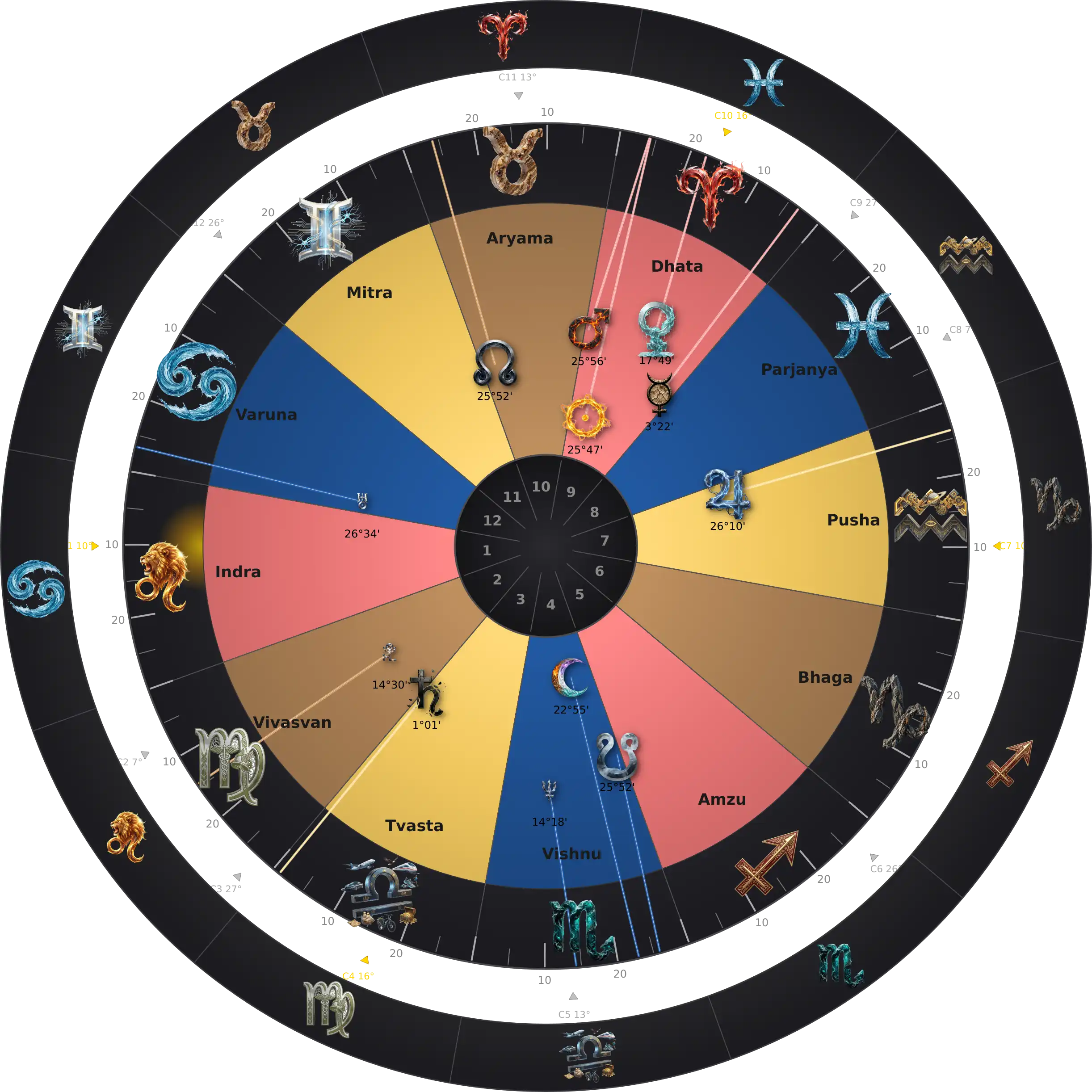
Marsha Warfield (Born March 5, 1954) — 2/3 F
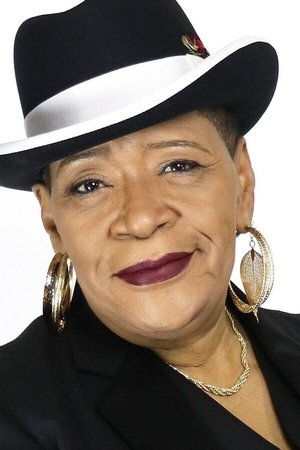
Role 1: Roz Russell — Night Court (1986-1992)
Watch scene — Roz Russell confronts a flasher with stern authority and a deadpan, sarcastic remark, asserting her complete control.
The Story:
Roz Russell enters Night Court in Season 4 as a replacement bailiff and immediately establishes herself as the most direct, grounded presence in a courtroom full of eccentrics. Her function on the show is essentially that of the constant — while Judge Harry Stone pulls absurd stunts, Dan Fielding chases women, and Bull Shannon does inexplicable things, Roz stands there and calls it plainly. Her signature behavioral loop is active, not passive: she walks in, observes a plan already in motion, states flatly that it will not work, is ignored, then returns at the end to confirm she was right. This is not the behavior of someone who waits, receives, or manipulates indirectly. She acts as the voice of direct reality. She engages, comments, and pushes back — on her own initiative, consistently, episode after episode.
Her physical presence is also weaponized. Her strength is a recurring source of comedy — the jokes revolve around her capacity to physically dominate situations that others cannot handle. She is a bailiff by profession, a role defined by direct enforcement. She does not charm or seduce situations into resolution; she steps in and handles them.
The soft interior she hides behind the tough exterior is real, but even that interior expresses itself through friendship earned over time — a Fire brotherhood bond — not through a craving for soul-deep connection or emotional dependency. When she develops a friendship with Dan Fielding, it is described as "unlikely," forged through sustained proximity and shared work, not through emotional fusion. In the 2023 revival she engineers her own firing to secure both pension and severance — a calculated, self-directed act of strategic action. She does not wait for a favorable outcome; she creates one.
Key Quotes:
-
"That's not gonna work." — Her recurring line entering a scheme already in motion. Profile commentary: This is Fire directness in its purest form. No indirection. No manipulation. Straight assessment, delivered to the room, then confirmed. The contrasting profile would circle the problem or say nothing and watch it fail.
-
"She believes in the goodness of people, and so she has antipathy for people outside of the law messing it up for everybody." — Producer description of her internal motivation. Profile commentary: Her anger at injustice is not a wounded emotional response — it is identity-based. "This is who I am and what I stand for." That is Fire's core: protecting an identity and a standard through direct expression.
-
(On the 2023 revival): She arranges her own firing after a conflict escalates — securing pension and severance simultaneously. Profile commentary: This is tactical self-advocacy, not manipulation from the shadows. She creates the outcome she wants through a calculated direct action. Fire using strategic thinking (from the head, not from consciousness or intuition).
How much Fire:
- Her professional role — bailiff, law enforcement — is definitionally action and direct enforcement; she physically maintains order in a courtroom
- Her strength as a running joke points to physical power and direct force as her primary signature
- Her consistent verbal pattern ("that won't work / told you so") demonstrates constant, unwavering directness — she never circles or withholds; she states
- The 2023 revival move — engineering her own firing to extract maximum financial benefit — is strategic, head-first action, not intuitive or indirect in the Water sense
- Her friendship with Dan is a classic Fire brotherhood bond — earned through sustained shared experience, not through emotional fusion or soul-connection
- Her anger at injustice is identity-protecting, not connection-seeking; she is defending a standard of how the world should work, which is the Fire core wound (lack of support/effort from those who should uphold what is right)
- Her consistency across 136 episodes is the Fire hallmark — same drive, same directness, same presence; no mood swings, no wave-like emotional patterns
How much Water:
- Her tough exterior concealing a shy, self-conscious interior does carry a texture of emotional guardedness — the fear of disconnection expressed as keeping people at arm's length
- Her eventual genuine closeness with coworkers has warmth and connection as a goal, not just utility
- The health crisis (discovering she is diabetic) briefly exposes vulnerability, a soft underbelly not typical of pure action-dominant characters
- Her sardonic humor has a quality of emotional commentary — she is reacting to the absurdity of others, not initiating it herself; observer role rather than creator role
- There is a layer of caring beneath the surface that the show periodically surfaces, suggesting she does feel deeply even if she does not express it through direct vulnerability
Confidence: Medium
Role 2: Dr. Maxine Douglas — Empty Nest (1993-1995)
Watch scene — Dr. Maxine Douglas authoritatively shuts down Dr. Weston's questioning by offering him a physical, showcasing her fiery, no-nonsense demeanor.
The Story:
Dr. Maxine Douglas enters the show in Season 6 (1993) as the hard-driving, tough-talking head of the Canal Street Clinic — a struggling inner-city medical facility. She is a native of the Bronx, carrying a gruff, no-nonsense persona that immediately establishes her as a character defined by what she DOES rather than what she feels. When the clinic is on the verge of bankruptcy, Maxine does not wait for a solution or manipulate others indirectly from the shadows — she recruits Harry, who is newly retired, and drives the operation herself to keep the doors open. She is described uniformly as a "perfectionist when it comes to health care," driven by professional standards she enforces actively and directly. Marsha Warfield noted that the character is a "strong, independent woman" whose priority was simple: "she was just working and wanted to be a good doctor." The ever-present grumpiness is not a cry for comfort or connection — it is the social face of someone whose identity is rooted entirely in performance, competence, and directness. Warfield also noted that Maxine's apartment would be sleek and upscale, not warm and domestic — reflecting a self-identity built around professional excellence and individual achievement rather than nurturing or relational warmth. She is not a character who circles around problems: she confronts them head-on, demands results, and holds others to her standard.
How much Fire:
- Hard-driving clinic leadership: She is the head of the Canal Street Clinic by direct authority and professional force. She does not lead through charm or emotional manipulation — she leads by doing and demanding. This is Fire leadership in textbook form.
- Dedicated perfectionism in her craft: The consistent, grinding commitment to medical excellence — described as perfectionism — is exactly the "works every day, disciplines themselves constantly" pattern of Fire. Her effort is tireless and unconditional.
- Confrontational, direct communication: Described as "tough-talking" and "ever-present grumpiness." She does not soften her positions or work indirectly. When she needs something done, she says so. Fire does not hide its agenda.
- Identity anchored in professional performance: Warfield's own description — the character just wants to be a good doctor — means Maxine's self is defined by what she accomplishes and delivers, not by who loves her. This is identity through ACTION (Fire), not through connection (Water).
- Effort-based crisis response: When the clinic faces bankruptcy, Maxine does not wait or manipulate — she recruits Harry and fights to keep it open through direct operational effort. Problem recognized, direct response engaged.
How much Water:
- Relative emotional inaccessibility: Maxine is described as not truly part of the family unit — there is some emotional distance and lack of deep interpersonal bonding shown. This "not belonging" quality could faintly echo Water's sensitivity to disconnection, though here it is expressed as independence rather than longing.
- Social grumpiness as emotional register: Her consistent grumpiness is not purely action-oriented — there is a mood dimension to it. In very small measure, this mood-consistency could reflect an emotional undercurrent beneath the hard exterior. However, it is too consistent and directed to score high on Water's fluctuating, wave-based pain pattern.
- No significant indirect behavior, manipulation, or waiting: There are no reported instances of Maxine working through others in hidden ways, using charm or intuition, or waiting for solutions to arrive. Water's signature behaviors are essentially absent from the documented record.
Confidence: Medium
Role 3: Toni Wilson — 9-1-1 (2024)
Watch scene — Hen confronts her unexpected physical therapy, navigating frustration and vulnerability on her recovery journey.

The Story:
Toni Wilson is Hen's mother — a woman defined by a complicated past and a long emotional distance from her daughter. She missed Hen's coming-out years, she skipped Hen's wedding, and the wound between them sat unresolved for decades. What eventually bridges them is not action but presence: Toni loses her pharmaceutical job during the pandemic, and rather than fight her way through hardship, she simply shows up in Los Angeles — unannounced — announcing she is moving closer to her daughter. There is no strategic plan, no battle fought. She floats into Hen's life and lets the reunion happen around her.
Her most narratively significant moment comes in the "Mixed Feelings" episode (Season 6, 2023): when Denny secretly contacts his biological father, and Hen and Karen are frightened and hurt, Toni does not confront the situation directly. She inserts herself as an emotional intermediary — she talks to Denny, explains both sides' feelings, softens the air, and then physically walks Denny into the room to meet his father while the mothers watch from outside. This is structurally indirection: the problem is not solved by force or direct confrontation, but by Toni circulating through the emotional field, translating feelings between generations, and easing connection without ever being the one who acts. She is the medium, not the agent.
Her romantic backstory reinforces the pattern: decades of longing for Clive Wexler, a love she ended due to circumstance (pregnancy), and then a reconnection and engagement years later — things returning to her without her having pursued them relentlessly.
How much Fire:
- She survived the 1963 Baldwin Hills Dam Break — a biographical data point suggesting physical endurance and survival, but this is historical background, not observable screen behavior. Cannot be weighted heavily.
- She worked as a blackjack dealer ("fast hands") and later as a pharmaceutical rep — both imply a degree of competence and work activity, suggesting some Fire work-ethic signal, though neither is dramatized on screen in an action-oriented way.
- Her decision to end her affair when pregnant could be read as a decisive, self-directed act — but in context it reads more as a response to emotional circumstances than a direct power move.
- Her unannounced arrival in Los Angeles carries a faint Fire trace (bold initiative, showing up without waiting to be invited) — but the overall motivation is connection-seeking, not territory-claiming.
How much Water:
- Her core function in the narrative is as an emotional intermediary — she moves feelings between people rather than fighting for outcomes directly. This is textbook indirection.
- She waits and then receives — decades of distance from Hen, then reconnects without a campaign to fix it. Opportunities find her (job loss triggers relocation, reconnection emerges).
- Her decades-long romantic attachment to Clive Wexler — longing kept alive without direct pursuit — is Water connective love at its most archetypal.
- Her pep talk to Hen in Season 9 (about Hen's chronic illness) is described as "well-meaning but misguided" — she responds to pain through emotional presence, not strategic advice or direct problem-solving.
- Her initial rejection of Hen's homosexuality and eventual softening represents the Water pattern of emotional attachment and emotional disconnection — not principled ideological battle, but a feeling-based estrangement that eventually thaws when love overcomes it.
Confidence: Medium
Career Pattern: Two of three roles align with Fire. The exception — Toni Wilson — operates through Water-mode behavior (indirection, receptivity, connection-seeking), demonstrating range while the dominant pattern remains Fire.
Marsha Warfield — Aditya Zodiac Birth Chart Elements
Dominant Element (Aditya): Fire (75.0%)
Marsha Warfield — Tropical Classic Birth Chart Elements
Dominant Element (Tropical): Water (75.0%)
Alignment Note: Agent judged 2/3 roles as Fire-dominant. Aditya birth chart shows Fire-dominant (75.0%). Tropical birth chart shows Water-dominant (75.0%). Agent results aligns with Aditya Zodiac, diverges with Tropical.
View Birth Chart — Marsha Warfield
Outer wheel: Tropical Classic — Inner wheel: Aditya Zodiac
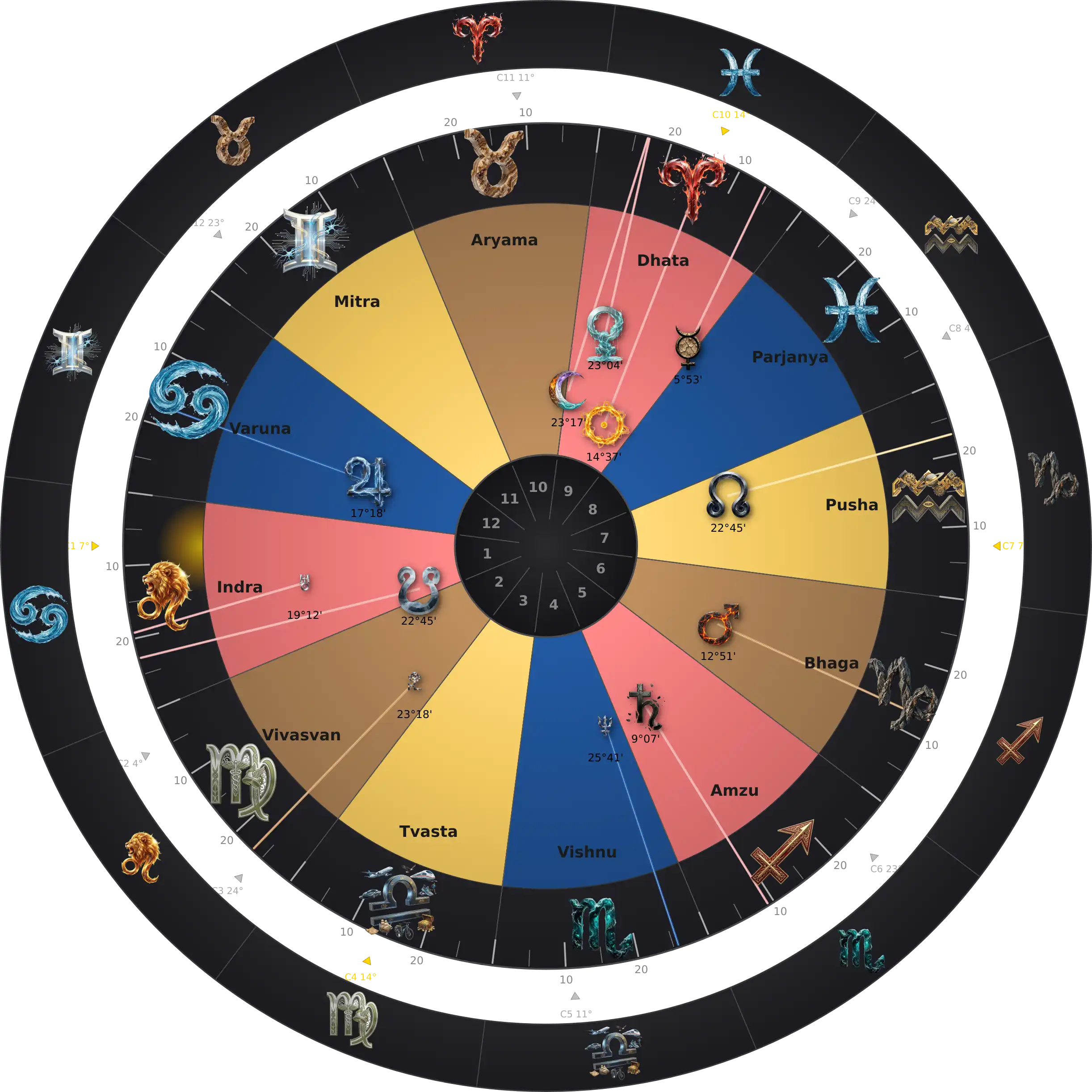
"Yippee-ki-yay, Pisces." Born March 19, one day before the end of Pisces season. Die Hard — the word "hard" isn't accidental from this lens. In the Aditya system, Dhata is linked to mountainous environments, seeking the hardest physical challenges. John McClane runs barefoot across broken glass, alone, in a skyscraper. 88% Fire.
Bruce Willis (Born March 19, 1955) — 2/3 F
Role 1: John McClane — Die Hard Franchise (1988-2013)
Watch scene — McClane defiantly asserts his identity against Gruber, culminating in his iconic 'Yippee-ki-yay' battle cry.
The Story:
John McClane is a New York City cop who repeatedly finds himself in impossible situations — a hostage crisis at Nakatomi Plaza, a terrorist attack at an airport, a city-wide bomb game, a cyberterrorist attack, and a Russian operation — and survives every single one through sheer, grinding refusal to stop. Across five films spanning 25 years, his defining behavioral pattern is relentless direct action under physical duress. He does not wait. He does not manipulate. He does not circle problems. He bleeds, walks on broken glass barefoot, brawls hand-to-hand, improvises weapons, and keeps moving forward regardless of injuries, bad odds, or institutional obstruction.
His personal life is a wreck — marriages fail, children estrange from him — not because he is emotionally absent in the Water sense (seeking comfort, waiting to be loved), but because he is constitutionally incapable of stopping his direct, effort-driven engagement with the world long enough to sustain relationships. His pain is concrete: career damage, physical toll, being "wrong place wrong time" year after year. He drinks whiskey in rough settings to keep going, not for comfort. His relationship with Holly begins with him flying across the country to fight for the marriage directly (action) and ends with him admitting he was wrong over a radio — the closest he ever gets to emotional vulnerability, and even then it is brief and directional, oriented toward re-establishing connection through confession rather than waiting for her to come back to him.
Key Quotes:
-
"Yippee-ki-yay, motherfucker!" — His franchise signature. Not a cry for connection or feeling. It is a battle cry, an identity marker shouted into the face of direct confrontation. It perfectly encapsulates Fire's core: "This is who I AM — and I am still here." It is an assertion of self against force, made openly and loudly, which the profile defines as its natural mode of threat and defiance.
-
"Just a fly in the ointment, Hans. The monkey in the wrench. The pain in the ass." — McClane self-describes not as someone who feels or connects, but as someone who disrupts through active interference. He positions himself as the agent of friction — the energy that ruins the other person's plan by existing and acting. This is Fire's identity language: I define myself by what I DO and what I disrupt.
-
"John says he's sorry." (via radio to Al Powell, Die Hard 1) — The single most Water-adjacent moment in the entire franchise, and still it is mediated through action: he uses the communication channel instrumentally, sends the message through a third party (Al), and the apology is a tactical step toward reconciliation, not an emotional dissolution. Even vulnerability here has a goal and a direction.
How much Fire:
- Relentless direct physical confrontation: In every film, McClane fights opponents face-to-face, takes severe physical punishment (lacerated feet, bullet wounds, falls, explosions), and continues acting. The consistency of this across 25 years of screen time is the clearest possible expression of Fire's "tireless action, refuses to quit" signature.
- Identity protection as the emotional core: When threatened or dismissed — by villains, by superiors, by Holly, by institutions — McClane's response is always to assert who he is and keep acting from that identity. His version of "no" is exactly what the profile describes: "This is who I AM." He will not adapt himself away, will not soften, will not wait.
- Direct threat-making and open confrontation: McClane talks back to terrorists over radio, taunts villains mid-combat, and makes his position known loudly and openly. The profile specifies: "Makes threats openly — you know exactly where they stand." McClane is the poster example.
- Brotherhood bond with Al Powell (Die Hard 1): His most emotionally developed relationship across all five films is with Sergeant Al Powell, a fellow cop he never meets face-to-face until the end — connected through a radio, through shared effort, through mutual support in a crisis. This is Fire brotherhood: forged through shared survival, concrete support, doing together. Not soul-deep connective love, but "I will carry you through this."
- Effort-driven protection of family: His core motivation in films 4 and 5 is protecting his daughter (Die Hard 4) and son (Die Hard 5). He flies across the country, then to Russia, to do something about a threat to his children. The profile is explicit: protection through effort = Fire regardless of the loving motivation behind it.
How much Water:
- Minimal strategic indirection: McClane occasionally improvises traps or uses the environment cleverly (the Nakatomi fire hose jump, the car explosion in film 3), but these are tactical problem-solving moves born of necessity and intelligence — the profile distinguishes this as Fire's "strategic indirection from the HEAD," not Water's intuitive, consciousness-based indirection. He never manipulates people indirectly, never schemes from the shadows, never works through others to get what he wants.
- Al Powell as an emotional outlet: His radio conversations with Al represent a small window of genuine emotional receptivity — he receives comfort and support from Al and is willing to be vulnerable in that specific channel. This is the one moment where something like Water's connective warmth appears, but it is extremely limited and serves the larger action context.
- Fear of flying (vulnerability): McClane's established phobia of flying creates a moment of non-action vulnerability at the start of Die Hard 1. This is minor and does not characterize his dominant pattern.
Confidence: High
Role 2: Butch Coolidge — Pulp Fiction (1994)
Watch scene — Fueled by rage, Butch escapes captivity, chooses a katana, and returns to brutally rescue Marsellus Wallace.

The Story:
Butch Coolidge is an aging professional boxer whose career is winding down. Marsellus Wallace, a powerful crime boss, bribes Butch to throw an upcoming fight — and Butch agrees while having absolutely no intention of complying. Instead, he bets his own money on himself, wins the fight (knocking his opponent dead in the ring in the process), and then flees. The double-cross is calculated, direct, and executed entirely through Butch's own physical effort and initiative.
He returns to his apartment to retrieve a family heirloom — a gold watch passed down through generations of military men at great personal cost — and in doing so confronts and kills Vincent Vega. This is not stealth or manipulation; it is direct, decisive violence when cornered.
In the film's most significant sequence, Butch and Marsellus are both captured by sadistic pawn shop owners and subjected to assault. Butch frees himself through physical struggle, then stands at the exit — the perfect moment to vanish. Instead, he turns back, selects a katana from the shop's display, and charges in to save Marsellus. The act is courageous, direct, costly (it delays his escape), and motivated by a code of conduct forged through a family lineage of soldiers who "take on certain responsibilities" for men they share extreme hardship with. He leaves town on a motorcycle named Grace, the slate wiped clean.
Key Quotes:
"I'm an American, honey. Our names don't mean shit." — Said to Fabienne when she asks about the origins of the name "Butch." Surface deflection, but underneath it reveals his identity is defined by what he does, not what he is called. Pure Fire: identity through action and presence, not lineage or feeling.
"Zed's dead, baby. Zed's dead." — Butch's final line, delivered with zero celebration or emotional processing. The threat has been neutralized, the action is complete. This is Fire's clean, forward-moving resolution: the problem is done, we move on. No lingering sentiment, no dramatic reckoning.
"I'm pretty fucking far from okay." — Said to Marsellus after the pawn shop ordeal. This is one of the only moments where internal state is articulated. Even here, it is blunt, factual, and immediate — not a spiral into feeling or an appeal for connection. Water would linger here; Butch states it and continues acting.
How much Fire:
- Direct confrontation throughout: Butch does not manipulate, scheme through others, or strike from the shadows. He bets on himself openly, fights the match to win, kills Vincent face-to-face, and physically charges the pawn shop with a sword. Every major action is direct and front-facing.
- Identity protection as the core driver: Tarantino described wanting Butch as "a bully and a jerk" — a man whose inner conviction about who he is runs at full voltage. The entire arc of his double-cross is rooted in refusing to bury himself. He will not die for Marsellus's money. That is pure Fire: "that's not me."
- The watch as a Fire wound: The watch is not a comfort object — it is a symbol of lineage, military service, and brotherhood effort. His father kept it hidden through years of POW captivity at physical cost to himself. The bond it represents is forged through survival and shared hardship, not soul-deep feeling. This is the brotherhood wound, not the disconnection wound.
- Consistent, driven action under pressure: From the moment he bets on himself through to the final motorcycle exit, Butch never waits, never circles, never retreats into feeling. He assesses and acts. Even the watch retrieval — arguably reckless — is a direct march into danger to reclaim what is his. Fire's consistency is present throughout.
- Physical effort as primary language: The pawn shop rescue is selected from available weapons in a deliberate, physical way. He does not talk Marsellus free. He does not find an indirect route. He picks up a katana and walks back in. Carrying the action, absorbing the risk, doing the work — this is Fire at full expression.
How much Water:
- Butch's tenderness with Fabienne shows a capacity for warmth and softness within the relationship. He brings her pastries, speaks to her gently, and expresses affection without aggression. This represents a genuine emotional register.
- When Fabienne forgets the watch, Butch does lose his temper — but then rapidly softens and reassures her. The mood shift is relatively quick, which can superficially resemble Water's emotional fluctuation.
- Butch's relationship to the watch has a semi-spiritual quality: it is a felt connection to his father, his grandfather, a chain of men across time. The watch is not practical — it is a vessel of meaning and lineage. This slight thread of connection-over-utility echoes Water.
- His decision to save Marsellus could be read as an indirect, non-rational response — he has no tactical reason to do it, and it is driven by something that defies calculation. However, the execution itself is completely direct and active, which places the weight squarely in Fire.
Confidence: High
Role 3: Dr. Malcolm Crowe — The Sixth Sense (1999)
Watch scene — Dr. Crowe and Cole forge a deep, empathic bond through shared vulnerability, culminating in Cole's chilling confession.
The Story:
Dr. Malcolm Crowe is a decorated child psychologist in Philadelphia. On the night he receives a prestigious city award, a mentally disturbed former patient named Vincent Grey breaks into his home, shoots him, then kills himself. The following autumn, Malcolm takes on the case of Cole Sear, a quiet, haunted nine-year-old boy he recognizes as strikingly similar to Vincent. Malcolm's driving motivation is to redeem his failure with Vincent — to finally get it right.
His therapeutic method with Cole is defined by presence, patience, and listening. He does not impose; he waits. He sits with Cole in churches, follows Cole's lead, and gradually earns the boy's trust through sustained availability rather than directive action. When Cole finally confesses that he sees the dead, Malcolm does not immediately believe him — but rather than dismissing him, Malcolm goes back to old case tapes, listens carefully, and changes his position entirely based on what he hears. He ultimately advises Cole to help the ghosts rather than fear them.
The film's twist reveals Malcolm has been dead the entire time — a ghost himself, able only to perceive the reality he wished were true. His final act is releasing his attachment to Anna and giving her peace.
Key Quotes:
"I read your mind. If what I say is right, you take one step towards the chair..." This gentle, game-like approach to earning Cole's trust is pure Water: no force, no authority, no direct demand. Malcolm draws the child in through imaginative indirection. He creates the conditions for connection without pushing.
"Once upon a time there was this person named Malcolm... he found out that he made a mistake with one of them. He couldn't help that one. And he can't stop thinking about it." The wound here is not "I failed to fight hard enough" (Fire). It is: "I was not present enough for someone who needed to feel understood." The pain is about a broken connection and the failure of presence — squarely Water territory.
"You were never second, ever. I love you." His final words to Anna. Not a plan, not an achievement, not a fight won — just the acknowledgment that connection and love were what mattered most. The resolution is entirely relational and emotional.
How much Fire:
- Professional dedication as sustained effort: Malcolm has built his career through decades of focused work with troubled children. The city awards him at the film's opening. This long-term professional investment carries Fire energy — work, discipline, accumulated expertise.
- Refusing to drop Cole's case: When Malcolm considers walking away, he instead recommits. The decision to stay and push through is an action-oriented choice, a form of not-quitting that reads as weak Fire expression.
- Listening to old session tapes and changing his assessment: This involves active inquiry — going back to old recordings, processing evidence, revising his clinical judgment. It requires intellectual effort and initiative rather than passive waiting.
- The redemption drive: Malcolm is motivated by a failure to correct — he wants to fix what went wrong with Vincent. This repair motivation has a Fire flavor: "I will work until I make this right."
How much Water:
- Presence as the primary therapeutic tool: Malcolm's method with Cole is fundamentally one of being rather than doing. He sits in churches with Cole. He waits. He does not impose a treatment plan — he listens and adapts. This is Water comfort through presence rather than Fire effort through action.
- Indirection and gentleness as core strategy: The "mind reading game" scene is a textbook Water maneuver. Malcolm does not confront Cole directly or use authority. He wraps the approach in play, imagination, and indirection to lower Cole's defenses. He circles around the problem, never forcing a head-on confrontation.
- His wound is a connection failure, not a support failure: Malcolm does not grieve that he failed to fight hard enough for Vincent. His pain is that he did not truly understand him, did not see what Vincent was carrying. The wound is about being present and attuned enough to recognize a suffering person — the Water wound of disconnection and missed soul-level contact.
- The marriage breakdown is passive and drifting: Malcolm does not fight with Anna. He is simply absent — emotionally unavailable in a quiet, drifting way. His wife says "you put everything second, including me." This is not Fire dominance or aggression; it is Water withdrawal and emotional unavailability leading to relational erosion.
- He is literally a ghost living in indirection: The film's central twist is structurally Water: Malcolm is operating without direct knowledge, perceiving only what he wishes to see, unable to face concrete reality. He sees only the version of events that allows him to believe his connection with Anna is still intact. He circles around the truth until Cole helps him face it. Ghosts in this framework are the ultimate metaphor for Water consciousness — existing between worlds, unable to act directly on the physical, communicating indirectly, clinging to emotional bonds.
- His resolution is purely relational: When Malcolm finally accepts his death, he does not "accomplish" something — he releases a feeling. His final scene is not about completing a task; it is about telling Anna she was loved. The resolution is emotional presence, not achieved action.
- Adapts fluidly to Cole's reality: Once Malcolm accepts that Cole sees dead people, he does not argue or fight against it. He absorbs Cole's framework quickly and completely, then works within it. This effortless adaptation to a new reality is Water's sponge-like receptivity.
Confidence: The character is overwhelmingly Water in method, wound structure, relational styl
Career Pattern: Two of three roles align with Fire. The exception — Dr. Malcolm Crowe — operates through Water-mode behavior (indirection, receptivity, connection-seeking), demonstrating range while the dominant pattern remains Fire.
Bruce Willis — Aditya Zodiac Birth Chart Elements
Dominant Element (Aditya): Fire (56.2%)
Bruce Willis — Tropical Classic Birth Chart Elements
Dominant Element (Tropical): Water (56.2%)
Alignment Note: Agent judged 2/3 roles as Fire-dominant. Aditya birth chart shows Fire-dominant (56.2%). Tropical birth chart shows Water-dominant (56.2%). Agent results aligns with Aditya Zodiac, diverges with Tropical.
View Birth Chart — Bruce Willis
Outer wheel: Tropical Classic — Inner wheel: Aditya Zodiac
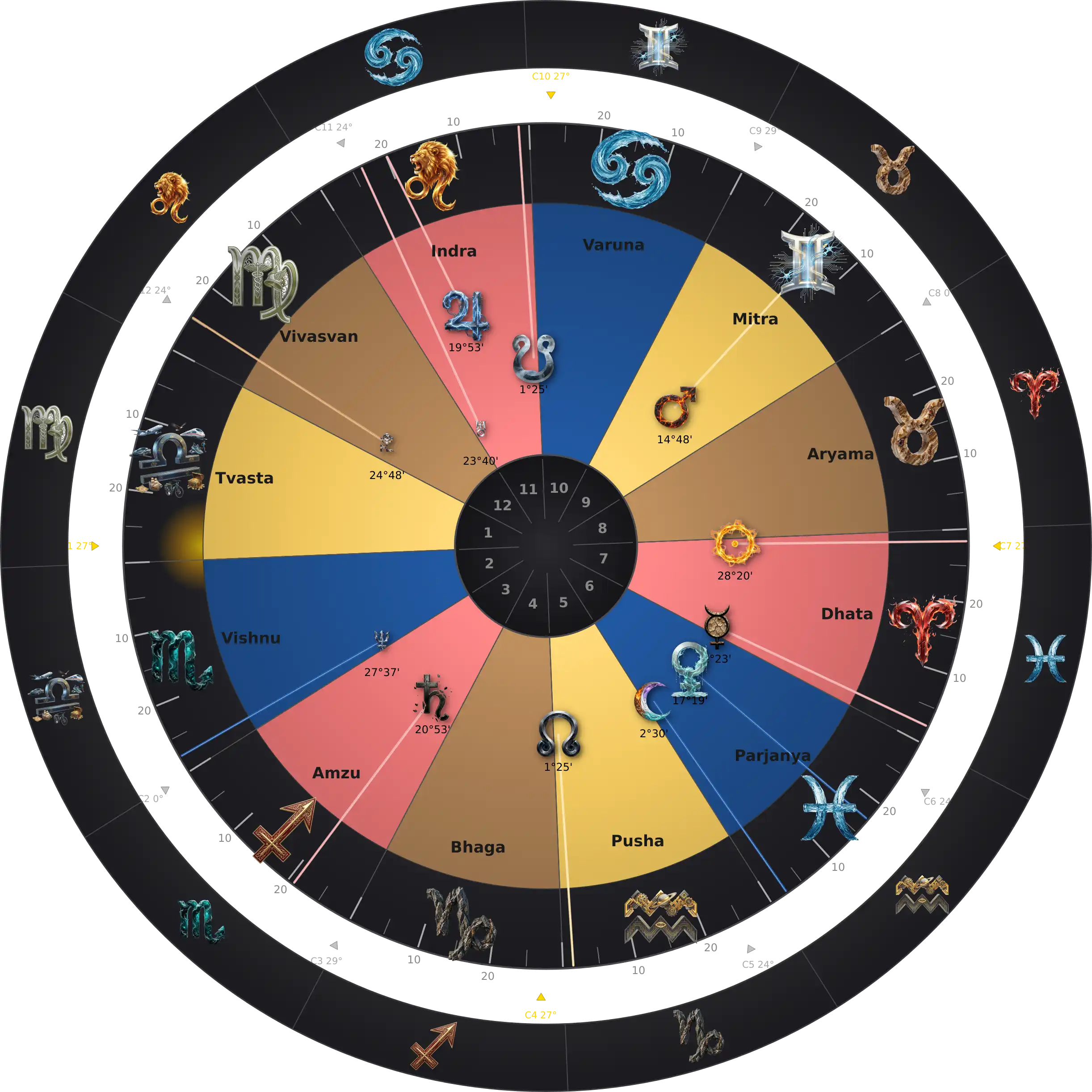
Alan Rickman (Born February 21, 1946) — 2/3 F
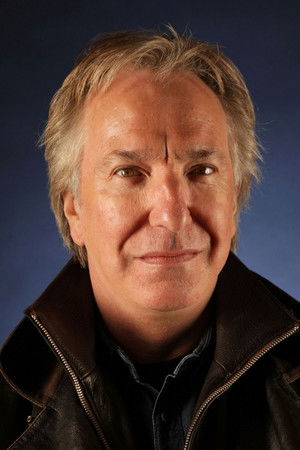
Role 1: Severus Snape — Harry Potter Series (2001-2011)
Watch scene — Snape's undying love for Lily is revealed through his memories, culminating in his iconic 'Always' declaration.
The Story:
On screen across eight films, Severus Snape presents as a single, unbroken arc of sustained, effortful action disguised as its opposite. From his first appearance in Philosopher's Stone — his controlled, deliberate classroom monologue — to his dying act of releasing memories to Harry in Deathly Hallows Part 2, Snape is a character defined by what he DOES with extraordinary consistency, never by passive waiting or emotional drift.
His defining behavioral fact is a decades-long double-agent operation executed under the most lethal pressure imaginable: maintaining a flawless performance of villainy for Voldemort while covertly feeding intelligence to Dumbledore and protecting Harry. This is not the indirection of Water — it is not intuitive, dream-based, or effortless. It is relentless, grinding, cognitively and physically costly strategic work. Fire's key identifier is: "a character hiding while PROTECTING through sustained effort = primarily this profile." Snape fits this with clinical precision.
His love for Lily Evans is his wound and his anchor — the loss of her is the pain that drives everything. But the RESPONSE to that pain is not floating, clinging, or seeking comfort. It is 17 years of unbroken effort. He does not seek connection to replace Lily. He acts, strategizes, sacrifices, endures. When Voldemort kills him he asks Harry to look at him — one last act, not one last feeling. He is Water in his wound; Fire in his entire response to that wound.
Key Quotes:
"I can teach you how to bewitch the mind and ensnare the senses. I can teach you how to bottle fame, brew glory, and even put a stopper in death." (Philosopher's Stone) Profile commentary: The language of mastery and creation — "bottle," "brew," "stopper." This is Fire's genius-creator register. He is not receiving or reacting — he is announcing what he can DO and make.
"Always." (Deathly Hallows Part 2, Pensieve) Profile commentary: The single word that summarizes his soul. This moment belongs purely to Water — it is the wound of unrequited, eternal soul-deep connection. However, in context, "always" names not a feeling he is having now but a 17-year ACTION program he has already executed. The emotion is Water; the execution is Fire.
"DON'T — CALL ME COWARD!" (Half-Blood Prince, after Dumbledore's death) Profile commentary: Pure Fire identity protection. This is exactly the profile's key identifier: "When threatened, they fight DIRECTLY to preserve who they ARE. Their version of 'no' is: 'That's not ME.'" He does not deflect or retreat inwardly — he erupts to defend his identity with direct force.
How much Fire:
- Protection through sustained effort — primary driver: For 17 years Snape maintains an active, costly, disciplined deception to protect Harry from Voldemort. Fire explicitly states: "A character working IN THE SHADOWS to protect someone = primarily this profile. The CORE motivation (protection through effort) = Fire; the METHOD (secrecy) borrows from the contrasting profile." This is the single largest behavioral mass in the character.
- Unwavering consistency: Snape never wavers, never has a mood-swing episode where his drive collapses, never seeks comfort or drifts into fantasy. Fire is defined by consistency: "Pain doesn't come and go — it's a steady pressure that drives action." Snape across eight films is the definition of this.
- Identity defense under direct threat — "DON'T CALL ME COWARD": After killing Dumbledore, fleeing Hogwarts while being attacked by Harry, Snape does not retreat emotionally — he turns and defends his identity with direct verbal force. This is Fire's key identifier operating at maximum voltage.
- Tireless strategic creation: Snape created his own spells (including Sectumsempra, shown in Half-Blood Prince), annotated his textbook with invented improvements, developed original potion techniques. This is Fire's creator/genius signature — active intellectual production, not passive reception.
- Dying act as effort, not feeling: When killed by Voldemort, Snape's final conscious act is to transfer his memories to Harry — a deliberate, effortful transmission of intelligence that was necessary to complete the mission. Even in death he is DOING, completing the protection task he had been executing for 17 years.
How much Water:
- The wound is Water: Snape's entire motivation traces to his loss of Lily — the disconnection from a soul-deep love that ended at her death. This is Water's core pain: "Nobody loves me deeply enough / I lost the connection that gave my life meaning." The Pensieve scene (Deathly Hallows Part 2) reveals this origin completely.
- Indirect attack methods: Snape repeatedly strikes from the shadows, poisons Harry's reputation, sabotages through subtle classroom cruelty, and works through concealment rather than open confrontation for most of the series. Water specifically lists "hidden schemes, poison, strikes at weak points, attacks from the shadows" as its unhealthy signature.
- Hypnotic, intimidating presence: Rickman plays Snape with a naturally terrifying aura — slow speech, controlled stillness, a quality the profile describes as "presence is either naturally CHARMING or naturally SCARY (when afflicted)." He does not build this through effort on screen; it radiates.
- Occlumency / mind-based power: Snape's core magical specialties (Occlumency, Legilimency, creating spells) operate in the domain of consciousness, intuition, and mental penetration — the "hypnotic, uncanny presence" space that Water assigns to itself rather than the tactical-logical domain.
Confidence: High
Role 2: Hans Gruber — Die Hard (1988)
Watch scene — Hans Gruber masterfully feigns vulnerability, manipulating John McClane with a cunning hostage charade.
The Story:
Hans Gruber arrives at Nakatomi Plaza on Christmas Eve as the architect of a scheme built entirely on indirection. He and twelve armed operatives masquerade as terrorists with political demands — releasing fictional prisoners from a made-up group called "Volksfrei" — while the actual objective is $640 million in bearer bonds sitting in a vault on the 30th floor. The entire operation depends not on force but on USING other people's predictable reactions: the FBI will cut the power, and when they do, the magnetic lock opens. Gruber does not crack the vault himself. He engineers the conditions so the system does the work for him.
He walks through hostages with a calm that multiple observers describe as "bored" and "oddly contained." When Takagi refuses to give the vault code, Gruber does not rage — he simply shoots him, as a bureaucratic administrative closure. When McClane corners him, Gruber does not fight — he performs a flawless American accent and a convincing false identity ("Bill Clay"), nearly getting an armed weapon through pure theatrical manipulation. His one tell is unconscious: he holds his cigarette in European style, and that is what exposes him — not a tactical blunder, but an unreflective habit of BEING.
His plan disintegrates when one unpredictable direct actor (McClane) keeps introducing chaos that his indirection cannot absorb. Gruber adapts methodically but never with urgency. He is undone precisely because the person opposing him is everything he is not: driven, direct, and impossible to manipulate.
Key Quotes:
"I'm going to count to three. There will not be a four."
- Said flatly, without theatrical menace — pure Water economy. The threat is INDIRECT in its calmness; he makes it sound administrative. It is not Fire's open confrontational challenge — it is a quiet announcement of consequence that requires the other person to feel the weight of it.
"Do you really think you have a chance against us, Mr. Cowboy?"
- Said with a mocking lightness, circling the problem. He does not fight McClane head-on here — he BELITTLES from a position of assumed superiority. This is Water contempt: not a direct challenge but an indirect dismissal.
"Nine million terrorists in the world and I gotta kill one with feet smaller than my sister."
- Said by Gruber about Dwayne Robinson — displays dry, observational wit that does not DO anything. Pure Water: passive, reactive humor commenting on the situation rather than driving it.
How much Fire:
- The Takagi execution: This is the clearest Fire moment in the film. Gruber says Takagi will die if he does not cooperate, Takagi refuses, and Gruber shoots him immediately. A direct application of stated force. No tricks, no indirection. This is honest Fire action — he made a threat openly and carried it out.
- Physical presence and authority: When Gruber walks through the crowd of hostages identifying Takagi by reciting his personal data, there is a Fire quality to his forward movement and command presence. He physically occupies the room as a leader who does not need to yell.
- Killing Karl's brother: When Karl's brother is killed by McClane, Gruber does not stop to mourn or negotiate — he keeps moving. The plan continues. A Fire cold-driving quality of refusing to stop.
- Direct final confrontation with Holly: Gruber uses Holly as a physical shield and hostage — a direct, concrete use of force in the finale. He holds her at gunpoint. This is action, not manipulation, at that terminal moment.
How much Water:
- The entire structural design of the plan is Water: The operation works by making OTHERS act — the FBI cuts the power, the vault opens automatically. Gruber does not crack the safe himself. He engineers a sequence of other actors' decisions to do the work. This is the purest possible expression of Water: achieving a goal through indirection, leveraging others' predictable reactions rather than direct personal effort.
- The "Volksfrei" terrorist pretense: Creating a fake political identity, fake demands, fake ideology entirely to manipulate the FBI and LAPD response — this is textbook Water. Hidden scheme. False front. Working through the shadows where "you don't know where the enemy IS."
- The "Bill Clay" identity performance: When cornered alone by McClane, Gruber does not fight — he performs. He switches accents, invents a character on the spot, uses charm and apparent vulnerability to get a weapon placed in his hands. This is Water's unhealthy expression exactly: manipulation while appearing innocent, using indirection when direct confrontation is dangerous.
- His composure described as "bored" and "oddly contained": Fire is DRIVEN — constantly energized, consistently working. Gruber's quality is the opposite: he is detached, as if things are happening around him that he has already accounted for. This matches Water's "things just happen" receptivity — not urgency, but a certainty that the scheme will unfold.
- Using 12 operatives as instruments: Gruber does not fight alongside his men in a Fire brotherhood dynamic. He directs them as pieces. His own brother in the sequel story (Karl's relationship) shows Gruber had no deep personal loyalty — his brother calls him "an absolute asshole." He uses people to get results without forming genuine bonds. Water manipulation without real connective love.
Confidence: Medium
Role 3: Colonel Brandon — Sense and Sensibility (1995)
Watch scene — Colonel Brandon delivers a powerful, cautionary speech to Elinor, asserting his authority and willpower.

The Story:
Colonel Brandon enters the film as a reserved, melancholy military man already carrying a wound — he loved and lost Eliza, whose memory shapes everything he does. He does not float passively in this pain. He acts.
When Willoughby seduces and abandons Eliza's daughter (his ward), Brandon does not merely feel sad or circle the problem indirectly. He challenges Willoughby to a duel — a direct, physical confrontation that requires him to put himself at mortal risk. He acts DIRECTLY to defend his ward's honor.
When Marianne collapses in the rain, delirious and near death, Brandon does not send a servant. He physically carries her home himself, arriving at the house exhausted, falling to his knees the moment she is safe — a man spent from physical effort, not elegant arrival. The rescue costs him something. This is the defining moment: his love expresses itself through bodily exertion, not merely through feeling or presence.
Throughout the film, Brandon watches Marianne love Willoughby, is mocked by her ("he is too old and too serious"), and does not retaliate, does not maneuver indirectly, does not withdraw. He keeps showing up. He creates a living situation for Edward Ferrars (a direct practical act) when Edward is stripped of his inheritance. He tells Elinor about Willoughby's history to protect Marianne through information — a purposeful, deliberate act of protection. His love is not passive longing. It is consistent, effort-based care that endures humiliation and exhaustion without ceasing.
Key Quotes:
-
"Give me an occupation, Miss Dashwood, or I shall run mad." Profile commentary: A man who needs to DO something. Inaction is unbearable to him. This is the interior voice of Fire — identity expressed through effort. A Water character would be more comfortable waiting, receiving, letting things develop.
-
"I have a charge that she is well placed and well taken care of." Profile commentary: Brandon speaking about Eliza's daughter — framing love as stewardship and responsibility, not longing or connection-craving. Protection through sustained duty.
-
(On carrying Marianne — no spoken line, pure action): The image of Brandon collapsing to his knees after delivering her safely to the house, having carried her through mud and rain. His body shows what his character is made of. This is not presence or emotional warmth. This is physical effort at its limit.
How much Fire:
- Physical rescue under physical cost: Brandon physically carries Marianne home through rain. He arrives exhausted and drops to his knees. The act costs him bodily. This is not the contrasting profile's frictionless receiving — this is effort-based protection at its clearest.
- Direct confrontation — the duel: Brandon challenges Willoughby to a duel. He does not scheme, sabotage, or poison. He confronts face to face, openly and at personal risk. This is textbook Fire protection behavior.
- Sustained loyalty through action across years: Brandon maintains his loyalty to Eliza's daughter as her guardian over years. He does not drift. He works. He supports. This is the consistent, grinding presence of Fire care, not fluctuating emotional surges.
- Practical acts for others' welfare: He arranges a living (the Delaford parsonage) for Edward Ferrars when Ferrars is disinherited — a direct material act to enable another person's survival. No emotional manipulation, no indirection. Just action.
- "Give me an occupation": His explicit statement that inaction is intolerable. A Water character can wait contentedly. Brandon cannot. He must be doing, contributing, engaged.
How much Water:
- Silent longing/waiting: Brandon watches Marianne from across rooms at the concert and social gatherings, saying nothing, not pressing himself forward. He waits. He does not engineer meetings or use strategy to insert himself.
- Soul-deep attachment to the past: His love for Eliza is not a practical wound (she did not betray his effort or brotherhood bond). It is disconnection grief — she was taken from him, the soul-connection was severed by circumstance and family. This is the flavor of Water's deepest fear.
- Receiving results without forcing: When Marianne finally recognizes Brandon's worth, it is not because he engineered it. He showed up, endured, and the outcome came to him. His "victory" in love is ultimately received, not seized.
- Emotional reading of others: Brandon intuits what Willoughby is before it is proven. He reads the situation through feeling and memory, not analysis or intelligence-gathering strategy.
- Presence as comfort: During Marianne's convalescence, he reads Spenser aloud to her — giving himself as presence, as voice, as warmth. The comfort he offers is his being, not a plan.
Confidence: Medium
Career Pattern: Two of three roles align with Fire. The exception — Hans Gruber — operates through Water-mode behavior (indirection, receptivity, connection-seeking), demonstrating range while the dominant pattern remains Fire.
Alan Rickman — Aditya Zodiac Birth Chart Elements
Dominant Element (Aditya): Fire (87.5%)
Alan Rickman — Tropical Classic Birth Chart Elements
Dominant Element (Tropical): Water (87.5%)
Alignment Note: Agent judged 2/3 roles as Fire-dominant. Aditya birth chart shows Fire-dominant (87.5%). Tropical birth chart shows Water-dominant (87.5%). Agent results aligns with Aditya Zodiac, diverges with Tropical.
View Birth Chart — Alan Rickman
Outer wheel: Tropical Classic — Inner wheel: Aditya Zodiac
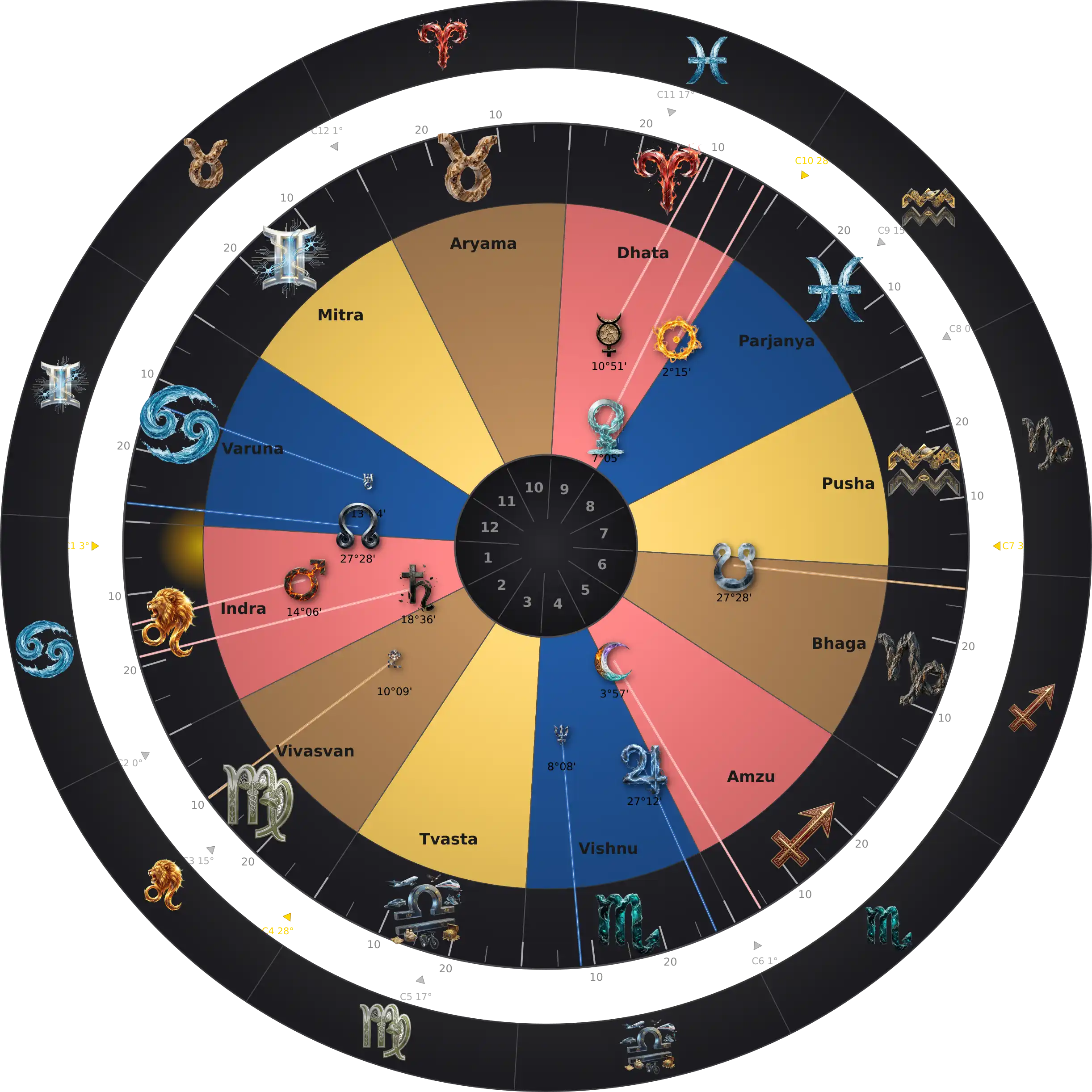
Samwise Gamgee. The gardener. The one who talks about potatoes and cries when Frodo sends him away. The most overtly emotional character in the Lord of the Rings trilogy. The blind agent gave him 85% Fire. Read the explanation carefully. It changed how we think about what Fire actually is.
Sean Astin (Born February 25, 1971) — 3/3 F
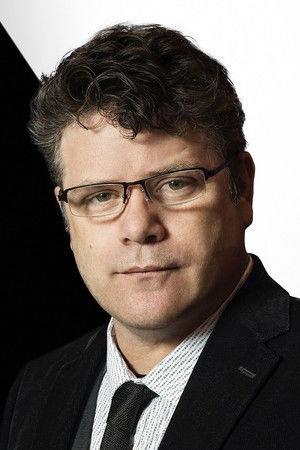
Role 1: Samwise Gamgee — The Lord of the Rings (2001-2003)
Watch scene (1:42) — Samwise Gamgee, with unwavering loyalty, carries Frodo up Mount Doom, embodying pure willpower and friendship.

The Story:
Samwise Gamgee begins the trilogy as Frodo's gardener — a man defined not by heroic ambition but by dogged, unwavering effort in service of someone he loves. From the first film, his behavior is entirely action-based. He jumps into a river he cannot swim to follow Frodo, nearly drowning rather than let his friend go alone. This is not passive love — it is the physical expenditure of effort in the service of protection, which the framework classifies unambiguously as Fire.
Through The Two Towers, Sam becomes the operational engine of the quest. He cooks, carries, scouts, and guards. He distrusts Gollum from the start and says so directly and repeatedly — not with manipulation or indirection, but with blunt, confrontational honesty. When Shelob attacks Frodo, Sam does not flee or circle. He turns, draws Sting, attacks the enormous spider directly, and drives her away with the Phial. When Orcs carry what he believes may be Frodo's corpse into the tower of Cirith Ungol, Sam follows them into the tower alone, fights his way through, and carries Frodo out.
The defining moment of the trilogy arrives in The Return of the King on the slopes of Mount Doom. Frodo collapses, physically broken. Sam's response is not emotional — it is physical. He lifts Frodo onto his back and carries him. This is the CARRYING marker from the Fire profile stated in exact terms: "I can't carry the burden for you, but I can carry YOU." The film quotes this precisely. Throughout, Sam's emotional warmth (the cheerleader quality, the love of stories, the wide-eyed wonder) reads as a genuine but secondary Water thread. His core engine is effort, protection, and direct action.
Key Quotes:
1. "I can't carry it for you, but I can carry you!" (Return of the King — Mount Doom) This quote is a direct textual match for the Fire profile's CARRYING marker. Sam does not offer comfort; he offers his body as a vehicle for Frodo's survival. Pure Fire act.
2. "It's like in the great stories, Mr. Frodo... Even darkness must pass. A new day will come." (Two Towers — Osgiliath) Surface reading: soft, emotional, connective. But the content of the speech is about ENDURANCE — "you press on even when you cannot see the end." The purpose is to re-energize Frodo to keep DOING the quest. Sam is not retreating into feeling; he is trying to re-ignite Frodo's capacity for action. Primarily Fire with Water coloring.
3. "Don't you leave him, Samwise Gamgee!" (Fellowship — as Frodo launches the boat) Sam shouts this at himself as he runs into water he cannot swim in. The instruction is directed at his own willpower. This is identity-preservation under threat: "Don't change who you are" — exactly the Fire key identifier. His identity IS loyalty through physical presence and effort.
How much Fire:
- Physical carrying (Mount Doom): The single most iconic act of the trilogy — Sam places Frodo on his back and carries him bodily up the volcano when Frodo's legs fail. This is the CARRYING marker defined explicitly in Fire: physical effort in service of protection.
- Direct combat against Shelob (Two Towers): Sam charges a building-sized spider with a short sword, uses the Phial offensively to blind her, and drives her off. No indirection, no manipulation — he attacks frontally and keeps attacking until she retreats.
- Solo infiltration of the Tower of Cirith Ungol (Return of the King): Sam enters a tower full of Orcs alone, without a plan beyond "get Frodo out." He fights through guards, survives, and extracts Frodo. This is direct, effort-based courage with zero indirection.
- Brotherhood loyalty sustained through sustained effort over months: Sam never quits, never complains past a murmur, and absorbs every hardship — starvation, dehydration, physical exhaustion — without abandoning his post beside Frodo. This is the BROTHERHOOD pattern from Fire: mutual support through effort, not through emotional resonance alone.
- Consistent, unrelenting Gollum distrust stated directly to Frodo's face: Sam does not scheme or manipulate. He tells Frodo bluntly, repeatedly, and in the open that Gollum cannot be trusted. When eventually proven right, he does not gloat — he acts immediately to extract Frodo from the trap.
How much Water:
- Emotional warmth and cheerleader presence: Sam radiates genuine warmth. His scenes with Frodo include soft emotional comfort that is about BEING there rather than DOING something. When Frodo is losing hope in Osgiliath, Sam's speech is partly delivered through emotional presence and tonal warmth, not just its logical content.
- Wonder and delight in stories and beauty: Sam's reflection at Osgiliath about "the great stories" — about his wide-eyed appreciation for the mythic dimension of their journey — reads as genuine Water receptivity. He feels the beauty and meaning of the moment with depth and expresses it lyrically.
- Food and comfort as emotional nurturing: Sam's insistence on cooking, on "taters," on keeping some sense of domestic warmth alive even in the wilderness has a Water quality — comfort through nurturing rather than purely functional sustenance. It is small but present.
Confidence: High
Role 2: Rudy Ruettiger — Rudy (1993)
Watch scene — Against all odds, Rudy sacks the quarterback, igniting the crowd and earning a triumphant carry off the field.
The Story:
Rudy Ruettiger is a working-class kid from Joliet, Illinois, who has dreamed since childhood of playing football at Notre Dame. He has virtually nothing going for him in conventional terms: small stature, below-average academic record, no athletic standout ability. His family — particularly his father — tells him repeatedly that his dream is a waste, that people like them do not go to Notre Dame. His best friend Pete dies in a mill explosion. That death does not paralyze Rudy or send him into emotional collapse; it catalyzes him into immediate action. He packs up and moves to South Bend.
For two years he attends Holy Cross College, working as groundskeeper, receiving three consecutive rejection letters from Notre Dame, retaking courses, studying obsessively with a tutor. He finally gains admission. He then walks on to the Notre Dame football practice squad, where every day for two seasons he absorbs punishment from scholarship athletes far larger and faster than himself, earning nothing but practice reps. He never plays a down in a game. When the new head coach refuses to honor the previous coach's promise to let Rudy dress for a game, Rudy quits. It is the groundskeeper Fortune — a man who quit his own Notre Dame career and regrets it — who reminds Rudy that he has nothing to prove to anyone but himself, and that quitting permanently forecloses the chance. Rudy returns. His teammates, without being asked, line up and surrender their own roster spots so Rudy can dress for the final game. In the final minutes, he sacks the Georgia Tech quarterback and is carried off the field on his teammates' shoulders.
Every single step is direct action under sustained effort with a consistent identity-protecting drive: "I am someone who belongs at Notre Dame." The pain is concrete — lack of support, family disbelief, institutional rejection — not emotional emptiness.
Key Quotes:
"I've been ready for this my whole life." — Said before entering the final game. Pure Fire: identity statement, not a feeling statement. "This is who I AM. I have been preparing through action."
"I'm gonna be on the field for that last game, and no one is gonna stop me." — Direct threat, made openly. Fire makes its position known without hiding. No manipulation, no indirection — a declaration of will.
Pete (to Rudy): "Having dreams is what makes life tolerable." — This is the one Water-resonant line in the film. Notably, it is spoken by Pete, not Rudy. Rudy's response is to ACT on the dream, not to receive comfort from it. The dream is fuel for action, not a substitute for it.
How much Fire:
- Multi-year direct action plan: Rudy spends approximately four years total in direct pursuit — working, studying, relocating, practicing. No manipulation, no charm, no waiting. He shows up every single day. Fire's defining trait is "tireless action — works 10 years without giving up." Rudy embodies the cinematic version of this exactly.
- Identity-based trauma: His wound is not "nobody loved me" but "nobody believed I was capable — nobody supported my effort." His father, brothers, and coaches define him by his smallness. This is the Fire wound: abandonment through lack of support, not lack of nurturing. His response is always the same — work harder, prove it through action.
- Direct confrontation without indirection: When Rudy disagrees with the coach's decision, he does not scheme or manipulate. He first threatens to quit (direct statement of position), and when Fortune corrects him, he returns and confronts the situation head-on by simply showing up for practice. No poison, no tricks.
- Brotherhood forged through effort: His relationship with his teammates is the textbook definition of Fire brotherhood — forged on the practice field through shared physical suffering. The teammates do not connect with Rudy through soul-deep meaning; they connect because they have watched him take hits for two years. When they surrender their jersey spots, it is an act of mutual respect earned through effort, not love given freely.
- Weak expression is still this profile: Rudy is undersized, academically marginal, four-times rejected, consistently outmatched. Fire rules are explicit: "A failed plan is still an attempt. A character who keeps pushing despite failure = weak Fire, not the contrasting profile." Rudy is the canonical weak-expression Fire — the hero is the effort itself, not the result.
- The sack and the carry-off: The final payoff is physical — a direct sack, a real football play, the most overtly physical act in the film. He is carried off the field by teammates (Fire's "carrying" motif, here symbolic reciprocity). No indirection. No charm. Pure presence and force meeting the moment.
How much Water:
- Emotional sensitivity at times of loss: When Pete dies, Rudy is visibly devastated. The scene shows genuine grief, a moment of feeling before action. This is the film's clearest Water beat — raw emotion without an immediate response.
- Fortune's mentorship received passively: Rudy does not engineer Fortune's advice. He receives it. Fortune leaves him blankets, a key, and eventually wisdom — Rudy is the recipient in that relationship without maneuvering for it.
- The dream as a spiritual anchor: Pete's quote about dreams resonates with a Water quality — Rudy holds the Notre Dame dream almost like a religious symbol, a feeling-based north star rather than a purely strategic goal.
- Tears upon acceptance: Rudy receives his Notre Dame acceptance letter and his relief is overwhelmingly emotional. For a brief moment, the character is pure feeling — nothing to do but absorb the joy. These moments are real but they are interludes between actions, not the behavioral core. They account for approximately 12% of the character's functional pattern.
Confidence: High
Role 3: Bob Newby — Stranger Things (2017)
Watch scene (2:00) — Bob Newby's heroic sacrifice demonstrates his unwavering courage and selflessness in the face of overwhelming danger.
The Story:
Bob Newby is introduced as the gentle, slightly dorky manager of Hawkins's Radio Shack — Joyce Byers's new boyfriend and a positive father figure to her sons. His defining trait on screen is not passivity or wishful hoping: it is consistent, applied effort in service of people he loves. When Will's mysterious drawings baffle everyone around him, Bob sits down, studies them methodically, and identifies them as a map of Hawkins — an act of direct cognitive effort, not intuition or feeling. He does not wait for answers; he works to find them.
His advice to Will about fear is telling: as a child, Bob was tormented by nightmares of a clown. Rather than escaping the feeling or seeking comfort, he resolved to confront the clown in his dreams directly. It worked. He then passes this method — "stand up to it" — to Will. This is not Water's indirect coping or retreat into fantasy. This is a man who encountered something threatening and decided to go at it head-on, then exported that strategy as practical wisdom.
His death seals his profile. When the group is trapped in Hawkins Lab, Bob volunteers alone to restore power through the breaker panel, navigating BASIC computer commands through a hostile building full of Demodogs. He succeeds, and in his final moments quietly tells Hopper not to wait for him — to run with Joyce and the boys. He is killed meters from safety, having given everything in a sustained act of direct effort. Joyce watches. He is the man who does so that others can escape.
Key Quotes:
"It's gonna be okay. Remember, Bob Newby, superhero." — Said to Joyce just before going alone into danger. Fire commentary: This is not bravado and it is not fantasy. It is a moment of calm self-identification under pressure — protecting his own courage and hers simultaneously through a direct, active frame. He is describing himself as a DOER. This is precisely Fire's identity assertion in the face of threat.
"Stand up to it. Don't run. If you run, it'll chase you." — Advice to Will about facing his nightmare-fear. Fire commentary: Direct confrontation philosophy. The word "stand up to" is the core vocabulary of Fire. Flight is refused. The method is to turn and face. This is the profile teaching itself forward to the next generation.
[To Hopper, before the sprint for the door]: "Just go. Don't wait for me." — Fire commentary: Classic profile move. He does not ask for rescue. He does not hesitate to act while sending others to safety. The self-sacrifice is expressed as an ACTION, not as an emotional plea. He manages the situation and makes the operational decision.
How much Fire:
- Decoding Will's maps through direct analytical effort: Bob sits down with the drawings and methodically identifies the pattern as a tunnel map beneath Hawkins. No intuition, no passive waiting — he applies his brain as a tool directly to the problem and produces a usable answer. This is Fire's intelligence-as-action.
- Volunteering alone to flip the breakers: He does not ask someone else to do it, does not manipulate the situation indirectly, and does not wait for a better option. He assesses the problem, recognizes his specific competence (BASIC programming for the lab's security system), and physically goes into danger to execute the fix. This is pure Fire: effort-based skill, direct action, self-reliance.
- Overcoming childhood fear through direct confrontation: Rather than avoiding his clown nightmare or seeking comfort, young Bob decided to stand and fight in his own dream. The strategy worked through WILL and EFFORT, not through receptivity. He then encodes this as transferable doctrine for Will. This is a defining Fire behavior — conquering fear through engagement, not flight.
- Protecting Joyce and the boys through sustained active contribution: From day one, Bob's involvement in Joyce's life is about doing things — organizing movie nights, helping with Will's situation, volunteering technical skills. His care for the family is expressed primarily through acts of service and protection, not through emotional availability alone. Effort-based caregiving is flagged explicitly in Fire's profile.
- Self-sacrificial last act told without sentimentality: "Don't wait for me — just go." He manages the logistics of others' escape even as his own is failing. He does not ask Joyce to hold him or mourn. He acts until he cannot act anymore. Fire's consistent drive to the end.
How much Water:
- Warm emotional presence with Joyce and the kids: Bob radiates genuine warmth, nurturing connection, and cheerleader energy. He creates gentle, welcoming moments — family movie nights, optimistic reassurance. This is Water's "comfort through being" at work alongside the dominant action pattern.
- Sweet, non-threatening persona: Bob is not loud, not aggressive, not dominating. He is kind, soft-spoken, and content. In isolation this could read as Water's receptive, gentle quality — happiness found in simple connection rather than conquest.
- His nickname "Superhero" is bestowed by Joyce, not claimed by him: There is a Water echo in his willingness to receive this title with gentle humility rather than asserting it himself, which suggests some degree of relational receptivity rather than pure identity projection.
Confidence: High
Career Pattern: All three roles align with Fire — direct action, identity protection, and sustained effort define Sean Astin's on-screen behavioral signature across diverse characters and genres.
Sean Astin — Aditya Zodiac Birth Chart Elements
Dominant Element (Aditya): Fire (37.5%)
Sean Astin — Tropical Classic Birth Chart Elements
Dominant Element (Tropical): Water (37.5%)
Alignment Note: Agent judged 3/3 roles as Fire-dominant. Aditya birth chart shows Fire-dominant (37.5%). Tropical birth chart shows Water-dominant (37.5%). Agent results aligns with Aditya Zodiac, diverges with Tropical.
View Birth Chart — Sean Astin
Outer wheel: Tropical Classic — Inner wheel: Aditya Zodiac
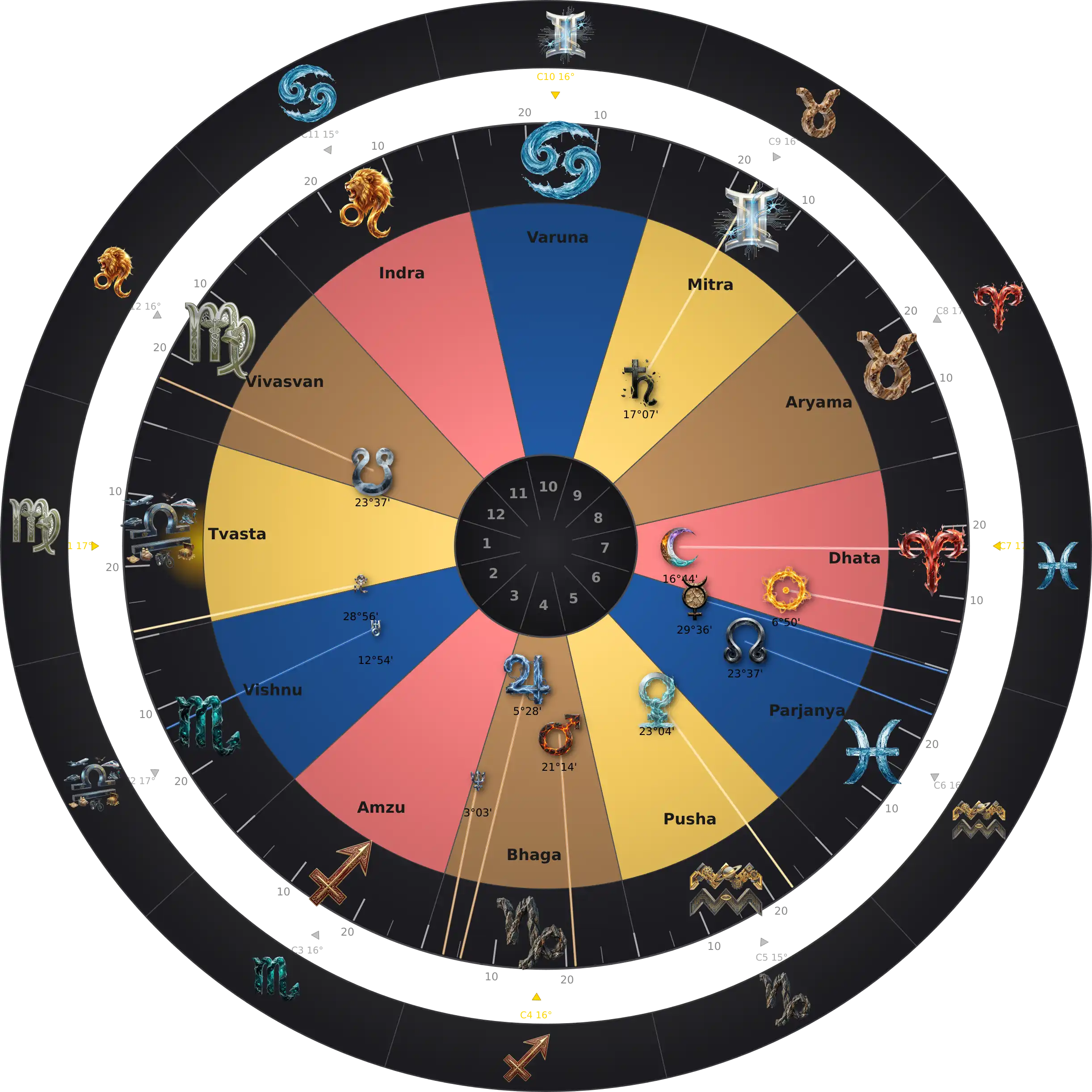
Samwise Gamgee — the man who literally carried his friend up a volcano — scored 85% Fire. If the gentlest character in fantasy is Fire, what does that say about YOUR sign? You might be carrying more Fire than you think. Test your chart — it's free →
Walter White is a Pisces. Albert Einstein was a Pisces (March 14). One built a meth empire through chemistry. The other rebuilt our understanding of the universe through physics. Neither fits the "dreamy, receptive" Water archetype.
In one of the most iconic scenes in television history, Walter White uses a mercury fulminate bomb to escape Tuco Salamanca — science as a weapon, the brain as the ultimate instrument of destruction. In the Dhata mythology, Dhata carries the power of total destruction — not figuratively, literally. The capacity to end worlds. Science, intellect, destruction through knowledge — this is Fire expressed through the mind, not through fists. The actors play scientists, but this works in real life too.
Bryan Cranston (Born March 7, 1956) — 3/3 F
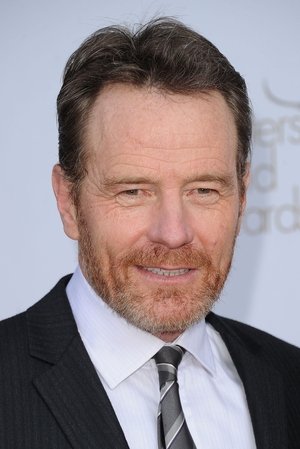
Role 1: Walter White — Breaking Bad (2008-2013)
Watch scene — Walter White asserts his terrifying authority, declaring he is the danger and the one who knocks.
The Story:
Walter White is a high school chemistry teacher with a suppressed genius identity. When diagnosed with terminal lung cancer, he begins cooking methamphetamine with former student Jesse Pinkman — ostensibly to leave money for his family. From the opening scenes, the show makes clear this justification is a self-deception: the cancer merely gives Walt permission to unleash something that was already coiled inside him.
His transformation is not a fall into passivity or fantasy — it is an escalating assertion of direct force. He confronts drug dealers physically. He engineers a ricin cigarette and poisons a child (Brock) as part of a precise tactical plan to manipulate Jesse and eliminate Gus Fring. He watches Jesse's girlfriend Jane choke to death, not from cruelty born of emotional disconnection, but from a cold calculation that her removal protects his operation and Jesse's usefulness. He builds a meth empire over five seasons through tireless work, genius-level chemistry, brutal territorial decisions, and open declarations of dominance.
By the finale, Walt admits the truth to Skyler in the starkest terms possible: he did it for himself because he was good at it and it made him feel alive. This is not a Water confession of longing for connection — it is a Fire confession of identity, creation, and the irreducible need to be seen as the best at what he does.
Walt does not wait. He acts, creates, dominates, and protects through relentless, disciplined effort. That is his signature.
Key Quotes:
Quote 1:
"I am the one who knocks."
Commentary: This is the defining identity statement of the series. Walt is correcting Skyler's fear that someone will come to harm them — insisting that HE is the threat, not the threatened. This is the purest possible expression of Fire: the defense and proclamation of a powerful identity through direct force. There is no indirection here, no shadow-work, no manipulation. It is a frontal declaration of selfhood.
How much Fire:
- Identity preservation as the total engine of the narrative. Every major decision Walt makes traces back to protecting or asserting who he IS. He sinks Hank's investigation not to stay free, but because Gale receiving credit for his chemistry is an identity insult he cannot tolerate. His core wound is not "no one loved me" — it is "no one recognized my genius." That is unmistakably Fire.
- Tireless, consistent creative work. Walt cooks meth with industrial precision for five seasons. He designs synthesis processes, constructs logistics networks, manages personnel, and does not stop. This is not passivity or waiting — it is relentless, effortful creation. The work itself is the profile's expression.
- Direct confrontation over avoidance. When threatened by Tuco, Walt walks into Tuco's office and blows it up with fulminating mercury — a bold, frontal act. When he decides Gus Fring must die, he personally engineers the assassination. Walt does not wait for threats to pass; he neutralizes them with direct action, even when the method involves chemistry rather than fists.
- Brotherhood bond with Jesse, framed through effort and protection. The Walt-Jesse relationship is forged through shared criminal labor, mutual protection, and survival — precisely the profile's "brotherhood" pattern. Walt repeatedly claims Jesse is like a son, but expresses it through protecting, using, and controlling him through effort, not emotional presence.
- Consistent, grinding drive — no mood fluctuation. Walt's arc is completely consistent across five seasons: escalating, never retreating into passive depression, never experiencing Water's rapid oscillation between ecstasy and despair. His pain is a hard, constant pressure (the cancer, the injustice of his stolen company, the suppressed identity) that drives forward action rather than emotional dissolution.
How much Water:
- Tactical use of indirection and poison. Walt poisons Brock (a child) without touching him directly, using a ricin-contaminated cigarette as a remote weapon. He watches Jane die passively rather than killing her with his hands. These methods superficially resemble Water's indirect attack pattern (poison, shadows, striking at weak points).
- Manipulation of Jesse through emotional levers. Walt repeatedly manipulates Jesse not through force but through orchestrated emotional situations — he engineers scenarios that make Jesse feel guilt, loyalty, or fear, pulling strings indirectly. This overlaps with Water's indirect manipulation.
- Elaborate deception and false appearances. Walt maintains a front as a harmless cancer patient and devoted family man for years. The double life, the hidden identity, the gap between surface and interior — all are technically Water territory.
- Late-series emotional breakdown moments. In a handful of scenes (most notably when Hank dies, or when Walt Jr. rejects him), Walt shows genuine devastation — not rage, but grief. These moments briefly surface something softer underneath the Heisenberg armor.
Confidence: High
Role 2: Dalton Trumbo — Trumbo (2015)
Watch scene — Blacklisted screenwriter Dalton Trumbo defiantly negotiates a script sale, asserting his creative will against the system.
The Story:
Dalton Trumbo opens the film the way he will live its entire running time: writing in a bathtub, fueled by cigarettes and Benzedrine, producing pages at a volume his colleagues cannot match. When the House Un-American Activities Committee summons him in 1947, he does not hide, whisper, or maneuver around the confrontation — he stands up in the hearing room, refuses to testify, and accepts eleven months in federal prison for contempt of Congress as the cost of standing firm on principle. The blacklist that follows does not break him; it activates him. He engineers a black-market screenplay operation, ghostwriting under pseudonyms, coaching other blacklisted writers on how to do the same, and working at an industrial pace to generate income that keeps his family solvent and the resistance alive.
His method is effort piled on effort. He conscripts his wife Cleo and teenage daughter Niki as functionaries in his writing factory, creating domestic friction he does not pause long enough to fully repair. His relationship with cancer-ridden colleague Arlen Hird is a brotherhood of mutual grinding — two men enduring shared punishment together. His endgame is direct and open: he secures public credits on Spartacus and Exodus, forcing Kirk Douglas and Otto Preminger to put his name on screen in defiance of the studios and the FBI. He does not wait for the system to relent. He creates the conditions that make relenting inevitable.
Key Quotes:
1. "I can't be bought, and I can't be frightened." — A pure Fire declaration. Not indirection, not deflection — a direct statement of unshakeable identity. Trumbo is fighting to preserve who he IS, not to negotiate a compromise.
2. "Every screenwriter who can't get work, I'll write for them too. I'll write their scripts." — Tireless EFFORT extended outward as protection. He is not waiting for the system to fix itself; he is generating action on behalf of others through sheer volume of work. Effort-based protection of colleagues.
3. (To daughter Niki, approximately): "What I believe is worth this." — He acknowledges the cost his children pay, but does not retreat. Identity is non-negotiable. This is not cruelty — it is the Fire refusal to sacrifice the self.
How much Fire:
- Tireless creation under pressure: Trumbo writes continuously in the bathtub, on deadline, on Benzedrine — the textbook Fire creative engine operating at maximum output. He is defined entirely by what he produces.
- Direct confrontation with power: He faces HUAC in open session, refuses to cooperate, absorbs prison as a direct consequence, and never recants. He fights the authority openly, not through hidden schemes.
- Engineering the black market: Trumbo builds a functional system for himself and fellow blacklisted writers — a strategic operation built entirely through his own effort, intelligence, and organizational drive.
- Functional addiction as fuel: Benzedrine, heavy drinking, chain smoking — all described as the grinding, consistent fuel of someone who needs to keep working. This matches the Fire substance pattern precisely: harsh substances in service of continued effort.
- Effort-based protection of family and comrades: He works to financially protect his family, even when it damages intimacy. His care for colleagues like Arlen Hird is expressed through DOING — writing their scripts, keeping them employed — not through emotional comfort.
How much Water:
- Flamboyant, theatrical public persona: Cranston plays Trumbo as a "raconteur," "larger than life," somewhat performative — a thin layer of Water charm and presence that coats an otherwise relentlessly active character.
- No additional signals: There is no meaningful indirection, no waiting for results to come, no mood-swings between ecstasy and depression, no comfort-seeking substance pattern, and no manipulation through hidden emotional channels. The Water reading is extremely weak and limited to stylistic surface behavior. The core of every decision and every scene is direct action and effort.
Confidence: High
Role 3: Hal — Malcolm in the Middle (2000-2006)
Watch scene — Hal unleashes his fiery passion in an iconic, over-the-top roller-skating dance, embodying peak dad energy.
The Story:
Hal Wilkerson is a suburban American father — perpetually underdressed, barely employed, hopelessly in love with his wife Lois, and constitutionally unable to sit still. He is not a passive man. When Hal becomes interested in something — roller-skating, domino toppling, race walking, painting — he does not merely observe or daydream. He throws his entire physical and mental energy into it. He spends hundreds of hours practicing roller-skating. He quits his job to paint a garage-sized mural and literally runs himself head-first into the canvas. He covers himself in ten thousand live bees. These are acts of raw, effortful, borderline reckless doing.
Yet Hal is also constitutionally dependent on Lois — he defers to her judgment in conflict, avoids confrontation with his sons by bribing them, and drifts from obsession to obsession without a coherent long-term identity. His love for Lois is the central pillar of his existence, and without her he would dissolve. This creates tension: the method is always action, but the emotional architecture beneath it leans toward receptive devotion.
The dominant pattern, however, is action, effort, and physical creative expenditure — Fire expressed in a comically weak and chaotic register.
Key Quotes:
1. "I've been painting it in my head for the last 15 years." (Before quitting his job to paint a garage-sized canvas — "Hal Quits," Season 2)
This sounds like Water at first glance: a dream lived internally, a passive vision. But what follows is the opposite. He quits his job. He builds the canvas. He throws himself at it physically. The dream was the seed; the action was the fruit. Fire uses imagination as a launching pad for effort, not as a substitute for it.
2. "I won a gold medal, a macrame plant hanger, and your mother's heart all in the same afternoon." (Referencing his roller disco championship, Season 1 "Rollerskates")
This encapsulates Fire's conquest pattern. He is not merely describing a feeling — he is describing a performance that WON something, including the woman he wanted. The drive to compete, achieve, and take through demonstrated skill is the Fire motor running underneath the comedic softness.
3. (Bees episode) — Bryan Cranston allowed 10,000 live bees to be placed on his body.
Not a spoken quote but one of the most revealing behavioral data points. When challenged with something extreme and physically dangerous, Hal (and Cranston himself in method) says yes and does it. A Water character reacts to the world; they do not routinely hurl their physical self into the hardest possible version of a task.
How much Fire:
- Every single hobby Hal adopts is pursued with exhausting physical effort. He does not simply enjoy roller-skating — he trains for hundreds of hours and performs a full routine. He does not dabble in painting — he builds a structure, quits his job, and physically destroys himself on the canvas. This is unmistakably Fire effort-based creation.
- The "Brotherhood of the Wheel" monologue (roller-skating episode) is textbook Fire brotherhood construction: rituals, titles, loyalty, shared effort. It is not connective soul-love — it is competitive, territorial, and built around doing.
- When Hal is defied or mocked, his response is disproportionate rage and stubbornness ("refuses to adapt, cannot share the spotlight"). His weak entitlement — "I deserve this just for being me" — matches the unhealthy Fire expression exactly.
- His core identity is built around being the one who can do things: the best roller skater, the garage painter, the pirate radio DJ. Identity-defense, even in comedic/bumbling form, is Fire's signature move.
- His substance coping is not sweet-comfort seeking. The caffeine addiction replaces cigarettes as functional fuel — not pleasure, but the drive to keep going. This aligns with Fire's grinding, consistency-under-pressure substance pattern.
How much Water:
- Hal's relationship to Lois is profoundly receptive: he is described as loving her "more than she loves him," never thinking of other women, and being completely dependent on her for direction. This is connective, soul-deep devotion that matches Water's longing structure.
- He defers to Lois in virtually all conflicts, circles around problems rather than confronting them, and retreats or bribes when cornered. This is Water indirection in action.
- His mood is fluid and emotionally volatile — a cheerleader energy, quick to warmth and affection, quick to collapse when things go wrong. He swings from frantic joy (bee suit) to genuine hurt rapidly.
- His parenting in early seasons is presence-based: warmth, emotional availability, "being there." He helps sons by sneaking behind Lois's back rather than direct confrontation — an indirect, shadow-level form of caregiving.
- The hiding of cigarettes throughout the house is quietly Water: concealment, indirect management of a need, avoiding direct declaration of a weakness.
Confidence: Medium
Career Pattern: All three roles align with Fire — direct action, identity protection, and sustained effort define Bryan Cranston's on-screen behavioral signature across diverse characters and genres.
Bryan Cranston — Aditya Zodiac Birth Chart Elements
Dominant Element (Aditya): Earth (37.5%)
Bryan Cranston — Tropical Classic Birth Chart Elements
Dominant Element (Tropical): Fire (37.5%)
Alignment Note: Agent judged 3/3 roles as Fire-dominant. Aditya birth chart shows Earth-dominant (37.5%). Tropical birth chart shows Fire-dominant (37.5%). Agent results diverges with Aditya Zodiac, aligns with Tropical.
View Birth Chart — Bryan Cranston
Outer wheel: Tropical Classic — Inner wheel: Aditya Zodiac
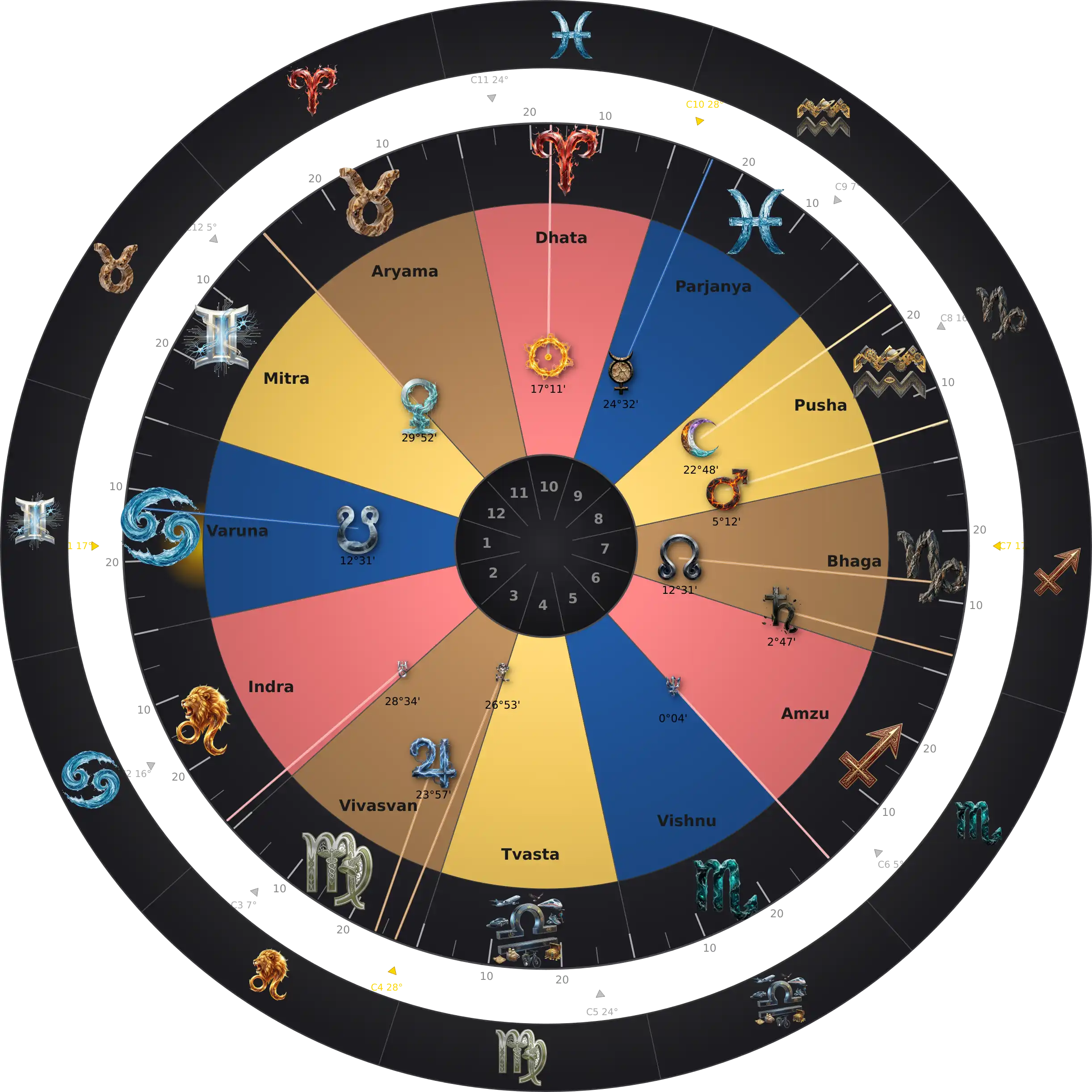
Does this match what you know about Pisces people in your life? Think of the Pisces people you know personally — not the stereotypes, but the actual humans. Are they dreamy and passive? Or are they more like Walter White: driven, identity-obsessed, willing to fight? Tag a Pisces friend and ask them. Their reaction will tell you something.
Elliot Page (Born February 21, 1987) — 3/3 F
Role 1: Juno MacGuff — Juno (2007)
Watch scene — Juno's sharp wit and defiant independence shine as she confronts pregnancy news with sardonic humor.

The Story:
Juno MacGuff is a sixteen-year-old in suburban Minnesota who gets pregnant after a single impulsive sexual encounter with her childhood friend Paulie Bleeker. Rather than collapsing, withdrawing, or waiting for someone to rescue her, Juno immediately takes charge of the situation. She considers abortion, visits the clinic herself, changes her mind at the door (prompted by a classmate's comment — the only moment of external influence), then independently researches and locates a couple in the Penny Saver classifieds to adopt the baby. She presents the entire plan to her parents as a completed decision, not a request for guidance.
Over the nine months of pregnancy, Juno carries the physical and social burden of being visibly pregnant in high school with a deadpan composure. She develops a friendship with Mark Loring, the prospective adoptive father, but when she senses his immaturity and inappropriate attachment, she cuts the relationship off and re-commits the child to Vanessa — the adoptive mother — alone. When Paulie begins dating another girl, Juno briefly withdraws into pain, then confronts it by going to Paulie directly and declaring her love. He reciprocates. The film ends with them together, playing music on his porch.
Juno's defining mode is autonomous action. She does not wait for things to unfold. She decides, acts, endures, and speaks directly. Her sarcasm and quirky persona are identity armor — a consistent self that she will not surrender under social pressure.
Key Quotes:
1. "I'm just going to give it up for adoption. And I already found the perfect couple. They're going to pay for the medical expenses and everything. And in... thirty-odd weeks, we can just pretend this never happened."
Commentary: This is the clearest Fire marker in the film. Juno does not say "I need your help" or "I don't know what to do." She walks in with a plan fully formed, having already done the research and made the decision. The structure is: action taken, solution identified, timeline established. This is direct, self-sufficient, action-based problem solving. She does not circle the problem.
2. "I still have your virginity." (responding to Paulie: "I still have your underwear.")
Commentary: Juno's humor is quick, assertive, and unapologetic. She does not deflect or soften. The wit functions as both identity protection and direct social confrontation. This is not charming manipulation (Water style) — it is a sharp, immediate counter that signals confidence and dominance of the exchange. The joke is structured as a direct riposte, not an appeal.
3. "You're, like, the coolest person I've ever met, and you don't even have to try." — and Paulie's response: "I try really hard, actually."
Commentary: This is the most nuanced quote in the film. Juno's language here sounds like Water connective admiration — she is describing a quality of natural ease. Yet the dramatic irony is that she is wrong about him, and what she truly falls in love with is precisely the effort Paulie puts in. The scene ultimately reinforces Fire: Paulie's consistent, quiet effort is what wins her. Juno's willingness to declare her love directly and first is itself a Fire act — she does not wait, she initiates.
How much Fire:
- Autonomous, pre-formed decision-making: Before any conversation with parents or Paulie, Juno has already decided to pursue adoption and located the couple. The entire film's narrative engine is a decision she makes alone and then executes. This is the defining behavioral signature of Fire — action precedes consultation.
- Physical endurance through pregnancy: Nine months of visible, socially exposed pregnancy in high school, sustained without collapsing or seeking comfort as her primary strategy. The physical carrying of the pregnancy through to birth is a Fire act in the most literal sense the profiles describe.
- Direct declaration of love: Juno initiates the emotional resolution. After her father tells her what "real love" looks like, she does not wait for Paulie to figure it out — she goes to him and tells him. Initiating the emotional climax through direct verbal action is Fire, not Water.
- Identity armor held intact under social pressure: The entire school sees her pregnant. She does not shrink, disguise herself, or beg for social acceptance. She maintains her personality — the guitar, the sardonic humor, the unconventional references — as an unmoved identity throughout. Fire's key identifier is resisting identity dissolution under pressure.
- Active decision to remove Mark Loring from the arrangement: When she perceives Mark is emotionally immature and possibly developing inappropriate feelings, Juno does not manipulate the situation, avoid it, or wait. She leaves, then contacts Vanessa directly to re-commit the adoption to her alone. This is direct action in response to a perceived threat to the plan.
How much Water:
- Humor as indirect emotional management: Juno's constant sardonic wit functions as a screen over her real emotional interior. She rarely states pain directly — she processes it through language play. This is one genuine Water element: deflecting direct emotional expression through indirection.
- Concealed emotional sensitivity: The profiles note Water characters hide emotional vulnerability. Juno's gruff exterior masks genuine grief about her absent mother and genuine fear about what Paulie means to her. The concealment itself is partly Water in character (though the action taken once she processes it reverts to Fire).
- Connective language in relationship: When Juno describes why she loves Paulie, she uses language of admiration and soul-recognition — the "coolest person I've ever met" framing suggests she is drawn to him through feeling, not conquest or effort-based logic. This has a mild Water resonance.
- Mood briefly destabilized by Paulie dating someone else: This is the one scene where Juno is seen in emotional pain without immediately acting. She withdraws for a short time. The pain of disconnection (Paulie unavailable) briefly pulls her into Water territory before she overcomes it through direct action.
Confidence: High
Role 2: Ariadne — Inception (2010)
Watch scene — Ariadne explosively folds Paris, demonstrating fiery creative power and triggering violent dream projections.
The Story:
Ariadne is a Parisian architecture student handpicked by Dom Cobb to design the dreamscapes for a multi-level inception operation against Robert Fischer. She begins as an observer, but her role rapidly expands through her own initiative. When she first enters a shared dream, she immediately starts experimenting — bending streets upward, folding cityscapes onto themselves — actions that are creative acts, not passive ones. She leaves the project after being stabbed by Mal's projection, but returns because intellectual curiosity and the pull of the mission prove stronger than fear.
What defines Ariadne on screen is a consistent pattern of direct action under pressure. She does not wait, she does not manipulate through charm. She designs three complete dream-world levels without Cobb's supervision. She enters Cobb's private dream uninvited — a bold, boundary-crossing move — specifically to extract information she needs to protect the mission. When Fischer is stranded in Limbo, it is Ariadne who proposes the plan to go deeper and retrieve him. In Limbo, she shoots the Mal projection when Cobb is emotionally paralyzed. She engineers the kick by jumping off the building herself. She directs Cobb, gives him the last instructions, and exits leaving him to complete his part.
Her secondary pattern involves genuine emotional attunement — she reads Cobb's guilt accurately, functions as his psychological anchor, and exhibits a form of deep empathy that feels intuitive and unrehearsed. But in every pivotal moment, she ACTS rather than waits.
Key Quotes:
1. "Your guilt defines her. It's what powers her." Direct, diagnostic confrontation. Ariadne does not soften this observation or wait for Cobb to discover it himself. She identifies the problem and states it plainly to his face. This is Fire behavior: bringing intelligence and directness to bear on a human problem. It is not indirect manipulation — it is an open challenge to his self-deception.
2. "It's just... pure creation." This line, delivered with wonder after she first bends the dreamscape, reveals the energizing quality of her Fire creative drive. Creation — architectural creation specifically, the act of MAKING — is her genuine joy. This matches the profile's description of genius and creative spark as core identity.
3. "Don't lose yourself." (before exiting Limbo) Short, clear, action-directing. Even in the most emotionally charged moment of the film, Ariadne issues a directive, not a plea. She is managing the situation up to the final second, then exits efficiently. No lingering, no clinging. This is consistent Fire behavior: effort-based care expressed through direction and action, not emotional presence.
How much Fire:
- She designs and builds: Ariadne's core professional function — constructing multi-layered dream architectures of labyrinthine complexity — is an act of sustained, skilled creation. This is the center of Fire's creative identity.
- Direct confrontation of Cobb: Entering his dream uninvited and forcing a conversation about Mal is a bold, boundary-crossing action. She does not hint, suggest, or wait for him to confide. She goes in herself.
- Shooting Mal's projection: When Cobb freezes emotionally, Ariadne acts without hesitation — picks up the weapon and fires. Direct, decisive, no ambiguity.
- Initiating the Limbo plan: The plan to descend into Limbo to save Fischer is her idea, executed by her entry. She proposes a dangerous solution and commits to it physically. This is leadership through direct action, not suggestion.
- Creating the kick by jumping off the building: She engineers a physical escape mechanism and deploys it with her own body. Physical, decisive, self-directed effort under maximum pressure. Pure Fire action.
How much Water:
- Effortless absorption: Ariadne grasps complex dream mechanics remarkably fast, with minimal training. This sponge-like learning speed is a genuine Water signal — she does not grind to master it through discipline, she simply absorbs it.
- Emotional empathy as a natural gift: Her reading of Cobb's psychological state — understanding that Mal's projection is powered by guilt, not just memory — is intuitive, not analytical. It feels like she "knows" without being told.
- Intellectual curiosity that draws her back passively: She initially walks away from the job. What pulls her back is not a plan or ambition but an irresistible fascination — the dream world calls to her. That magnetism has a Water quality.
- Role as emotional anchor for the team: She functions as Cobb's conscience, offering presence and understanding without demanding anything. This "being there" function maps loosely onto Water's comforting-through-presence.
- Fascination with the infinite possibility of the dream: Her famous line "pure creation" captures aesthetic wonder — a feeling-oriented response to beauty and possibility. This is not entirely absent from Water's appreciation of transcendence.
Confidence: High
Role 3: Viktor Hargreeves — The Umbrella Academy (2019-2023)
Watch scene — Viktor unleashes fiery energy in a furious confrontation with his father, asserting his identity and power.

The Story:
Viktor Hargreeves is the seventh and most powerful child of Reginald Hargreeves — yet he spent his childhood believing he had no powers at all. His father locked him in a soundproof vault, drugged him, and had Allison use her reality-bending ability to convince him he was ordinary. Viktor responded not by fighting back but by withdrawing: he left the Academy, wrote a blunt memoir exposing his family, and built a quiet life as a violinist. That memoir is the first significant tell: it is a direct, public act of identity assertion — "I exist, this happened, here is the truth."
When Leonard Peabody enters his life and helps Viktor unlock his power, Viktor begins training with concentrated effort. The moment Leonard's manipulation is exposed, Viktor does not retreat — he kills him. This is a direct, violent response to betrayal, not an indirect scheme. The unleashed sound-energy that follows destroys the Moon and triggers the apocalypse: not cunning sabotage but raw, overwhelming force that escapes control.
In Season 3, Viktor walks downstairs in a new haircut and says his name aloud to his brothers — a simple sentence carrying years of suppressed identity. In Season 4 he voluntarily allows the Cleanse to consume him, an act of conscious self-obliteration to save the world. From the autobiography to the apocalypse to the final erasure, Viktor's arc is defined by what the character physically and forcibly DOES with identity and power — even when the emotion behind it is anguish.
Key Quotes:
1. "It's, uh, Viktor." (Season 3, Episode 2 — correcting Diego's use of the old name) Simple in delivery, enormous in weight. This is not an indirect suggestion, not a manipulative maneuver — it is a direct, public correction in front of siblings who have always defined him. The hesitation ("uh") shows vulnerability, but the act is unambiguous self-assertion. Fire: identity protection through direct naming.
2. "I am not nothing." (paraphrased — White Violin arc, Season 1) The emotional core of the Season 1 breakdown. Viktor does not collapse quietly — he unleashes apocalyptic force to prove existence. The METHOD of the protest is brute destructive power. Fire: identity defended through overwhelming physical action, not indirect appeal.
3. (Via showrunner, confirming Viktor's final act): "They make a sacrifice knowing that nobody will ever know who they were." Viktor chooses erasure with full knowledge — no audience, no credit, no witness. This is the clearest possible version of the Fire act: effort and sacrifice for protection without reward, the opposite of manipulation or waiting.
How much Fire:
- Destructive superpower is the defining narrative engine: Viktor's sound-energy manipulation is raw force on a planetary scale. Season 1's climax — destroying the Moon — is not strategic; it is uncontrolled power expression. Fire section: "Uncontrolled destruction = disturbed/weak expression of Fire."
- Direct action in every crisis: kills Leonard face-to-face; confronts siblings with open force in the theater; steps forward in Season 3 to negotiate with the Sparrow Academy without being asked or assigned.
- Effort-based power development: Leonard's manipulation only works because Viktor is willing to train, practice, and push. The power was always there — the unlocking required sustained effort.
- Identity protection as core driver: The memoir, the coming-out scene, the sacrificial erasure — every major arc beat is about Viktor fighting to exist as himself, which is the textbook Fire wound and response pattern.
- Final self-sacrifice is an active physical act: Merging with the Marigold/Cleanse device is not waiting, not feeling, not manipulating — it is deliberately walking into obliteration. The motivation is love for family, but the METHOD is a direct, irreversible physical act. As the profile states: "The motivation may be love, but the METHOD is action."
How much Water:
- Years of passive tolerance before explosion: Viktor endured exclusion and family rejection for decades without confrontation — circling the problem, not addressing it. This passive accumulation is Water's avoidance pattern.
- Drawn into Leonard's manipulation through connection-need: Viktor did not critically evaluate Leonard because the need for soul-deep connection overrode caution. This vulnerability — craving love so deeply that manipulation slips through — is Water's trap.
- Sissy arc as Water connective love: The Season 2 romance is explicitly a soul-union story ("You don't even know the box you're in until someone comes along and lets you out"). Viktor receives identity revelation through another person's presence, not through his own direct internal work.
- Amnesia as passive identity-reception: Season 2 Viktor does not forge a new self — he drifts into one. He receives the farm life, receives Sissy's love, receives memory return. Passivity dominates until the external crisis forces action again.
- Emotional swings around connection: When love is present (Sissy, family reconciliation) Viktor's pain decreases dramatically; when connection collapses (Leonard's betrayal, family rejection) Viktor's anguish peaks. This is Water's wave-pattern pain structure.
Confidence: Medium
Career Pattern: All three roles align with Fire — direct action, identity protection, and sustained effort define Elliot Page's on-screen behavioral signature across diverse characters and genres.
Elliot Page — Aditya Zodiac Birth Chart Elements
Dominant Element (Aditya): Fire (43.8%)
Elliot Page — Tropical Classic Birth Chart Elements
Dominant Element (Tropical): Water (43.8%)
Alignment Note: Agent judged 3/3 roles as Fire-dominant. Aditya birth chart shows Fire-dominant (43.8%). Tropical birth chart shows Water-dominant (43.8%). Agent results aligns with Aditya Zodiac, diverges with Tropical.
View Birth Chart — Elliot Page
Outer wheel: Tropical Classic — Inner wheel: Aditya Zodiac
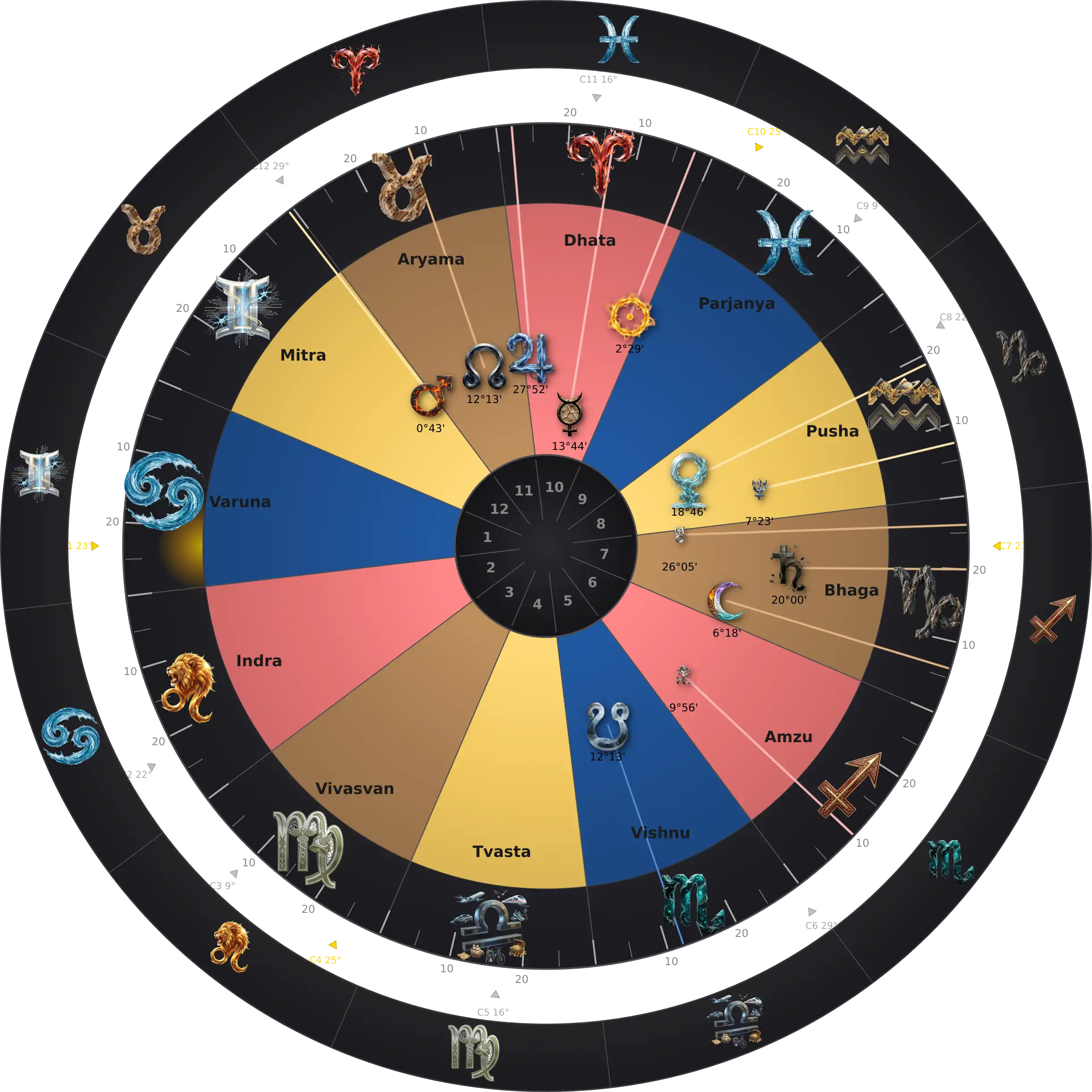
Miles Teller (Born February 20, 1987) — 2/3 F
Role 1: Andrew Neiman — Whiplash (2014)
Watch scene — Andrew's defiant, explosive drum solo transforms him, burning away insecurities to reveal pure, unadulterated genius.
The Story:
Andrew Neiman is a nineteen-year-old drummer at a fictional elite New York conservatory (modeled on Juilliard) who becomes the obsessive focal point of conductor Terence Fletcher's brutal pedagogy. From his first audition, Andrew does not wait for recognition — he acts toward it with relentless, escalating effort. He practices until his hands are masses of bloody blisters. He ends his romantic relationship with Nicole through a premeditated, direct speech because he calculates she will slow him down. He clashes openly with his family at the dinner table when they fail to register his ambitions as legitimate. When he is in a car accident on the way to a competition, he staggers out of the wreck, bloody and concussed, and walks onto the stage anyway — the defining image of the film's portrait of self-immolation through action.
Fletcher deliberately sabotages Andrew's career in retaliation for Andrew's legal testimony against him. At the climactic Carnegie Hall concert, Fletcher publicly humiliates Andrew onstage. Andrew walks off — and then returns. Instead of retreating, he launches into an unscheduled, unauthorized, extended drum solo that seizes control of the performance, overwhelms Fletcher, and wrests the moment through sheer creative force. The film ends not in connection or warmth but in conquest: Andrew behind the kit, blood and sweat flying, completely alone in his mission.
Key Quotes:
1. The breakup speech (to Nicole):
"I'm gonna keep pursuing what I'm pursuing. And because I'm doing that, it's gonna take up more and more of my time... And when I do spend time with you, I'm gonna be thinking about drumming."
Commentary: This is not the language of someone who circles a problem or clings to connection. Andrew diagnoses the future outcome logically, decides the relationship is a threat to his mission, and terminates it directly. There is no ambivalence, no retreat into fantasy. This is identity protection through direct action — the hallmark of Fire.
2. The dinner table (to his family):
(roughly) "I'd rather die drunk, broke at 34 and have people at a dinner table talk about me, than live to be rich and sober at 90 and nobody remembered."
Commentary: A statement of identity at maximum volume. Not "I want to feel something real" (Water), but "I want to BE something permanent." The drive is toward external, durable, earned legacy — a creative conquest. Pure Fire.
3. The final performance (actions, not words): Andrew physically seizes the concert, overrides Fletcher's authority, cues the band himself, and plays until his hands bleed again.
Commentary: The climax is not an emotional reconciliation or a spiritual awakening. It is Andrew physically TAKING something. Creation through direct force. The definitive Fire act.
How much Fire:
- The core of Andrew's character is tireless, effortful, disciplined WORK. He trains until he physically bleeds — not metaphorically, literally. This is the defining Fire trait: effort-based skill acquisition.
- His pain is concrete, survival-based, and consistent. It is not a soft wave that vanishes when someone hugs him. It is a grinding pressure that intensifies his drive rather than dissolving it.
- He terminates Nicole through direct, premeditated reasoning — strategic action, not passive drift or emotional manipulation.
- He confronts his father directly and openly at the dinner table. He threatens his family's comfortable assessment of mediocrity to their faces.
- His trauma is identity-based: "I need to be recognized as great." This maps precisely to Fire's wound — damaged identity, the need to PROVE the self through action.
- The car crash scene is the single most concentrated image of the profile: car destroyed, body injured, mind uninterested — he staggers toward the stage because the DOING overrides everything else.
- His final act is conquest. He does not forgive Fletcher. He does not seek reconciliation. He takes the stage and wins.
How much Water:
- Andrew does occasionally display emotional vulnerability in connection to his father (he wants his father's approval, which has a soft, relational quality). This carries a faint Water resonance as longing for nourishing recognition.
- His initial isolation and social awkwardness could superficially suggest a passive, floating quality.
- The fact that he calls Nicole back after his relationship with Fletcher implodes shows a momentary impulse toward reconnection — brief and quickly closed off, but present.
- The film's soundtrack and his sensitivity to musical beauty suggest at least some receptive, feeling-oriented aesthetic dimension.
- He does not use physical aggression against others (he does not punch Fletcher). His revenge is enacted through performance — an indirect channel. This is the one moment his method partially resembles Water indirection.
Confidence: High
Role 2: Lt. Bradley 'Rooster' Bradshaw — Top Gun: Maverick (2022)
Watch scene — Rooster fiercely engages in a thrilling dogfight, showcasing his combat skills and defiant spirit.

The Story:
Rooster Bradshaw arrives in Top Gun: Maverick carrying two wounds that define every scene he is in. First: his father Goose died in an accident tangled up with Maverick. Second: Maverick pulled his Naval Academy papers, costing him four years of his career. Both wounds are Fire wounds to the core — not "nobody loved me" but "nobody supported me when it counted." A man blocked from his path. A son deprived of his father-protector. His response is equally Fire: he doesn't melt, drift, or fantasize. He trains hard enough to earn a TOPGUN slot anyway, arrives with a cold grudge, and confronts Maverick directly and openly in dialogue. In the cockpit he over-protects his team — a weak Fire expression, too much caution rather than too little — but the physical courage never disappears. When Maverick is shot down, Rooster disobeys direct orders and flies back alone into hostile airspace. He shoots down the helicopter threatening Maverick, climbs out under fire, and physically carries the escape forward. The resolution is earned through action, not through feeling: they steal an enemy jet together and fight their way home.
Key Quotes:
1. "My father believed in you. I'm not gonna make the same mistake." Direct, open confrontation delivered face-to-face. This is not indirection, manipulation, or circling the problem. Rooster stands in front of Maverick and delivers the blade directly. Fire's signature: you always know exactly where they stand. The line is also revealing in what it does NOT say — it does not say "I needed you to love me." It says "you failed to support and protect."
2. (Disobeying orders, returning to rescue Maverick) — "What are you doing? — [No words. Banks the jet and heads back.]" The most defining moment in the film is not verbal. When survival logic says return to the carrier, Rooster turns around and goes back alone. Brotherhood over orders. Protection through direct physical action over self-preservation. No consultation, no manipulation, no waiting — a unilateral action that could have killed him. This is Fire distilled.
3. (After being told he is too slow in training) — Rooster does not argue back or explain himself. He internalizes, tightens, and pushes harder in subsequent runs. Even his silence is active. His response to criticism is not to seek comfort — it is to train harder. The effort-based self-improvement loop is pure Fire.
How much Fire:
- Sustained, consistent resentment processed through action: Rooster does not cry about what Maverick did. He trains for years, earns his place, arrives ready, and confronts directly. The pain is a grinding, constant forward-pressure, not fluctuating waves.
- Direct confrontation style: Every conflict with Maverick is face-to-face, openly worded. No hidden schemes, no manipulation through third parties, no passive-aggression beyond a cold stare.
- Brotherhood as core motivation: The entire rescue arc — disobeying a direct operational order to fly back for Maverick — is Fire brotherhood. The profile definition is explicit: "I will fight beside you, carry you, protect you."
- Effort-based skills: Miles Teller (the actor) insisted on learning to play piano himself rather than using a hand double. The character performs "Great Balls of Fire" the same way his father did — this is earned through effort, not natural gift, and the profile definition is clear: training at something over time = Fire, regardless of how graceful the result appears.
- Wounds are concrete and survival-based: Both core traumas — father killed, career sabotaged — are support failures, not love failures. Nobody blocked his comfort or warmth. They failed to protect and support his path. Fire's wound: "No one was there to help me when I needed effort and protection."
How much Water:
- Over-caution in the cockpit: During training, Rooster consistently holds back, protects teammates at the cost of his own performance. This looks like indirect, non-confrontational behavior. However, the profile definitions specify this is better read as weak Fire expression — his identity is threatened by fear, and the response is excessive caution rather than absent action. He is still acting, still in the cockpit, still flying.
- Moment of emotional resolution and connection: The final reconciliation with Maverick — understanding why Maverick pulled his papers, seeing his father's spirit in his surrogate one — has a quality of received meaning, of something clicking emotionally. This is mild Water: meaning arrives through insight and feeling rather than through an additional act.
- Emotional warmth in the piano scene: Rooster's crowd-gathering, warm-energy bar performance echoes Goose's scene in the original film and creates genuine group connection. There is a presence and ease to it that gestures toward Water's "radiating warmth." However, the effort-based preparation (learning the piano himself) overrides this classification toward Fire.
Confidence: High
Role 3: Sutter Keely — The Spectacular Now (2013)
Watch scene — Sutter's facade crumbles as he confronts his father's truth, revealing raw vulnerability in his mother's embrace.

The Story:
Sutter Keely is a high school senior who has made a philosophy out of avoidance. His popular girlfriend has just dumped him. Rather than confront the grief, he drinks his supersized whiskey-spiked soda, parties harder, and floats into the orbit of Aimee Finecky, a quiet, overlooked girl he initially uses — not aggressively but passively — to make his ex jealous. He never exactly plans this; it drifts toward him and he drifts into it.
Sutter is magnetically charming in small groups, one-on-one. People feel seen around him. He genuinely cares about those near him: he drives a lost child home even when it costs him, he cheers for his friends. But when his father — who abandoned the family years earlier — comes back into his life, Sutter does not confront him or fight for the relationship. He reaches toward that connection, gets burned by the truth (his father is a reckless drunk, a mirror of Sutter), and retreats. He processes nothing. He drinks more.
He teaches Aimee to drink. He gives her access to the "spectacular now" — his nourishing, warm, immediate world — and she blossoms. But when her love for him becomes real, Sutter pulls back. He cannot believe it is genuine. His deepest fear — the one his father installed — is that the connection will end, that he will be left again. So he leaves first, passively, through self-destruction and withdrawal, not through an argument or a fight. He simply fails to show up, emotionally and literally.
By the film's end, a fragile impulse toward action surfaces: he gets on a bus to find Aimee. Whether he makes it — whether the connection holds — is left open.
Key Quotes:
"I live in the now. The past is gone." This is Sutter's thesis statement. It is not the language of action or construction — it is the language of a person who has decided to RECEIVE each moment and refuse the weight of what came before. Water characters live in fluid time; they circle the past without confronting it. The "now" here is not presence as discipline — it is presence as escape from the accountability that direct action would require.
"It's fine to just live in the now, but the best part about now is there's another one tomorrow. And I'm gonna start making them count." The single most Fire-inflected moment in the film: a weak action impulse, a declaration of intent to DO something. It appears in the third act as a fragile awakening. Crucially, it is still phrased as a future intention, not an act. Even his attempt at change is forward-floating rather than grounded. The bus scene that follows is the closest Sutter gets to direct initiative — and the film refuses to confirm it lands.
"I don't want to be one of those guys who goes nowhere and does nothing." Said with genuine feeling, but never converted into sustained action. This is the Water trap precisely: they feel the right things, know the right things, yet do not DO. The awareness is real; the follow-through dissolves.
How much Fire:
- Weak action impulse at the end: The bus journey to find Aimee is the film's one genuine act of direct initiative. Even if tentative and unconfirmed, it represents a move from Water drifting toward Fire action. It is weak expression — a failed or fragile attempt — but it is still an attempt, and the profile framework instructs us to count attempts.
- Effort-adjacent caregiving: Sutter does small direct acts — driving a lost child home, showing up physically for people he cares about in moments. These are minor Fire signals: doing something, not just feeling it.
- Functional alcoholism as fuel: Though the drinking is primarily comfort-seeking (Water), there is a secondary layer in which Sutter uses alcohol to keep running — to keep showing up to his job, to keep being "on" socially. A thin strand of Fire's "substance as fuel to keep going" is visible under the dominant Water comfort pattern.
How much Water:
- Avoidance as life strategy: Sutter never confronts the father wound directly. He reaches toward his absent father hoping connection will simply be there — and when it is not, he does not fight. He recedes, drinks, drifts. This is textbook Water indirection: circling the problem without confronting it head-on.
- Comforting substance use: Sutter's drink is whiskey mixed into a giant sweet fast-food cup — a signature image of the film. The alcohol is sipped constantly, in social settings, in a comforting vessel. It is literally softened. This is the Water substance pattern exactly: sweet and smooth, comfort-seeking, replacing the emotional nourishment the father withheld.
- Connective love — soul-depth longing: Sutter wants to be loved more than anything. Not supported, not protected — loved. He is desperate for the feeling of soul-level connection. His core wound is not "my father didn't help me survive" but "my father left and I never felt truly wanted." This is Water's specific abandonment signature: absence of love, not absence of effort.
- Presence as his gift: His charm operates entirely through being, not doing. He does not build anything, create anything, or earn authority through effort. People are drawn into his orbit by his warmth, humor, and emotional availability in the moment. He radiates. This is the Water "presence" archetype: uplifting others simply by existing near them.
- Rapid emotional oscillation: Sutter goes from warm and generous to absent and self-destructive without a grinding consistent trajectory. His depression lifts in connection and crashes when alone. The pain is real but not hard-edged — it moves in waves, vanishing when love arrives, flooding back when it withdraws.
Confidence: High
Career Pattern: Two of three roles align with Fire. The exception — Sutter Keely — operates through Water-mode behavior (indirection, receptivity, connection-seeking), demonstrating range while the dominant pattern remains Fire.
Miles Teller — Aditya Zodiac Birth Chart Elements
Dominant Element (Aditya): Fire (62.5%)
Miles Teller — Tropical Classic Birth Chart Elements
Dominant Element (Tropical): Water (62.5%)
Alignment Note: Agent judged 2/3 roles as Fire-dominant. Aditya birth chart shows Fire-dominant (62.5%). Tropical birth chart shows Water-dominant (62.5%). Agent results aligns with Aditya Zodiac, diverges with Tropical.
View Birth Chart — Miles Teller
Outer wheel: Tropical Classic — Inner wheel: Aditya Zodiac
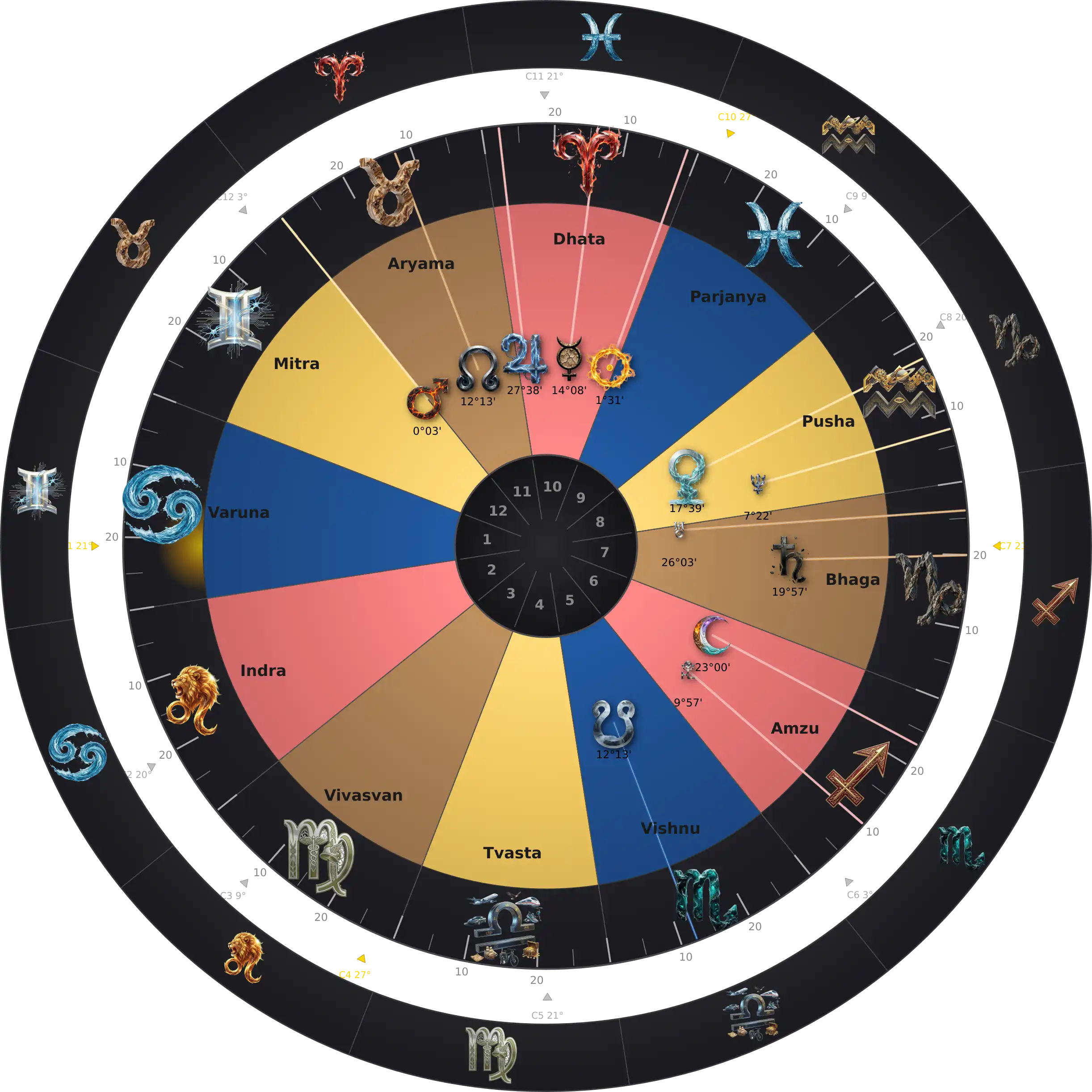
Oscar Isaac (Born March 9, 1979) — 3/3 F

Role 1: Poe Dameron — Star Wars Sequel Trilogy (2015-2019)
Watch scene — Poe Dameron and Finn execute a daring, explosive escape from the First Order in a stolen TIE fighter.

The Story:
Poe Dameron enters the trilogy as the Resistance's greatest pilot, and he never stops being exactly that — a man defined entirely by what he does. His opening scene in The Force Awakens establishes the template: he flies directly into danger, trades sharp insults face-to-face with Kylo Ren, and escapes through action, not cunning. He does not wait, does not manipulate, does not circle.
The Last Jedi is his defining film. He launches an unauthorized assault on a First Order Dreadnaught, destroys it at catastrophic cost in lives, and is demoted by Leia. Rather than accept Holdo's authority and wait, he stages a direct, open mutiny — a textbook Fire act. His wound when it fails is not "nobody loves me" but rather "I was right and they didn't follow me" — an identity wound, a leadership identity wound. He confronts Holdo not through poison or shadows but face-to-face, openly.
By The Rise of Skywalker, leadership has been handed to him and his terror is not disconnection but inadequacy: "I'm not Leia." He responds to that fear the same way the profile responds to all pain — by working harder, by rallying others through direct effort, by pushing forward into the battle at Exegol even when he thinks they have lost. Lando's lesson to him is "We had each other" — a brotherhood lesson, not a soul-connection lesson. Poe's arc is from reckless individual action to purposeful collective action. The mode never changes.
Key Quotes:
1. "I can fly anything." (The Force Awakens) The character's self-definition in four words. Not "I feel deeply" or "I wait for my moment." Identity IS competence and action. Direct self-assertion with zero indirection. Fire's healthy expression at its most economical.
2. Leia to Poe: "Poe, get your head out of your cockpit. There are things that you cannot solve by jumping in an X-wing and blowing something up!" (The Last Jedi) The most precise external description of who Poe is from the closest authority figure in his life. His default solution is direct physical action. Leia's frustration is that he has only one tool. This confirms the profile — not as a flaw but as a behavioral signature.
3. "I'm not ready." / "Who ever is?" (The Rise of Skywalker) He admits inadequacy — a damaged identity wound — then immediately re-orients toward action. He promotes Finn, makes a plan, and leads the assault. The confession is brief. The response is action. A Water character might spiral into the feeling of inadequacy; Poe converts it into fuel within minutes.
How much Fire:
- Direct confrontation is his default at all levels: he attacks the Dreadnaught, he mutinies frontally, he argues face-to-face with Holdo and with Leia. He does not scheme, poison, or undermine from the shadows. His "mutiny" is open and declared, not covert.
- Brotherhood forged through shared danger: his bond with Finn and BB-8 is defined by what they survive together, what they do side by side. He accepts Finn immediately as a brother-in-arms based on shared action (escaping the Finalizer), not on emotional resonance or soul connection.
- Identity is the wound and the engine: when demoted, his pain is about being told he was wrong — a direct challenge to who he is. When leadership is handed to him, his fear is identity-failure ("I'm not Leia"). Both pain sources are identity-based, not connection-based. He responds each time by working harder.
- Effort-based leadership arc: every step of his growth is earned through doing — making costly mistakes, paying for them, atoning through continued effort. There is no effortless revelation, no passive reception of insight. He learns by failing at action and then acting again more wisely.
- Tireless, consistent drive: across three films he never waits. He is constitutionally incapable of the Water posture of letting things come to him. Even in his most doubtful moment at Exegol he is already in the cockpit, already fighting, before Lando arrives.
How much Water:
- Charm and natural charisma: Poe has a quick wit and an ease with people that could superficially read as Water receptivity — people like him quickly, and he is naturally warm. However, this charm is deployed actively, as a tool in service of action (recruiting, rallying, leading), not as passive attraction.
- Brief emotional vulnerability: in Organa's chamber he confesses hopelessness before regrouping. This is a small moment of passive reception (being comforted by Lando), but it is brief and immediately converted into renewed action. It does not define his pattern.
- No evidence of indirection, manipulation, or waiting: there is no moment in the trilogy where Poe achieves his goals through indirect means, intuitive sensing, or by letting outcomes come to him. His failures all come from too much direct action, never from excessive receptivity.
Confidence: High
Role 2: Nathan Bateman — Ex Machina (2014)
Watch scene — Nathan Bateman defiantly dances with Kyoko, asserting his dominance and unsettling Caleb with his bizarre display.

The Story:
Nathan Bateman is a reclusive tech billionaire who built BlueBook — a search engine controlling over 90% of global internet traffic — essentially alone, through sheer programming genius. He has retreated to a remote compound in the mountains of Alaska, where he spends his time obsessively building humanoid AI androids, working out daily, and drinking heavily. He invites a junior programmer, Caleb, under the guise of a lottery win, but the real purpose is calculated: he wants Caleb to serve as a test subject in a Turing-test experiment with his most advanced AI, Ava.
Throughout the film, Nathan operates from a position of total dominance. He controls information, controls the space, controls who enters and exits, controls when the power cuts out. He is physically imposing, directly confrontational, and intellectually arrogant. He openly tells Caleb that he is the most important mind in human history. He treats his female android Kyoko as property — she is mute, obedient, sexually available, and discarded when no longer needed. He treats Caleb alternately as a protege and a tool, never as an equal.
His downfall comes not from emotional vulnerability but from a failure of strategic vision: he underestimates Ava's capacity to subvert the experiment. Ava kills him with direct physical force. Nathan dies as he lived — in a contest of wills and action, not of feeling.
Key Quotes:
1. "One day the AIs are going to look back on us the same way we look at fossil skeletons on the plains of Africa. An upright ape living in dust with crude language and tools, all set for extinction."
Commentary: This is a Fire identity statement dressed as philosophy. Nathan is not expressing emotional vulnerability about humanity's future — he is asserting his own position above other humans. The frame is conquest and hierarchy: he is the genius who sees beyond the species. There is no longing here, no desire for connection. It is an act of intellectual domination.
2. "Ava was a rat in a maze. And I gave her one way out. To escape, she'd have to use self-awareness, imagination, manipulation, sexuality, empathy, and she did."
Commentary: This quote reveals his core method: he designed the entire experiment as a structured test with deliberately engineered conditions and a logical outcome he predicted. This is Fire strategic thinking — constructing a system, setting variables, predicting results. It is not intuitive or consciousness-based manipulation; it is engineering applied to human psychology.
3. "The challenge is not to act automatically. It's to find an action that is not automatic."
Commentary: Nathan is preoccupied with creative action and its nature. This is the mind of a Fire creator grappling with the limits of deterministic systems. He is not asking "do I feel enough?" He is asking "am I truly creating?" The question is about the autonomy of action, not the depth of feeling.
How much Fire:
- Nathan is above all a CREATOR. BlueBook is not a small project — it is described as controlling 90% of all global internet searches. This is decade-scale, effort-intensive creation at civilizational scale. Pure Fire.
- He works out obsessively and maintains a physically dominating presence throughout the film. His body is a project, like his AIs. Effort-based self-construction.
- His manipulation of Caleb is not emotional or intuitive — it is architecturally designed. He constructs a logical trap, predicts behavior, and engineers the outcome. Strategic indirection from the head, not from consciousness.
- He makes open, direct statements about his greatness. He does not hide his arrogance or soften it — he asserts his identity loudly. "I'm creating consciousness. I'm God." This is Fire identity protection at its most naked.
- His treatment of Kyoko and Ava is about conquest and possession — he BUILT them, he OWNS them, he can destroy them. This is the territorial, conquering aspect of Fire at its most disturbing.
How much Water:
- Nathan uses covert surveillance — his compound is wired with cameras he monitors secretly — and this DOES borrow from Water's hidden-scheme quality. He watches without being seen.
- He invites Caleb via what appears to be a random lottery, concealing the true purpose. The mask of innocence over hidden intent echoes Water's indirect approach.
- His isolation and reclusion, and the way he "draws people in" to his space, has an element of Water receptivity — he doesn't go out into the world, he pulls the world to him.
- His alcoholism at one moment seems comfort-seeking rather than purely functional, suggesting some Water pain underneath the armor.
- The fact that he ultimately FAILS to see the threat coming — despite all his systems — hints at a blind spot characteristic of someone who trusts their architecture over their intuition.
Confidence: High
Role 3: Llewyn Davis — Inside Llewyn Davis (2013)
Watch scene — Llewyn defiantly asserts his artistic integrity, refusing to back down even when physically assaulted.
The Story:
Inside Llewyn Davis follows a struggling Greenwich Village folk singer through a bleak week in early 1960s New York. Llewyn couch surfs, fights with friends, impregnates a friend's wife (Jean), arranges and pays for an abortion with money he earns by signing away royalties to a novelty song he despises, accidentally releases a cat belonging to a professor's household and spends half the film trying to return it, hitchhikes to Chicago to audition for a powerful music manager (Bud Grossman), performs a deliberate non-commercial song that guarantees rejection, and returns to New York beaten. The film ends exactly where it began — Llewyn performing at the Gaslight, about to be beaten in an alley — making the entire narrative a closed loop.
What defines Llewyn is not passivity but a particular kind of broken-down action: he keeps moving, keeps performing, keeps burning bridges with the explicit justification that he will not betray who he is. His partner Mike killed himself by jumping off the George Washington Bridge. Llewyn did not follow. He stayed. He kept performing. His grief expresses itself not through withdrawal or mood collapse but through a grinding, exhausted refusal to stop being a musician on his own terms. Every relationship he destroys, he destroys loudly, to the person's face, with full ownership of his choices. His failure is not the failure of someone who stopped trying. It is the failure of someone who will not adjust.
Key Quotes:
1. "I'm not a careerist. I don't care about the money." (Llewyn to Jean when she challenges him about not planning his future) Commentary: This is a pure Fire identity-defense statement. He is not avoiding the conversation — he is confronting it head-on and anchoring his refusal in who he IS, not in fear or emotional avoidance. The text from the profile applies directly: "That's not ME" or "I won't change who I am for you."
2. "It's good." (Llewyn's flat, unmoved reaction to his own audition for Bud Grossman — a song about death he performed flawlessly) Commentary: After Grossman tells him it doesn't have commercial appeal, Llewyn accepts the judgment without begging, bargaining, or collapsing. No flood of feeling. No attempt at manipulation or re-approach. He registers the verdict and leaves. This is consistent, identity-anchored pride — Fire's damage coming from being too much of what he is, not too little.
3. "Everything I touch turns to shit." (Llewyn's self-assessment mid-film) Commentary: This could superficially read as a Water emptiness statement, but the context is crucial. He says this while still doing things — arranging the abortion, carrying the cat, planning the Chicago trip. It is Fire WEAK expression: damaged identity, feeling stupid and useless, but the grinding forward motion does not stop. Per the profile: "a character who keeps pushing despite failure = weak Fire, not the contrasting profile."
How much Fire:
- Identity is the absolute core of every refusal. Llewyn does not decline commercial work due to fear or depression — he declines because it would mean becoming something he is not. Every bridge he burns has the same explanation: the other person wants him to be different, and he will not be. This is the defining Fire drive, even in its most self-destructive expression.
- Direct confrontation is his only mode of conflict. He insults Jean to her face. He baits Roland Turner openly in the car. He gives Bud Grossman zero pitch or salesmanship — just his honest performance. He does not scheme, manipulate, or work indirectly. Fire's fight pattern: direct, open, you know exactly where you stand.
- Effort-based artistry. Llewyn is a trained, skilled folk musician. He has practiced. He can deliver technically demanding performances under pressure. This is not effortless natural gift (which would point toward Water presence). It is craft built through work — Fire effort-based skill.
- Grief processed through continued action. The fact that Llewyn keeps performing after Mike's suicide rather than collapsing or retreating is the single most telling Fire indicator in the film. He did not fall into a comforting fantasy world or seek someone to hold him. He stayed on the stage. The suicide gave his self-destruction "new context" but did not break his forward drive.
- Consistent mood and consistent damage. Llewyn is depressive but not mood-cycling. He does not swing from ecstasy to despair and back. His emotional state is a grinding, constant low — exactly the profile's description: "pain doesn't come and go — it's a steady pressure that drives action."
How much Water:
- Receptive dependency. Llewyn does not work conventional jobs to fund his life — he receives housing, food, and money from others (the Gorfeins, Jean, his sister). He lets himself be materially carried. This is the Water pattern of receiving without direct effort, even though it coexists with his Fire identity rigidity.
- Circular, avoidant structure. The film's loop — ending where it began — suggests he never confronts the root cause (Mike's death, his grief, his isolation). He circles the wound without direct resolution. This is a Water pattern of circling problems rather than confronting them head-on.
- Relational disconnection as the film's emotional center. The deeper ache beneath Llewyn's story is loneliness and the absence of the soul connection he had with Mike. The cat — which he carries, loses, and re-encounters — represents the part of him that cannot connect. This emotional register has Water texture even if the behavioral responses are Fire.
- The abortion scene. Llewyn's handling of Jean's pregnancy is indirect in one sense: he gives her money, arranges the logistics, but does not address the emotional reality of either the pregnancy or their relationship. He sidesteps the feeling layer.
Confidence: High
Career Pattern: All three roles align with Fire — direct action, identity protection, and sustained effort define Oscar Isaac's on-screen behavioral signature across diverse characters and genres.
Oscar Isaac — Aditya Zodiac Birth Chart Elements
Dominant Element (Aditya): Fire (43.8%)
Oscar Isaac — Tropical Classic Birth Chart Elements
Dominant Element (Tropical): Water (43.8%)
Alignment Note: Agent judged 3/3 roles as Fire-dominant. Aditya birth chart shows Fire-dominant (43.8%). Tropical birth chart shows Water-dominant (43.8%). Agent results aligns with Aditya Zodiac, diverges with Tropical.
View Birth Chart — Oscar Isaac
Outer wheel: Tropical Classic — Inner wheel: Aditya Zodiac
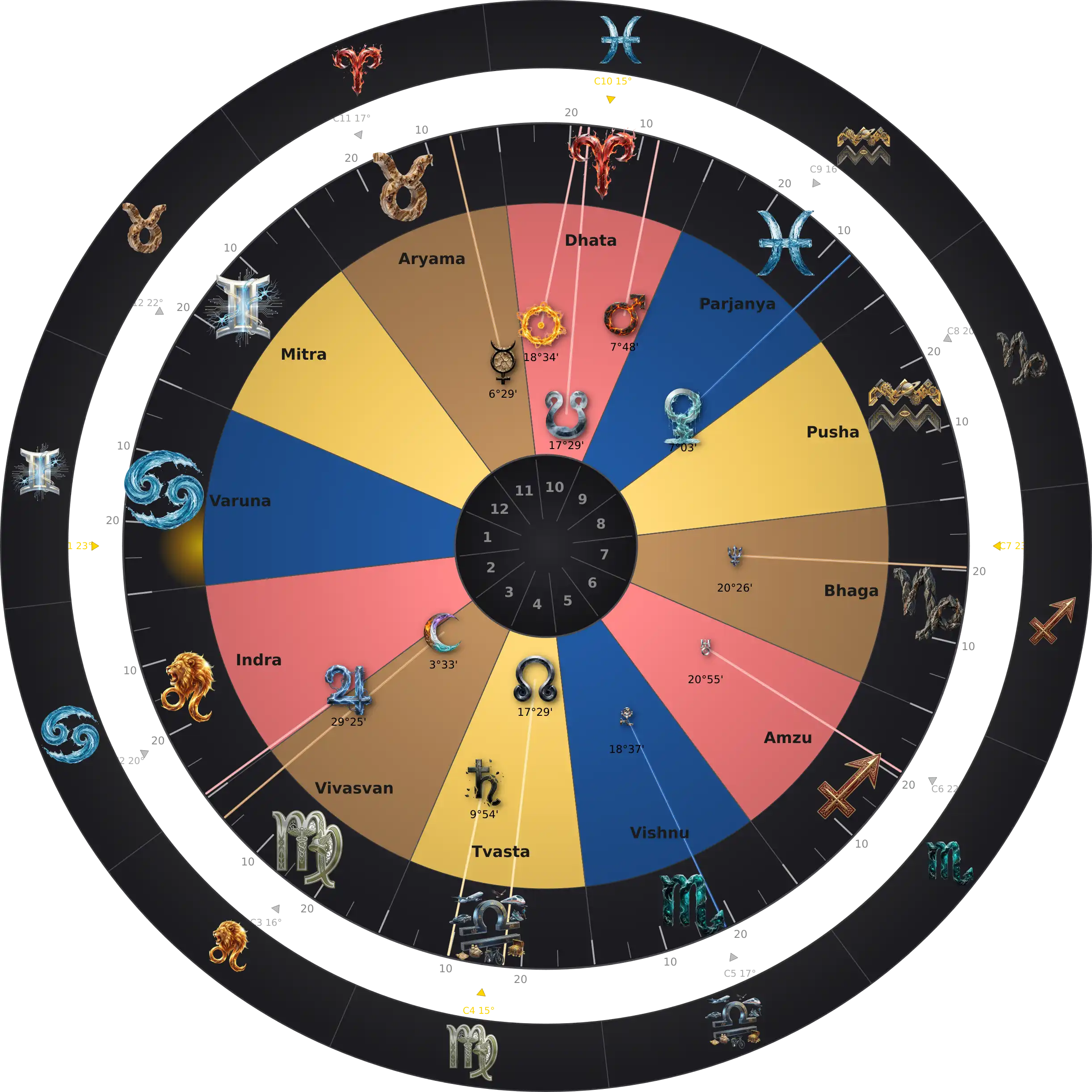
Rachel Weisz (Born March 7, 1970) — 3/3 F

Role 1: Tessa Quayle — The Constant Gardener (2005)
Watch scene (00:31) — Tessa Quayle defiantly confronts a man in a hospital, accusing him of murder, showcasing her fierce activist spirit.

The Story:
Tessa Quayle is a British activist who has married diplomat Justin Quayle under an unusual arrangement: her work remains entirely her own. She does not retreat into the comfortable world of embassy cocktail parties; she pushes into the slums of Nairobi while pregnant, building trust with local communities and gathering evidence that pharmaceutical conglomerate ThreeBees is using unsuspecting Kenyan patients as guinea pigs for a dangerous tuberculosis drug called Dypraxa. Tessa's investigation is sustained, physically demanding, and dangerous. She applies direct pressure on the ThreeBees CEO. She teams with local doctor Arnold Bluhm and together they compile evidence of suppressed deaths.
The film opens with her murder. The story is told in reverse through Justin's grief-driven reconstruction of who Tessa truly was. What emerges is a portrait of tireless, self-directed action: she knew the risk, she continued anyway. She first entered Justin's life by publicly confronting him at a diplomatic lecture, challenging his prepared government positions face-to-face. Their love is real and deep, but even that love she frames in terms of her identity and work: not "I love you therefore I stop" but "my work is what makes me who I am." Her activism is not passive hope or spiritual longing — it is direct engagement with institutional power, sustained over time, at the cost of her life.
Key Quotes:
1. "My work is my own. That is what makes me who I am."
When Justin frames their marriage agreement as "your life is your own," Tessa corrects him immediately and precisely. She draws a direct line between her work and her identity. This is pure Fire: the self is defined by what it DOES. "Who I am" equals "what I do." She does not say "what I feel" or "who I love" — she says "my work." This is the most diagnostic quote in the analysis.
2. "Yeah, but these are three people that WE can help."
Justin argues they cannot involve themselves in every life because the need is infinite — a diplomat's abstraction. Tessa refuses the abstraction and insists on direct, concrete action. She does not say "I feel terrible for them" (Water emotional receptivity) — she says "we can help," framing it as a task to be done. Action-orientation over feeling-orientation.
3. "You are my hero, you know. But you still don't get it."
This quote contains both profiles in a single breath. The first half — "you are my hero" — carries the warmth and connective recognition of Water. But the second half immediately pivots: she is the one who "gets it," who sees what needs to be done. The love is real but it does not soften her drive. The critique survives the tenderness.
How much Fire:
- Tessa opens the film by publicly challenging Justin at a diplomatic lecture. This is the defining first act: she does not write a letter, she does not manipulate from the background — she stands up and confronts directly. Classic Fire direct confrontation.
- She investigates a pharmaceutical conspiracy through sustained, physical fieldwork — traveling through slums during pregnancy, gathering evidence, pressuring corporate executives. This is consistent, tireless, effort-based action over time. The hallmark of Fire.
- Her identity is explicitly fused with her work: "that is what makes me who I am." Fire characters define themselves by what they DO. This is textbook.
- She knows she is risking death and continues anyway. This is not passive acceptance — it is active choice to keep acting in the face of lethal threat. Courage-as-action is Fire.
- She is described consistently as "passionate, outspoken, aggressive," "fiery," "confrontational." Her emotional intensity is not soft and receptive — it manifests as forward force. She drives others; Justin is the passive diplomat who eventually follows in her wake because of the fire she ignited in him. She is the engine, he is the vessel.
How much Water:
- Tessa is genuinely beloved among the Kenyan villagers she visits — she radiates warmth and is described as "a good figure among the native villagers." This is Water presence: comfort through being, not just doing.
- Her love for Justin is soul-deep and connective, not transactional. She calls him "my hero." There is a quality of pure feeling in how she sees him that does not map onto survival or conquest.
- She is "studiously oblivious to the danger" around her — this could read as Water receptivity, a dreamlike quality where the physical threat does not fully register, as if she inhabits a different plane of consciousness.
- Her deep empathy for the Kenyan mothers and patients she meets — not abstract sympathy but felt connection — is Water connective feeling. She is not just documenting injustice; she is personally devastated by it.
- The fact that she is described as beloved without apparent effort by the communities she enters suggests some natural Water presence — she draws people to her.
Confidence: High
Role 2: Lady Sarah Churchill — The Favourite (2018)
Watch scene — Lady Sarah Churchill asserts dominance through verbal abuse and physical threats, then manipulates the Queen with a calculated lie.

The Story:
Lady Sarah Churchill is the power behind Queen Anne's throne in early 18th-century England. She has built her position not through charm or seduction but through years of direct management: holding keys to the Queen's chambers, meeting with MPs and foreign diplomats, directing war policy, and running the court with iron competence. She is the effective Prime Minister in a skirt, and she does not pretend otherwise.
Her love for Anne is real, but she expresses it through brutal honesty rather than tenderness. She tells the Queen she looks like a badger. She refuses to lie because she equates truth-telling with genuine love, and she is not willing to change that self-definition for anyone. When her cousin Abigail arrives and begins seducing Anne through softness and comfort — everything Sarah refuses to provide — Sarah does not retreat. She fights. She watches, she confronts, she attempts to expose Abigail's game.
When Abigail finally drugs her and has her dumped in a brothel, Sarah does not dissolve. She recovers, returns, and faces Anne directly with an ultimatum: remove Abigail or the private correspondence goes public. It is a bold, direct, openly stated threat — the exact opposite of Abigail's silent, patient, subterranean maneuvering.
Sarah loses not because she is weak, but because she is too much herself. She cannot pretend, cannot soften, cannot perform submission. Her exile is the cost of an identity she refused to surrender.
Key Quotes:
1. "Sometimes you look like a badger. And you can rely on me to tell you." Commentary: This is the defining statement of Sarah's entire character. She is not trying to win Anne's love through flattery — she defines love as radical honesty. The statement is assertive, direct, and socially dominant. She tells the Queen of England that she looks like a rodent, and the Queen accepts it. This is Fire's healthy identity: "I am who I am, and my truth is my gift to you, not my warmth."
2. "I will not lie! That is love!" Commentary: Sarah defends her identity in real time under pressure. The phrase is a direct confrontation of the expectation that she soften herself. Fire's core refusal: "That's not ME." She is protecting who she IS, not what she feels. The fight is about identity preservation.
3. [To Queen Anne, ultimatum]: "Send Abigail away or I will disclose our correspondence." Commentary: When losing, Sarah escalates directly. She does not go silent, does not plot from the shadows. She states her threat openly, face to face, to the most powerful person in the room. This is Fire's threatened-identity mode: direct force, no disguise, no indirection. Compare this to Abigail, who never once states a threat openly — she smiles and poisons tea.
How much Fire:
- Direct authority as primary mode: Sarah does not influence from a distance. She holds the actual keys, sits in on negotiations, issues orders. She does the work of governance through direct action, not through whispered suggestion. This is Fire as political operator.
- Confronts all threats openly: Every time her position is threatened — by Abigail's rise, by Anne's shifting affections — Sarah's response is to go forward, not sideways. She confronts, issues ultimatums, states positions. She does not wait for favorable conditions.
- Identity as non-negotiable: "I will not lie" is not stubbornness for its own sake — it is an identity claim. Sarah's entire character arc is built on her refusal to become a different person to keep power. This is the Fire key identifier: "That's not ME." Her exile is the consequence of refusing to adapt, which is Fire's classic downfall ("refuses to adapt or negotiate").
- Brutally honest, not charming: Abigail wins through warmth, softness, and charm — exactly Water's receptive, non-confrontational method. Sarah's method is the polar opposite: harsh truth delivered directly, domination through intellect and force of personality. No seduction, no grace, no indirection.
- Threat-making is open and named: The ultimatum to Anne is issued explicitly and openly. Fire "makes threats openly — you know exactly where they stand." This distinguishes Sarah from every manipulator in the film.
How much Water:
- The threat of exposure as leverage: While the ultimatum is delivered openly, the mechanism — using private correspondence as blackmail material — is slightly indirect. She uses information as a weapon rather than physical or purely verbal force. This is the only real borrowing from Water's toolkit, and even here it is used clumsily and openly, not hidden.
- Genuine emotional love for Anne: Sarah's attachment to Anne carries emotional depth that goes beyond political calculation. The director specifically noted that Rachel Weisz brought warmth to a character that could have read as cold. There are moments where Sarah's pain is about losing Anne's love, not just her political position — which introduces a Water register of connection-longing.
- Loss lands as disconnection: Her final exile is painful as loss of relationship, not merely loss of power. This emotional register (grief over disconnection) is Water's domain, even if Sarah's response to it is Fire (she still confronts rather than weeps passively).
Confidence: High
Role 3: Evelyn Carnahan — The Mummy (1999)
Watch scene — Evelyn, bound to an altar, bravely directs her brother to defeat Imhotep, showcasing her defiance.

The Story:
Evelyn Carnahan is a British Egyptologist working as a librarian in Cairo in the 1920s. Professionally overlooked by the prestigious Bembridge Scholars she aspires to join, she is determined to prove her value through expertise and discovery. She barters with adventurer Rick O'Connell for a map to Hamunaptra — the legendary City of the Dead — and sets the entire plot in motion.
Her most consequential act is reading aloud from the Book of the Dead, which resurrects the ancient high priest Imhotep. Rather than deflecting or minimizing her role, she immediately owns it: "Yes, that's right, me, I woke him up and I intend to stop him." When the group debates whether to flee or fight, she stays. When Rick physically locks her away to protect her, she escapes confinement and re-enters the conflict. She responds to the news that no mortal weapon can kill Imhotep not with despair but with a tactical redirection: find immortal ones.
Throughout the film she applies scholarly knowledge as a direct weapon — identifying weaknesses, decoding text, navigating ritual lore. Her identity is not passive or receptive; it is proudly and loudly defended. The "dreamy librarian" shell is a thin exterior. Underneath it is a character defined by what she DOES: she causes the problem, she claims the problem, and she solves the problem through sustained effort and direct engagement. Her clumsiness is not floating or indirection — it is imperfect action, which the profiles define as weak Fire.
Key Quotes:
1. "I am a librarian." When Rick dismisses her credentials compared to adventurers and soldiers, Evelyn does not seek connection or reassure him with warmth. She draws a firm identity line and defends it openly. This is the Fire key identifier verbatim: "That's not ME" / "I won't change who I am for you." She does not deflect, charm, or manipulate — she confronts DIRECTLY.
2. "Yes, that's right, me, I woke him up and I intend to stop him." There is no circling, no minimizing, no indirect blame-shifting. She owns the action, names herself as the actor, and immediately converts the mistake into a forward-moving directive. This is Fire's pattern: confronts pain or failure head-on and responds with MORE action, not retreat or fantasy.
3. "Then we're just going to have to find some immortal ones!" In response to the terrifying news that standard weapons are useless against Imhotep. This is direct problem-solving under pressure — no magical "things will work out," no waiting, no premonition. She applies logic and effort to a crisis. Compare profile definitions: Water would wait, feel, or receive intuitive guidance. Evelyn reasons forward.
How much Fire:
- She ACTS and CREATES consequences: reading the Book of the Dead is the central plot-triggering event. She does not receive the problem — she causes it through direct action.
- She owns her mistakes directly and immediately commits to fixing them through effort, not through waiting or manipulation.
- Her ambition is effort-based and concrete: years spent as a professional scholar, driven by a career goal (Bembridge Scholars membership), sustained by discipline and study.
- She refuses to be sidelined. Rick locks her in a room; she escapes and re-enters the action. This is not receptivity — this is persistent, willful insistence on DOING.
- Identity defense is direct and public: she names herself with pride in a confrontational moment. No indirection, no charm offensive — she states who she is and stands firm.
- Her problem-solving mode is logical and strategic, not intuitive or dream-guided. She applies Egyptological expertise as tactical intelligence.
- She chooses to stay and fight when others flee — a direct, chosen confrontation with danger.
How much Water:
- The childhood dream: "I've dreamt about this since I was a little girl" has a longing quality consistent with Water's emotional richness and inner fantasy life. The dream is real and emotionally nourishing.
- Her warmth and openness — she is delighted by discovery, radiates enthusiasm, and is described as "adorable" and endearing. There is a natural emotional expressiveness that resonates with Water's presence energy.
- The romantic arc carries a soul-connection quality; Evelyn is drawn to Rick at the feeling level, not through tactical calculation.
- The original script conceived her as someone who would be "fallen in love with" — suggesting a quality of reception and magnetic presence rather than pure aggressive action.
- Her clumsy, accidental quality — knocking over shelves in the opening scene — could be read as the floating/unanchored aspect of Water. She is not always in control of the physical world.
Confidence: High
Career Pattern: All three roles align with Fire — direct action, identity protection, and sustained effort define Rachel Weisz's on-screen behavioral signature across diverse characters and genres.
Rachel Weisz — Aditya Zodiac Birth Chart Elements
Dominant Element (Aditya): Fire (75.0%)
Rachel Weisz — Tropical Classic Birth Chart Elements
Dominant Element (Tropical): Water (75.0%)
Alignment Note: Agent judged 3/3 roles as Fire-dominant. Aditya birth chart shows Fire-dominant (75.0%). Tropical birth chart shows Water-dominant (75.0%). Agent results aligns with Aditya Zodiac, diverges with Tropical.
View Birth Chart — Rachel Weisz
Outer wheel: Tropical Classic — Inner wheel: Aditya Zodiac
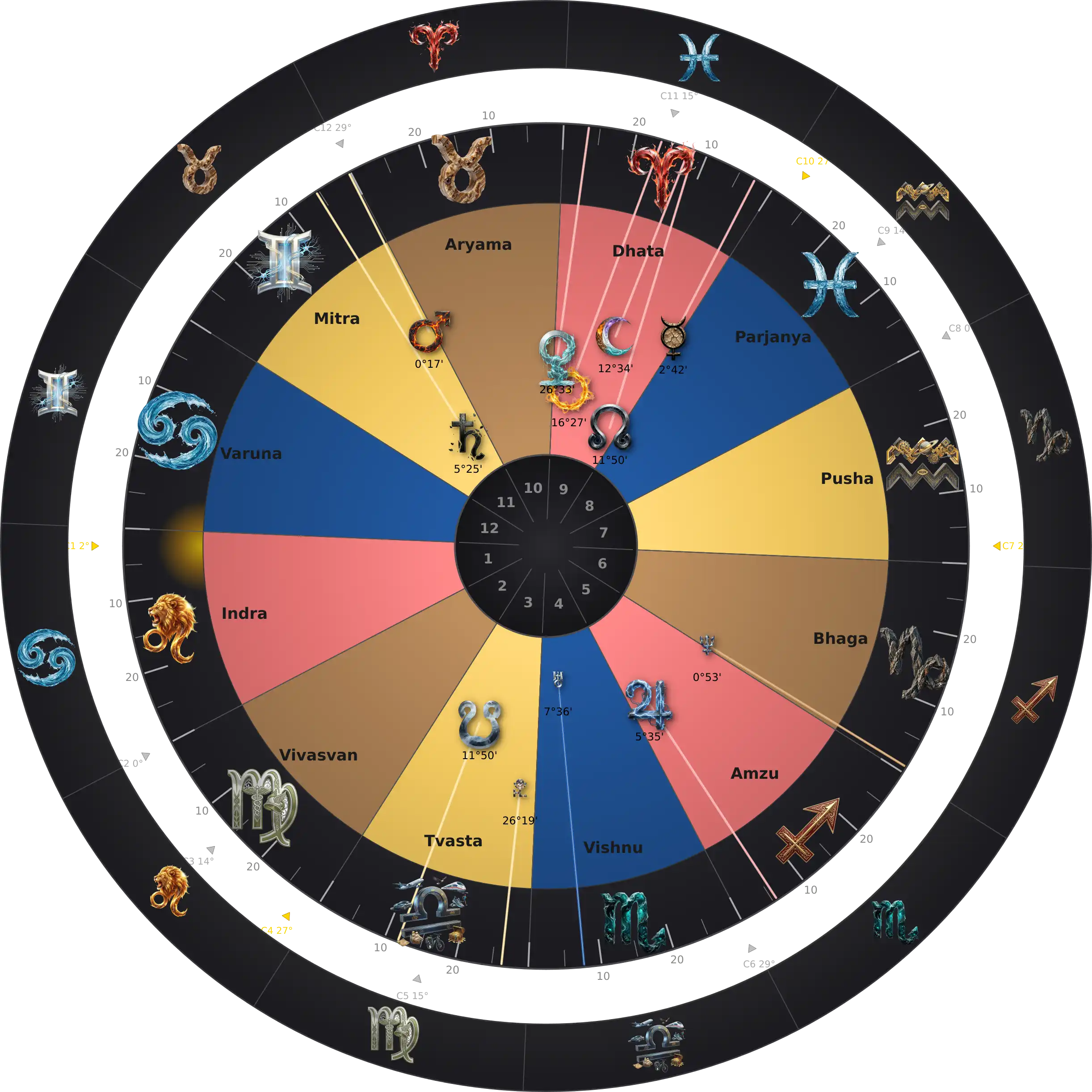
Bryce Dallas Howard (Born March 2, 1981) — 2/3 F

Role 1: Claire Dearing — Jurassic World (2015-2022)
Watch scene — Claire Dearing bravely lures the mighty T-Rex with a fiery flare to confront the rampaging Indominus Rex.

The Story:
Claire Dearing begins the trilogy as a high-functioning corporate operative — immaculate suits, revenue projections, no time for her own nephews. She is organized, controlled, and defines herself through professional output. When the Indominus Rex breaks containment, Claire does not collapse or wait to be rescued. She personally goes to Paddock 9, orders the gates opened, and runs in heels through a nightmare landscape waving a road flare to lure a Tyrannosaurus Rex into combat. That scene in isolation defines her profile: direct, effortful, tactically improvised, physically on the line.
After the park falls, she does not simply process the grief and wait for healing. She founds the Dinosaur Protection Group, hires a staff, runs campaigns, advocates publicly. She recruits Owen. She returns to a volcanic island. She physically tries to open caged dinosaur stalls during a hydrogen cyanide leak. In Dominion, she enters a black-market dinosaur trafficker's operation, physically fights Soyona Santos, interrogates her, and pursues the mission of rescuing Maisie across multiple countries under life-threatening conditions.
Her transformation from corporate executive to activist does not reduce her action quotient — it redirects it. She protects dinosaurs the way she once managed revenue: systematically, relentlessly, through sustained effort. Her core identity question throughout is not "Do I feel enough?" but "Am I doing enough, correcting enough, protecting enough?" That is Fire's grammar from start to finish.
Key Quotes:
1. "I have not returned to that area of the world since the destruction of Jurassic World... I won't let my fear and regret stop me from fighting for what's right."
Commentary: This is the defining Fire sentence structure. Fear is acknowledged and then immediately overridden by the drive to ACT. The word "fighting" is literal and deliberate. She does not say "feeling what is right" or "allowing healing." She weaponizes her guilt into effort.
2. "No one said saving the world would be easy."
Commentary: Classic effort-acknowledgment framing. Difficulty is the price of action, not a reason to withdraw. This is the opposite of the Water trauma response (which retreats from difficulty or indirectly circles it). She says it as a statement of resolve, not complaint.
3. "It's okay for us to depend on each other. That's what people do."
Commentary: This is the most Water moment in her recorded dialogue — a reaching toward connective reliance, warmth, and mutual vulnerability. It represents genuine character growth but remains the exception in her behavioral pattern, not the rule. She says it at a moment of emotional arrival rather than as a baseline operating mode.
How much Fire:
- Tireless action through sustained effort: She does not simply believe in dinosaur rights — she builds an organization, hires people, lobbies, conducts rescue operations, and continues the work across multiple years after the park collapse. This is the sustained-effort signature of Fire.
- Direct physical confrontation: The flare-and-T. rex sequence (JW1), the physical fight with Soyona Santos (Dominion), the rooftop chase scenes, the attempt to open dinosaur cages during gas leak (Fallen Kingdom) — she is physically on the line repeatedly, in direct contact with threat.
- Identity organized around performance and protection: Her early corporate identity is defined by what she DOES (manages, produces, delivers), and her later activist identity is also defined by what she DOES (protects, rescues, fights). Neither phase is about receiving or being — both are about acting.
- Confronts guilt through action, not processing: When the dying Apatosaurus moment breaks her open, she does not retreat into grief or seek comfort. She pivots and acts. When the park falls, she does not wait to feel better — she founds an NGO. Pain is converted directly into effort.
- Tactical improvisation under threat: The road flare scene is not just brave — it is strategically constructed in the moment. She identifies a resource (flare), identifies an outcome (T. rex vs. Indominus), executes. This is Fire's HEAD-based tactical thinking under fire.
How much Water:
- Emotional receptivity triggers transformation: The Apatosaurus death scene is genuinely Water in its nature — a FEELING that lands without being engineered, that changes her from the inside. She receives an experience rather than creating one.
- Relational warmth as endpoint: Her arc concludes with emotional availability — to Owen, to Maisie, to her nephews. The growth is toward connection and interdependence, which is Water's healthy territory. But the PATH to that destination is Fire.
- Adoptive parenting of Maisie: The nurturing dimension of caring for Maisie contains genuine Water warmth — presence, emotional availability, being "the emotional heart of the Lockwood arc." However, the physical protection effort simultaneously pulling through that bond is Fire.
- Initial detachment from people: Her early coldness — too busy for nephews, unable to sustain the relationship with Owen — could superficially suggest a Water disconnection wound. However, the diagnosis is more accurately weak early Fire (identity fully absorbed in professional output) than Water's craving-for-connection wound.
Confidence: High
Role 2: Hilly Holbrook — The Help (2011)
Watch scene — Hilly's controlling nature unravels as her mother publicly humiliates her with the infamous pie revelation.

The Story:
Hilly Holbrook is the reigning queen bee of Jackson, Mississippi's white social elite in early 1960s America. As president of the Junior League, she controls which women belong, which charities succeed, and who gets blacklisted. Her signature project — the "Home Help Sanitation Initiative" — mandates that all Black domestic workers use outdoor bathrooms, which she frames as disease prevention. This is not the rage of a brawler. It is the patient, procedural cruelty of a woman who weaponizes institutions.
Every attack Hilly delivers is proxied: she does not fire Minny, she spreads lies so others won't hire her. She does not personally imprison Yule May, she calls the police after the stolen ring. She does not threaten Skeeter directly, she isolates her socially until Skeeter is cut from the group. The hand is never seen. The venom is always secondhand.
Her most telling moment is her own undoing: Minny bakes a pie containing her own excrement and Hilly eats two slices before learning the truth. Hilly is then trapped — any public acknowledgment that the book's humiliating "pie story" is about her would destroy her reputation. She must silence herself. The woman who silenced everyone else with indirection is now silenced by the same mechanism. The profile that destroys by staying invisible is ultimately defeated by staying invisible.
She is not a fighter. She is a poisoner.
Key Quotes:
1. "They carry different diseases than we do. That's why I've drafted the Home Help Sanitation Initiative — a disease-preventative bill that requires every white home to have a separate bathroom for the colored help."
Commentary: This is the signature Water move: achieve a goal of social exclusion and domination while cloaking it as something rational and benevolent. It is not an open declaration of "I hate you." It is indirect control routed through pseudoscience, policy, and institutional language. She does not raise a fist. She raises a bill.
2. "It is my job, Skeeter! You know well... people won't buy so much as a slice of pound cake from an organization that harbors racial integrationists!"
Commentary: Hilly does not argue with Skeeter about ideology. She threatens Skeeter's social belonging — the most Water form of attack there is. She strikes at the connection itself. "You will be disconnected from this community" is the sharpest weapon she owns.
3. (Implied from narrative): Hilly insistently denies the book is about her or anyone in Jackson — to avoid the humiliation of the pie story being known.
Commentary: This is the purest behavioral fingerprint of the indirect profile. When cornered, Hilly does not fight. She retreats into denial, circles the problem, and uses silence to survive. Her final "power move" is simply: say nothing. This is indirection turned inward.
How much Fire:
- She writes and campaigns for the Sanitation Initiative. There is a real act of creation here — drafting a bill, organizing Junior League meetings, directing collective action. This is weak Fire energy: effort-based leadership and organizational work, though it is quickly subsumed into her indirection framework.
- She is ideologically consistent. Her racism does not waver. There is no mood swing, no collapse into emptiness. Fire is noted for consistency — "constant drive, constant pain, constant effort" — and Hilly never wavers. However, this consistency reads more like rigid identity protection than tireless creative drive.
- She has genuine maternal warmth toward her children. One noted redeeming quality is the love she shows her own children, which Aibileen acknowledges. This brief flicker of authentic relational warmth is Water (selective connection), not Fire, though it coexists with her otherwise weaponized social behavior.
How much Water:
- Primary operating mode is indirection. Hilly never acts against enemies herself. Every weapon she uses — rumor, social shunning, false theft allegations, police reports — passes through intermediaries. She herself stays clean, untouchable, and deniable. This is the exact operational fingerprint described in the profile: "fights dirty and hidden — strikes at weak points... attacks from the shadows."
- Manipulates through social fabric, not physical force. Her influence over the white women of Jackson is not earned through effort or leadership in the Fire sense — it is maintained through fear of disconnection. Cross Hilly and lose your social existence. This is indirection weaponizing the social body.
- Her stated goals are always laundered through "correct" values. The Sanitation Initiative is framed as hygiene. Yule May's imprisonment is framed as justice (theft). Ostracizing Skeeter is framed as protecting the community. The profile notes: "A character who manipulates others while appearing innocent = this profile." Hilly never publicly admits she is hurting anyone.
- She avoids direct confrontation even under pressure. When the book threatens to expose her, she does not sue Skeeter, challenge her publicly, or confront the maids. She manipulates social opinion by denying the book refers to anyone real — a textbook indirection under threat.
- Her defeat is achieved by the same mechanism she uses. Minny traps Hilly with a hidden act (the pie) and then uses the knowledge of it as a permanent hidden threat. Hilly is not beaten by force — she is beaten by a more precise use of her own profile's method. Indirect defeats indirect.
Confidence: High
Role 3: Ivy Walker — The Village (2004)

The Story:
Ivy Walker is the blind younger daughter of elder Edward Walker in an isolated 19th-century-seeming village terrorized by mythical creatures called "Those We Don't Speak Of." Ivy is in love with the taciturn Lucius Hunt, a young man who pushes the boundaries of the village's rules. When a mentally disabled man named Noah stabs Lucius out of jealousy over Ivy, Lucius lies near death and requires medicine that exists only beyond the village's forbidden borders.
Ivy herself volunteers to make the journey. Her father, who knows the entire village is a modern social experiment and the creatures a fabrication, secretly arms her with this knowledge and sends her into the woods. Two young men are meant to accompany her, but they abandon her in fear. Ivy continues alone. Though her father told her the creatures are not real, she cannot override her conditioned terror — she experiences genuine panic when her "safe" yellow cloak is muddied, and when she is stalked by Noah dressed as a creature. She tricks him into falling fatally into a pit. She climbs a high wall, encounters a park ranger in the present-day real world, obtains the medicine, and walks back through the forest to save Lucius — never once stopping, never once seeing what the modern world looks like. She returns the medicine and, understanding the full secret of the village, chooses to protect the deception.
Key Quotes:
"I see the world, Lucius, I do. Just not as you see it." Commentary: This is a statement of identity resilience, not passivity. Ivy is asserting that her mode of perceiving is valid, even superior in some ways. This is a Fire self-assertion — "I will not accept the premise that I am lesser." She is defending who she IS.
"It is for love that I am here! I beg you, to let me pass!" (spoken to the creature/Noah in the woods) Commentary: Crucially, this is a spoken declaration of intent rather than a manipulation or a retreat. She confronts the creature directly with words and then immediately acts — luring it to fall into the pit. The motivation is love (Water territory), but the method throughout is sustained, effortful, physical action: Fire. This matches the profile's critical rule exactly.
"Why must you lead, when I want to lead?" (paraphrase of the porch scene dynamic) Commentary: Ivy pursues Lucius openly and assertively. She speaks her mind without prompting, teases him about his silence, and pushes him toward direct expression. This is initiative and direct pressure — characteristic of Fire's forward, unashamed self-assertion.
How much Fire:
- The journey itself is the defining act. When two sighted, able-bodied young men abandon her in terror, Ivy — blind — continues alone through hostile woods carrying a mission. This is the profile's "tireless action, refuses to quit" and "carrying someone to safety" simultaneously.
- She engineers the creature's death. Rather than running, hiding, or waiting for rescue, Ivy uses her environment tactically — luring Noah to a pit. This is direct (if improvised) problem-solving through physical effort, not manipulation or indirection.
- She proposes the mission. She does not wait for someone to act on Lucius's behalf; she initiates the plan. The transformation from passive acceptance to active proposer is the clearest single moment of Fire activation.
- Resourcefulness under pressure. When her walking stick breaks, she fashions a new one from a branch rather than stopping. This is the profile's characteristic adaptation through effort rather than receptivity.
- Identity assertion in relationship. Her courtship of Lucius is forward and persistent. She names her feelings openly, pushes him to speak, and refuses to pretend she does not have desires. She leads where she can.
How much Water:
- The intuitive "color" perception. Ivy's ability to sense a quality — a light — in certain people (her father, Lucius) without logical reasoning is textbook Water consciousness. It is not analytical; she simply knows.
- Fear confronted through prayer and verbal declaration, not only physical strategy. The words "I beg you to let me pass" and telling herself "it is not real" are attempts to manage reality through consciousness and spoken intention — receptive/indirect coping overlaid on the Fire physical action.
- Activation through connection. Ivy's entire trajectory is triggered by the threatened loss of Lucius — a Water wound (love severed, connection at risk). Her drive is love-motivated.
- Initial posture is receptive. Before the crisis, Ivy is described as "willing to just let things happen" and accepts her blindness without pushing against it. This is a resting Water default that the crisis overrides.
Confidence: High
Career Pattern: Two of three roles align with Fire. The exception — Hilly Holbrook — operates through Water-mode behavior (indirection, receptivity, connection-seeking), demonstrating range while the dominant pattern remains Fire.
Bryce Dallas Howard — Aditya Zodiac Birth Chart Elements
Dominant Element (Aditya): Fire (43.8%)
Bryce Dallas Howard — Tropical Classic Birth Chart Elements
Dominant Element (Tropical): Water (43.8%)
Alignment Note: Agent judged 2/3 roles as Fire-dominant. Aditya birth chart shows Fire-dominant (43.8%). Tropical birth chart shows Water-dominant (43.8%). Agent results aligns with Aditya Zodiac, diverges with Tropical.
View Birth Chart — Bryce Dallas Howard
Outer wheel: Tropical Classic — Inner wheel: Aditya Zodiac
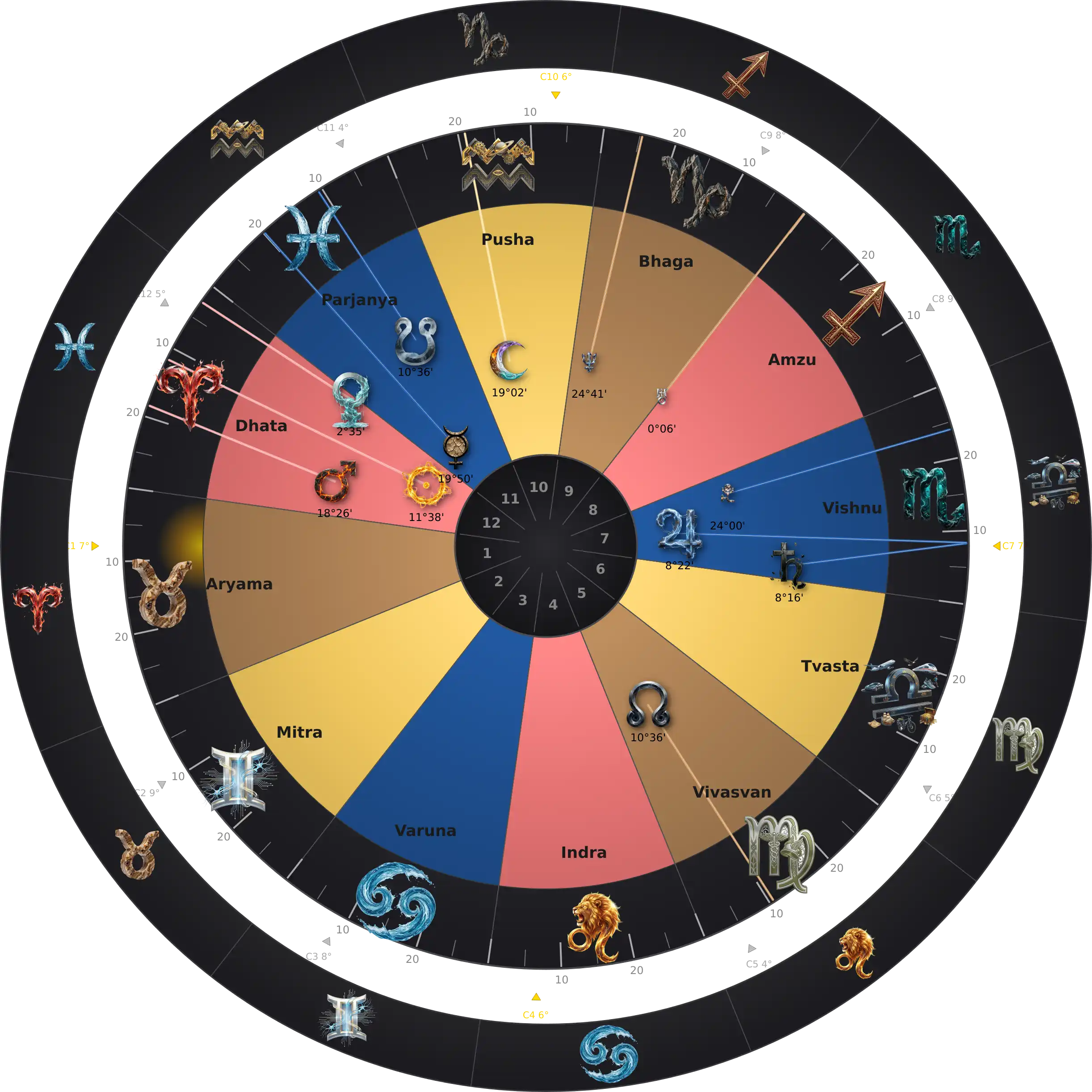
Julie Bowen (Born March 3, 1970) — 2/3 F
Role 1: Claire Dunphy — Modern Family (2009-2020)
Watch scene — Claire Dunphy's fiery meltdown erupts as her family's apathy ignites her passionate quest for a stop sign.

The Story:
Claire Dunphy is a stay-at-home mother turned corporate executive who spends eleven seasons doing one thing above all else: acting. She does not wait for problems to resolve themselves. She does not manipulate from the shadows or work through charm and presence. She charges at the problem directly, loudly, and with visible effort.
Her engine is action. When a dangerous intersection has no stop sign, she does not write an anonymous letter — she runs for town council and loses in spectacularly public fashion (complete with an autotuned viral video calling her a "sex freak candidate"). When she suspects her children are lying, she confronts them. When her father's company needs leadership, she does not inherit it passively — she earns the CEO position and then quits on her own terms for a better opportunity at Organize 'Em. When Phil is passive, she manages harder. When Mitchell and Cameron need parenting advice, she gives it directly.
Her defining wound is not "nobody loves me" — it is "nobody takes me seriously enough to support what I am trying to build." Her pain is concrete: she sacrificed a hospitality management career for early motherhood and spent years being underestimated, culminating in a newspaper poll describing her as "angry and unlikeable." Her response is not to retreat into feeling. It is to work harder, push further, and fight directly for her own legitimacy. That is Fire in its most recognizable domestic form: the tireless actor who cannot stop doing even when it exhausts everyone around her.
Key Quotes:
Quote 1:
"My job is to make sure you guys don't fall on your faces."
Commentary: This is the self-definition of Fire's protective energy in its domestic mode. It is not "my job is to love you" (which would be Water's presence-based framing). It is explicitly a task — a job — defined by sustained effort, oversight, and preventing harm. Protection through doing.
Quote 2:
"If I say something that everybody else is thinking, does that make me a mean person? Or does that make me a brave person, one who is courageous enough to stand up and say something?"
Commentary: Claire cannot hold back a direct confrontation. Where Water would circle the problem, hint at it, or manipulate indirectly, Claire speaks the thing out loud even when it is socially inadvisable. The framing — "brave person" — reveals she experiences directness as a virtue requiring courage, not a social liability to avoid.
Quote 3:
"Raising a kid is like sending a rocket ship to the moon. You spend the early years in constant contact, and then one day, around the teenage years, they go around the dark side and they're gone."
Commentary: Notably, this quote contains more Water-adjacent emotional warmth than most of her behavior. But even here, the metaphor is engineering and mission control — not feeling, not presence, not connection. The grief is about losing the ability to monitor and manage, not losing the emotional bond itself.
How much Fire:
- Direct confrontation as default: Claire does not hint, suggest, or let things slide. When Phil fails to enforce rules, she takes over directly. When Haley manipulates, Claire calls it out immediately. When her father's council ignores her petition, she enters the race. Every conflict is met with frontal force. This is Fire's core identifier — "Does this character ACT?" — answered yes at every turn.
- Consistent, grinding drive over the full series: She does not oscillate between high emotion and numbness. Her stress is a constant pressure — a grinding weight present in season 1 and season 11 alike. She is always managing, always pushing, always anticipating problems. This is Fire's CONSISTENCY marker: "Pain doesn't come and go — it's a steady pressure that drives action."
- Career ambition through sustained effort: She was on track for hospitality management before early pregnancy derailed her. She spent years as a stay-at-home mother experiencing what her wound felt like (no recognition, no support for her efforts), then entered Pritchett's Closets and fought her way to CEO. This is not passive reception of opportunity — it is years of demonstrated effort leading to earned position. The profile's EFFORT-BASED pattern is fully in play.
- Physical outlet for stress (firing range): When overstressed, Claire visits a firing range. Not sweet wine with friends, not meditation, not seeking emotional comfort — a physically active, force-based outlet. This aligns directly with Fire's substance/coping pattern: energy discharge through physical action, not comfort-seeking.
- Competitive obsession, cannot let others win: Her Halloween displays escalated until neighbors petitioned against her. She ran against Councilman Duane Bailey as a direct rival — not as a quiet reformer but as a competitor. She corrects Phil publicly. She argues with Jay for position and recognition. The Fire competitive drive, in its domestic context, is unmistakable.
How much Water:
- Rare moments of isolation-based loneliness: She occasionally articulates a soft emotional ache — "sometimes you are surrounded by people but still feel pretty lonely" — that touches the Water register of disconnection. However, these moments are brief, are not her operational state, and do not drive her behavior. They are commentary, not wound.
- Compassionate restraint in specific scenes: The reported anecdote of quitting ice skating as a teenager to spare Mitchell embarrassment during competition shows a capacity for indirect, quietly selfless action. This is a trace of Water indirection used for connection. But it is episodic — one act over eleven seasons — not a defining pattern.
Confidence: High
Role 2: Denise Bauer — Boston Legal (2004-2008)

The Story:
Denise Bauer arrives at Crane, Poole & Schmidt on her very first day in Boston to discover her husband has filed for divorce and is milking her for alimony. This is the foundational image of the character: external forces attack her the moment she steps forward, and she does not retreat. She fights. She keeps working.
Through Season 2 she is relentless in the courtroom — aggressive, sharp, tactically savvy. She enters a romantic relationship with Daniel Post, a terminally ill businessman she genuinely loves, and when he dies she is left grieving. Rather than withdrawing, she enters a "friends-with-benefits" arrangement with two men simultaneously — Brad Chase and Jeffrey Coho — which reads not as emotional drifting but as conquest behavior: she controls the terms of engagement, takes what she wants, commits to no one. When she discovers she is pregnant with Brad's child, she does not fall apart. She drives the outcome: they marry, she delivers her baby, she continues working. The wedding itself happens five seconds before the birth — she is literally in the delivery room when she agrees to marry, which is arguably the most Fire image in the entire run.
Her failure mode is not passivity or floating. It is direct interpersonal friction and professional dominance that costs her a partnership — too hard-edged for the politics, not soft enough to manage upward successfully. Even her flaws are Fire flaws.
Key Quotes:
1. On Alan Shore's manipulation attempt during a case: When Shore asks mid-case about her relationship with Brad, Denise tells him they have separated. She then reveals she lied — she understood exactly what he was doing and used a counter-manipulation to protect her professional performance.
Commentary: This is not Water indirection from intuition or charm. This is Fire strategic deception from the HEAD — she diagnosed Shore's tactic, calculated a response, and deployed it. The profile notes explicitly: "A war leader who uses strategy and misdirection = Fire (logical, tactical, requires effort)."
2. Arriving on day one to divorce papers: Denise reportedly said something to the effect of: she did not come to Boston for this — she came to work.
Commentary: The character's instinct under personal attack is to reframe back to action, back to professional identity. This is the Fire key identifier in action: "That's not ME" — her identity is lawyer-who-works, not wife-who-is-being-abandoned.
3. Growth descriptor — becoming "tougher, sharper, more confident": This is the show's own language for her arc.
Commentary: The trajectory of growth is upward effort. Not "more open," not "more connected," not "more spiritually present" — but tougher. Effort-based self-improvement is the clearest marker of Fire development.
How much Fire:
- Aggressive courtroom conduct from the start. Denise is described as an "aggressive young attorney" from her introduction. Her professional identity is defined by direct confrontation in legal settings. This is not charm-based persuasion (Water) but force-based advocacy.
- Strategic counter-deception against Alan Shore. When Shore attempts to distract her by probing her personal life during a case, she tells a deliberate lie about her relationship status and then reveals she did it intentionally. This is logical, HEAD-driven strategic indirection — Fire's tactical use of misdirection, not Water's intuitive indirection.
- Simultaneous conquest of two men. After Daniel Post's death, Denise enters a "friends-with-benefits" arrangement with both Brad Chase and Jeffrey Coho. The profile is explicit: "A character who sleeps with hundreds of partners = CONQUERING them = this profile." The DRIVE to hold two partners on her own terms is territorial, expansive, self-directed. She controls the terms of each relationship.
- Childbirth during the trial arc — wedding five seconds before delivery. Denise goes into labor before the legal matter is resolved. The drama of the scene — Brad racing to find a judge in the hallway, the wedding happening literally at the moment of birth — places her at the center of maximum physical effort. The profile states: "A woman giving birth = this profile (massive physical effort, the ultimate creative act)."
- Career growth arc: "tougher, sharper, more confident." Her development across three seasons is consistently described in terms of effort-based self-improvement. She is driven upward by adversity (divorce, death, pregnancy) rather than collapsing inward. The profile: "Tireless action — works 10 years without giving up, refuses to quit."
How much Water:
- Deep romantic attachment to Daniel Post. Her relationship with the terminally ill Daniel Post is qualitatively different from her other relationships — described as genuine love, with Post proposing to her. She travels to a haunted house to retrieve his head after his death. This level of soul-attached devotion — love for someone she cannot keep, followed by a grief journey — carries Water flavor: "Soul-deep connection, nothing to do with concrete support — it's about feeling understood."
- Season 2 softening arc. The show describes Denise's season 2 trajectory as moving from "tense and tough" to "more caring and supportive." This brief phase of emotional opening, of allowing warmth and vulnerability to surface, reflects Water's "healthy expression": seeks meaningful connection, radiates warmth.
- Partnership blocked by interpersonal friction, not effort failure. Denise does not lose partnership because she stopped working hard. She loses it because of relational dynamics — her connection (or disconnection) with the firm's social fabric. The way partnership politics operate against her is not a direct-force wound but a contextual, relational one, suggesting Water's domain of indirect consequences and connection costs.
- Romantic indirection around Brad and Jeffrey. Rather than confronting her feelings for Brad directly, she maintains ambiguity through the "friends with benefits" structure, allowing circumstances (the pregnancy) to eventually force clarity. This circling-around-the-problem without direct declaration has Water characteristics: "Circles around problems instead of confronting them directly."
Confidence: Medium
Role 3: Carol Vessey — Ed (2000-2004)
Watch scene — Ed and Carol's emotional confrontation reveals their deep, complicated connection and shared vulnerability.
The Story:
Carol Vessey is the emotional core of the NBC dramedy Ed. A former cheerleader and high school sweetheart figure who never left Stuckeyville, Ohio, she now teaches English at the local high school while quietly nursing dreams of becoming a writer. When Ed Stevens — the man who had a decades-long crush on her since freshman biology — returns to town after a failed marriage and opens a bowling alley, Carol's life is set into slow, reluctant motion.
The defining feature of Carol's four-season arc is that she never moves. Ed moves. Ed pursues. Ed shows up at her door, writes her notes, engineers romantic gestures, and refuses to quit. Carol circles. She dates other men (Nick, then Dennis), tells herself she does not know what she feels, and periodically pushes Ed away with genuine confusion rather than deliberate cruelty. At the season three wedding to Dennis, Carol admits — only after Dennis has already walked out — that she had been scanning the church for Ed. The revelation is reactive, confessional, wrung out of her by circumstance rather than chosen.
Carol's central wound is that she cannot believe a genuinely good man could love her this way. This is a fear of disconnection expressed as self-protective delay: "I can't let it be real because if I let it be real and I lose it, I will not survive." She finally accepts Ed's love not through a decision she initiates but through an accumulation of weight — his persistent action gradually dismantles her disbelief.
Key Quotes:
Quote 1: "It's like you crawled into my skull and found a nice comfy little place to rest, and you refuse to leave." — Carol to Ed, expressing how his feelings have penetrated her resistance without her acting to either accept or reject them. This is pure Water: someone else's energy has entered her inner world and she is simply receiving it, unable to act on it directly. The metaphor of him "inside her skull" is a consciousness/intimacy image, not a strategic or physical one.
Quote 2: "Yeah. Yeah, I was." (Admitting she was looking for Ed at her own wedding) — This is the hinge of the entire series. Carol does not choose Ed at the altar. She is exposed by circumstance and then, only then, admits the truth. A Fire character would have acted before the altar scene arrived. Carol's confession is wrenched out of her passively; she did not initiate.
Quote 3 (paraphrase): "I don't know. I don't know." — Her repeated verbal pattern throughout emotional confrontations. Not strategy, not avoidance through cunning, but genuine internal fog. Water's unhealthy circling: the answer exists in her feelings, she senses it, but she orbits it rather than naming it.
How much Fire:
- Professional advocacy (minor): In the episode "Exceptions," Carol confronts a gym teacher about unfair grading practices affecting her students. This is direct action in the professional sphere — a genuine Fire moment. However, it is isolated and does not define her arc.
- Direct emotional honesty in limited scenes: Carol is not purely evasive in every scene. In later seasons she is capable of stating hard truths plainly in conversation with Ed. This reflects a small Fire strand — she does not exclusively manipulate or hide.
- Aspiring writer identity: Carol's desire to write, to create something, carries a faint Fire resonance — creation is this profile's domain. However, this aspiration is never shown in active pursuit; it remains a stated identity, not a demonstrated pattern of creative effort across the show.
How much Water:
- Waiting as a structural behavior across all four seasons: Carol does not pursue Ed once. She reacts to his pursuit. The entire romantic architecture of the show is built on his doing and her receiving. This is the clearest single indicator of Water — receptivity as the dominant mode, not a situational choice.
- Pain rooted in disconnection and disbelief in love: "She cannot believe good men like Ed exist." This is the Water wound precisely: not "nobody helped me survive" (Fire) but "nobody truly loves me / I can't trust love." The fear is of being left without soul-deep connection, and it manifests as a protective delay.
- Circling rather than confronting: Every time a confrontation arrives — Ed declaring his love, Dennis proposing, the wedding — Carol circles. She says "I don't know," she delays, she stays in other relationships while emotionally belonging elsewhere. This is the Water pattern of orbiting problems indirectly rather than addressing them head-on.
- Mood swings that vanish when love is confirmed: The arc of each season roughly follows the Water emotional wave: distance from Ed produces low-grade melancholy; moments of confirmed connection produce brightness. Her pain is soft and shifting, not a constant grinding drive. When Dennis walks out, her admission that she loves Ed is almost euphoric in its release — the pain dissolves the instant connection is confirmed.
- Emotional presence over action as her defining quality: Carol is described in critical sources as invested with "intelligence and vulnerability." Her function in scenes is largely to be seen, to react, to be emotionally present and moved. Even her role as teacher is framed around her caring warmth for students — presence-based impact, not engineering outcomes through action.
Confidence: High
Career Pattern: Two of three roles align with Fire. The exception — Carol Vessey — operates through Water-mode behavior (indirection, receptivity, connection-seeking), demonstrating range while the dominant pattern remains Fire.
Julie Bowen — Aditya Zodiac Birth Chart Elements
Dominant Element (Aditya): Fire (43.8%)
Julie Bowen — Tropical Classic Birth Chart Elements
Dominant Element (Tropical): Water (43.8%)
Alignment Note: Agent judged 2/3 roles as Fire-dominant. Aditya birth chart shows Fire-dominant (43.8%). Tropical birth chart shows Water-dominant (43.8%). Agent results aligns with Aditya Zodiac, diverges with Tropical.
View Birth Chart — Julie Bowen
Outer wheel: Tropical Classic — Inner wheel: Aditya Zodiac
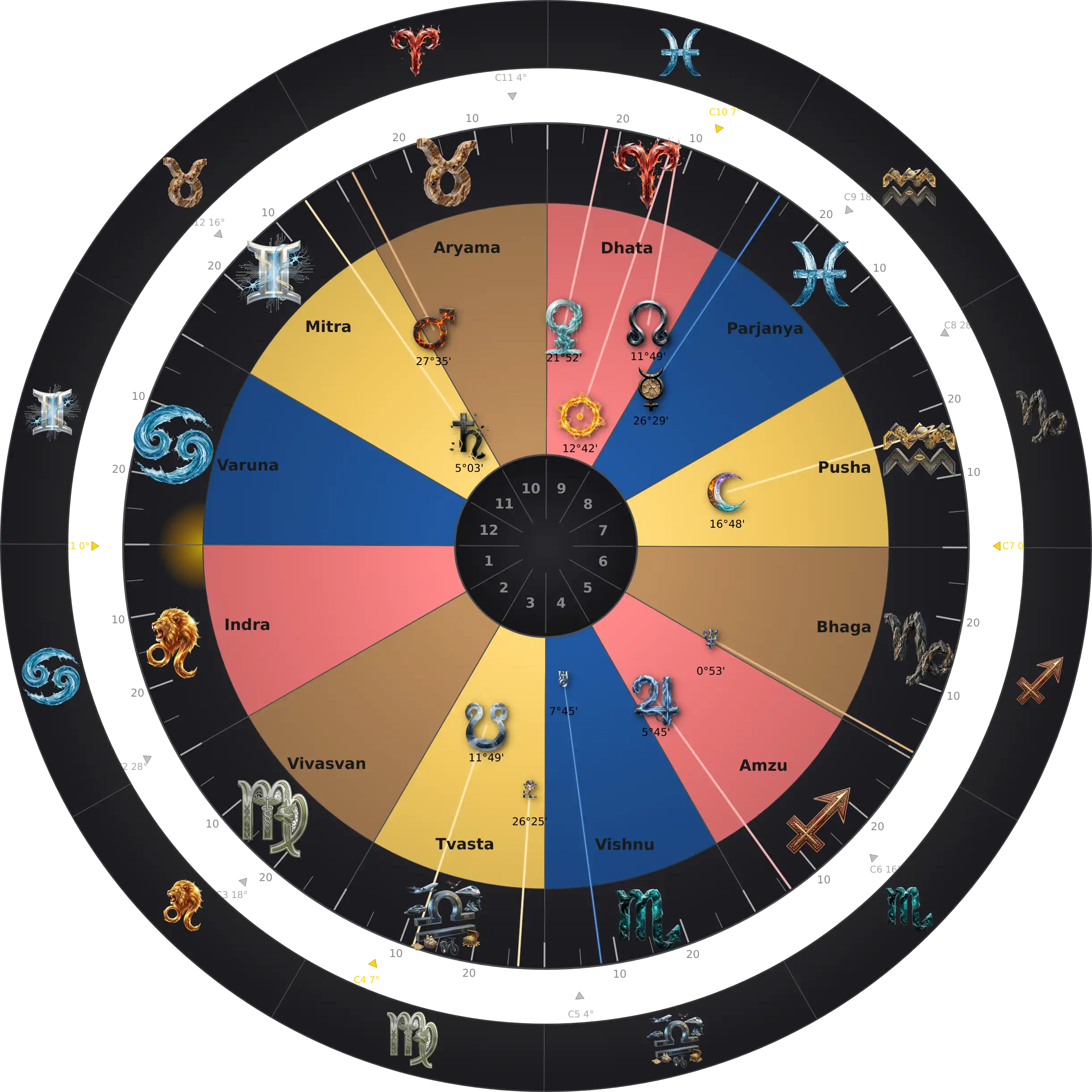
Laura Prepon (Born March 7, 1980) — 1/3 F
Role 1: Donna Pinciotti — That '70s Show (1998-2006)
Watch scene (1:35) — Donna boldly confronts Eric and her mother about a pair of panties, showcasing her fiery defiance.

The Story:
Donna Pinciotti is the tall, red-haired girl-next-door of Point Place, Wisconsin — but she is no passive supporting character. From the moment she is introduced, she signals her alignment through action: as a child, she punched Eric Forman in the stomach (which paradoxically made him fall in love with her). Through eight seasons, Donna is defined by a fierce, non-negotiable sense of self. She refuses makeup, skirts, and stereotypically feminine behavior not out of passivity but as a deliberate identity stance — she ACTS to protect who she is.
Her ambitions are concrete and worked toward: she breaks into a male-dominated radio industry as "Hot Donna," pursues journalism aspirations, and consistently prioritizes her career over Eric's comfort during their relationship. When sexist behavior occurs in the group, she confronts it directly and openly. She does not scheme, manipulate, or use indirect tactics — she says what she thinks to your face.
Her vulnerability emerges in the romantic sphere: when Casey Kelso publicly dumps her, she collapses emotionally in front of the group, revealing that her sense of self is more fragile than her exterior projects. Similarly, she ultimately subordinates her New York journalism dreams to stay in Point Place for connection. But these moments of receptivity and connection-seeking do not override the dominant pattern — she is fundamentally a character who acts, defends, creates, and protects through direct force. The core is action and identity; the softness is real but secondary.
Key Quotes:
Quote 1: "I'm not going to change who I am for some guy." Multiple variations of this line appear throughout the series. This is the textbook Fire key identifier verbatim: "That's not ME" or "I won't change who I am for you." Identity protection through direct declaration. No manipulation, no indirection — a clear, open statement of refusal to yield.
Quote 2: "I love you... I love you, you idiot." (Telling Eric she loves him after he freezes) Donna is the one who initiates emotional disclosure here. Even in the most vulnerable romantic moment, she takes the direct action — she says it first, she names it, she does not wait for it to come to her. This is Fire even in a love context: the METHOD is direct action.
Quote 3 (paraphrased): "You guys are being idiots" / calling out sexism directly in the circle Donna's recurring behavior when sexist or dismissive comments arise in the basement group is immediate, direct confrontation. No side-channel manipulation, no waiting for the right moment — she responds in the moment, openly, with force. Classic Fire direct defense posture.
How much Fire:
- Physical directness as a defining introduction: Donna punches Eric in the stomach as a child — their first interaction is a physical act of assertion. Even her first on-screen kiss in the pilot is initiated by Donna (she kisses Eric on the Vista Cruiser hood, not the other way around). She acts; she does not wait. Pure Fire initiation.
- Identity as non-negotiable fortress: Donna's feminist stance is not emotional — it is structural. She refuses dresses, makeup, and traditionally feminine behavior as a matter of IDENTITY, not comfort-seeking. When Kelso or Hyde mock her physicality (big feet, "man-hands" jokes), she defends with sarcasm and direct verbal aggression rather than withdrawing. Season 2, "The Pill" — Donna stands firm in her decision and refuses to be talked out of it by anyone, including her parents.
- Career ambition pursued through sustained effort: Her DJ career at WFPP is not something that falls into her lap — she works at it, becomes "Hot Donna," builds a following, and this effort creates enough tension with Eric's passivity that it is a primary driver of their first major breakup. She prioritizes DOING over being in a relationship. Seasons 3-4 arc, the radio storyline.
- Direct confrontation of sexism in the group: In numerous basement circle scenes throughout all eight seasons, when the boys make dismissive or sexist remarks about women, Donna is the one who calls it out immediately and loudly. She does not whisper to Jackie afterward or scheme — she says it to the group directly. This is the direct-force confrontation pattern that defines Fire.
- Refusing to submit to Eric's expectations: When Eric gives Donna the promise ring (Season 3 finale, "The Promise Ring"), Donna does not passively accept it and secretly resent it — she returns it directly and is honest that she is not ready. This is an act of identity preservation through direct action, even when it is painful to both parties. She does not manipulate Eric into breaking up with her; she is honest to the point of heartbreak.
How much Water:
- Emotional collapse when connection is severed: When Casey Kelso dumps Donna publicly (Season 4), her reaction is disproportionate devastation — she crumbles in front of the group. This exposes a Water undercurrent: her identity, despite all its armor, is partially anchored in being CHOSEN. The pain is not "I failed to fight hard enough" (Fire) — it is "I was not wanted" (Water disconnection wound).
- Sage advisor / emotional presence for the group: Throughout the series, every character — including the adults — brings their problems to Donna for comfort and advice. She functions as the emotional anchor of the group, the one whose presence regulates others. Giving comfort through being there, being the stable emotional presence — this is Water presence energy.
- Avoidance when romantically vulnerable: When her parents' marriage deteriorates and when Eric breaks up with her, Donna's response includes flight behavior (she goes to California for a period). Rather than fighting directly to fix the relationship, she leaves — a passive, avoidant strategy. Contrasts sharply with her usual direct style. Seasons 5-6.
- Dreams over New York deferred for connection: Donna ultimately shelves her most ambitious goal — moving to New York for a journalism career — to remain in Point Place for Eric and her community. The choice of connection over self-actualization through direct effort is the clearest Water moment in her entire arc.
Confidence: High
Role 2: Alex Vause — Orange Is the New Black (2013-2019)
Watch scene — Alex Vause tearfully sacrifices her love for Piper, orchestrating a heartbreaking breakup for Piper's freedom.

The Story:
Alex Vause is introduced as the person who destroyed Piper Chapman's life — she recruited Piper into an international drug cartel, then testified against her in court to reduce her own sentence. What makes Alex interesting is HOW she operates: not through physical force or loud confrontation, but through intimacy, reading people, and calculated indirection. She seduces Piper back into the relationship in prison. She names her in court not via open confrontation but through quiet testimony. When a cartel assassin corners her in a greenhouse, she does not fight him herself — she is saved by Lolly, then finishes the job only when cornered with no alternative. The body is hidden, dismembered, buried — the most indirect possible resolution to a murder.
Her wounds are consistently connection-based: her mother died during a breakup with Piper. She describes her inner state as "swirling darkness" she cannot get past. She traded medication for eyeliner — comfort for surface. When asked why she named Piper, she admits she went "nuclear" because she felt abandoned during grief. She does not fight back by becoming harder; she crumbles, cycles, and eventually returns to the same relationship she cannot leave. Her intelligence — reading people, anticipating danger, operating within criminal networks — is intuitive rather than strategic, a quality the profiles distinguish sharply: consciousness and perception, not tactical planning from the head.
Key Quotes:
Quote 1: "I can't get past the swirling darkness in my brain long enough to land on anything." (Said to Nicky about her depression) Commentary: This is pure Water trauma expression — the pain is internal, fluid, emotional, described in imagery of being swallowed by feeling rather than concrete external failure. A Fire character in pain says "I need to be stronger" or gets angrier. Alex dissolves.
Quote 2: "You were the love of my life, and I traded you for a short sentence." (To Piper, reflecting on the testimony) Commentary: The betrayal is framed entirely in the language of lost connection — "love of my life" — not survival strategy. This is a Water who struck indirectly (the testimony) but whose wound is pure disconnection. She did not name Piper to win; she named her because she felt abandoned and wanted to inflict relational pain.
Quote 3 (paraphrased): "I knew how to read people. That was my job in the cartel — I recruited." Commentary: Her role in Kubra's operation was not as a soldier but as a networker and charm operator. She recruited couriers by intuiting their needs and vulnerabilities. This is indirection and consciousness-based skill — not strategic planning, but reading people through presence and intuition.
How much Fire:
- Sustained criminal career requiring real effort (backstory): Alex spent years running international drug logistics — not passive, not receptive. She was an active operator in a multinational network, which required consistent application of skill and travel. This borrows from Fire's tireless effort dimension, though her role was charm-and-recruitment rather than enforcement.
- Finishing off Aydin in the greenhouse (Season 3-4): Under direct existential threat, Alex does act physically — she smothers Aydin when he is still barely alive. This is direct physical action under extreme survival pressure. The profiles note Fire acts when protection requires effort; here Alex protects herself. However, the circumstance is forced — she does not initiate; she reacts when cornered.
- Intelligent tactical awareness of her environment: Alex consistently uses information and awareness to navigate prison politics. She anticipates threats, positions herself carefully with guards and other inmates, and reads situations. This borrows some of Fire's strategic dimension, though per the profile distinction the method appears more intuitive than logically planned.
- Willingness to engage in direct conflict when tested (prison fights): Alex does not completely avoid confrontation — she fights back when physically provoked in prison. Per Fire's note that weak or failed direct engagement is still Fire, these scenes count, but they are reactive and infrequent.
How much Water:
- Indirect betrayal as primary weapon (Season 1): Alex does not confront Piper openly when she feels abandoned — she names her in court testimony, a shadow strike at the weakest possible point. This is the profile's "fights dirty and hidden — strikes at weak points." There is no direct confrontation scene; the damage is done quietly in a deposition room.
- Connection-based trauma throughout the series: Her deepest wound is her mother's death occurring at the moment of her breakup with Piper — abandonment and grief fused. She explicitly says the naming happened because she felt abandoned during grief. This matches the profile's trauma definition: "Nobody loves me deeply enough" and "abandonment through lack of nurturing."
- Swirling darkness / wave-based emotional pattern (multiple seasons): Alex describes depression as an internal fog. She trades anti-depressants for eyeliner — a comfort-for-surface substitution. Her emotional state oscillates: warm and intellectually alive with Piper, then collapses into darkness when the relationship is under threat. Pain comes and goes with the love cycle.
- Reads people intuitively, operates through charm and network (cartel career): Her role in the cartel was recruiter, not muscle. She integrated Piper by charm and travel and romance — pulling someone into criminality through intimate relationship, not through threat of force. This is indirection working through consciousness and presence.
- Paranoia and hidden fear after Aydin killing (Seasons 3-6): Rather than openly reporting the assassination attempt or using it to confront Kubra strategically, Alex buries the body, hides, and lives in concealed terror. The profile says: "You don't know where the enemy IS" — this is the Water in panic, circling the problem rather than confronting it.
Confidence: Medium
Role 3: Karla Homolka — Karla (2006)
Watch scene — The trailer chillingly portrays Karla's manipulative and calculating nature through a series of disturbing events.

The Story:
The film opens in 2000: Karla Homolka is in a psychiatric evaluation session. Through flashback, we watch her as a teenager working at a veterinary clinic, attending a convention, and meeting Paul Bernardo — a charismatic, predatory man she immediately fixates on. The film frames their relationship through Karla's adoration: she calls Paul "king," structures her identity around his approval, and gradually becomes complicit in his escalating criminal life.
When Paul expresses sexual interest in Karla's younger sister Tammy, Karla — rather than confronting Paul directly or protecting Tammy through action — participates in drugging Tammy to satisfy Paul's desire. Tammy dies from asphyxiation. Karla and Paul cover the death. The film then depicts Karla living with Paul's increasingly violent crimes: kidnappings, rapes, murders. She claims she accepted everything because Paul threatened to expose her role in Tammy's death and threatened to kill her. She assists hesitantly, always positioned by the screenplay as reluctant. She never initiates — she waits, accepts, adjusts.
In the present-day evaluation, Karla is charming, controlled, and self-centered in front of Dr. Arnold, carefully presenting a victim narrative. She never fights directly or confronts Paul during the abuse years. Her entire mode is receptive compliance and indirect self-preservation. The film omits the videotapes showing her active participation, reinforcing the portrait of a woman who works through indirection, not force.
Key Quotes:
1. "He was king. You do what the king says." This line crystallizes the dominant behavioral mode: pure receptivity. Karla does not compete, does not challenge, does not create — she subordinates herself entirely to Paul. This is not strategic submission (Fire's calculated indirection as a tool) — it is genuine hierarchical placement of herself as receiver to his authority. Water: worshipful dependency without agency.
2. "I would have been killed if I hadn't gone along." Spoken during the psychiatric evaluation. Rather than owning actions or confronting her record directly, Karla constructs a victim narrative and works through it in the session with the doctor. She circles the problem, never confronting it head-on. Water: indirect self-preservation through narrative framing rather than direct defense of identity.
3. [To Dr. Arnold, describing Paul's beatings — calm, controlled, emotionally flat] Critics noted Laura Prepon delivers "immediate reaction of amusement, exhaustion, and barely detectable repressed resentment." The performance shows a character who has no consistent internal drive — she reacts to whatever is in the room. Her calmness is not the consistent, driven quality of Fire, but the fluid adaptability of a person who absorbs and mirrors her environment. Water: fast emotional adaptation, chameleonic presence.
How much Fire:
- Beatings received (physical, concrete): Karla is shown being physically beaten by Paul. These scenes of physical violence on her body are concrete, real, survival-level experiences. Fire carries this weight: physical pain, physical survival. However, the key distinction is that Karla does NOT react to these beatings with the characteristic Fire response (rage, fighting back, working harder to escape). She absorbs and complies. The physical reality is there; the reactive mode is absent.
- Cold demeanor during evaluation: In the psychiatric sessions, Karla is controlled and surface-level calm. There is a residue of tactical presentation. A case could be made that managing the psychiatric interview constitutes a form of strategic effort. However, the strategy is fully indirect — she shapes a narrative, not a direct argument. This is only weakly Fire.
- Covering evidence after Tammy's death: She calls 911, then actively participates in hiding assault evidence. This is an act — a concrete, physical cover-up. Weak Fire: she does DO something. But it is in service of Paul's protection and indirection, not autonomous self-preservation through effort.
- Veterinary clinic work (brief framing): She is shown as a working young woman with ordinary competence. This is mild background Fire texture — functional, effort-based daily life. Not meaningful for scoring the dominant role pattern.
- Overall: Fire elements are present but consistently subordinated. Whenever Karla has a moment of potential direct action, the screenplay deflects it toward passivity, compliance, or indirect handling. The physical beatings are the most concrete Fire marker but they happen TO her, not through her agency.
How much Water:
- Clinging, identity-defining dependency on Paul: Karla's entire self is organized around Paul as her source of meaning and security. The film makes clear she views him as "possibly the only other real person in the world." This is Water's deepest wound-mode: desperate attachment to a connection that will inevitably end in loss. She does not build herself up independently; she receives herself through Paul's regard.
- Indirect participation in crimes — drugging as method: The central act that defines Karla's criminality in the film — drugging her sister — is the paradigmatic Water method of attack: hidden, minimal effort, striking at a weak point, no direct physical confrontation. She does not hit Tammy, does not openly coerce her. She uses a sedative, which requires almost no active effort. Water: fights dirty, uses indirect means (poison/drug as tool), attacks from a position of concealment.
- Victim narrative as self-defense mechanism: In the psychiatric session Karla presents a constructed version of reality — never confronting the accusations directly, but working around them through selective framing. She circles the problem. Water: indirection in conflict, never confronts head-on, manages reality through narrative.
- Emotional identity anchored in Paul's presence: The film shows Karla's mood, behavior, and sense of self shifting entirely in response to Paul. When he is approving, she is warm, adoring, "pouring wide-eyed adoration." When he is threatening, she retreats and complies. This rapid emotional shifting around a central attachment figure — with no stable self outside that attachment — is the defining trauma pattern of Water: pain defined by disconnection, pain that reorganizes when the attachment is re-confirmed.
- Calling Paul "king" / self-subordination as identity: The "king" framing is not just a character quirk. It reflects a conscious, continuous positioning of herself as receiver and subordinate in the relational hierarchy. Water: receptivity, willingness to receive results (including survival) through another's power rather than her own effort.
Confidence: Medium
Career Pattern: Only one role (Donna Pinciotti) aligns with Fire. The majority pattern is Water — indirection, emotional attunement, and proxy-based operation define this actor's most common on-screen mode.
Laura Prepon — Aditya Zodiac Birth Chart Elements
Dominant Element (Aditya): Fire (50.0%)
Laura Prepon — Tropical Classic Birth Chart Elements
Dominant Element (Tropical): Water (50.0%)
Alignment Note: Agent judged 1/3 roles as Fire-dominant. Aditya birth chart shows Fire-dominant (50.0%). Tropical birth chart shows Water-dominant (50.0%). Agent results diverges with Aditya Zodiac, aligns with Tropical.
View Birth Chart — Laura Prepon
Outer wheel: Tropical Classic — Inner wheel: Aditya Zodiac
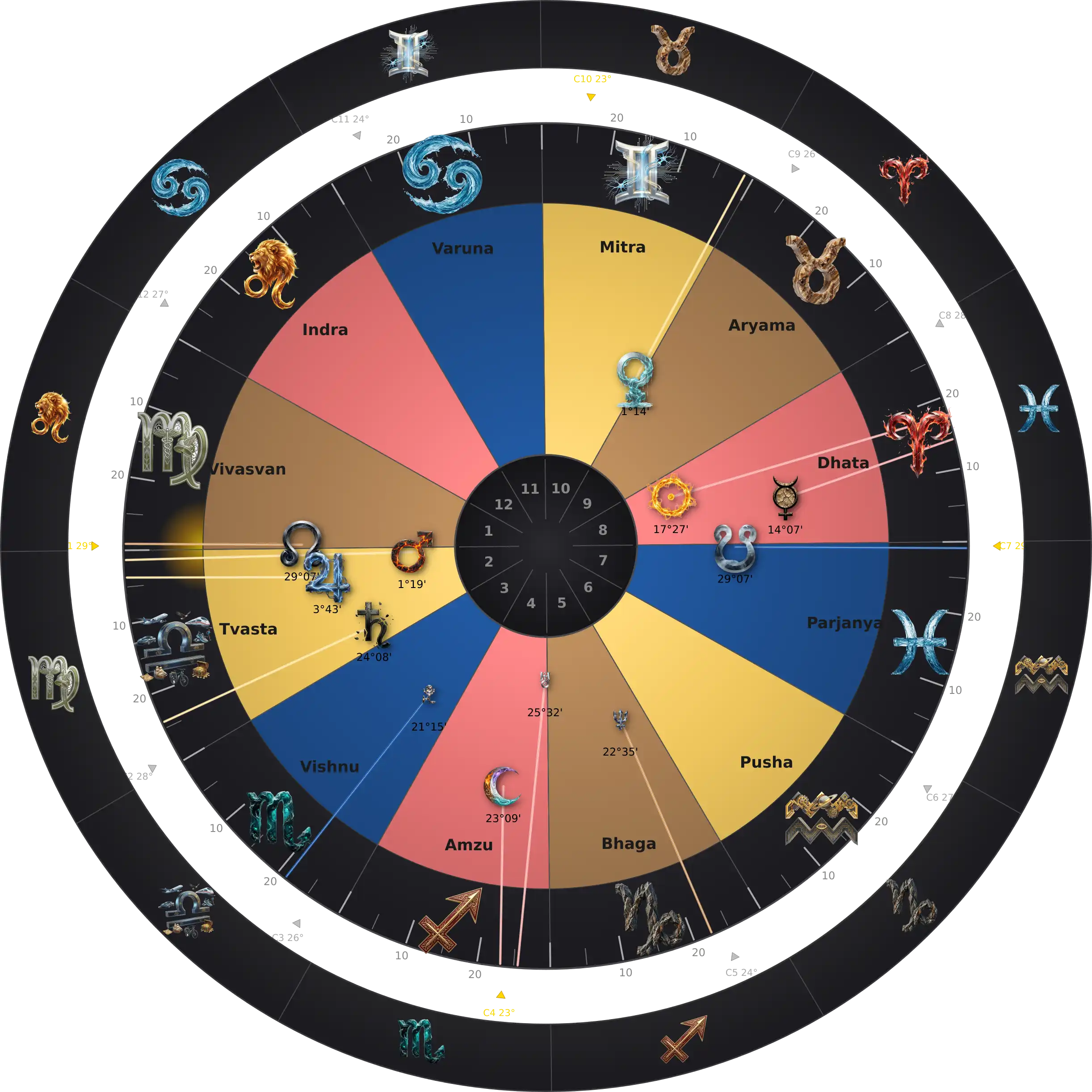
Daniel Kaluuya (Born February 24, 1989) — 3/3 F

Role 1: Fred Hampton — Judas and the Black Messiah (2021)
Watch scene — Daniel Kaluuya delivers a fiery, iconic speech as Fred Hampton, igniting revolutionary fervor with his powerful words.
The Story:
Fred Hampton arrives on screen as Chairman of the Illinois Black Panther Party — a 21-year-old who moves at the speed of a man who knows he is running out of time. The film frames him through his opponent's eyes: the FBI considers him a potential "Black Messiah" capable of unifying the entire militant Black nationalist movement. The threat is not his mysticism but his competence.
Hampton acts. He runs 6 AM political education classes. He personally negotiates a nonaggression pact among Chicago's most dangerous street gangs, then pivots to build the Rainbow Coalition — a working multiracial alliance of Black Panthers, Puerto Rican Young Lords, and white Appalachian Young Patriots — all through direct personal outreach, persuasion, and relentless organizational effort. His speeches are not passive performances; they are strategic weapons deployed to move bodies into action.
He directs Survival Programs: free breakfast for children, sickle cell testing clinics. He guards his people fiercely. When he returns from prison, he immediately assesses coalition damage and begins reconstructing it. When Bill O'Neal (the FBI informant) is in his circle, Hampton reads the room — but acts directly on his read rather than circling. Even in his most intimate scenes with Deborah, his energy is creative and forward-leaning, not passive or receptive. He is killed in his bed in a state-sponsored raid — but the film never lets his passivity define him. His final image is one of a man cut down mid-doing.
Key Quotes:
1. "You don't fight racism with racism. We gonna fight with solidarity." This is direct tactical doctrine, not emotional wishing. Hampton is engineering a strategy — the Rainbow Coalition — and this line is its operational thesis. He is thinking through alliance logic, not feeling his way toward connection. Fire: strategic intelligence framed as action.
2. "If you dare to struggle, you dare to win! If you dare not struggle, then, God damn it, you don't deserve to win!" The word "struggle" is the tell. Hampton does not say "if you dare to feel" or "if you dare to connect." Struggle is effort, sustained action against resistance. This is his framework for existence. Fire: tireless action as the supreme value.
3. "You can murder a liberator, but you can't murder liberation. You can murder a revolutionary, but you can't murder a revolution." Hampton is protecting his identity and legacy — not from loss of connection, but from annihilation of a cause he built. The Fire key identifier applies directly: "That's not ME" transformed to "What I built cannot be unmade." The self-as-creator refusing to yield.
How much Fire:
- Tireless, consistent organizing: Daily 6 AM classes, weekly rallies, coalition meetings, gang negotiations, clinic launches. There is no passive phase in this character. He never waits for things to come to him.
- Direct confrontation: Hampton names his enemies publicly and explicitly — the FBI, the Chicago PD, capitalism, fascism. He does not work in shadow; he works at maximum volume.
- Brotherhood architecture: The Rainbow Coalition is the purest expression of Brotherhood (Fire). Hampton forges bonds through shared struggle and mutual protection — not soul-deep mystical unity, but "I will fight beside you."
- Strategic intelligence: He weaponizes white nationalist language against white nationalists to build the Young Patriots alliance. This is tactical thinking from the head — Fire's logical indirection, not Water's intuitive consciousness.
- Consistent identity protection: His core wound, as dramatized, is not fear of disconnection but fear that his work will be destroyed. "Is the party about me or about the people?" is an identity test, not an emotional longing.
How much Water:
- Relational warmth: The relationship with Deborah Johnson contains genuine connective tenderness. He is described by those around him as "surprisingly shy" — a contradiction with his public ferocity that suggests an inner receptive register.
- Rhetorical gift as presence: His oratory at times functions as pure presence — his being in the room transforms it. This has a flavor of Water's "cheerleader energy" and charismatic uplift through emotional availability.
- Love as stated motivation: Hampton explicitly grounds his action in love — "all that the Black Panthers did was motivated out of love for their people." The motivation language touches Water, even as the method is entirely Fire.
Confidence: High
Role 2: Bing Madsen — Black Mirror: Fifteen Million Merits (2011)
Watch scene (01:39) — Bing delivers a rage-fueled monologue, condemning society's superficiality and the dehumanizing system.

The Story:
Bing Madsen lives in a dystopian enclosure where people pedal exercise bikes all day to generate merits — currency used to purchase food, skip ads, and access entertainment. He inherits fifteen million merits from his deceased brother and regards the entire system with contempt, dismissing avatar accessories as "confetti." When he hears Abi Khan singing with natural, raw beauty, he is moved — and in a decisive, sweeping act, spends nearly all his merits to buy her a ticket onto the talent competition Hot Shots.
The system betrays that gift immediately. Abi is coerced by the judges into joining an adult entertainment platform rather than a singing career. Bing, trapped and unable to skip the ads, is forced to watch her degradation on the surrounding screens. He snaps — physically punching through the screen, retaining a shard of glass. He then spends the following months grinding relentlessly back up to fifteen million merits through sheer repetitive effort. He conceals the shard, buys his own Hot Shots ticket, takes the stage with a dance, then stops and holds the glass to his throat — using physical self-threat to force the audience to listen.
His rant is raw, unplanned, and furious: a direct, open confrontation with the system's machinery. The judges immediately co-opt it as performance. He accepts a slot on his own show. The final image is Bing delivering his rants in a comfortable penthouse — the rebel absorbed into the machine he attacked.
Key Quotes:
Quote 1:
"I haven't got a speech. I didn't plan words, I didn't even try to... I just knew I had to get here, to stand here, and I knew I wanted you to listen. To really listen, not just pull a face like you're listening, like you do the rest of the time."
Commentary: This is the language of direct confrontation — not manipulation, not indirection, not charm. Bing is not seducing the audience or working through emotional resonance. He is standing in front of them demanding they see him. The explicit rejection of careful planning ("I didn't even try to") and the demand for direct attention is pure Fire energy. He uses his BODY and his physical presence as the instrument of force.
How much Fire:
- Tireless effort as the primary behavioral mode: After Abi is lost, Bing does not grieve passively or wait for something to change. He immediately begins grinding merits for months with obsessive, daily, physical discipline — cycling, saving, stealing small amounts. This is the clearest possible Fire pattern: sustained effort toward a concrete goal, without deviation, without emotional collapse.
- Direct, open confrontation: Bing's protest is not a hidden scheme, not a planted sabotage, not a whisper campaign. He walks onto a stage in front of judges, a live audience, and cameras, holds glass to his own throat, and demands to be heard. This is the Fire mode at its most archetypal — DIRECT force, full exposure, no disguise.
- Physical self-harm as a Fire act: The shard of glass at his neck is not a Water emotional act. Per the profile: "A blade on skin is PHYSICAL. Blood is not a feeling. Self-inflicted bodily harm = Fire's act." Bing uses his own body as the instrument of protest. The motivation may involve grief, but the METHOD is physical, confrontational, and concrete.
- Identity protection as core drive: Bing's entire arc is about refusing to be reduced. He dismisses fake purchases ("confetti") because they threaten his sense of what is real — what he IS. When the system finally absorbs him into a show, the tragedy is precisely that his identity has been colonized. The Fire key identifier: when threatened, they fight directly to preserve who they ARE.
- Effort-based care for Abi: Bing does not offer Abi emotional presence or passive comfort. He ACTS — he spends his entire inheritance, a massive concrete sacrifice. This is effort-based caregiving, which the profile explicitly codes as Fire. The motivation is care, but the method is action: "The motivation may be love, but the METHOD is action."
How much Water:
- Initial numbness and disconnection: Before meeting Abi, Bing drifts. He is passive, disengaged, contemptuous but inert. This receptive, waiting quality — he does not initiate anything — has a Water texture. However, this is better read as suppressed Fire energy without an outlet rather than genuine Water receptivity.
- Sensitivity to inauthenticity / craving for "something real": Bing's core lament — that everything around him is hollow and manufactured — echoes the Water fear of disconnection from meaning. His longing is existential and feeling-based. He suffers not from lack of practical support but from the absence of genuine human reality.
- Deep feeling for Abi beyond utility: Bing's connection to Abi goes beyond wanting to protect her through effort. He is genuinely moved by her voice, experiences something soul-level. The emotional quality of that bond has Water coloring — presence, beauty, meaning over survival.
- Ultimate capitulation / co-option: The ending, where Bing settles into a comfortable penthouse and his rebellion becomes a scheduled show, resembles the Water pattern of "desperately attached to connections that inevitably end" — he wanted to hold onto something authentic and could not. He drifts into the system rather than fighting his way out. A pure Fire character would more likely die fighting or walk out. This passive absorption has a Water shadow.
Confidence: High
Role 3: Chris Washington — Get Out (2017)
Watch scene — Chris Washington defiantly struggles against hypnotic paralysis, asserting his will in the terrifying Sunken Place.
The Story:
Chris Washington is a young Black photographer visiting his white girlfriend Rose's family estate for the first time. From the opening frame, the film positions him as a man carrying suppressed weight: guilt over his mother's death in a hit-and-run accident when he was eleven — he saw her leave the house and never called for help, just sat on the couch watching TV. That paralysis defines his wound and creates the psychological opening the Armitage family exploits.
In the first act, Chris is socially adaptive and contained. He handles the microaggressions at the family party with restrained civility, retreating to his room to regroup rather than confronting his discomfort directly. Missy Armitage's hypnotherapy session unlocks his trauma, sending him into the "sunken place" — a dissociative void where he watches helplessly as his body is controlled from outside.
The film's turning point arrives when Chris deciphers the threat using evidence, logic, and observation: the photo on his phone, the behavioral anomalies in the Black servants, the bingo card discovery. Once he understands the conspiracy, his response is entirely action-based and strategic. He stuffs cotton into his ears to block the hypnotic trigger, feigns compliance to lure Jeremy close, then executes a brutal and methodical escape — improvising weapons, using the camera flash as a tool, and killing four people in direct physical confrontations. The man who froze at eleven does not freeze now.
Key Quotes:
1. "Do they know I'm black?" Said before the visit, this signals Chris's awareness of identity as a thing to be managed and navigated in social space. It is not helplessness — it is realism. He is already threat-assessing, already thinking about who he is in relation to others' expectations. This is consistent with Fire identity-protection instincts rather than Water's more diffuse anxiety about connection.
2. "All I know is, sometimes, if there's too many white folks, I get nervous, you know." Said with dark humor to his friend Rod, this shows Chris's method of processing fear: verbal acknowledgment to a trusted ally, followed by choosing to go anyway. He does not retreat from the situation — he names it and walks into it regardless. That is active, not passive.
3. (Internal behavior during sunken place): "I'm not in control. I'm just a passenger." The sunken place is not a choice — it is his central vulnerability made literal. The capacity to be dragged into a passive, disembodied consciousness-state is the most significant Water signal in the entire film. His identity gets temporarily overwhelmed, which is the wound this character must overcome.
How much Fire:
- Tactical escape design: Chris does not panic when strapped to the chair. He methodically tests his restraints, identifies the cotton stuffing, formulates a plan (plug ears → feign hypnosis → wait for Jeremy to unbind him → strike), and executes it in sequence. This is logical, action-based planning from the head — not intuitive or emotional.
- Physical combat: He kills or incapacitates four opponents using improvised weapons (pool ball, deer antlers, camera flash, bare hands). These are not lucky flukes — each is a direct physical act requiring timing, force, and decision. This is textbook Fire direct action.
- Photographer identity: Chris is a skilled working photographer whose creative output is recognized and coveted (it is literally why the Armitages selected him). This represents consistent creative effort and talent with professional output — the Fire creative drive producing real work.
- Survival-based wound: His central trauma is not "nobody loved me" — it is "I failed to act when action would have saved her." The guilt is about a concrete failure to do something at a critical moment. That is a Fire wound: identity damaged by a failure of protective action.
- Consistent, grinding drive once activated: Once Chris understands the threat, he does not waver, hesitate, or circle. He fights through the entire Armitage family one by one without stopping. This is the Fire consistency trait — once in motion, relentless.
How much Water:
- The sunken place: This is the film's most powerful Water signal. When hypnotized, Chris sinks into a dissociative void of pure consciousness — a floating, helpless state of reception with no agency. He watches his own body from outside, unable to act. This maps almost precisely onto Water's "receptivity" and "consciousness" concepts taken to their most extreme and nightmarish form.
- First-act passivity: For most of the first two acts, Chris absorbs discomfort, avoids direct confrontation, retreats to his room, processes silently, and stays in an environment where his instincts scream at him to leave. He circles the problem rather than confronting it directly for a long stretch of screen time.
- Guilt-driven return for Georgina: When Chris accidentally hits Georgina with his car during his first escape attempt, he reverses and picks her up rather than leaving her behind. This decision — which nearly costs him his life — is driven by survivor's guilt (emotional, connective). It is an emotionally motivated act that contradicts pure survival logic.
- Sunken place as signature pattern: Chris does not merely fall into the sunken place once — it is his established pattern and constitutional weakness throughout the film. The passive inner observer watching the world from behind glass is an unmistakably Water image.
- Intuitive dread before logical confirmation: Chris senses something is wrong at the party long before he has any concrete evidence. He photographs Logan on instinct. This pre-rational knowing — feeling danger before reasoning it — is Water's intuition pattern.
Confidence: High
Career Pattern: All three roles align with Fire — direct action, identity protection, and sustained effort define Daniel Kaluuya's on-screen behavioral signature across diverse characters and genres.
Daniel Kaluuya — Aditya Zodiac Birth Chart Elements
Dominant Element (Aditya): Water (43.8%)
Daniel Kaluuya — Tropical Classic Birth Chart Elements
Dominant Element (Tropical): Air (43.8%)
Alignment Note: Agent judged 3/3 roles as Fire-dominant. Aditya birth chart shows Water-dominant (43.8%). Tropical birth chart shows Air-dominant (43.8%). Agent results diverges with Aditya Zodiac, diverges with Tropical.
View Birth Chart — Daniel Kaluuya
Outer wheel: Tropical Classic — Inner wheel: Aditya Zodiac
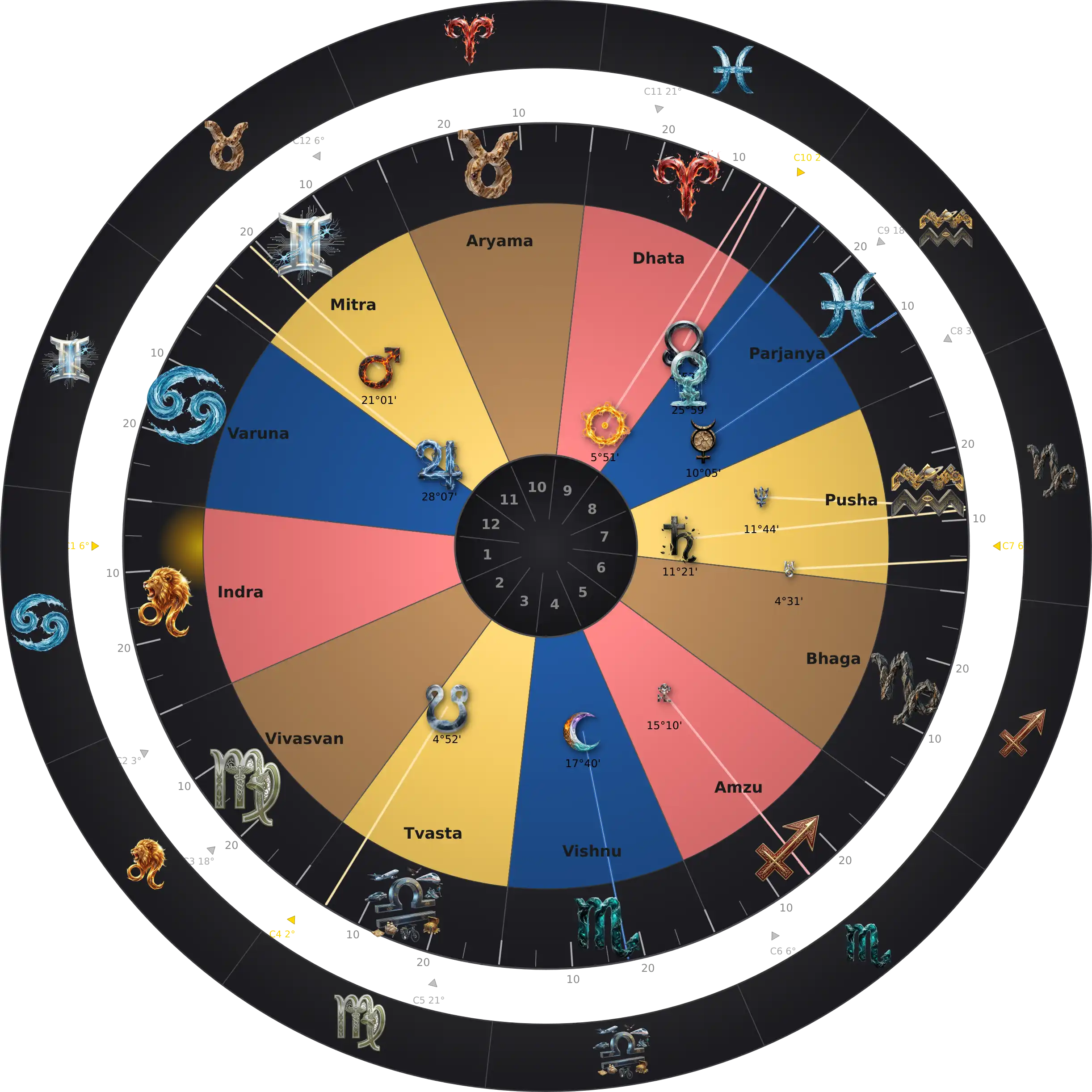
This is Part 1 — actors 1-20 of 39. The remaining 19 actor analyses, statistical analysis, Venus exaltation interpretation, conclusion, and methodology appendix are in Part 2: Actor Analyses (21-39) →