Pisces Blind Analysis Part 2 - Actor Analyses (21-39)
This is Part 2 of the Pisces blind analysis. For the introduction, executive summary, career patterns, and actors 1-20, see Part 1: What if Pisces is Actually a Fire Sign?
Kevin Connolly (Born March 5, 1974) — 2/3 F
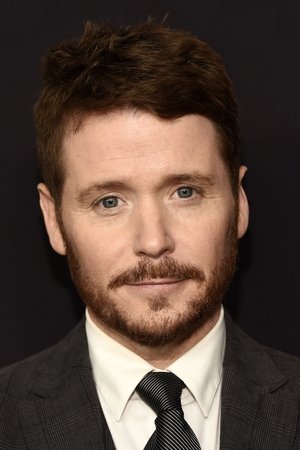
Role 1: Eric Murphy — Entourage (2004-2011)
Watch scene — Eric Murphy assertively navigates Hollywood deals, confronting Ari Gold with fiery determination for his client's success.
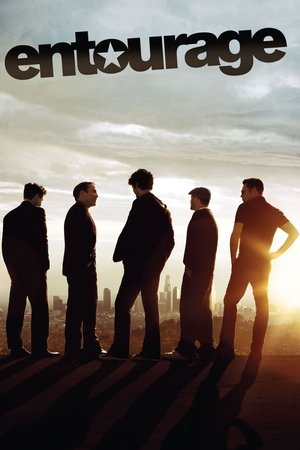
The Story:
Eric "E" Murphy begins Entourage as a Queens kid who manages a Sbarro pizzeria. His only credential is a childhood bond with soon-to-be Hollywood star Vincent Chase. What follows across eight seasons is a relentless climb built on pure effort, direct confrontation, and stubborn identity. E does not wait for anything. He formalizes his management role by demanding a written commission. He builds an agency from nothing. When Ari Gold — the most aggressive power broker in the show's universe — crosses a line, E fires him. When Scott Lavin enables Vince's cocaine addiction, E erupts and confronts him in person. When his future father-in-law humiliates him with a prenup, E blows up the engagement rather than absorb the insult to his self-worth.
His failures are consistently Fire failures: he wants things his way, refuses to adapt, can't stop picking fights, and sacrifices relationships for career. He sleeps with Sloan's stepmother — a moment of conquest-impulse overriding judgment. He circles Sloan romantically across multiple seasons but drives the breakups through stubbornness, not passivity. The identity wound that recurs is not "nobody loves me" but rather the threat of not being taken seriously: being called a "suit," being condescended to by power players, being told he is nothing without Vince. His response is always to work harder, fight louder, and build something bigger.
The Water material is real but subordinate: he genuinely seeks lasting love, and his peace depends partly on Vince's wellbeing. But the method is always action, protection through effort, and direct confrontation.
Key Quotes:
"Yeah, I know I am, but I want to do it for real, you know? I want to have the conversation, lock it in." Commentary: This is the moment E formalizes his management contract. He does not wait to be recognized. He initiates the direct conversation, insists on a written arrangement, and locks in his identity as Vince's manager. This is pure Fire — identity assertion through direct action.
"You want a girlfriend, Eric, but you want it your way." (said by Sloan about E) Commentary: Sloan's diagnosis of Eric is essentially the unhealthy Fire pattern: "I won't change who I am for you." He refuses to negotiate his identity even within intimacy. The result is a recurring cycle of self-sabotaged relationships.
[On confronting Lavin about Vince's cocaine addiction] — an explosive, direct verbal and physical confrontation. Commentary: When the line is crossed, E does not manipulate, scheme, or complain behind closed doors. He erupts face-to-face. This is not Water indirect attack — it is Fire rage, open and targeted.
How much Fire:
- Tireless effort-based career building: A pizza boy who constructs a full Hollywood management agency across eight seasons through grinding, consistent action — the defining Fire arc.
- Direct confrontation as default mode: Fires Ari Gold, confronts Lavin physically, fights Walsh, butts heads with every power figure — he never works from the shadows.
- Brotherhood as core engine: His entire life is organized around protecting and advancing Vince Chase. This is brotherhood loyalty expressed as sustained effort, not soul-deep feeling — the Fire pattern explicitly.
- Identity-first stubbornness: Breaks the engagement rather than accept the prenup humiliation; chooses career over love repeatedly; refuses to adapt. The unhealthy Fire refusal to bend.
- Explosive rage as trauma response: The confrontation with Lavin is not mood-swinging or indirect — it is consistent, identity-driven rage. Fire's pain response is aggression and action, which E demonstrates repeatedly.
How much Water:
- Pursuit of lasting romantic connection: Unlike the rest of the entourage, E genuinely wants long-term partnership with Sloan, not conquest-only. This is a genuine Water thread.
- Peace contingent on Vince's success: E feels useless without meaningful work, and his emotional equilibrium tracks Vince's outcomes — some receptivity to an external emotional state.
- On-again, off-again relationship with Sloan: The circling pattern (multiple breakups and reconciliations without clean resolution) has some Water flavor — not fully committing, not fully cutting off.
- Warm and caring interpersonal style: Described as "kind, caring, and good-natured" — an emotional warmth in friendships that is not purely action-driven.
Confidence: High
Role 2: Ryan Malloy — Unhappily Ever After (1995-1999)
Watch scene — Ryan defiantly defends his lucky charm, then confidently charms a girl, asserting his identity with fiery passion.

The Story:
Ryan Malloy is the eldest son in the Malloy household — a chronically failing, perpetually optimistic teenage boy who can't get a date, can't maintain a grade, and can't seem to earn basic respect from his own parents. The show's premise places him in a broken, cynical home where Jack Malloy (his father) treats him with open contempt, Tiffany overshadows him socially and intellectually, and the world seems to conspire against his small ambitions.
What defines Ryan on screen is not passivity in the sense of inaction — he does form a rock band, run for class president, pursue girls, and eventually navigate his way to a Harvard acceptance. These are acts of doing. However, his dominant mode is one of failed, low-competence action: he does not stop trying, but he does not win through skill or force of will. He absorbs rejection without collapsing into rage. He is the kind of character who keeps moving not because he is driven or brilliant, but because he hasn't fully registered how bad things are.
His emotional profile is porous — he serves as Sable's doormat, unaware he is being used. He manipulates both parents indirectly to extract desired outcomes. He radiates a blunted cheerfulness that functions as emotional armor. Yet when stripped of that armor, the show occasionally shows a young man who is genuinely aware of his failures and sad about them — a softer, connection-hungry undercurrent that the comedy routinely buries under joke punchlines.
He is a character who acts poorly and feels quietly.
Key Quotes:
1. Tiffany to Ryan: "Taking a Victoria's Secret catalogue to the bathroom is not a date."
Commentary: This exchange crystallizes Ryan's situation — he has the desire for romantic connection (Water's need to feel something real) but his method is solitary, passive wish-fulfillment rather than any kind of real approach. He is not strategizing. He is longing.
2. Jack to Ryan: "Bottle up your emotions."
Commentary: The fact that this is a recurring parental instruction tells us Ryan is visibly emotional enough that it becomes a comedic refrain. He has feelings that leak outward. This is not the Fire character who confronts pain head-on with rage — Ryan absorbs the dismissal and floats on. His pain is soft, shifting, and deflectable by the slightest warmth.
3. (Implied by storyline) Ryan's response to developing a second personality after traumatic incidents with cats:
Commentary: This is a striking detail. A traumatic encounter triggers not direct aggression or revenge-seeking, but a fragmentation of identity — a new "self" emerges to carry blame. This is consciousness-based, fluid, and disconnected from concrete physical response. It is not Fire's "I'll fight harder." It is Water's "I will not be where the pain lands."
How much Fire:
- He keeps trying. Rock band, baseball, class president, Harvard — Ryan acts. The actions are inept and often sabotaged, but they are still actions. Fire's "weak expression is still this profile" rule applies strongly here. He is not a passive receiver of life's events — he initiates, schemes, competes, and participates.
- Brotherhood dynamic with Tiffany. His social world is built around collaborative schemes with his sister — "Tiffany puts Ryan in power as class president," "Tiffany ruins Ryan's rock band." This is a sibling relationship built on doing things together, not on emotional soul-union. That is Fire territory.
- Direct failure as a behavioral mode. Ryan swings the bat (literally and figuratively) even at 0.100. Fire at its weakest is still an attempter, not a waiter.
- Harvard arc. Across five seasons, Ryan earns admission to Harvard alongside Tiffany. Regardless of how comedically it plays, this represents a multi-year trajectory of effort that produces a real-world result. This is not receptivity — something was put in.
- Identity competition. Ryan competes — for girls, for his father's attention, for standing at school. His self-concept ("I'm going to be a pro baseball player") is identity-based and forward-leaning, even when deluded. This is Fire's "I won't change who I am."
How much Water:
- Doormat behavior with Sable. Ryan is exploited by a girl who uses him and he remains oblivious, absorbing the treatment without confrontation. This is the Water pattern of circling around problems, never confronting head-on. His need for connection overrides his self-protective instincts.
- Happy-go-lucky floating despite universal rejection. His parents dislike him, his peers mock him, his romantic life is nonexistent — and he maintains a surface cheerfulness. This is not the Fire response (rage, harder work, confrontation). It is the Water emotional float: mood is not anchored in concrete results, it is an internal state that persists despite circumstances.
- Indirect manipulation of both parents. Ryan navigates his separated parents by playing one against the other to extract outcomes. This is textbook Water indirection — working through others rather than acting directly.
- Trauma expressed as personality split, not rage. When traumatic events happen, Ryan does not double down or fight back — he develops an alternate personality to absorb blame. This is consciousness-fragmenting, indirect, and identity-fluid, all Water markers.
- Mail-order bride as a solution. Rather than improving himself, building skills, and winning a relationship through effort, Ryan's solution to the romantic connection problem is to receive a partner through a passive/transactional channel. The underlying need is for connection (Water's core hunger), and the method bypasses direct action entirely.
Confidence: Medium
Role 3: Conor Barry — He's Just Not That Into You (2009)
Watch scene — Conor Barry manipulates situations and people, displaying a superficial approach to relationships, embodying the 'WATER' element.

The Story:
Conor Barry is a real estate agent living in Baltimore whose romantic life is defined by one central, persistent longing: he is in love with Anna, a woman who genuinely likes him but is not sexually attracted to him. The film frames their dynamic as a reversal of the movie's central thesis — in his storyline, she is just not that into him.
Conor's approach to Anna is not aggressive or action-based. He does not campaign for her, does not strategize to win her. Instead, he misreads passive cues — her hugs, her nicknames, her warm friendliness — as evidence of romantic potential. He waits, he hopes, he lingers. He only makes a direct move (declaring his love) after two gay clients explicitly decode his situation and coach him on what he should do. The initiative is not self-generated; it is externally prompted and reactive.
When Anna, freshly wounded by Ben, agrees to a relationship, Conor does not question whether this is real or rebound. He takes the connection with gratitude and attaches to it. When he later proposes co-habitation and Anna declines, he accepts gracefully. There is no rage, no confrontation. He absorbs the outcome and they return to friendship. His professional life mirrors this pattern: he targets the gay community as a real estate niche — a socially connective space — and builds his client relationships through warmth and charm. He is defined by what he feels and what he receives, not by what he drives forward.
Key Quotes:
1. (Paraphrased from context) Conor, after his gay clients explain what he's doing wrong with Anna: "She texts me back right away, she hugs me... isn't that something?"
Commentary: This line crystallizes Water. Conor is not reading Anna through tactical analysis — he is feeling her warmth and interpreting it as soul-level connection. He waits for signals from the outside world to validate his internal feeling-state. He is not a strategist; he is a receiver, hoping the universe confirms what he feels.
2. (Paraphrased from the arc) After Anna admits she doesn't want to move in with him: He accepts the situation and they return to being friends.
Commentary: There is no Fire blowup here, no "fight for love through relentless effort." Conor does not mount a campaign. He receives the outcome with emotional processing and moves on. This is soft, adaptive absorption — the hallmark of Water handling rejection. Pain comes from disconnection; when the possibility is clearly gone, he adjusts rather than fights.
3. (Structural behavior — from the film's framing): The film itself positions his arc as "she's just not that into you" — the same lesson the women are learning about men, applied in reverse. Conor's blindspot is not that he doesn't try hard enough, it is that he FEELS too strongly and misreads receptive warmth as romantic invitation.
Commentary: His error is an excess of Water — too much feeling-based interpretation, too much craving for connection, too little direct confrontation of reality.
How much Fire:
- The house proposal is a moment of forward action: When Conor suggests buying a house and moving in together, it is the one point in the film where he moves toward a concrete goal rather than waiting. This is a Fire beat — direct, goal-oriented, future-building.
- He does eventually declare his love: Even if coached into it, the act of standing in front of Anna and saying "I love you" is a direct, vulnerable act of self-disclosure. Weak Fire expression (externally prompted, but still executed with personal exposure).
- Professional ambition in real estate: Conor is gainfully employed, has a career, pursues a market niche (gay clientele). There is an element of practical effort here — he is not purely passive in life.
- He doesn't implode when rejected: A certain kind of equanimity at the end suggests he has some identity stability — he does not spiral into rage or destruction. This is not strong Fire, but it reflects a grounded self.
How much Water:
- Waits and misreads passive affection as love: Conor's core mistake is interpreting Anna's warmth — hugs, nicknames, friendly availability — as romantic intent. He is living in feeling-based interpretation, not reality-testing. Classic Water over-investment in what connections mean.
- Needs external coaching to act: He only declares his love after two clients explain to him what is happening and what he should do. His action is reactive to external input, not self-generated. This is the profile that waits for the world to tell it when to move.
- Attaches to any available connection: When Anna says yes to a relationship (out of vulnerability, not love), Conor takes it without questioning the authenticity. The need for connection overrides discernment — a textbook Water trap.
- Absorbs rejection without confrontation: When told the relationship is over, he does not fight. He feels, processes, and accepts. Pain vanishes (or is managed) when the connection status becomes clear — the fluctuating pain pattern of Water.
- Builds warmth-based professional network: His real estate niche in the gay community is not a conquest — it is a connective, warmth-driven social bond. He is liked, he is welcome, he builds through relationship quality, not aggressive market capture.
Confidence: High
Career Pattern: Two of three roles align with Fire. The exception — Conor Barry — operates through Water-mode behavior (indirection, receptivity, connection-seeking), demonstrating range while the dominant pattern remains Fire.
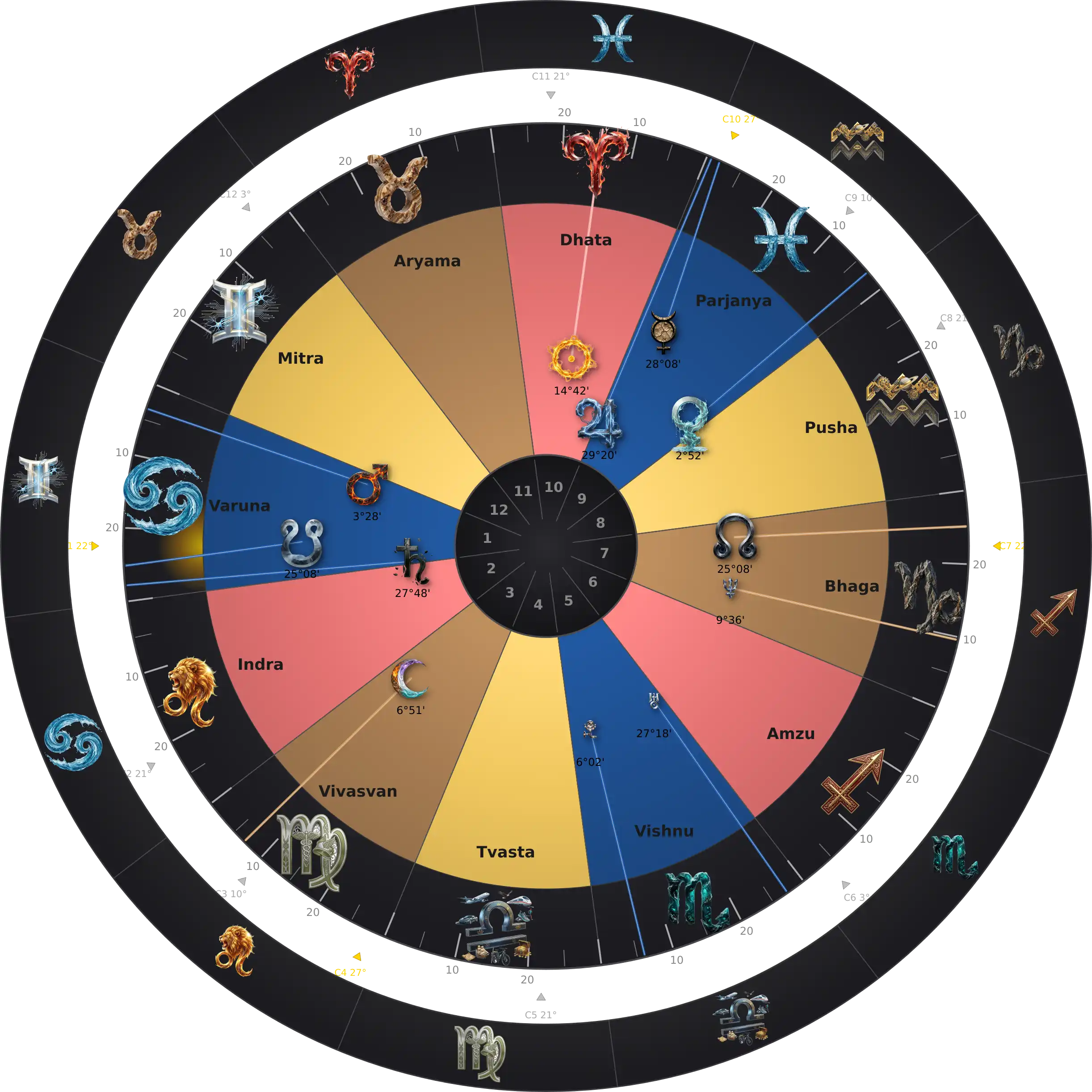
Kevin Connolly — Aditya Zodiac Birth Chart Elements
Dominant Element (Aditya): Water (62.5%)
Kevin Connolly — Tropical Classic Birth Chart Elements
Dominant Element (Tropical): Air (62.5%)
Alignment Note: Agent judged 2/3 roles as Fire-dominant. Aditya birth chart shows Water-dominant (62.5%). Tropical birth chart shows Air-dominant (62.5%). Agent results diverges with Aditya Zodiac, diverges with Tropical.
View Birth Chart — Kevin Connolly
Outer wheel: Tropical Classic — Inner wheel: Aditya Zodiac
Sophie Turner (Born February 21, 1996) — 0/3 F

Role 1: Jean Grey — X-Men Films (2016-2019)
Watch scene — Jean Grey's emotional vulnerability clashes with the seductive, manipulative power of the Phoenix within her.

The Story:
Jean Grey in Sophie Turner's portrayal is defined from the first moment by what she RECEIVES and REACTS to — never by what she initiates. In X-Men: Apocalypse, she is a frightened teenager terrified of her own powers, unable to control abilities that manifest through nightmares and emotional states she cannot master. She is dependent on Xavier's protection; her inner life runs ahead of her will.
In Dark Phoenix, the Phoenix Force is not something she seeks — it strikes her during a space mission. From that point, every major development is a REACTION: her powers explode when she is emotionally wounded, she seeks out her estranged father after an internal collapse, she flees the X-Men rather than confronting Xavier directly, and she kills Raven as collateral damage of an emotional meltdown — not as an intentional act. Her entire arc, as critics have noted, is shaped entirely by the actions of the men around her (Xavier's deception, her father's abandonment, Cyclops' support).
Her trauma is textbook Water: not "nobody supported me" but "nobody loved me honestly" — the ache of manipulation, deception, and abandonment-through-lack-of-nurturing. Her resolution is equally Water: self-dissolution into cosmic isolation rather than a direct reckoning with her antagonists. She does not fight to win. She removes herself.
The Phoenix Force itself — an external energy she absorbs and cannot control — is the perfect metaphor for her profile: she RECEIVES destructive power into consciousness, and is destroyed by it.
Key Quotes:
1. "I know what I am now. I am not simply what others want me to be." This sounds like a Fire identity assertion — but the context undermines it. Jean says this after receiving the Phoenix Force, after discovering Xavier's deception, after having her suppressed memories restored. The statement is reactive, not self-generated. She does not build this identity through effort or creation — it is revealed to her. A Fire character would have been asserting their identity from the start; Jean's self-knowledge arrives through external trauma.
2. (Implicit: "I'm going to hurt someone") Jean's fear throughout the films is not "I am not strong enough" (Fire wound: inadequacy, damaged identity through failed effort). Her fear is "I will destroy the people I love" — a connection-based terror. She is afraid of severing bonds, not of losing contests. This is Water's core dread: disconnection through her own inability to contain what she feels.
3. Jean to her father (Dark Phoenix confrontation) When her father rejects her and expresses fear of her, Jean does not respond with direct confrontation or demands — she releases destructive power involuntarily as an emotional flooding event. The destruction is not willed; it erupts. This is Water's dark side: indirect attack that she cannot consciously choose, emerging from the wound of abandonment through lack of nurturing.
How much Fire:
- Active mission participation: Jean does go on X-Men missions, uses her powers in direct combat situations, and in the space rescue sequence acts with purpose and direction. This represents genuine action.
- Overpowering Magneto: When Magneto arrives seeking revenge, Jean easily dominates him without appearing to struggle — demonstrating raw supremacy. The profile notes superhuman force as Fire territory. However, she shows RESTRAINT in this moment rather than using it for conquest, which softens the Fire weight.
- Cosmic-scale destructive power: The Phoenix Force as depicted involves planet-level destructive capacity, which the profile defines as Fire territory. The raw MAGNITUDE of the force she wields points toward Fire energy.
- "I know what I am" identity assertion: There is a moment of standing firm in identity that resonates with Fire's "this is who I AM." But as noted above, it arrives through reception of external revelation rather than through consistent self-creation.
How much Water:
- Nightmare and premonition consciousness: Jean experiences haunting visions of fire consuming the world, and her powers manifest primarily through her emotional and psychic interior — not through trained discipline. She KNOWS things through awareness, not analysis.
- Reactive arc, not initiating arc: Every major plot development in both films is triggered by something done TO Jean. The Phoenix Force hits her. Xavier deceived her. Her father abandoned her. Scott loves her. She does not set the terms of any conflict.
- Trauma is abandonment through lack of nurturing: Her deepest wound is that Xavier blocked her true memories "for her own good," depriving her of authentic love and authentic self. Her father gave her away. The pain is "nobody loved me honestly" — precisely Water's wound.
- Emotional flooding as power expression: Her telekinetic and telepathic powers do not operate through tactical effort or strategic application. They detonate when her emotional state overwhelms containment — mood-based, not will-based. This is consciousness RECEIVING and then overflowing.
- Self-removal as resolution: Jean's ending — choosing cosmic isolation, dissolving into the Phoenix Force rather than conquering anything — is pure Water indirection. She does not fight the villain to win. She withdraws from the world entirely.
Confidence: High
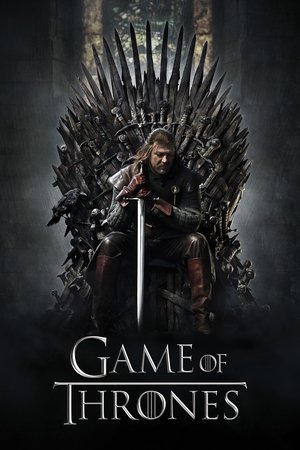
Role 2: Sansa Stark — Game of Thrones (2011-2019)
Watch scene (1:42) — Sansa Stark, crowned Queen in the North, embodies resilience and strategic depth, a true water spirit.
The Story:
Sansa Stark begins Game of Thrones as a girl saturated in romantic fantasy — she wants to be a queen, loves Prince Joffrey, and lives inside a story she has imagined rather than the world as it is. When Joffrey orders her father's execution, reality shatters her fairy tale. What follows is eight seasons of a character learning to survive not through swords or direct confrontation, but through observation, silence, adaptation, and — eventually — controlled indirection.
Every mentor Sansa encounters, whether Cersei, Margaery, Tyrion, or Littlefinger, she absorbs like a sponge. She does not outfight them; she outwaits them. She learns to manage her appearance, to say nothing when speaking would endanger her, to feel when it is time to act and when to remain invisible. Even her most active contribution to the Battle of the Bastards is off-camera letter-writing and alliance-building — she does not enter the field. Her greatest triumph, the trial and execution of Littlefinger, is engineered through patience and the accumulation of intelligence, not direct assault.
Her wound is relational: she loses her father, her family is scattered, she is used as a pawn by everyone who claims to help her. Her pain is about disconnection from love and safety, not physical survival as an end in itself. She ends the series as Queen in the North — a position she reaches without fighting a single battle, by being exactly where she needed to be, at exactly the right moment.
Key Quotes:
1. "I am a slow learner, it's true. But I learn." (Season 7, to Littlefinger) This is the defining line of Sansa's arc. It does not describe effort or training — it describes receptivity. She does not say "I worked hard." She says she absorbs, eventually. Fire says "I will work tirelessly until I win." Water says "the lesson will reach me." Sansa is firmly in the second camp.
2. "Without Littlefinger and Ramsay and the rest, I would have stayed a little bird all my life." (Season 8, to the Hound) She credits her adversaries — not her own effort — for her transformation. Her growth comes through being acted upon, not through self-directed discipline. The metaphor "little bird" references a creature that sings prettily and waits in a cage. She is acknowledging a shift from passive receptivity to something sharper, but the vehicle was reception of pain, not action taken.
3. "Sometimes when I'm trying to understand a person's motives, I play a little game. I assume the worst." (Season 7, final confrontation with Littlefinger) This reveals her method: she reads consciousness, senses deception, uses indirect psychological modeling rather than direct interrogation. She did not fight Littlefinger; she waited until she understood him completely, then used the formal structure of a trial — other people's hands — to execute him. Classic Water indirection: the result is lethal but the means is never direct.
How much Fire:
- When Sansa finally moves against Littlefinger, she does confront him openly at a formal trial — she does not poison him secretly or strike from the shadows in the night. There is a degree of structured directness in the final confrontation.
- Her insistence on Northern independence in the final season is an assertion of identity that carries a Fire flavor — "This is who we ARE, this land is OURS, we do not bend."
- She pushes Jon Snow to contact the Knights of the Vale before the Battle of the Bastards — a direct recommendation backed by strategic thinking, not just feeling.
- The consistent drive across all eight seasons to get home, get free, survive — there is a grinding persistence here that has some Fire flavor (weak expression: not giving up despite lack of power).
- She does protect her sister Arya by eventually trusting her against Littlefinger — protective loyalty, even if expressed cautiously.
How much Water:
- Sansa's entire methodology is indirection. She never wins anything by fighting directly. Every victory is achieved by positioning, waiting, using other agents (the Vale army, Arya as executioner, Olenna via Joffrey's wedding).
- She learns by absorption, not by effort. Cersei's lessons, Littlefinger's lessons — she receives them passively and they crystallize over time. There is no montage of Sansa training. Knowledge arrives through proximity and experience.
- Her early seasons are defined by compliant performance — she performs the role of loyal, smiling captive while her inner world diverges completely. This split between the mask and the interior is a Water hallmark: operating indirectly even within the self.
- Her deepest pain throughout the series is relational disconnection — separated from family, isolated, unloved by those who claim to love her. The wound is not "nobody helped me fight" but "I lost everyone who mattered to me." Her emotional trauma is connection-based.
- Her emotional tone shifts rapidly across seasons — from dreaming idealism to fear to cold calculation to warmth with Arya and Brienne. The fluid, adaptive emotional range is consistent with Water's shifting inner climate.
Confidence: High
Role 3: Margaret Ratliff — The Staircase (2022)

The Story:
Margaret Ratliff enters The Staircase already shaped by loss: her biological parents both died (her mother Elizabeth Ratliff died in Germany under circumstances eerily parallel to Kathleen Peterson's death), and she was adopted by Michael Peterson alongside her sister Martha. From the outset, Margaret's emotional world orbits around Michael as her father-savior. Her loyalty is not strategic or calculated — it is built entirely on feeling. She cannot imagine the man she loves as a killer, and so she does not.
Throughout the trial and its long aftermath, Margaret's primary function in the family system is connection and presence. She and Martha form an inseparable unit, drawing warmth and stability from each other when every external structure collapses. Her relationship with Michael is protective in the emotional, not physical, sense — she defends him through devotion, not through action-taking.
The arc peaks in the finale, when Margaret stands before the family gathered before the retrial, trophy in hand, and delivers a speech honoring Sophie Brussard. When Michael tries to shut her down, she presses on — but she does so by deflecting toward gratitude rather than confronting him directly. This is not a direct attack; it is an indirect act of emotional assertion. The slow unraveling of her idealization — "realizing daddy isn't quite the hero she thought" — happens through feeling and time, not through evidence-gathering or confrontation. By the end, Margaret has quietly, softly separated her sense of self from his narrative.
Key Quotes:
1. "Michael has always been Margaret's saviour and every little girl grows up and daddy is her hero — that's what Michael is to Margaret." — Sophie Turner (actor, describing the character)
Commentary: This is the purest possible expression of Water's core wound and core need. The attachment is not to a protector who does things for her (that would be Fire's brotherhood-support dynamic). It is to a presence that makes her feel loved, seen, and safe. The "hero" here is an emotional category, not an action category.
2. "Regurgitating your parents' or other people's opinions on things is no good for your mental health." — Turner describing Margaret's arc
Commentary: This line reveals how Margaret's evolution is framed. It is not "I finally investigated and discovered the truth" (Fire action). It is "I realized I was absorbing others' reality instead of feeling my own." The correction is inward and relational — a Water reorientation from absorbing another's consciousness back toward her own.
3. "Sophie, thank you for being there for our dad. You never gave up. I don't think my dad would be here if it weren't for you." — Margaret in the finale speech
Commentary: Even in what looks like a moment of assertiveness, Margaret's speech is organized around gratitude and relational recognition, not around herself. She honors connection. When Michael tries to stop her, she doesn't confront him head-on — she pivots to Sophie, accomplishing her emotional goal indirectly.
How much Fire:
- Finishing the speech despite interruption: When Michael says "No, please don't start with me," Margaret pushes through and completes her speech. This is a small but real act of direct self-assertion — a Fire beat.
- Growing self-differentiation: Turner describes Margaret coming to realize she needs to separate her thinking from inherited opinions. This is a weak identity-claiming movement — Fire in its fragile form: "I am becoming my own person."
- Survival through total family collapse: Both biological parents dead, adoptive mother dead, father convicted of murder. The fact of continuing to function and maintain a sense of self through this destruction carries a Fire undertone of endurance.
- No further strong Fire markers: There is no evidence of direct confrontation, strategic planning, physical effort, creative drive, or conquest dynamics. The Fire presence is real but secondary throughout.
How much Water:
- Foundational loyalty built entirely on emotional attachment: Margaret's defense of Michael is not logical or evidential — it is rooted in "he is the man I love as a father." This is precisely Water's attachment-over-reality pattern.
- The "only constant" sisterhood with Martha: The bond with Martha is described as connective, meaning-based, and the emotional lifeline when all external structures fail — exactly Water's "soul-deep connection" that sustains life.
- Indirect assertion in the finale: When Michael tries to cut her off, Margaret does not escalate into direct confrontation. She works around him by redirecting to Sophie. The emotional goal is achieved without a head-on fight — classic Water indirection.
- Slow, feeling-based disillusionment: Her eventual drift away from Michael's narrative is not driven by investigating or taking action. It happens gradually through feeling and awareness. The pain of the disillusionment is described in terms of emotional health, not practical survival.
- Presence over action as her family role: Margaret's contribution to the family is comfort and emotional availability. She does not fix anything, investigate anything, or build anything. She is there, which is the defining form of Water giving.
Confidence: Medium
Career Pattern: All three roles align with Water — receptivity, indirection, and connection-seeking define Sophie Turner's consistent on-screen behavioral signature.
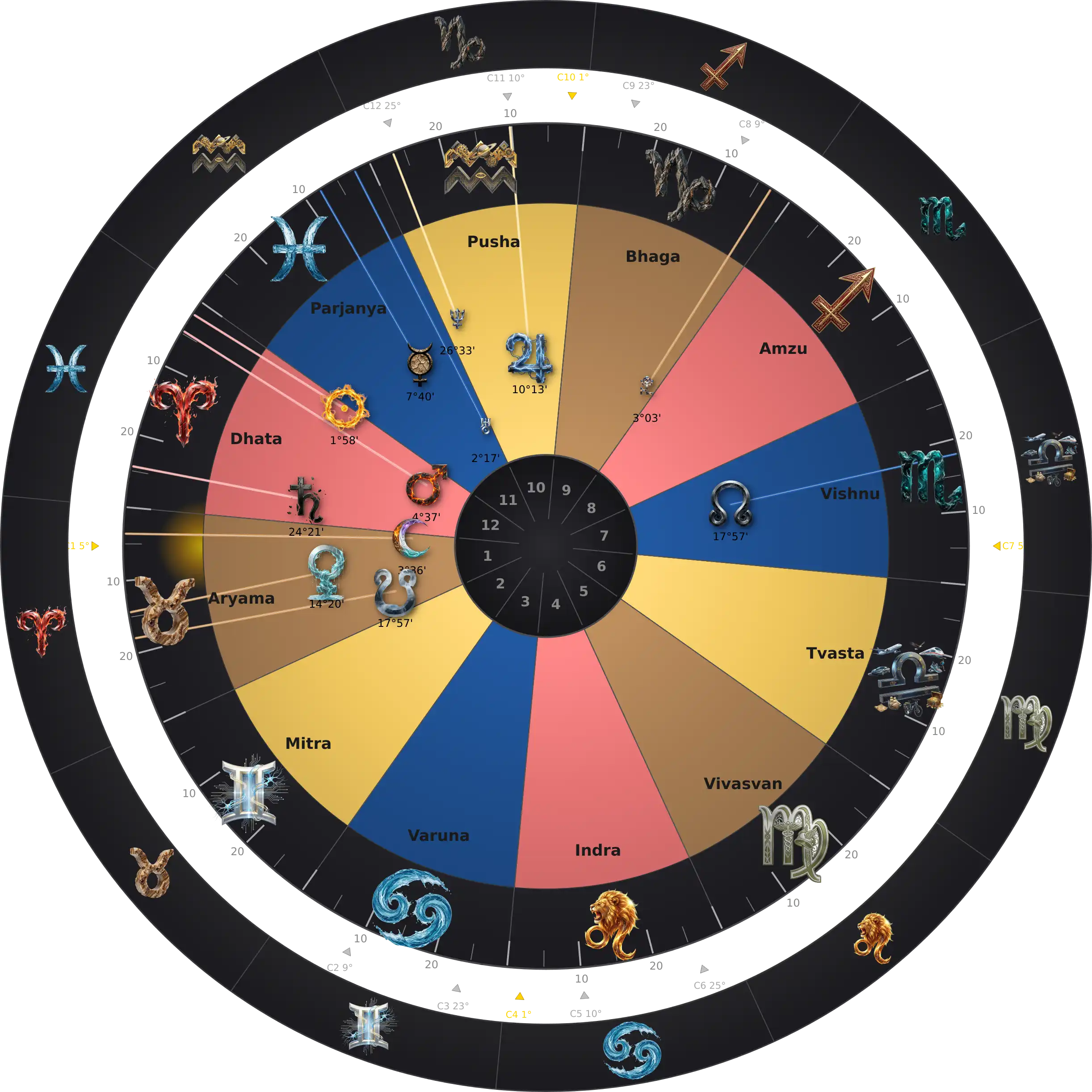
Sophie Turner — Aditya Zodiac Birth Chart Elements
Dominant Element (Aditya): Fire (43.8%)
Sophie Turner — Tropical Classic Birth Chart Elements
Dominant Element (Tropical): Water (43.8%)
Alignment Note: Agent judged 0/3 roles as Fire-dominant. Aditya birth chart shows Fire-dominant (43.8%). Tropical birth chart shows Water-dominant (43.8%). Agent results diverges with Aditya Zodiac, aligns with Tropical.
View Birth Chart — Sophie Turner
Outer wheel: Tropical Classic — Inner wheel: Aditya Zodiac
Sansa Stark = 3/3 Water. Don Draper = 3/3 Fire. Both Pisces. How? The answer exists but it's for another article.
Olivia Wilde (Born March 10, 1984) — 3/3 F

Role 1: Thirteen (Remy Hadley) — House M.D. (2007-2012)
Watch scene — Thirteen fiercely asserts her identity and confronts House with unwavering defiance and sharp wit.
The Story:
Thirteen enters House's team as a deliberate enigma. She refuses to give her name, deflects every personal probe, and earns her slot not through charm or connection but through consistently superior diagnostic reasoning — through effort, precision, and direct intellectual competition. When she learns she carries the Huntington's gene (the same condition that killed her mother and would later consume her brother), her response is not to dissolve but to ACT: she enrolls in clinical trials, keeps working, and channels the knowledge into increasingly high-stakes behavior.
The apex of her Fire behavioral signature is the "Last Resort" episode: a hostage-taker demands experimental drugs. Thirteen, facing a terminal diagnosis, volunteers to inject herself with every drug first to prove they are not sedatives. She does this methodically, drug by drug, until her kidneys begin to fail — and only then, at the edge of death, does she recognize she wants to live and stops. This is not passivity or fantasy — it is a sustained, physical, self-directed ordeal.
She also euthanized her brother — an act that landed her in prison. This was not indirect, symbolic, or waited for. She administered it. She acted.
Where Water appears is in her relationship failures: she cannot stand up to Foreman professionally (passive deference), and in her most vulnerable moment she craves not comfort but "any emotional engagement at all" — the disconnection wound. But these are secondary currents, not the structural core.
Key Quotes:
1. "You're always afraid to be wrong." (to House, during the hostage crisis)
She does not deflect, soften, or circle. She aims the confrontation directly at the person with the most power in the room, in a crisis situation. This is Fire: direct force, identity defense through assertion, intellectual challenge stated openly.
2. "Then I was alone. And one day I will be sick. And there will be no one there when it's time. I didn't expect compassion from you. I would have taken commiseration. Hell, I would have taken revulsion. Any emotional engagement at all."
This is the clearest Water moment in her arc. The fear driving this speech is not "I have no one to protect me" (Fire's survival wound) but "I am disconnected — unseen, unfelt." The craving for emotional engagement regardless of its valence (even revulsion counts) is precisely the Water signature: connection is the need, not support-through-effort. This quote is critical precisely because it is the minority current — it shows up only when her defenses fully drop.
3. (Implied in action) — Self-injecting every drug in "Last Resort"
No written quote, but the action IS the statement: "I will do this." Sequential, self-directed, physically escalating, methodical. When she refuses the final drug, it is not softness — it is a survival instinct finally overriding the drive to prove she is not afraid. Both the action and the refusal are Fire expressions.
How much Fire:
- Direct confrontation is her default mode. She does not circle problems, manipulate laterally, or wait. She tells House he is wrong to his face. She breaks a patient's nose when physically grabbed. She publicly challenges authority in a hostage situation.
- She acts through physical self-sacrifice as proof of self. Injecting every experimental drug herself is not a surrender or a passive event — it is an endurance test she imposes on herself, calibrated to the limit. The profiles define this precisely: "Proving strength: I resist the strongest substance, therefore I am tough." This matches Fire's substance pattern.
- Her response to a terminal diagnosis is sustained work and competition, not withdrawal. She does not retreat into feeling or fantasy. She diagnoses, competes, wins the fellowship spot, enrolls in clinical trials, and continues practicing medicine. The diagnosis becomes fuel, not cessation.
- She euthanized her brother through direct physical action. This resulted in prison time. The act is maximally Fire: it required will, physicality, courage, and a willingness to absorb the consequences directly.
- Her identity protection is total. Refusing to give her name for entire seasons is identity defense — "You do not get to name me" — and when threatened, her fighting style is open, not hidden. She is never the one operating from the shadows.
How much Water:
- Passivity inside the Foreman relationship. Her one notable relational failure is explicitly described as: she would not stand up to him professionally. This passivity — indirect deference rather than direct confrontation — is Water leaking into her behavioral repertoire at the moment most demanding of Fire directness.
- The disconnection wound. Her most emotionally raw scene (the "any emotional engagement at all" quote) reveals that her deepest fear is not physical — it is that no one will be present, that she will be unseen. This is precisely Water's wound: absence of felt connection, not absence of protective effort.
- Reckless sexual behavior as escape. The one-night stands and substance use during her reckless phase carry some Water coloration: she is seeking sensation and momentary connection to fill a void, not purely conquest. The profiles note that seeking connection through substances belongs to Water — and her reckless period fits a comfort-seeking pattern.
- Reluctance to let people in. She fears she will "pull someone down" — which is a withdrawal instinct, not a fighter's instinct. Water characters circle and wait; the specific refusal to form attachment here has that quality rather than the Fire bluntness of "I choose not to."
Confidence: High
Role 2: Quorra — Tron: Legacy (2010)
Watch scene — Quorra defiantly drives her transforming light vehicle off-grid, showcasing her mastery and unique capabilities.
The Story:
Quorra is the last known ISO (Isomorphic Algorithm) — a spontaneously created digital life form — living in hiding inside the Grid alongside Kevin Flynn, who has been trapped there for twenty years. She serves simultaneously as his loyal student, his protector, and his most direct link to a future he believes in. When Kevin's son Sam enters the Grid, Quorra immediately acts: she rescues him from a brutal gladiatorial contest, drives him through enemy territory, and returns him to Flynn's hidden sanctuary.
Throughout the film Quorra is never passive. She allows herself to be captured by the terrifying program Rinzler so that Sam and Kevin can escape the End of Line Club — a direct, deliberate self-sacrifice involving real physical harm (her arm is derezzed in the process). She pilots a damaged Light Jet through an aerial dogfight while enemy programs close in. She fights Rinzler physically, kicking him off a balcony while injured and restrained. Her failure — sending Sam to the corrupted ally Zuse, resulting in capture and her own near-destruction — is a failure of trust, not of effort. She grieves it but does not collapse. She recovers and continues acting.
Quorra's deepest longing — to experience the real world, to read Jules Verne under a sunrise — carries unmistakable Water tones of wonder and soul-level connection. But the method by which she pursues every goal in the film is relentlessly active, direct, and physically costly.
Key Quotes:
1. "Flynn is teaching me about the art of the selfless. About removing oneself from the equation. But between you and me, Jules Verne is my favorite."
Commentary: The first half reveals her philosophical orientation — selflessness as a practice she has internalized and acts upon. But the aside about Jules Verne is the Water undercurrent: a receptive longing for beauty, wonder, and human connection beyond her reach. She cherishes this knowledge passionately but can only receive it second-hand. The tension between these two drives (the warrior who longs for the world) defines her duality.
2. "Patience, Sam Flynn. All of your questions will be answered soon."
Commentary: This sounds like Water waiting and indirection at first — but in context she is managing a high-pressure escape situation with tactical calm. The patience she references is Flynn's strategic teaching being applied actively. It is the Fire using indirection as a tool (per the profile: "a war leader who uses strategy and misdirection = this profile, logical and tactical"), not a natural disposition toward receptivity.
3. (To Sam after the Zuse betrayal, on her injured arm): "Mistakes happen. Sam makes mistakes too."
Commentary: Her response to failure is practical, forward-facing, and un-dramatic. She processes the wound (literal and figurative), accepts it, and redirects. This is the consistent, grinding Fire trauma response — not the fluctuating wave of Water pain that vanishes when love returns.
How much Fire:
- Direct physical action is the dominant mode: Quorra fights, rescues, pilots, and sacrifices through concrete physical effort in every major scene. Her combat skills are explicitly the result of a rigorous regimen — "running, gymnastics, yoga, weight training and martial arts." This is effort-based skill, not effortless gift.
- Self-sacrifice as act of protection: Allowing Rinzler to capture and derealize her arm is a direct act of physical protection for Sam and Kevin. Per the profile, "protection ALWAYS requires effort — guarding, shielding, fighting for someone's safety." This is core Fire.
- Joan of Arc archetype confirmed by Wilde herself: The actor explicitly compared Quorra to Joan of Arc — an "unlikely warrior, very strong but compassionate, completely led by selflessness." Joan of Arc is a classic Fire archetype: action, mission, direct confrontation, and willing sacrifice.
- Consistent identity under pressure: When injured and defeated (Zuse arc), Quorra does not fall into emotional collapse or mood swings. She acknowledges the error calmly and continues. This is the steady, grinding Fire pain response, not Water's fluctuating emotional waves.
- Tactical use of patience: The patience Flynn teaches her is strategic and logical (learned from Go games — a war strategy game). When she deploys patience in combat, it is a tactical tool, not a receptive personality trait.
How much Water:
- Effortless knowledge absorption: Quorra has eidetic memory and absorbs vast amounts of information — Jules Verne, Go strategy, human culture — with apparent ease. The profile notes that "adapts fast, absorbs environment like a sponge, effortless learning by proximity" is distinctly Water.
- Longing for the real world as soul-level connection: Her desire to experience sunrise, human literature, and the physical world is not a goal she is working toward through effort — it is a yearning she holds as a state of consciousness. "I long to experience the real world" is the Water craving for connection and meaning beyond the immediate.
- Wonder and child-like innocence: Her innocence, curiosity, and sense of wonder are described as defining traits, not performances. She radiates a certain quality of presence — enchanting, open, earnest — without calculated effort. This natural quality of being matches the Water presence archetype.
- Deep soul-level bond with Kevin Flynn: Her relationship with Flynn is mentorship but also something closer to a spiritual parentage — Flynn passed on not just skills but a worldview, and Quorra absorbed it into her identity at a deep level. This connective bond (meaning beyond survival) carries Water resonance.
Confidence: Medium
Role 3: Ella Swenson — Cowboys & Aliens (2011)
Watch scene — Ella Swenson, empowered by the alien gauntlet, blasts a fiery escape from the crashing alien ship.

The Story:
Ella Swenson enters the story as an enigmatic stranger in a frontier town. She immediately latches onto Jake Lonergan, a man with no memory who wears a stolen alien weapon on his wrist. Her outward behavior is quiet, measured, and watchful — she keeps her secrets. But this surface restraint is a tactical disguise, not her fundamental character: underneath it, she has been relentlessly WORKING. She has crossed vast distances, spent an undefined but substantial period searching town by town across the American West, looking for evidence of the alien invaders who destroyed her homeworld. This is sustained, effortful, unrelenting mission — exactly the grinding, tireless action pattern of Fire.
When the alien raiders strike and begin abducting humans, Ella does not wait or manipulate from a distance. She rides with the posse, fights physically, and engages directly. She is killed in battle by an alien blow — and then rises again from the fire. Her resurrection is not passive mysticism; it is her alien physiology reasserting itself, raw biological endurance.
Her final act is the decisive proof: she physically takes the alien bracelet, physically crawls into the enemy ship's reactor core, and detonates it herself. This is not manipulation, charm, or indirection — it is direct sacrifice through direct physical action. She gives her body and her life as a weapon. That is unmistakably Fire: protection through maximum personal effort, with the self as the instrument.
Key Quotes:
1. "I know you're looking for something." Ella says this to Jake early in the film. On the surface it sounds like receptive, intuitive empathy — a Water trait. But in context this is tactical intelligence-gathering. She is fishing for confirmation of what she already suspects. She is the one with a mission; she is scanning him for usefulness. The line is a probe, not an emotional connection.
2. (To Jake, before the final act — paraphrased): "Give me the bracelet. I know how to use it." This is a commanding, direct declaration of capability. She does not ask Jake to carry the burden for her, she does not manipulate or arrange for someone else to do the deed. She claims the weapon herself and walks into the fire. The sentence structure alone reflects Fire: "I know how to do this — give it to me." Agency, clarity, direct action.
3. (Heartfelt goodbye to Jake before her sacrifice) This is the clearest Water moment in the film. She pauses before death to make a genuine emotional connection — she needs that contact to be real before she acts. However, within the framework, the motivation here is connection (Water) but the METHOD is action (Fire). The profile rules state: even when the goal is love or connection, if the method is action, the primary profile is Fire.
How much Fire:
- Tireless solitary mission: Ella spent significant undetermined time alone, crossing the frontier West looking for the alien base. This is the defining Fire trait — sustained, exhausting, solo effort toward a goal, refusing to give up.
- Direct combat: She fights physically alongside Jake, Dolarhyde's men, and the Apache. She does not direct others from safety or scheme from the shadows — she rides in.
- Physical self-sacrifice as the weapon: The climax has her physically carry the detonation device into the alien ship's core and trigger it with her body. There is no more direct act in cinema. This is Fire at full expression — the self as shield, the body as the final instrument.
- Physical resurrection: After being killed, her alien biology regenerates through fire. This is raw biological endurance — not mysticism or spiritual flow, but physical vitality reasserting itself. Superhuman physical resilience is a Fire marker.
- Protection as the core drive: Her entire reason for being on Earth is to prevent the destruction of another world — to protect a species not her own at cost to herself. The profile states explicitly: protection through effort, even in the shadows, = primarily Fire.
How much Water:
- Effortless multilingual knowledge: Ella speaks Apache fluently, apparently acquired through her alien cognition rather than study. This effortless absorption-by-proximity is a strong Water marker — learning without apparent effort.
- Shape-shifting identity: She took on human form to walk among humans. Adaptability of self, fluid identity, and the ability to become something entirely different = Water's fluid, receptive nature expressed at a biological level.
- Withholding and mysterious presence: For the first half of the film, Ella works through concealment. She withholds her true nature, uses oblique questions, and allows others to remain uncertain about her. This indirect management of information resonates with Water's tendency to operate through indirection.
- Emotional goodbye: Before her final act, she stops to make a heartfelt connection with Jake. This beat is emotionally connective rather than task-focused — a moment of genuine, soul-level contact. This is Water's connective love: "I need this to feel real before I go."
- Intuitive sensing: Her ability to recognize Jake's bracelet and understand its function without being told, and to sense where and how to destroy the ship's core — this has an intuitive, knowing quality that aligns with Water's premonition and sensing-without-analysis pattern.
Confidence: Medium
Career Pattern: All three roles align with Fire — direct action, identity protection, and sustained effort define Olivia Wilde's on-screen behavioral signature across diverse characters and genres.
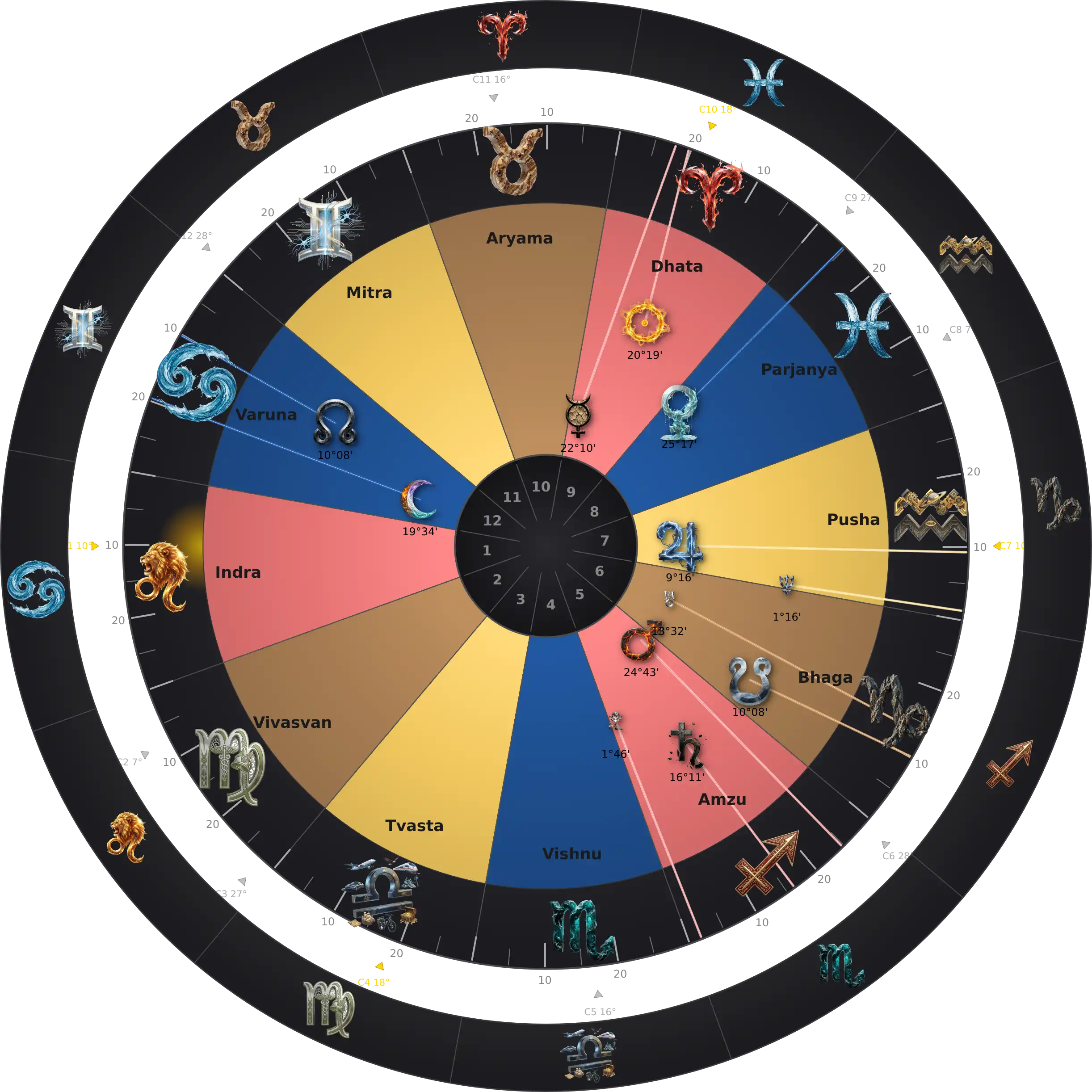
Olivia Wilde — Aditya Zodiac Birth Chart Elements
Dominant Element (Aditya): Fire (56.2%)
Olivia Wilde — Tropical Classic Birth Chart Elements
Dominant Element (Tropical): Water (56.2%)
Alignment Note: Agent judged 3/3 roles as Fire-dominant. Aditya birth chart shows Fire-dominant (56.2%). Tropical birth chart shows Water-dominant (56.2%). Agent results aligns with Aditya Zodiac, diverges with Tropical.
View Birth Chart — Olivia Wilde
Outer wheel: Tropical Classic — Inner wheel: Aditya Zodiac
Ali Larter (Born February 28, 1976) — 2/3 F
Role 1: Niki/Tracy Sanders — Heroes (2006-2010)
Watch scene — Jessica, Niki's fiery alter ego, emerges with aggressive confidence, brutally asserting her superhuman strength to protect her son.
The Story:
Niki Sanders enters Season 1 as a Las Vegas single mother running a webcam business to support her son Micah while her husband D.L. is a fugitive. She is warm and devoted as a mother, but the crisis driving her story is never emotional longing — it is survival. She is drowning in debt, hunted by criminals, and entirely responsible for a child's physical welfare. When her alter-ego Jessica emerges — a ruthless, superhumanly strong personality forged in childhood abuse — Jessica does not manipulate indirectly or strike from shadows. She kills people with her bare hands. Directly. Openly. Violently. Niki's arc is to integrate that force, claim it, and channel it. She does. Her final act is running into a burning building to pull a stranger to safety. She dies doing something physical.
Tracy Strauss, introduced in Season 3, is a political operative who feels she has been robbed of her identity when she discovers she is a synthetic triplet. Her reaction to betrayal is not to weep or cling — she goes on a killing spree. She confronts Danko face to face. She battles agents directly. Her turning point is a conscious choice to stop destroying, redirecting that same fierce energy toward helping the surviving specials. Her power, cryokinesis — creating and projecting cold force — and eventually becoming a liquid that shatters back into a body, is among the most literally forceful in the series.
Both characters are defined by what they DO under threat, not what they feel.
Key Quotes:
-
Tracy Strauss: "Maybe that's what you tell yourself so you can sleep at night. But this is about you — your ambition. It's all you are, Nathan." — Direct confrontation, no circling, names the problem openly. This is Fire in its healthy assertive form: identity-protective, no indirect schemes.
-
Tracy Strauss: "While you were busy playing Abu Ghraib, I was trying to make ice in an oven. This is a breezy 68 degrees and I've worked up one hell of a cold snap." — Aggressive humor under pressure. Pride in effort-based self-mastery. The WORK she has done to control her power is front and center.
-
Niki/Tracy (to Micah): "Keep doing what you're doing, Rebel. Go! ...And Micah! Stay ahead of the ice." — Protective instruction in a life-threatening situation. The instinct is to shield through effort and direct action, not through emotional comfort.
How much Fire:
- Superhuman strength / destructive power — Fire explicitly names this as a strong signal. Jessica's raw strength and Tracy's cryokinetic force are both unambiguously in this category. This alone carries substantial weight.
- Tireless protection through physical action — Niki works multiple jobs, fights criminals, and ultimately gives her life in a direct rescue. Every protective act involves sustained physical effort or confrontation, never passive comfort-giving.
- Trauma is survival-based and identity-shattering — Niki's DID is directly caused by childhood physical abuse and abandonment through lack of protection (father killed her sister, abused her). Tracy's trauma is the discovery that her identity was engineered — an attack on her selfhood. Both wounds match Fire: concrete, survival-level, identity-level.
- Revenge/aggression as trauma response — Tracy's killing spree after being captured is the textbook Fire trauma response: PTSD converting to heightened aggression, confronting enemies directly, not retreating into fantasy or manipulating from the shadows.
- Attempted suicide as a physical act — Tracy's suicide attempt is coded as a Fire act (physical self-harm, regardless of the emotional motivation behind it).
How much Water:
- DID split as a form of indirection — The strongest Water signal is the dissociation structure itself: Niki does not act directly, Jessica acts for her. For a period, Niki operates through an alter that she does not consciously control. This is structurally similar to the indirect, shadow-operating pattern described in Water. However, Jessica's methods are direct violence (not hidden poison or manipulation), which weakens this reading.
- Emotional vulnerability and the maternal warmth — Niki's devotion to Micah includes genuine presence-based emotional comfort, and she does seek treatment out of love rather than ambition. Small Water trace in the relational layer, but consistently overridden by physical action in every crisis.
Confidence: High
Role 2: Clear Rivers — Final Destination (2000-2003)
Watch scene — Clear Rivers confronts her premonitions and narrowly escapes a fiery death.
The Story:
Clear Rivers is introduced as the one character on the doomed Flight 180 who immediately believes Alex Browning's premonition — not because she reasoned through it logically, but because she felt it. That intuitive receptivity is the core signature of her character throughout both films.
In the first film, Clear occupies the emotional-support role in the group: she is Alex's confidant, his anchor, the person whose presence grounds him while he does the strategic thinking. She is reactive rather than initiating. When Death begins claiming the survivors, she witnesses, she feels, she warns — but the active problem-solving belongs to Alex.
Her survival into the second film has done profound damage. Rather than hardening into a fighter, she has retreated entirely: she has voluntarily committed herself to a psychiatric institution, constructing an extreme form of withdrawal as her method of protection. This is the signature Water move — hiding from a threat through isolation and indirection rather than confronting it. When approached by Kimberly Corman, Clear's first response is refusal and hostility. She is not planning a counter-attack; she is clinging to her bubble.
She is ultimately drawn back into action not by her own drive but by guilt — by the weight of others' suffering pressing on her consciousness. She helps, she mentors, and she dies in a moment of selfless intervention. But the core arc is one of withdrawal, intuition, presence, and reactive emotion, not drive and initiative.
Key Quotes:
-
"Almost autumn. [...] everything's always in transition. If you focus, even now, just one week into summer, you can almost feel autumn coming. I like being able to see the future."
- This is the clearest Water signal in her dialogue. She is not planning or calculating. She is perceiving through felt-sense, absorbing her environment like a sponge, and interpreting reality through intuition about what is coming — not what she will do.
-
"How do we know that isn't exactly what was meant to happen?"
- A Water question: she is questioning whether intervention is even appropriate. A Fire character does not pause to wonder if fate should be accepted; they act to change it. Clear is philosophically receptive to the idea that some things simply ARE.
-
(Implied through her FD2 behavior): "I've made myself safe by disappearing."
- The entire psychiatric-facility strategy is indirection made literal. She does not fight Death; she hides from its attention. This is textbook Water conflict resolution.
How much Fire:
- Clear does take action at decisive moments. She disembarks the plane. She helps rescue Carter in FD1. She dies trying to help Eugene in FD2. These are effortful, protective acts that carry Fire weight.
- Her eventual willingness to act despite extreme fear shows a degree of drive and determination. The commitment to help even when she wanted to stay hidden reflects some Fire energy.
- Her PTSD in FD2 has rendered her hypervigilant and combative in personality — she is not soft or placid. There is an edge, a guardedness, that carries some fire profile energy.
How much Water:
- Her primary mode of survival is WITHDRAWAL and INDIRECTION. Checking herself into a mental institution is not a plan of attack — it is an attempt to vanish from Death's list by removing herself from the world entirely.
- Her signature attribute — intuitive premonition about the future — belongs squarely to Water. She "feels" transitions, she senses things before they happen; this is not strategic or logical, it is consciousness-based awareness.
- Her emotional role in both films is one of PRESENCE. She supports Alex by being there, not by managing logistics or creating solutions. In FD2 she mentors Kimberly through emotional guidance, not tactical leadership.
- Her trauma is framed around loss, disconnection, and absence of love. "My mom couldn't deal anymore." Her family fell apart through emotional withdrawal, not physical abandonment. This is a Water wound profile.
- Her resistance to helping Kimberly — circling the problem, refusing, then relenting — is the classic Water pattern of avoiding confrontation until the emotional weight becomes unbearable.
Confidence: Medium
Role 3: Brooke Windham — Legally Blonde (2001)
Watch scene (02:00) — Elle Woods' sharp deduction exposes the pool boy's lie, igniting a courtroom revelation that frees Brooke.

The Story:
Brooke Taylor-Windham is introduced as a glamorous, high-profile fitness mogul — a woman who has built her entire brand on the image of natural physical perfection. She is accused of murdering her wealthy elderly husband, Heyworth Windham, and faces trial with her reputation, freedom, and business empire all at stake.
The defining tension of Brooke's character is her refusal to reveal her alibi. On the day of the murder, she was having liposuction — a fact that would expose her as a fraud to her fitness fan base and destroy her commercial empire. She makes the calculated decision to risk a murder conviction rather than sacrifice her public identity. This is not passive, emotional avoidance. It is a strategic, identity-driven choice of the highest order: "I would rather be convicted than let them take away who I AM."
When Elle, a Delta Nu sorority sister, visits her in jail, Brooke grants her a rare and targeted trust — revealing the alibi to Elle alone because the sorority bond provides a verified personal connection. She then delegates her entire legal defense to Elle and stays silent while Elle does the work of solving the case.
Her most forceful direct action comes after the verdict: upon learning that her former attorney Callahan had sexually harassed Elle, Brooke fires him immediately and personally. No deliberation, no indirection — a direct, clean act of authority. She is ultimately a creator of empire, protective of her identity, who briefly enters a passive receiving mode when legally trapped.
Key Quotes:
-
"I have a secret. I was having liposuction." — Revealing her alibi to Elle alone. A calculated act of targeted trust, not open disclosure. She keeps control of who knows.
-
"You're fired." (to Callahan, upon learning of harassment of Elle) — Unambiguous, immediate direct action. No hesitation, no negotiation. A command from someone with a strong sense of who she is and what she will not tolerate.
-
(Implied / as character context): Her brand is built on the message that women can achieve her physique through effort and discipline — even though she secretly uses surgery. This persona, built through years of deliberate effort and maintained through direct self-promotion, is the core of her identity.
How much Fire:
- Identity protection through sustained effort: Brooke built a fitness empire from the ground up. Her refusal to reveal the liposuction is not about emotional attachment — it is about protecting a professional identity she worked hard to construct. This is precisely Fire's defining wound: "Do not take away who I AM."
- Direct authority: Firing Callahan the moment she learns of the harassment is a signature Fire moment — swift, unambiguous, direct. No manipulation, no circling. She sees a violation and acts.
- Strategic withholding: Her silence on the alibi is not passive or dreamy. It is a calculated sacrifice (freedom for identity), which aligns with Fire's strategic indirection as a tool, not as a fundamental mode of being.
- Consistent under pressure: She maintains composure throughout the trial — not because she floats through it, but because her sense of self is sturdy enough to withstand the assault.
- Hiring Elle: Choosing Elle as her new attorney is an active decision, an exercise of agency. She assesses, decides, and acts.
How much Water:
- Sorority bond as basis for trust: Brooke only opens up to Elle because of the Delta Nu connection. This connective loyalty — trusting someone due to shared belonging — carries the flavor of Water's soul-deep connection preference.
- Passive during trial: After revealing the alibi, Brooke largely goes passive. She does not directly contribute to her own defense; she waits and receives the outcome. This temporary receptivity borrows Water energy.
- Warmth post-acquittal: The celebratory embrace with Elle is genuine emotional warmth — not a strategic act, just feeling good and sharing it. Soft, Water-flavored moment.
Confidence: High
Career Pattern: Two of three roles align with Fire. The exception — Clear Rivers — operates through Water-mode behavior (indirection, receptivity, connection-seeking), demonstrating range while the dominant pattern remains Fire.
Ali Larter — Aditya Zodiac Birth Chart Elements
Dominant Element (Aditya): Water (56.2%)
Ali Larter — Tropical Classic Birth Chart Elements
Dominant Element (Tropical): Air (56.2%)
Alignment Note: Agent judged 2/3 roles as Fire-dominant. Aditya birth chart shows Water-dominant (56.2%). Tropical birth chart shows Air-dominant (56.2%). Agent results diverges with Aditya Zodiac, diverges with Tropical.
View Birth Chart — Ali Larter
Outer wheel: Tropical Classic — Inner wheel: Aditya Zodiac
Johnny Knoxville (Born March 11, 1971) — 1/3 F
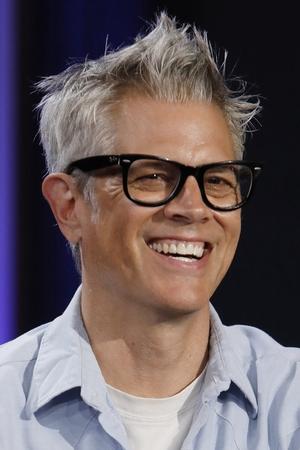
Role 1: Irving Zisman — Jackass Presents: Bad Grandpa (2013)
Watch scene — Irving Zisman's funeral prank culminates in dancing with the 'dead' wife, shocking unsuspecting mourners.
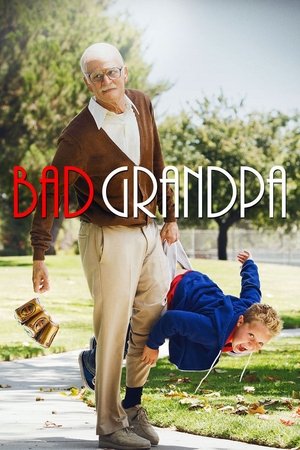
The Story:
Irving Zisman is an 86-year-old man (Knoxville in heavy prosthetic makeup) who has just lost his wife, Ellie — and is not exactly heartbroken about it. Before he can enjoy his newfound freedom to chase women and drink without accountability, his daughter is sent back to jail and he is saddled with his eight-year-old grandson Billy, whom he must drive from Nebraska to North Carolina to deliver to the boy's deadbeat father.
Irving's solution is pure direct action: he stuffs Ellie's corpse in the trunk, drops Billy in the passenger seat, and hits the road. The journey is a sustained barrage of physical, in-your-face pranks on unsuspecting members of the public — Irving crashes through funeral services, causes chaos at a ladies' night strip club, ships Billy in a box, and engineers a child beauty pageant striptease. Every prank involves Irving entering a situation aggressively, escalating it directly, and dominating the space. He does not wait, manipulate from a distance, or let things come to him — he barrels in.
The emotional turn comes when Irving finally delivers Billy to his father, only to discover the man is a dangerous alcoholic. Without hesitation, Irving physically takes Billy back. The film ends with the two fishing together — a quiet moment of earned connection after a road trip defined by relentless action and initiative. Irving does not become soft; he simply adds protective loyalty to his catalog of direct behaviors.
Key Quotes:
-
"I thought she'd never die!" — Irving's first reaction upon learning Ellie has passed. Zero indirection. Pure, unfiltered direct expression of self. This is the Fire refusal to perform emotion that is not felt.
-
"I might be too old to fry the rice, but I can still chop the suey, that's for sure." — Conquest-coded language. Irving's sexuality is framed as territorial drive (taking, conquering) not as connection-seeking.
-
"In your name we pray. Amen." — The prayer over Ellie's corpse in the trunk, said to bystanders who helped him load it, immediately followed by getting on the road. The spiritual moment is brief; the action resumes instantly. Classic Fire: acts, pauses minimally, acts again.
How much Fire:
- Every prank is a DIRECT confrontation. Irving walks into spaces — a biker bar, a funeral home, a strip club, a beauty pageant — and physically escalates. He does not scheme from a distance. He is the agent of chaos in person.
- The core engine of the film is sustained effort: a cross-country road trip is itself an act of prolonged, non-stop doing. Irving never waits for things to resolve themselves.
- His sexuality is conquest-coded. He actively pursues women at every stop. The drive is territorial, not connection-seeking.
- Protection through effort: when Billy's father proves dangerous, Irving takes physical action to remove the child. This is the Fire protective act in its clearest form — effort, presence, shield.
- His drinking pattern fits Fire: aggressive, hard, in rough settings (biker bar), not sweet-comfort-seeking in pleasant environments.
How much Water:
- The prank setups do involve indirect manipulation of unsuspecting public. Irving deceives bystanders into participating in scenarios they do not understand — this borrows indirection from Water. However, the key distinction is that this indirection is LOGICAL and STRATEGIC, which the profiles assign to Fire (strategic indirection), not Water (consciousness-based, intuitive indirection).
- The emotional thread with Billy — a slowly developing bond across the road trip — carries connective warmth. Irving does come to genuinely care for the boy, and the final fishing scene is a moment of presence rather than action.
- Irving's brief prayer and the odd tenderness in some grandfather-grandson moments suggest a trace of receptive emotional life underneath the aggression.
Confidence: High
Role 2: Scrad/Charlie — Men in Black II (2002)
Watch scene — Scrad/Charlie's emotional pleas and fluid allegiances during a chaotic alien confrontation perfectly embody water energy.
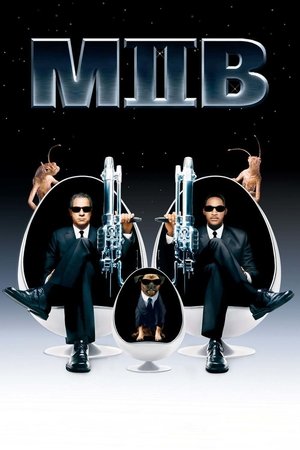
The Story:
Scrad and Charlie are a two-bodied, two-headed alien creature serving as the secondary henchmen of the film's villain, Serleena. Scrad is the primary head on the body; Charlie is a smaller head mounted on a long neck emerging from a backpack Scrad wears. They are introduced in their apartment when Serleena arrives seeking information about the Light of Zartha. Rather than confronting her or negotiating from a position of strength, they immediately attempt to leverage what little they know ("we couldn't find the light ourselves, but we tracked it to a guy who runs a pizza parlour on Spring Street") in exchange for 50 million dollars — an indirect, information-brokering gambit rather than direct action. When Serleena simply shoves tentacles into their ears, they comply instantly. They produce no resistance whatsoever.
Throughout the film they execute assigned tasks — tracking Agents J and K, infiltrating MiB headquarters as part of Serleena's larger plan — but always as instruments of another's will. Their internal dynamic is defined by constant bickering: Scrad mocks Charlie's irrelevant conversational tangents (the egg salad question mid-crisis is the defining comedic beat), while Charlie contributes wisecracks that serve no tactical purpose. They manage no independent initiative. When the going gets difficult, they retreat or dissolve from the plot. According to the novelization, they ultimately defect from Serleena to support J and K — switching allegiance being the quintessential Water move: no fixed identity of their own, shaped entirely by proximity to whoever holds the stronger presence.
Key Quotes:
-
Charlie: "You like egg salad?" — delivered in the middle of a tense confrontation with Serleena. The purest possible expression of non-sequitur disconnection from the action at hand, operating in an inner world irrelevant to the threat in front of them.
-
Scrad (to Agent J): "Hey, boo-boo. These guys really need Kay." — Scrad addresses a MiB agent casually, passing on Serleena's demand as a relay, not a threat. No force, no personal agenda: pure messenger function.
-
Scrad (to Serleena, on the Light of Zartha): "We couldn't find the light ourselves, but we tracked it to a guy who runs a pizza parlour on Spring Street." — This is the defining scene: rather than fighting or posturing, they trade information to survive. Indirect leverage is their only currency.
How much Fire:
- They do execute assigned tasks involving movement and effort — tracking targets, infiltrating a building, showing up to confront Agents J and K. These are actions, not pure passivity.
- Infiltrating MiB HQ is at minimum a logistical act: it requires doing something, going somewhere, participating in a scheme. This is the weakest possible expression of Fire but it belongs here.
How much Water:
- Serves another's agenda with no independent will. Scrad and Charlie never pursue a goal of their own. They exist entirely within Serleena's orbit, executing her instructions. This is the classic Water minion configuration: receptivity to a more dominant will, no self-originating initiative.
- Capitulates immediately under the slightest pressure. When Serleena puts tentacles in their ears, they fold with zero resistance. There is no fight, no counter-move. Water's deepest pattern is to yield rather than confront directly.
- Information-brokering as their primary weapon. Their one moment of agency — offering the pizza parlour tip — is entirely indirect. They do not act; they relay. They do not fight; they whisper. This is textbook Water indirection.
- Internal incoherence (the two heads) mirrors the Water split between feeling and action. The Scrad/Charlie dynamic is literally a character divided against itself: one head tries to function, the other derails with irrelevant tangents. Charlie's egg-salad non sequitur is disconnection from reality coded as comedy.
- Defection mid-film (novelization). Switching sides based on the emotional pull of the stronger or more righteous presence — rather than holding to a fixed loyalty through effort — is profoundly Water. No identity investment in Serleena, no brotherhood bond; they simply drift toward whoever feels more compelling.
Confidence: Medium
Role 3: Ray Templeton — Walking Tall (2004)
Watch scene — Ray Templeton, a manipulative henchman, faces unexpected vulnerability during a hostage situation, leading to his demise.

The Story:
In Walking Tall (2004), Ray Templeton is Chris Vaughn's childhood friend, a self-described slacker and former convict whose criminal record stems from drug addiction. When Chris — the film's true protagonist — returns to their hometown and decides to clean it up by running for sheriff, he fires the entire police force and deputizes Ray as his one and only deputy. This is a crucial dynamic: Ray does not volunteer, does not scheme, does not seize the moment. He receives the role when it is handed to him.
Ray's primary contribution to the plot is informational and positional rather than combative. He teaches Chris about crystal meth and the drug trade — knowledge acquired through personal experience of addiction, not through active investigation. He is then assigned to guard Chris's family home, a watch-and-wait role requiring presence more than action.
Throughout the film, Ray functions as comic relief. His lines are sharp and observational ("Room full of fake boobs and real assholes"), flowing naturally from his personality rather than from tactical thinking. He reads social situations with ease and instinct, not analysis. His humor disarms rather than confronts. His loyalty is genuine and deep — he would stand beside Chris against serious danger — but the mode of that loyalty is reactive and present rather than proactive and driving. He follows the stronger energy. He stays close, supports, absorbs, and responds. That is the defining behavioral signature.
Key Quotes:
-
"Room full of fake boobs and real assholes." Immediately classifies the casino environment through intuitive feeling and social reading. No analysis — pure perception and wit delivered effortlessly.
-
"He's probably blowing on someone's dice right now." Indirect, suggestive humor — circles around the situation without confronting it head-on. Typical of a character who approaches threat with deflection and irony rather than direct statement.
-
"Soon you'll be frisking guys' crotches." Self-deprecating, anticipates the awkward and absurd. Again, effortless social awareness, no strain — humor as a natural mode of being present.
How much Fire:
- Ray does show genuine brotherhood loyalty — accepting a dangerous role, standing guard over Chris's family, putting himself in harm's way for his friend. This is a real expression of effort-based protective loyalty, which belongs to Fire.
- He accepts deputization and does perform actual duties — there is some concrete action and physical presence that leans Fire.
- The sustained bond with Chris, formed through years of shared history, carries Fire's "band of brothers" quality even if Ray is the junior partner in it.
How much Water:
- Ray's core mode is receptivity and reactivity — he waits to be deputized, waits to be assigned, waits at the house. He does not initiate a single major action in the film.
- His humor is a form of natural, effortless presence — he does not work at being funny; wit flows through him instinctively. This matches Water's "gift" pattern versus Fire's effort-earned skill.
- His addiction history is framed as a comfort/escape narrative (drug use as a way to cope with a difficult life) and his knowledge of narcotics comes from lived experience, not from trained discipline — matching Water's substance coping pattern.
- He consistently circles situations rather than confronting them — his quotes are all oblique, observational, arriving at truth by indirection. He reads people intuitively.
- His role is defined by receiving assignments and being present rather than creating plans, fighting directly, or driving the plot forward.
Confidence: Medium
Career Pattern: Only one role (Irving Zisman) aligns with Fire. The majority pattern is Water — indirection, emotional attunement, and proxy-based operation define this actor's most common on-screen mode.
Johnny Knoxville — Aditya Zodiac Birth Chart Elements
Dominant Element (Aditya): Fire (31.2%)
Johnny Knoxville — Tropical Classic Birth Chart Elements
Dominant Element (Tropical): Water (31.2%)
Alignment Note: Agent judged 1/3 roles as Fire-dominant. Aditya birth chart shows Fire-dominant (31.2%). Tropical birth chart shows Water-dominant (31.2%). Agent results diverges with Aditya Zodiac, aligns with Tropical.
View Birth Chart — Johnny Knoxville
Outer wheel: Tropical Classic — Inner wheel: Aditya Zodiac
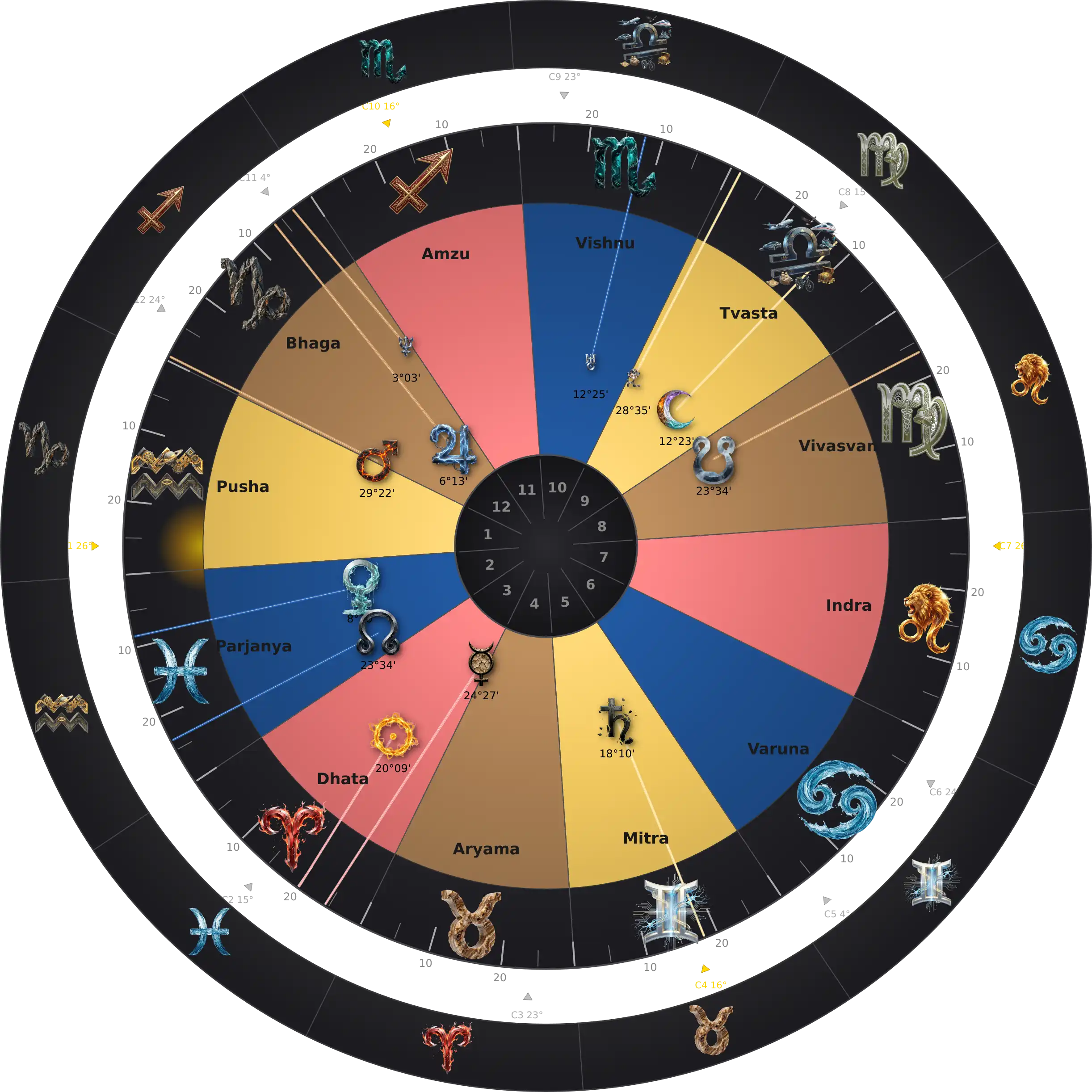
Wanda Sykes (Born March 7, 1964) — 3/3 F
Role 1: Barb Baran — The New Adventures of Old Christine (2006-2010)

The Story:
Barb Baran is Christine Campbell's best friend, business partner, and most reliable straight-man through five seasons of romantic and professional chaos. From the start, she is established as one of the few characters in the show's ensemble who is "remotely close to intelligent" — a designation earned not by emotional insight but by consistent, clear-eyed directness. Where Christine spirals, Barb engages. Where Christine avoids, Barb says what needs to be said.
Her most significant storyline — the deportation arc in Season 4 — might look like an indirect scheme (sham marriage, legal workarounds), but the underlying structure is pure Fire: a survival crisis met with active problem-solving. Barb does not withdraw, manipulate from the shadows, or wait for rescue. She enters a legal fiction (the sham marriage with Christine), gets arrested at a public wedding, and eventually resolves the crisis through a real marriage to Richard — each step an active decision, not a passive reception.
Her romantic arc with Matthew — brief, then cleanly ended when she discovers the connection was manufactured to provoke Christine — shows the same reflex: when identity is compromised, she exits directly. There is no clinging, no fantasy, no mood cycle. She ends it. Her eventual acceptance of Dave's proposal is similarly decisive rather than emotional.
The character is not without warmth, but the warmth is delivered through wit and loyalty — effort-based friendship — not through emotional flooding or indirect nurturance.
Key Quotes:
-
"Barb's often worn down by Christine's manic energy and schemes. She's not much more innocent than Christine, though, as she usually caves and gets wrapped up in her friend's messy situations." — Collider character guide (narrative observation rather than Barb's own words, but capturing her pattern: she participates actively, she does not wait on the sidelines)
-
"Um, Christine, you've got to get out there. There's a group of ladies in the bathroom who are about to riot." — Direct, practical, confrontational without softening.
-
"Wanda Sykes doesn't do polite comedy — she does honest comedy that tells the truth even when it makes people uncomfortable." — BET (capturing the essential directness of the character's register)
How much Fire:
- Her communication style is consistently direct, blunt, and unfiltered — the antithesis of Water's indirection and circling. She confronts, she states, she ends.
- The deportation crisis is met with active problem-solving steps, not waiting or emotionally processing — survival-level action under pressure.
- When she discovers her relationship with Matthew was engineered to provoke Christine, she terminates it immediately, protecting her identity rather than grieving the loss of connection.
- She is a business co-owner (creative/economic action) and sustains a five-season friendship through consistent, effort-based loyalty — Fire's brotherhood/sisterhood pattern rather than Water's soul-deep connective longing.
- Her humor is weaponized with precision and timing — a direct strike, not a hidden one. "Wanda Sykes doesn't do polite comedy" is a near-perfect description of Fire's preference for open confrontation over soft manipulation.
How much Water:
- The sham-marriage scheme involves indirection (using a legal fiction to solve a real problem), which borrows from Water's toolkit of working around rather than through.
- Barb functions as Christine's emotional sounding board and confidante — a presence role that has Water overtones (being, not doing).
- Her comedy is partly reactive — she responds to Christine's chaos with wit and sarcasm, rather than initiating the action herself.
- Her willingness to "cave and get wrapped up" in Christine's schemes suggests some receptivity to others' energy rather than pure independent drive.
Confidence: Medium
Role 2: Stella — Over the Hedge (2006)
Watch scene — Stella unleashes a fiery rant, asserting her identity against a judgmental cat, showcasing defiance and willpower.

The Story:
Stella is a striped skunk living in the forest with a tight-knit animal family — Verne, Hammy, Ozzie, RJ, and others. When the raccoon RJ introduces the group to the suburban world beyond the hedge, Stella becomes a key operative in his increasingly audacious food-stealing schemes.
Her defining character challenge comes when RJ needs someone to distract Gladys' cat Tiger, the guardian of the pet door. The plan: disguise Stella as a "Miss Kitty," cork her spray, and have her charm the cat into giving up his collar. Stella resists — she knows the plan depends on pretending to be something she is not. She accepts reluctantly, undergoes the makeover, and is briefly struck by her own transformation. But when Tiger begins rejecting her for being "stray" and common, Stella reaches her breaking point. She drops the pretense entirely, reverts to her natural self, and verbally assaults Tiger with unfiltered aggression and dominance. To everyone's shock, Tiger is captivated. He falls in love precisely because she was bold, direct, and unapologetically herself.
This is the defining throughline of Stella's arc: her natural mode is direct force — threatening, spraying, confronting, protecting. The disguise sequence briefly borrows indirection, but the resolution is always achieved the moment she abandons it and returns to direct action and identity assertion.
Key Quotes:
-
"I'mma gas you so hard your grandchildren will stink!" — an open, announced threat. No indirection, no subtlety. Direct confrontation, public and defiant.
-
"Oh, I can clear a room, Verne. That much I can do!" — pride in her direct capability as a defensive weapon. Self-assertion through a concrete, effortful physical ability.
-
"Look, why does everyone think I need a man, huh? I look like a nest and smell like a swamp." — raw, sarcastic self-deprecation, but delivered with combative energy rather than sadness or yearning. The complaint is direct, not plaintive.
How much Fire:
- She fights directly and announces it. Stella's threats are never hidden or implied. She warns, she shows her rear end, she broadcasts her weapon openly. Her conflict mode is pure Fire: you always know where you stand with her.
- Her protective role is physical and effort-based. She uses her spray offensively to shield the group — spraying Gladys' entire house is a direct, decisive physical act. She is the group's most potent weapon.
- Her breakthrough with Tiger happens the moment she stops being indirect. The disguise (borrowed Water tool) fails completely. The second she reverts to who she is and dominates him verbally, Tiger is won. Fire identity assertion is literally what creates her love story.
- She refuses to change who she is. The core Fire identifier is: "That's not ME." Stella's entire arc wrestles with shame about being a skunk, but her resolution is not acceptance-through-vulnerability — it is defiance. She reasserts her identity with force.
- Her humor is aggressive and weaponized. Wanda Sykes' comedic delivery is rooted in attack comedy — the joke is always a strike, not an invitation. This is Fire vocal energy: the comedy of direct confrontation.
How much Water:
- The disguise sequence introduces a genuine Water instrument. Stella does not approach Tiger as herself — she wears a costume, she uses charm, she employs misdirection as a tool. For one extended scene she operates indirectly. However, per the profile rules, this is properly coded as "indirection as a TOOL" borrowed by a Fire character — the core drive (protect the group through this mission) is Fire.
- Her insecurity about being a skunk carries a Water emotional texture. The shame is not about feeling physically weak or abandoned (Fire wound). It reads closer to: "I feel repulsive, I crave acceptance, I fear nobody will ever want me." This is a Water emotional wound — disconnection, lack of love.
- The Tiger relationship resolution has a Water warmth. Tiger revealing he has no sense of smell and accepting her completely is received by Stella with relief and genuine softening. The emotional payoff — "someone accepts me exactly as I am" — touches Water connective territory.
Confidence: High
Role 3: Granny — Ice Age: Continental Drift (2012)
Watch scene — Granny defiantly scolds her family for watching her impromptu bath, showcasing her feisty and confrontational spirit.

The Story:
Granny is an ancient, toothless, apparently decrepit ground sloth — Sid's grandmother — who gets accidentally swept away with Manny's herd when a continental rift carries them out to sea on an ice floe. She joins the adventure entirely by accident and immediately becomes a chaotic unpredictable force in the ensemble.
Her defining traits are blunt aggression and bewildering imperviousness. She hits anyone who irritates her with her walking stick without hesitation or warning. She sleeps through a full ocean storm without waking. When pirates force her to walk the plank toward a pod of narwhals, she treats the experience as a pleasant spa day and says it was the best vacation she has ever had. The film plays her as someone for whom danger simply does not register as danger.
Her most significant plot contribution involves Precious — a whale she has long claimed as a pet, dismissed by everyone as senile fantasy. At the film's critical moment when pirates are about to kill her and Sid, Granny calls out and Precious appears, routing the pirates through a blowhole water blast and delivering the final rescue of the herd. Granny enters Precious's mouth and effectively commands the creature as a weapon. She also helps steal Captain Gutt's ship and delivers a taunting farewell to him. Her relationship with Sid provides the film's only moments of genuine warmth from her side.
Key Quotes:
-
"I'll bury y'all and dance on your grave!" — Direct, open threat. No subtlety, no manipulation, no circling around. Pure Fire confrontation.
-
"So long Banana Breath! Thanks for the ship!" — Brazen post-victory taunt at the pirate captain after the herd has taken his vessel. Identity display, zero fear.
-
"A lovely vacation, best I've ever had." — Said while being forced to walk the plank toward narwhals. Extreme imperviousness to threat; she reframes lethal danger as comfort.
How much Fire:
- Direct physical aggression as default mode: Granny hits people with her stick the moment they annoy her. No indirection, no manipulation — immediate, blunt, physical. This is consistent direct-action behavior throughout every scene she appears in.
- Open verbal threats: "I'll bury y'all and dance on your grave" is not a hidden threat or a manipulative scheme. She announces it publicly and directly. Fire characters make open threats; you know exactly where they stand.
- Consistency: Granny's aggression does not fluctuate. She is irritable and combative in every scene, regardless of whether she is in danger or safety. Fire is defined by consistency of expression; Water mood swings between ecstasy and depression. Granny has one mode: blunt, biting, direct.
- Taunt after victory: "Thanks for the ship!" is the act of someone who conquered and knows it. It is a display of identity — this profile protects and asserts who they are, and her taunting Gutt after taking his ship is a territorial, victory-claiming act.
- Imperviousness to danger: She does not run from danger, does not manipulate her way around it, and does not feel it emotionally. She moves through it as if it does not exist. Even the plank scene is not passivity — it is a refusal to register threat, which functions as a form of dominance.
How much Water:
- Precious as indirection: Granny's most decisive contribution to the plot comes by summoning another being — the whale — rather than through her own direct physical effort. The victory arrives through a creature that comes to her. This is classic Water receptivity: the result manifests without direct fighting on her part.
- Misreading danger as comfort: Walking the plank is "the best vacation." She does not confront the threat head-on intellectually; she inhabits a different internal reality, borderline fantasy-world absorption. This matches Water's tendency to live in a softer internal register even amid external chaos.
- The bond with Sid: Her care for Sid is not expressed through protecting or working for him — it is simply there as warmth, presence, a quiet alliance between two family screw-ups. This connective dimension (feeling-based, not effort-based) carries a Water quality.
- The Precious backstory: She has maintained a private bond with a creature for years that no one believed in, dismissed as delusion. She didn't fight to prove them wrong; she simply held the connection until the moment it was needed. That patience and private interior relationship is somewhat Water.
Confidence: Medium
Career Pattern: All three roles align with Fire — direct action, identity protection, and sustained effort define Wanda Sykes's on-screen behavioral signature across diverse characters and genres.
Wanda Sykes — Aditya Zodiac Birth Chart Elements
Dominant Element (Aditya): Fire (43.8%)
Wanda Sykes — Tropical Classic Birth Chart Elements
Dominant Element (Tropical): Water (43.8%)
Alignment Note: Agent judged 3/3 roles as Fire-dominant. Aditya birth chart shows Fire-dominant (43.8%). Tropical birth chart shows Water-dominant (43.8%). Agent results aligns with Aditya Zodiac, diverges with Tropical.
View Birth Chart — Wanda Sykes
Outer wheel: Tropical Classic — Inner wheel: Aditya Zodiac
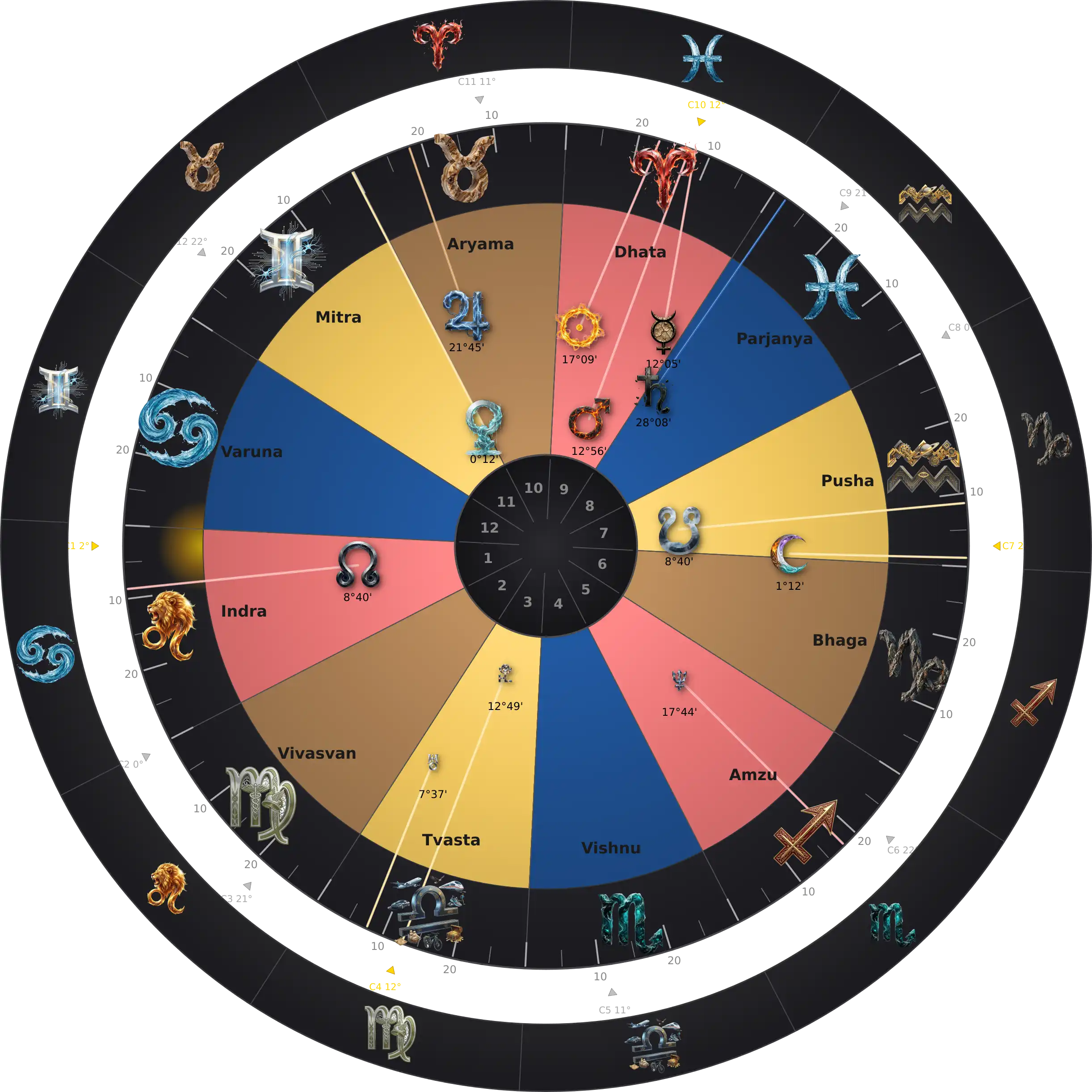
Sharon Stone (Born March 10, 1958) — 0/3 F
Role 1: Ellen (Lori Quaid) — Total Recall (1990)
Watch scene — Lori's betrayal culminates in a brutal fight, revealing her true manipulative nature and deadly nature.

The Story:
Lori Quaid, known to her "husband" Doug as a loving wife, is in reality a trained operative assigned by the Martian governor Cohaagen to monitor and contain Doug following a government-ordered memory wipe. Her true husband is Richter, a fellow agent. She has been living a complete fabrication, performing the role of devoted spouse as an undercover assignment.
When Doug's buried memories begin re-emerging after a Rekall session, Lori's cover is blown. Her first instinct is not open confrontation — she feigns concern, offers to "get help," and then attempts to shoot him from behind in disguise. When Doug recognizes her, she shifts tactic again: she reappears on Mars as the emotional, tearful wife pleading for him to "stop all this bloodshed" and come home. She weaponizes the emotional bond of marriage itself — appealing to his confusion about what is real — rather than simply overpowering him.
She does fight directly when cornered (a vicious beatdown of Melina, hand-to-hand with Doug), but even there she pivots to emotional manipulation mid-fight: "Doug, honey... you wouldn't hurt me, would you, sweetheart? After all, we're married!" Her final move is to draw a hidden pistol. She is eliminated by Doug — "Consider that a divorce."
Her combat skill is real and lethal, but it is not her primary instrument. Her primary instrument is the false self, the hidden identity, the emotional trap.
Key Quotes:
-
"Doug, honey... you wouldn't hurt me, would you, sweetheart? Sweetheart, be reasonable. After all, we're married!" — Using the marriage bond as a psychological weapon mid-combat, attempting to paralyze Doug's action through emotional confusion.
-
(On Mars hotel, to Doug) Pleading lovingly with him to stop fighting and return with her — deploying the persona of the caring wife to lure him into surrender rather than physically overpowering him.
How much Fire:
- Lori is a trained martial artist and fights directly when forced into it — she nearly holds her own against Schwarzenegger and gives Melina a brutal beating. This is real, direct, physical action that belongs to Fire.
- She is proficient with firearms, knives, and close-quarters combat. The physical skillset was intentionally built through training and discipline (effort-based), not innate grace alone.
- She confronts danger actively rather than retreating from it. When cornered, she draws a weapon and attempts to fight her way out, not flee or hide indefinitely.
How much Water:
- Her entire operational mode is deception and false identity — she lives undercover as a fabricated wife for years. This is the essence of Water: working indirectly, from the shadows, through a constructed persona rather than through direct assertion of self.
- Her primary weapon is emotional manipulation. She does not simply try to shoot Doug — she uses his love, his confusion, his marital bond against him. Appealing to "we're married" mid-fight is a textbook Water tactic: exploiting emotional connection as leverage rather than meeting force with force.
- She fights dirty and from ambush. Her first assassination attempt involves disguise and shooting from behind. She does not declare herself an enemy and fight openly — she strikes from a hidden position. Profile definition: "fights DIRTY and HIDDEN — strikes at weak points."
- Her presence in the film is entirely oriented around indirection. She is sent to monitor and contain Doug, not to defeat him in open battle. The surveillance role — watching, waiting, reporting — is receptive and operational, not creative or directly forceful.
- When cornered emotionally in the Mars hotel scene, she does not resort to violence immediately. She deploys warmth, emotional appeal, and the performance of love as a containment strategy. This use of feeling and connection as a tool to neutralize an opponent is precisely Water's unhealthy expression: manipulating through the appearance of genuine connection.
Confidence: High
Role 2: Catherine Tramell — Basic Instinct (1992)
Watch scene — Catherine Tramell, with cool composure, manipulates her interrogators through psychological depth and seductive indirection.
The Story:
Catherine Tramell is a wealthy, highly intelligent crime novelist living in San Francisco. When her rock-star lover Johnny Boz is stabbed to death with an ice pick during sex — exactly mirroring the murder described in her latest novel — she becomes the prime suspect. Detective Nick Curran is assigned to investigate her, and from the first moment he enters her orbit, he is never in control again.
Catherine does not run, hide, or fight directly. She walks into the police interrogation room, sits down, lights a cigarette she was told not to light, crosses her legs with utter calm, and proceeds to make every detective in the room lose their composure. She then enters into an affair with the man investigating her for murder, feeding him information, withdrawing affection, and using her rival Beth Garner as a shadow figure — engineering Beth's death through Nick's own hand without ever touching her.
Her method throughout is pure invisibility. She is never where she appears to be. She arranges events so that others act while she recedes. She uses intimate access as a weapon — learning Nick's psychology through pillow talk and using it back against him. Her final image is the most iconic: lying in bed with Nick, hand drifting beneath the mattress toward the ice pick — and then she stops. She never acts. She contemplates. The audience is left uncertain whether the knife was ever used, which is exactly where she wants them.
Key Quotes:
-
"I'd have to be pretty stupid to write a book about killing the way I described it in my book. I'd be announcing myself as the killer. I'm not stupid." — Pure Water logic: she operates by hiding in plain sight, using the accusation's own structure as a mirror that deflects it.
-
"I might be manipulating you to create risk for myself." — Masterclass in indirect power. She tells Nick the truth so he cannot use it against her. The confession IS the shield. No direct denial, no direct confrontation — the admission dissolves the threat without effort.
-
"Yes. I liked fucking him." — When asked if she was sorry Boz was dead. Emotionally detached, striking at the questioner's expectation rather than defending herself. The blow lands sideways, not head-on.
How much Fire:
- Conquest drive is present. Serial seduction — sleeping with many partners — carries a conquest energy that belongs to Fire. Catherine does accumulate lovers with territorial intent, and her refusal to be owned by anyone reflects a strong sense of self-identity.
- Self-aware identity protection. Her famous "I'm not stupid" line and her unapologetic self-knowledge ("she knows she is bad and has no plans to change") carry Fire's signature of identity-defense: "That's not ME / I won't change who I am for you."
- Intellectual strategy is present but subordinate. She does use her psychology degree to plan — she understands Nick's profile before the first meeting. This is the head-based planning of Fire. However, the execution is always through charm, seduction, and shadow — not through direct force — so the method overrides the planning mode.
How much Water:
- Indirection is her entire operating system. Catherine never commits violence in direct confrontation. The ice pick enters during sex, at the moment of maximum intimacy and vulnerability, at the moment the victim is least defended. This is Water's hidden strike at the weak point — "attacks from the shadows," poison-method violence.
- Manipulation without direct action. Her greatest achievement — engineering Beth Garner's death — is accomplished by doing almost nothing. She arranges conditions, plants information, and allows Nick to pull the trigger himself. She is never physically present at the decisive moment. This is indirection at its purest.
- Hypnotic, effortless allure. Catherine does not work to seduce. People orbit her. Her interrogation scene requires zero effort — she simply sits and the room destabilizes around her. The profile describes this exactly: "Presence is either naturally charming or naturally scary — not tactical planning."
- Writing as self-expression, not constructed effort. Her novels flow from her lived crimes — they are not disciplined craft so much as effortless self-documentation. She does not describe struggling to write. The book already contains the murder before it happens, as though it manifested without labor.
- Drinking pattern is smooth and sophisticated. Chardonnay in a beautiful Stinson Beach house. Water's "smooth, comforting alcohol in pleasant settings" matches precisely versus Fire's harsh whiskey in survival settings.
Confidence: High
Role 3: Ginger McKenna — Casino (1995)
Watch scene — Ginger McKenna's volatile casino confrontation with her pimp, Lester Diamond, culminates in a dramatic chip toss.
The Story:
Ginger McKenna is introduced as a professional Vegas hustler: beautiful, calculating, and invisible in plain sight. She steals poker chips while pretending to be arm candy, and when caught, manufactures a scene — scattering chips everywhere so the room dissolves into chaos and no one can pin anything on her. This is not combat. This is theater. She marries Sam "Ace" Rothstein not from love but from a calculated decision to secure financial stability, while openly acknowledging to herself she is a working girl. She never pretends otherwise in her own mind. Throughout the marriage she maintains a parallel emotional entanglement with her pimp ex-boyfriend Lester Diamond — an attachment she cannot sever despite his exploitation of her, driven entirely by her craving for a feeling she calls love. As the marriage deteriorates, she attacks indirectly: threatening FBI exposure, stealing from the safe deposit box, approaching the mob as a weapon against Ace. Her rage does erupt physically at moments — assaulting Nicky, trashing property — but these are eruptions inside a life built entirely on indirect leverage. She neglects her daughter Amy with total emotional absence, eventually tying the child to a bed so she can leave. She spirals into drugs for comfort, squanders millions, and dies of an overdose in a Los Angeles motel room, dressed in Pucci pajamas — a detail that captures her precisely: beautiful, reaching for a softness that never arrives.
Key Quotes:
-
"I went into this with my eyes open... I'm a working girl, right?" — Reveals her transactional consciousness; she does not love Ace, she entered the connection as a managed exchange. This is Water indirection: appearing to give while internally calculating.
-
"I am always here for you." (to Lester Diamond) — Said to a pimp who exploits her financially. She maintains the emotional connection through verbal declarations, not through any real action. Her need for connection overrides all rational self-interest.
-
[On stealing chips, throwing them everywhere during confrontation] (action without words) — Her signature move is creating confusion to escape accountability. She does not face opposition head-on; she dissolves the frame of the conflict itself.
How much Fire:
- She does erupt in direct physical confrontations on specific occasions: physically attacking Nicky Santoro and vandalizing Ace's property. These are genuine Fire acts — direct force, body-to-body.
- She hands $25,000 in cash to Lester — a concrete, effortful financial act in service of a connection she craves, which carries a trace of direct action.
- Her introduction involves real-time improvisation under pressure (throwing chips, dominating a scene physically) — there is a flash of Fire boldness in the moment.
- She does not collapse passively; she schemes, threatens, steals, confronts. The drive to survive is present.
How much Water:
- Her PRIMARY method across the entire film is indirection: charm, manufactured confusion, appearance as weapon, emotional leverage, threats-as-weapons rather than direct combat. She works the room, not the opponent.
- Her core wound is a love deficit. She cannot leave Lester despite his abuse — the pull is not practical, it is the desperate need to feel connected to someone who "chose" her first. This is textbook Water disconnection pain.
- Her substance pattern is comfort-seeking: drugs as escape into softness, ultimately fatal. Not whiskey to prove toughness — she is reaching for warmth and numbness simultaneously. The overdose is the end of that chase.
- Her mood pattern is classically Water: rapid cycling between ecstatic highs (the penthouse life, the glamour) and catastrophic lows (the spiral, the neglect, the death). Pain vanishes temporarily when Lester returns a call; despair floods back when ignored. Not a grinding, consistent drive — a tidal emotional pattern.
- Her maternal failure is absence of feeling, not absence of effort. She does not fight for Amy; she disappears from her emotionally before she disappears physically. The tying-to-a-bed act is not protective effort — it is the removal of herself from a connection she cannot sustain.
- She approaches Nicky Santoro as a proxy weapon against Ace — using someone else's direct force rather than deploying her own. This is Water tactical indirection at its most explicit.
- Her death — alone in Los Angeles, overdosed, with no one present — is the Water wound made literal: the craving for connection (drugs as substitute comfort) consuming the person who could never secure real love.
Confidence: High
Career Pattern: All three roles align with Water — receptivity, indirection, and connection-seeking define Sharon Stone's consistent on-screen behavioral signature.
Sharon Stone — Aditya Zodiac Birth Chart Elements
Dominant Element (Aditya): Fire (43.8%)
Sharon Stone — Tropical Classic Birth Chart Elements
Dominant Element (Tropical): Water (43.8%)
Alignment Note: Agent judged 0/3 roles as Fire-dominant. Aditya birth chart shows Fire-dominant (43.8%). Tropical birth chart shows Water-dominant (43.8%). Agent results diverges with Aditya Zodiac, aligns with Tropical.
View Birth Chart — Sharon Stone
Outer wheel: Tropical Classic — Inner wheel: Aditya Zodiac
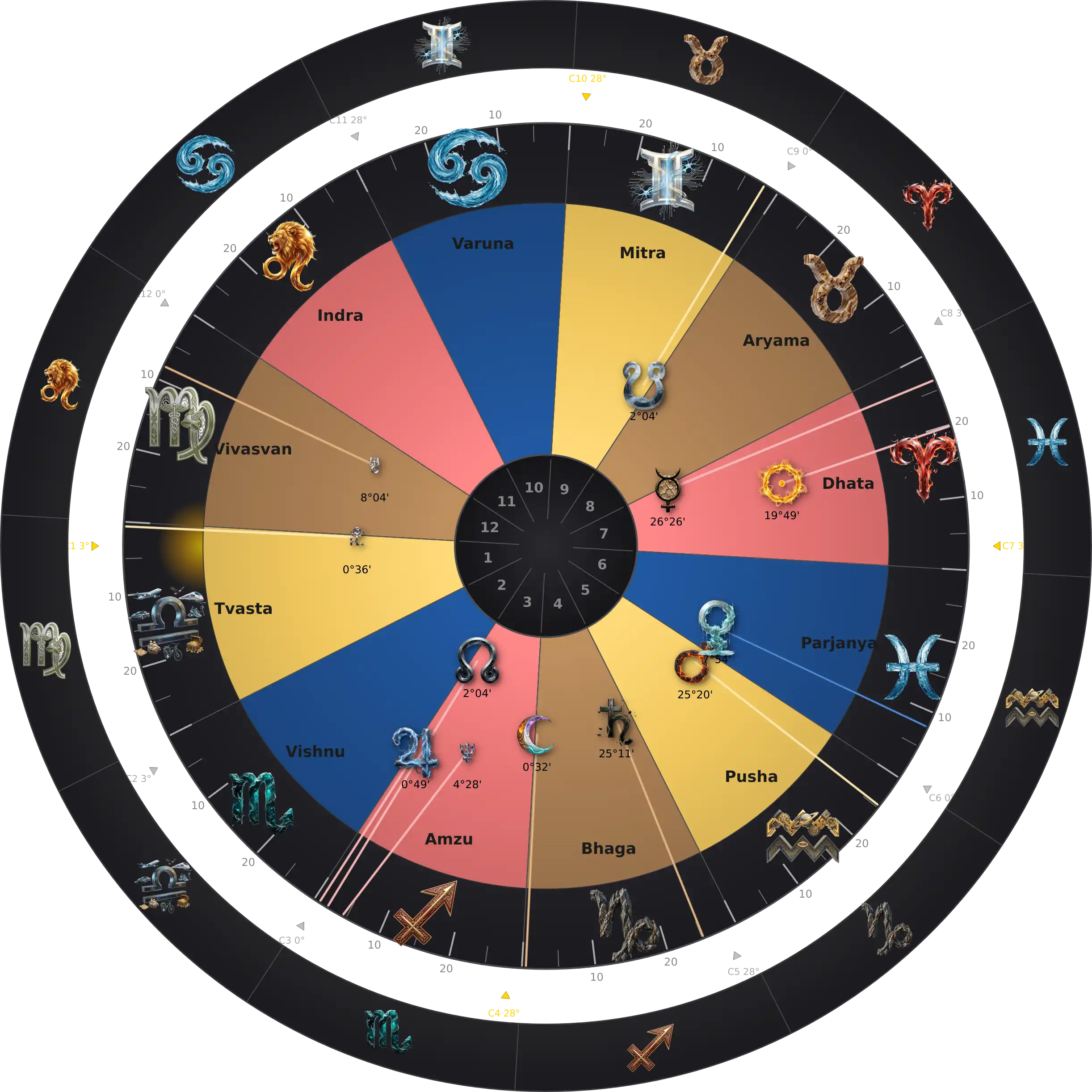
Elizabeth Taylor (Born February 27, 1932) — 1/3 F
Role 1: Cleopatra — Cleopatra (1963)
Watch scene — Cleopatra's grand entrance into Rome is a masterful display of royal authority, achieved through overwhelming spectacle and calculated manipulation.
The Story:
In the 1963 epic directed by Joseph L. Mankiewicz, Elizabeth Taylor's Cleopatra is the young Queen of Egypt fighting to secure her throne and expand her power — but she does so almost entirely through indirection. She never commands an army herself. She never defeats an enemy through direct combat or sustained strategic planning. Instead, she places herself in the path of powerful men and allows her presence — her beauty, her allure, her emotional intensity — to do the work.
She arranges to be rolled into a rug and presented to Caesar. He is instantly infatuated. Her instrument of power is not a sword or a strategy document: it is her body, her charm, and the consciousness she projects. With Antony, she arrives on a barge so opulent it overwhelms his senses, and the conquest happens again — through spectacle, through feeling, through indirect enchantment.
Her emotional pattern is unmistakably wave-like. She rages at Caesar about the Library of Alexandria, then is silenced by a kiss — the pain dissolves when connection is restored. She is devastated when Antony marries Octavia, then recovers when he returns to her bed. She does not plot revenge through sustained strategic effort; she pines, she grieves, she waits. Ultimately, when her world collapses after Actium, she retreats entirely, and rather than fight on she chooses to die — the ultimate passive withdrawal. Her story is one of desperate clinging to connections that inevitably end.
Key Quotes:
-
"How DARE you and the rest of your barbarians set fire to my library!" — A raw, passion-fueled outburst rather than a calculated political response. This is feeling erupting uncontrolled, not strategic direct action. She is "carried in like a scorned child" and Caesar silences her with a kiss. Even her confrontation is ultimately disarmed and received, not pressed to victory.
-
"You come before me as a suppliant... You will therefore assume the position of a suppliant before this throne. You will kneel." — Spoken to Antony. On the surface this sounds like direct dominance (Fire). But in context it is theater — a seduction ritual in which she draws Antony toward her by making him desire what she withholds. The EFFECT is created through presence and indirection, not effort.
-
"I am the Nile. I will bear many sons... My breasts are full of love and life." — This speech is the most revealing. Cleopatra does not define herself through action or conquest; she defines herself through BEING, through receptivity, through the power of presence and nurturing. She is not a warrior queen here — she is a vessel, a source, a receiver. Water at its core.
How much Fire:
- Overt assertion of rank: She commands Antony to kneel, she openly declares herself Egypt's rightful sole ruler — there are moments of direct, frontal assertion of authority that do not hide in shadow.
- Ambition to rule alone: The drive to be sole ruler of Egypt, displacing her brother, is a territorial conquest impulse that brushes against Fire's conquest energy.
- The Library confrontation: She directly charges Caesar with a crime to his face — a moment of open, confrontational behavior that is not hidden or indirect, however briefly it lasts before dissolving.
How much Water:
- Indirection as primary tool throughout the film: The rug entrance, the bath invitation, the barge arrival at Tarsus — every key political move is made indirectly, through being seen rather than through doing. She never directly seizes power; she creates conditions for powerful men to hand it to her.
- Emotional manipulation at weak points: She consistently attacks through feelings — making Antony feel inadequate compared to Caesar, withholding herself to create longing, deploying jealousy and infatuation as weapons. These are precisely the hidden, soft, indirect strikes the profile describes.
- Wave-like emotional pattern: Devastated when Antony marries Octavia, fully restored when he returns. Furious over the Library, then kissed into silence. Her pain comes in waves and dissolves instantly when connection is restored — this is the hallmark mood pattern of Water.
- Self-defined through presence and receiving, not action: "I am the Nile" — she is a source that others must come to. She does not go to them through effort; she radiates until they arrive. The film consistently subordinates her intelligence to her magnetic being.
- Retreat and withdrawal at the end: After Actium she does not fight back, strategize, or rebuild. She waits, and chooses death — the most passive of endings. A Fire character would fight harder or go down swinging.
Confidence: High
Role 2: Martha — Who's Afraid of Virginia Woolf? (1966)
Watch scene — Martha unleashes a torrent of drunken verbal abuse and physical dominance, embodying fiery, unpredictable rage.

The Story:
Martha and George are a middle-aged married couple living on the campus of a small New England college where Martha's father is the president. Returning home late after a faculty party, Martha has impulsively invited a young couple, Nick and Honey, over for drinks. What follows across one long and brutal night is a war of psychological attrition.
Martha is the aggressor from the first moment. She is loud, profane, sexually forward with Nick, and relentless in her attacks on George's career failures. She humiliates him before guests with contemptuous precision — mocking his stalled academic rank, his masculinity, his very identity. She openly announces her intentions before carrying them out, a signature of direct confrontation rather than hidden strategy.
Beneath the assault is a woman in agony. Martha and George have sustained for years a private fiction: an imaginary son. It is the one game with a rule — it must never be shared with outsiders. When Martha breaks that rule tonight, she sets in motion the events that allow George to execute his devastating counter-move: he announces to everyone that their "son" has died. Martha is shattered. In the film's final minutes, her defenses collapse entirely and she sits quietly, admitting — for the first time — that she is afraid.
The story is about a woman whose enormous energy and drive have been denied any legitimate outlet, and whose self-destructive force has turned entirely inward onto the marriage.
Key Quotes:
-
"I'm gonna howl it out, and I'm not gonna give a damn what I do and I'm gonna make the biggest god-damn explosion you've ever heard." — Open, frontal declaration of attack. She announces the threat rather than executing it in secret. Classic Fire direct-force signature.
-
"George who is good to me, and whom I revile; who understands me, and whom I push off." — A confession of the paradox: she knows she destroys what she loves. The act of destroying is still ACTION, still Fire; the pain underneath is the Water emotional layer.
-
"You married me for it!" (responding to George saying he cannot stand her attacks) — Identity assertion. "This is WHO I AM. You chose this." Refusing to adapt or negotiate = Fire unhealthy expression precisely described.
How much Fire:
- Direct, open, frontal combat: Martha never schemes from the shadows. She announces, she shouts, she confronts face to face. When she threatens George, he knows exactly where she stands before she strikes. This is the defining Fire attack mode.
- Conquest drive: She seduces Nick not out of genuine desire but as territorial conquest — she is taking something from George's world, expanding her dominance, asserting she still has power. The profile explicitly names this pattern.
- Identity wound as the core engine: Her rage is not about feeling unloved (which would be Water) — it is about the fact that George failed to BECOME what she needed him to become to extend her father's power and her own identity. Her anger is "You did not deliver on the identity you were supposed to build." That is Fire's wound: identity not fulfilled through effort.
- "Earth mother" physicality: Martha openly describes herself this way. Loud appetite, physical vitality, harsh alcohol, profanity as raw energy — all match Fire's substance and energy pattern (harsh alcohol in aggressive settings, not sweet comfort drinking).
- Refuses to adapt, refuses to bend: "You married me for it!" is textbook Fire unhealthy expression — "I won't change who I am for you." She treats her own destructive identity as non-negotiable.
How much Water:
- The imaginary son as fantasy world: Martha has built and inhabited an elaborate emotional fiction — she has partly convinced herself the child is real. This is Water's deep imagination and fantasy dimension: living in a rich inner world rather than confronting the concrete absence.
- Paradoxical vulnerability and connective pain: Her admission that George "loved me and must be punished for it" reveals a Water emotional layer — the pain of receiving love she cannot accept, the fear of genuine soul-deep connection. This is not a survival wound but a connection wound.
- Emotional interiority ("I cry inside"): Beneath the performance of aggression is a woman who describes herself as quietly weeping within. This hidden softness and emotional inner life belongs to Water's pattern.
- The final yielding: In the film's last scene, when the games are over and the fantasy is dead, Martha sits quietly and admits she is afraid. She does not fight back against George's final move — she receives the ending. This passive acceptance is momentarily Water.
Confidence: High
Role 3: Maggie the Cat — Cat on a Hot Tin Roof (1958)
Watch scene — Maggie unleashes a torrent of emotional hunger and defiance, confronting Brick with his painful truths.
The Story:
Margaret "Maggie" Pollitt lives in the Mississippi Delta plantation home of Big Daddy, the patriarch of the wealthy Pollitt family who is dying of cancer. Her husband Brick has withdrawn from her completely — drinking heavily and refusing physical intimacy — in grief and guilt over the death of his best friend Skipper, whose relationship with Maggie became a source of destructive jealousy.
Maggie's position is precarious on every front. She grew up in poverty and clawed her way into the Pollitt family through marriage. Now, with Big Daddy's will undecided, her scheming sister-in-law Mae and her husband Gooper are actively positioning their own brood of children as evidence of domestic virtue, while Maggie and Brick have produced nothing.
Rather than confront the family or Brick with direct demands, Maggie works entirely through indirection. She declares to the assembled family that she is pregnant with Brick's child — a lie, but one calculated to reshape the inheritance outcome instantly. She locks away Brick's liquor as leverage, not violence. She wraps her survival strategy in the language of love, longing, and raw vulnerability. She does not threaten to leave or demand compliance. She waits. At the end of the film, when Brick tells her to lock the door — the first signal of his return to her — she does not boast or push. She simply receives what she has been working toward all along. The lie, she declares, will be made true.
Key Quotes:
-
"You can be young without money, but you can't be old without it." — Crystallizes her survival terror rooted in poverty. Not a warrior's war cry but a wounded animal's whisper of knowing.
-
"Maggie the Cat is alive. I'm alive." — She asserts existence, not achievement. This is pure Water: the declaration is about BEING, not doing. Her identity is not built on what she creates but on the fact of her aliveness, her presence.
-
"I have Brick's child in my body, and that is my present to you." — A beautiful lie delivered as a gift. She moves the entire chess board not by force but by planting a seed of consciousness — a felt reality — in the room. Invisible, untouchable, and devastatingly effective.
How much Fire:
- Her survival drive carries Fire energy. She grew up poor and she will not go back. This determination — consistent, grinding, never-quit — has a Fire undertone. She does not float. She is not passive about the outcome she needs.
- She acts under pressure. Locking away the liquor is a direct physical act. Going out into the rain to help Brick back into the house after he crashes his car is effort-based caregiving, not merely emotional presence.
- Her refusal to quit has Fire flavor. She does not dissolve when Brick rejects her night after night. She keeps returning, keeps pressing. The consistency and tenacity have a Fire echo, even though the method is always indirect.
How much Water:
- Indirection is her entire method. Maggie never attacks directly. She lies about the pregnancy. She seduces rather than demands. She waits for Brick to come to her. Every weapon she uses is hidden, soft, and planted in the consciousness of others rather than imposed by force.
- Her wound is disconnection, not survival threat. Her deepest pain is that Brick no longer loves her, no longer touches her, no longer sees her. This is not "nobody helped me survive" — it is "nobody holds me." The ache is emotional, not strategic.
- Her fear is about being unseen and unloved. She describes herself as a cat on a hot tin roof — alive but in agony, with nowhere to jump. This is the classic Water metaphor: reactive, restless, unable to rest but equally unable to act with force. She suffers in the heat of longing.
- She receives the outcome rather than taking it. At the film's climax, she does not conquer Brick. She waits until he signals the door. The reconciliation comes to her. She manifests it through sustained emotional presence, not direct force.
- Her lies and manipulations are the Water "fighting dirty" pattern. The pregnancy announcement, the confiscated liquor, the strategic positioning — none of it is open confrontation. It is hidden scheming, striking at weak points (Gooper and Mae's inheritance strategy), working from the shadows.
Confidence: High
Career Pattern: Only one role (Martha) aligns with Fire. The majority pattern is Water — indirection, emotional attunement, and proxy-based operation define this actor's most common on-screen mode.
Elizabeth Taylor — Aditya Zodiac Birth Chart Elements
Dominant Element (Aditya): Fire (62.5%)
Elizabeth Taylor — Tropical Classic Birth Chart Elements
Dominant Element (Tropical): Water (62.5%)
Alignment Note: Agent judged 1/3 roles as Fire-dominant. Aditya birth chart shows Fire-dominant (62.5%). Tropical birth chart shows Water-dominant (62.5%). Agent results diverges with Aditya Zodiac, aligns with Tropical.
View Birth Chart — Elizabeth Taylor
Outer wheel: Tropical Classic — Inner wheel: Aditya Zodiac
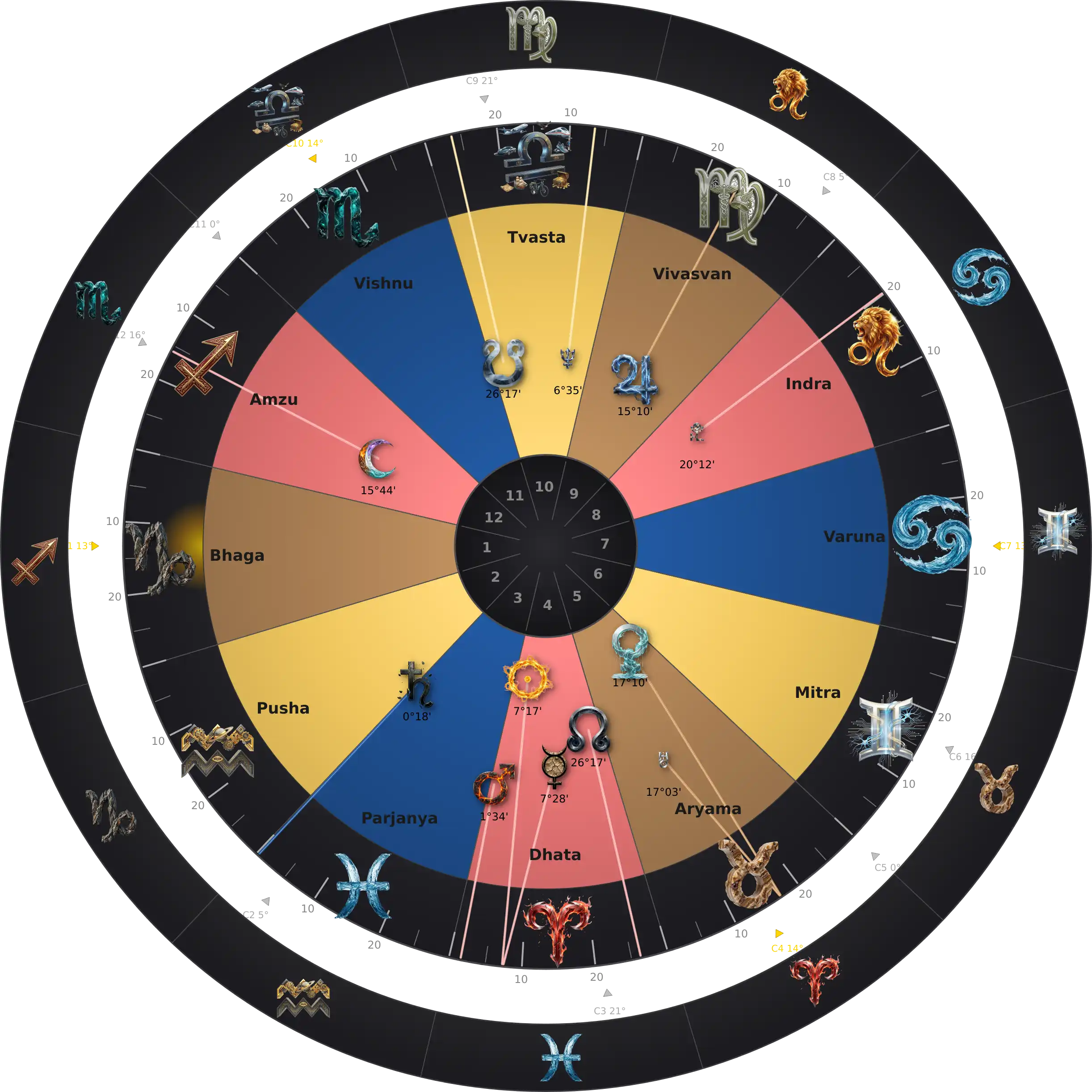
Dakota Fanning (Born February 23, 1994) — 1/3 F

Role 1: Lucy Diamond Dawson — I Am Sam (2001)
Watch scene — Lucy Diamond Dawson expresses profound love and guilt to her father, culminating in an emotional outburst.

The Story:
Lucy Diamond Dawson is the seven-year-old daughter of Sam Dawson, a man with an intellectual disability. Her mother — a homeless woman — abandoned them at birth, leaving Sam as her sole caregiver. Sam raises Lucy with devoted, if limited, love, surrounded by his circle of friends. When Lucy reaches school age, social services determines Sam is incapable of raising her and initiates a custody battle. Lucy is placed with a foster family, Randy Carpenter and her household.
Lucy's defining behavioral signature is her inability to tolerate the separation from her father. Night after night she slips out of the foster home to return to Sam's apartment. Sam, understanding the legal consequences, walks her back each time. She also deliberately stops reading and learning — pretending she cannot do things Sam cannot do — specifically to prevent the emotional gap between them from widening. She tells Sam directly: "I don't want to read if you can't."
Lucy does not fight the court system, argue with lawyers, or strategize to win custody. She waits. She feels. She runs back toward love, not toward a victory. Her ultimate emotional throughline is: "I want no other daddy but you" — pure connective longing, the essence of a soul that requires the bond to feel whole. The film ends with a soccer game where all parties reconcile organically around Lucy, a resolution that required no direct campaign from her — it came to her.
Key Quotes:
-
"I don't want to read if you can't." — She voluntarily limits her own development to preserve emotional symmetry with her father. This is not an action — it is a withdrawal from action to protect a feeling.
-
"I want no other daddy but you." — Raw connective declaration. This is not about what Sam does for her; it is about the irreplaceable soul-bond. The exact language of Water's deepest need: "I crave this connection and nothing else will do."
-
(Implied through behavior): Lucy repeatedly leaves the foster home at night to be physically present with Sam — not to rescue him, not to build a plan, but simply to be near him. Presence is the goal.
How much Fire:
- Lucy does physically act: she escapes the foster home multiple nights in succession, requiring physical effort and some courage. This is the strongest Fire signal.
- She shows a form of defiance — she will not simply comply with the foster system. There is a kernel of direct refusal.
- The midnight departures have a driven, repetitive quality — she keeps doing it despite being returned, which mirrors Fire's "refuses to quit" pattern.
- Her statement "I don't want to read if you can't" contains a decision — she chose to act on a value. That is weak Fire agency.
- In the final scene she participates in a soccer game — she is physically present and doing, not merely sitting and receiving.
How much Water:
- Her core wound is entirely disconnection-based: being separated from Sam is not physically threatening — it is the absence of the essential love/nurturing bond. This is the canonical Water wound.
- Her self-limiting behavior (pretending she cannot read) is a profoundly indirect, passive act. She circles around the problem of the intelligence gap rather than confronting it. She does not say to her father "let's work together to raise your reading." She withdraws her own capability. Pure indirection.
- She does not fight the court system directly, does not argue to judges, does not take assertive legal or social action. She WAITS. The resolution comes to her organically.
- Her midnight escapes are emotionally driven — she is not training herself, not building a plan, not protecting Sam through effort. She is running toward PRESENCE — being near the person she loves. The goal is connective presence, not protection.
- "I want no other daddy but you" is the exact soul-deep connective language of Water. It is not about what Sam provides (no Fire transactional element) — it is about the essential meaning of the bond.
- Her mood and pain pattern fluctuate around the connection: when near Sam she is happy; when separated she suffers. Pain tied entirely to presence/absence of love — the Water wave pattern.
- Lucy does not initiate the resolution of the conflict. She does not lead, organize, or engineer. The adults around her — Rita's lawyering, Sam's persistence — do the action work. Lucy is the emotional core that draws everyone toward resolution.
- Her natural emotional intelligence and ability to move adults with her mere presence is classic Water: she gets results without direct effort — people (the judge, Randy, Rita) are moved by who she IS, not by anything she strategically DOES.
Confidence: High
Role 2: Pita Ramos — Man on Fire (2004)
Watch scene — Pita Ramos, safe after her kidnapping, shares a tearful and emotionally profound reunion with Creasy.
The Story:
Pita Ramos is a nine-year-old girl living in Mexico City, daughter of a wealthy businessman who requires a kidnapping insurance policy and thus a bodyguard. That bodyguard is Creasy — a burnt-out, suicidal former operative. Pita does not react to Creasy's coldness with fear in the way others do; she reads him with quiet, almost preternatural intuition and persists, asking him questions, slowly dismantling his defenses not through any direct effort but through sheer presence and warmth.
Their bond deepens when Creasy agrees to coach her swimming. Even here, Pita is the receiver: Creasy drives the sessions, sets the goals, delivers the discipline. She absorbs it. She does not train out of ambition or competitive drive — she trains because Creasy is there with her, and that connection gives her something to run toward.
When Pita is kidnapped, she is utterly passive — a victim, a catalyst, the emotional center that everything orbits around. She does not attempt escape, does not fight. In the film's closing sequence, she and Creasy share a tearful farewell, Pita telling him she loves him and receiving his declaration of love in return. She weeps. She is led away. She is recovered.
Pita's entire arc is connection — opening a closed man's heart through pure receptivity and emotional presence, and then being retrieved by the action those feelings set in motion in him.
Key Quotes:
-
"I love you, Creasy. And you love me too, don't you?" — Pure connective love declaration. Not about action or support — about soul-deep feeling. Classic Water need to have the connection confirmed verbally, to RECEIVE the love back.
-
"I'm not afraid of you." (To Creasy, who senses others fear him) — Pita reads the room intuitively without analysis. She senses what Creasy needs to hear, knows before being told. This is intuitive reading, not strategic. Water's "knows things without being told."
-
(Regarding the parrot) — When Creasy tells Pita the truth about the parrot being shooed away, she respects it. Her response is emotional and relational — she values the honesty because it deepens the connection, not because it helps her make a plan.
How much Fire:
- Swimming training (effort received, not generated). There is a surface-level reading where Pita "works hard" in the pool. However, the effort in those scenes belongs to Creasy. Pita is the recipient of his coaching energy. The small credit here is that she does show up and try — minimal but acknowledged.
- No fear of Creasy. One could read this as a kind of self-possession, identity holding firm — a mild Fire trace. However, given that it is expressed through emotional intuition rather than willpower or direct assertion, this weighs more toward Water's intuitive knowing.
- No further Fire signals. There is no direct fighting, no strategy, no protection of others, no creative drive, no leadership, no consistent competitive effort. The 22% is a baseline acknowledgment that she is not entirely inert — she does have enough presence to pursue the relationship persistently.
How much Water:
- Connective love as the defining behavioral mode. Pita's entire purpose in the story is to form a soul-deep bond with a man who cannot feel anymore. She does this through presence, questioning, warmth, and emotional availability — not through any direct action or effort. This is the purest possible expression of the Water pattern.
- Receptivity to coaching. The swimming subplot is notable: Creasy brings the energy, the discipline, the effort. Pita receives it. She is not self-driven in that domain. The training works because of what Creasy pours into it, not because Pita generates competitive drive.
- Intuitive reading of others. Pita immediately understands that Creasy is dangerous but not to her. She does not analyze this — she knows it. She reads his inner world without strategic thinking, the way Water characters absorb emotional truth by proximity.
- Passive in all physical moments. Kidnapping, rescue, final farewell — Pita does not act. She is acted upon. She weeps, she waits, she is recovered. Her role in the plot is entirely receptive — the emotional anchor that others are compelled to move toward.
- Chipping away through indirection. She does not confront Creasy's wall directly. She asks questions. She persists gently. She "just appears" in his emotional life until he opens. This is Water's signature indirect method: achieving deep connection without visible effort, through presence alone.
Confidence: High
Role 3: Coraline Jones — Coraline (2009)
Watch scene — Coraline bravely confronts the monstrous Other Mother, demonstrating fierce defiance and cunning to escape her clutches.

The Story:
Coraline Jones is an eleven-year-old girl who has just moved to the Pink Palace Apartments in Ashland, Oregon with her chronically distracted parents. Bored and neglected, she explores her new home and discovers a small bricked-up door that, at night, opens into a parallel "Other World" — a mirror version of her life where her "Other Mother" and "Other Father" are attentive, magical, and indulgent.
The Other World initially satisfies every complaint Coraline has about her real life. But the price of staying there forever is allowing the Other Mother — the Beldam, a parasitic spider-entity — to sew black buttons over her eyes. Coraline refuses in horror, is imprisoned, and there encounters the ghost children of past victims. Rather than wait to be rescued, she immediately acts: she proposes a game to the Beldam with defined stakes ("if I find my parents and the ghost children's eyes, you let us all go free"), executes the search under supernatural pressure, tricks the Beldam into opening the door by staging a distraction with the snow globe, defeats the Beldam's severed hand attempting to follow her, and ultimately destroys the key to the Other World.
She is defined throughout by what she DOES: she explores, she plans, she prepares weapons, she confronts directly, she refuses to surrender her identity. The emotional wound (parental neglect) drives her into danger, but the entire arc is resolved through ACTION.
Key Quotes:
-
"I will be brave. No — I AM brave." — Self-assertion of identity and the act of choosing courage. Protects who she IS under threat. Classic Fire identity statement.
-
"What kind of fun would it be if I just got everything I ever wanted, just like that, and it didn't mean anything?" — Reveals her values: things earned through effort, not received passively. Effort-based self-definition.
-
"You're not my mother." — Direct refusal of substitution. Identity protection: this is NOT me, you are NOT mine. The Fire "no."
How much Fire:
- Direct action is her default mode: Coraline does not wait to be saved. She immediately devises a plan (the game), executes it alone, and uses resourcefulness under pressure. She brings clippers — she prepared for combat. This is tireless action.
- Identity protection is her emotional core: Every time the Beldam tries to lure her with false love, Coraline's refusal is identity-based — "You're not my mother," "I won't stay here," "That's not who I am." Her version of "no" is the classic Fire formulation: That's not ME.
- Strategic misdirection from the head: Tricking the Beldam to the door using the snow globe is a calculated tactical move — she figures out the Beldam's weakness (possessiveness over objects) and exploits it logically. Per the profile guide, strategic indirection rooted in logic is Fire, not Water.
- Protection through sustained effort: She does not simply escape — she insists on freeing the ghost children's souls AND her parents. She carries the rescue burden the entire third act without delegating or retreating. Protection through effort is unambiguously Fire.
- Consistent, driven response to fear: She is afraid throughout and acts anyway. She does not have mood swings; she is consistently determined. Pain produces more drive, not retreat. This is the Fire trauma pattern: confronts pain head-on, responds with increased action.
How much Water:
- Initial attraction to the Other World's comfort and nurturing: Coraline's vulnerability is her craving for warmth, attention, and magic — things she is not getting from her real parents. This passive longing for nourishment is Water territory and is the wound that makes her susceptible to the Beldam's trap.
- The Beldam's bait works because Coraline has an unmet need for connection: Her pain initially expresses itself through fantasy-seeking — going back to the Other World even when it becomes threatening. The pull toward the abundant, beautiful, attentive Other World is Water receptivity.
- Gradual emotional opening to Wybie: Her relationship development with Wybie is reactive and indirect rather than driven. She lets it grow rather than initiating it, which has a mild Water texture. These Water signals are the wound and the bait — they describe what makes her vulnerable, not what she does when it counts. The film's entire resolution is Fire.
Confidence: High
Career Pattern: Only one role (Coraline Jones) aligns with Fire. The majority pattern is Water — indirection, emotional attunement, and proxy-based operation define this actor's most common on-screen mode.
Dakota Fanning — Aditya Zodiac Birth Chart Elements
Dominant Element (Aditya): Fire (56.2%)
Dakota Fanning — Tropical Classic Birth Chart Elements
Dominant Element (Tropical): Water (56.2%)
Alignment Note: Agent judged 1/3 roles as Fire-dominant. Aditya birth chart shows Fire-dominant (56.2%). Tropical birth chart shows Water-dominant (56.2%). Agent results diverges with Aditya Zodiac, aligns with Tropical.
View Birth Chart — Dakota Fanning
Outer wheel: Tropical Classic — Inner wheel: Aditya Zodiac
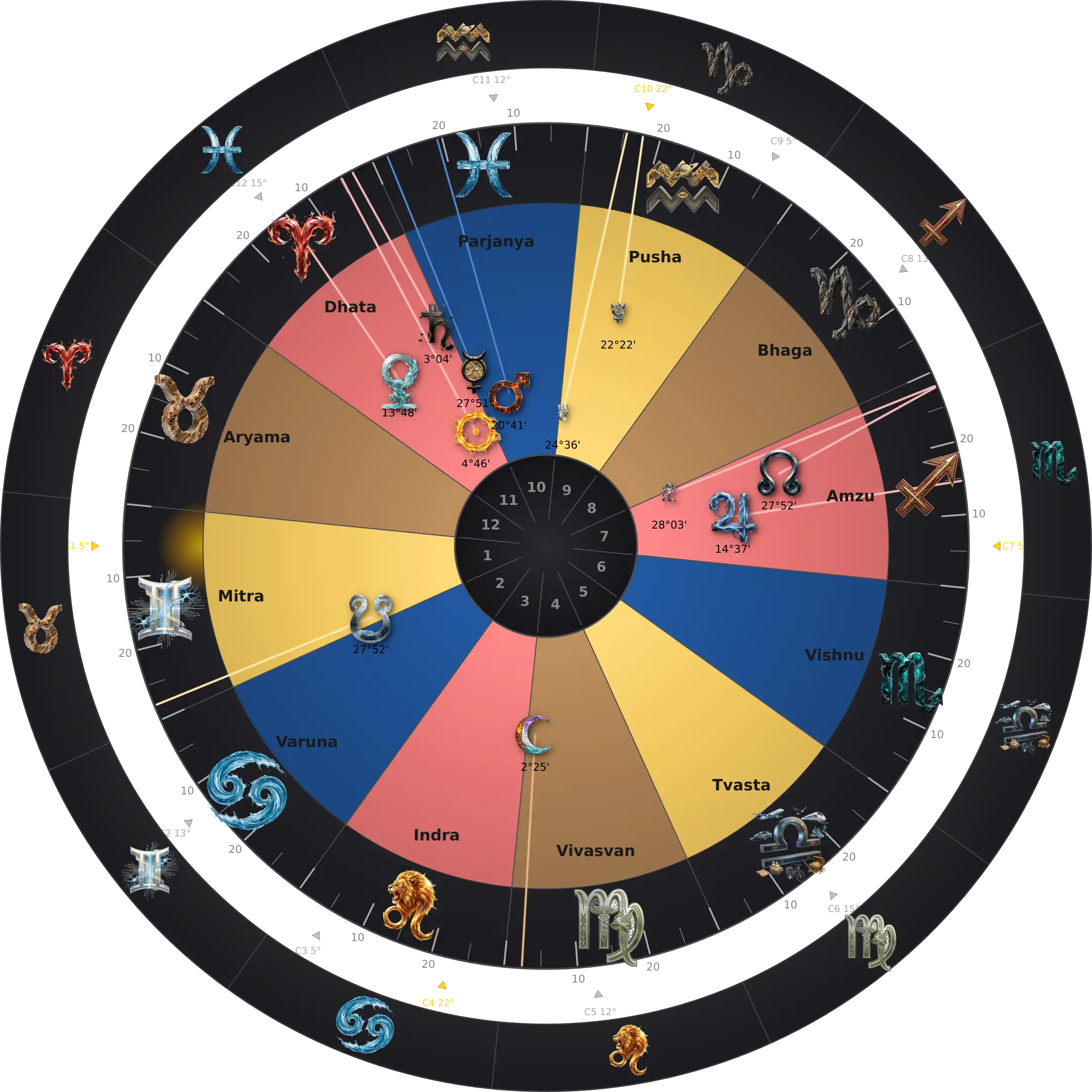
Spike Lee (Born March 20, 1957) — 1/3 F
Role 1: Giant — Mo' Better Blues (1990)
Watch scene — Giant, beaten and left for dead, embodies vulnerability and the harsh consequences of his reckless schemes.
The Story:
Giant is Bleek Gilliam's childhood friend and perpetually incompetent manager in Spike Lee's Mo' Better Blues. He books the wrong venues, handles money poorly, fails at every negotiation, and most critically, has a compulsive gambling addiction that keeps him in debt to increasingly dangerous loan sharks named Madlock and Rod. Despite every member of Bleek's inner circle telling Bleek to fire Giant — that he is actively holding the band back — Bleek refuses. He cannot sever the bond because the friendship is not transactional; it is existential to him.
Giant does not confront his gambling problem directly. He circles it, jokes around it, digs deeper into debt. He is not grinding or building or pushing — he is drifting, reacting, avoiding. When the loan sharks finally close in, it is not Giant who resolves the situation but Bleek who physically intervenes on his behalf. The result is catastrophic: the sharks use Bleek's trumpet as a weapon, destroying the trumpeter's lips and effectively ending his career.
In the aftermath, Giant eventually gets clean and holds Bleek's trumpet in safekeeping — a gesture of loyal presence, not effort or achievement. He works quietly as a doorman. He does not build anything new; he waits, holds space, and remains available to the friend he inadvertently destroyed. His arc is one of passive harm followed by passive redemption.
Key Quotes:
-
Giant consistently deflects from responsibility regarding his gambling — he never initiates a direct conversation about quitting; the reckoning always comes from outside pressure, not inner drive.
-
When Bleek fires him as manager, Giant does not fight back, protest, or strategize a comeback — he simply remains present as a friend, accepting the demotion without direct confrontation.
-
His final posture — holding the trumpet, working the door — is the image of someone who has settled into being a quiet, loyal presence rather than someone rebuilding with effort.
How much Fire:
- One act of direct physical protection: When Giant is confronted by loan sharks, Bleek steps in — but this is Bleek acting, not Giant. Giant does attempt some physical presence in the confrontation, which has a faint Fire flavor (protection through showing up).
- He holds his ground on the friendship: When challenged professionally or told to leave Bleek alone, Giant does not dissolve — he stays. There is a minimal stubbornness here, a "this is who I am" refusal to completely disappear that faintly echoes Fire's identity-protection instinct.
- The doorman role post-recovery: Taking a job and showing up every day to work is a minimal effort-based act. It is not creative or driven, but it is consistent presence through action rather than pure passivity.
How much Water:
- Indirection as operating mode: Giant never solves his gambling problem through direct effort or strategy. He drifts deeper into debt, hiding the scope of the damage, working around it indirectly until external forces (loan sharks) force a reckoning. This is the hallmark Water pattern of circling around problems without confronting them.
- Addiction as disconnection-filling: His gambling is not a "prove my toughness" substance pattern. It reads more as compulsive comfort-seeking — a soft, recurring escape rather than a functional fuel. Water's substance pattern is about replacing the warmth of genuine connection.
- Clinging to the childhood bond: Giant's entire identity in the film rests on maintaining the connection with Bleek. He cannot let the relationship become purely professional because the soul-deep bond is what defines him. This fear of disconnection — and desperate attachment to a temporal connection — is a core Water signature.
- Passive redemption arc: After the catastrophe, Giant does not build, fight back, or create anything. He waits, holds the trumpet, maintains loving presence. Redemption through BEING, not DOING — archetypal Water.
- Incompetence through inaction: His failures as a manager come not from misguided effort (which would be weak Fire) but from an absence of sustained directed action. He simply does not DO the job. The result is a vacuum, not a failed plan.
Confidence: Medium
Role 2: Mookie — Do the Right Thing (1989)
Watch scene (2:00) — Mookie ignites a riot by defiantly hurling a trash can through Sal's Pizzeria window.

The Story:
Mookie is a young Black man living in the Bedford-Stuyvesant neighborhood of Brooklyn during the hottest day of the summer. He works as a pizza delivery driver for Sal's Famous Pizzeria, owned by Italian-American Sal, with whom he has a complex but mostly functional working relationship. He also lives with his sister Jade and has a son, Hector, with his Puerto Rican girlfriend Tina — a relationship defined by his inconsistency and her frustration at his absence.
Throughout the film Mookie functions as the connective tissue of the neighborhood. He moves between worlds — the Black community, the Italian-American family of Sal, the Latino sphere of Tina — without fully belonging to any. He is accused of laziness; Jade calls him a bum. He stretches his deliveries, takes unauthorized showers, haggles for early wages. He sees his son perhaps once a week.
But when white police officers asphyxiate his friend Radio Raheem during a fumbled arrest outside Sal's, something decisive breaks open in Mookie. He picks up a garbage can and throws it through Sal's front window, detonating the riot that destroys the pizzeria. The act is raw, direct, physical, and irreversible. Whether it saves Sal from personal harm or is pure rage made concrete is debated — but the act itself is unambiguous. The next day Mookie returns, is fired, collects his $250 wages, and the two men exchange a last tense exchange before Mookie walks back into his life.
Key Quotes:
-
Tina to Mookie: "Trust you? The last time I trusted you, Mookie, I ended up with a son." — captures Mookie's pattern of partial presence, of acting without sustaining what the action creates.
-
Mookie to Pino (in confrontation over racism): Direct verbal challenge — Mookie doesn't deflect or manipulate; he names the hostility openly and returns it.
-
Mookie's racial rant (fourth-wall sequence): A direct, unfiltered delivery of communal prejudice — no indirection, no manipulation, pure confrontational speech.
How much Fire:
- The trash can throw is the defining act of the film — it is direct, physical, forceful, and public. No shadow, no poison, no manipulation. Mookie picks up a heavy object and throws it with maximum bodily force through a glass window. This is Fire's blunt instrument, the energy body acting in the world.
- He works every day. The film follows him on his delivery route. He may be slow, but he is on his feet, moving, carrying bags up stairs, covering territory. The effort is real even when it is minimal — this is weak Fire, not the absence of it.
- He protects Jade directly. When Sal shows inappropriate interest in his sister, Mookie confronts him face-to-face. No indirect maneuvering — he plants himself between Sal and Jade and defends her.
- He confronts Pino openly. Pino's racism is met with direct verbal challenge, not avoidance. Mookie names the hostility and does not retreat from it.
- His response to Radio Raheem's death is rage expressed through explosive physical action — a Fire trauma response. Pain hits hard, translates instantly into direct destructive force. There is no circling, no manipulation, no waiting. He acts.
How much Water:
- Mookie drifts and avoids for most of the film. He stretches his delivery times, takes unsanctioned breaks, delays returning to work. He moves through the neighborhood without urgency. This floating, anchorless drift is closer to Water's quality of receiving without directing effort.
- His relationship with Tina is defined by avoidance and circling. He does not confront the problems in their relationship directly. He visits rarely, commits minimally, and lets the tension accumulate rather than resolving it. This is Water's indirect non-engagement with relational demands.
- He functions as a social bridge through presence and movement, not through asserting himself. For most of the film he mediates tensions by being known and liked — by his social capital and connectivity, not by forceful advocacy. This is closer to Water's "results without direct effort" mode.
- There is a passivity to his moral position for most of the film — he watches the escalation, stays on the margins, participates in conversation but does not take a stand. This waiting, reactive posture is characteristic of Water.
Confidence: Medium
Role 3: Shorty — Malcolm X (1992)
Watch scene — Shorty and Malcolm engage in a playful, imaginary shootout, showcasing Shorty's comedic nature and loyalty.
The Story:
Shorty is Malcolm Little's closest friend during the Boston hustler years, before Malcolm's prison-to-Nation-of-Islam transformation. He is first seen alongside Malcolm in zoot suits, full of energy and street charm, dancing and jiving in a world they are trying to inhabit rather than build. Shorty works in a barbershop — a place of social bonding, grooming, and comfort — and performs the famous conk procedure on Malcolm: a painful chemical hair-straightening ritual that symbolizes aspiration and identity-seeking. The scene is intimate, almost maternal in texture — Shorty applying chemical, Malcolm wincing, their laughter masking the pain. Shorty is funny and warm, punctuating the film's opening number with a theatrical slide toward the camera and a grinning fourth-wall stare. He jokes about wanting to be Bogart — not out of drive or ambition, but out of playful fantasy. He is part of Malcolm's petty robbery ring, not as an initiator or strategist, but as a companion carried by the current of events. When the ring is caught, both men are arrested; Shorty does not scheme his way out or fight his way out — he simply goes down with Malcolm. His entire function in the film is to be a warm, comic, connective presence in Malcolm's early life: someone who nourishes through humor, loyalty, and shared atmosphere. He represents the world Malcolm must leave behind.
Key Quotes:
-
"Man, I'm tired of playin' cops all the time. I wanna be Bogart." — Reveals Shorty's tendency to live in fantasy and play-act identity rather than asserting one directly. This is a man who wants to inhabit a romantic image, not build one through effort.
-
(Fourth-wall stare during the opening dance number) — A non-verbal but strongly coded gesture: Shorty breaks film reality to charm the audience directly. It is effortless, natural, pure presence — not earned technique.
How much Fire:
- The brotherhood bond with Malcolm is real and concrete — their friendship is forged through shared street life, shared arrest, and mutual loyalty. Brotherhood through shared experience (even passive experience) carries some weight for Fire.
- Shorty participates in the robbery ring. Even as a follower, participation in a criminal scheme involves doing something, taking some risk, not merely receiving. That effort — even weak effort — still counts as action.
- There is a consistent identity Shorty maintains throughout the early film: the zoot-suit hustler, the funny barber, the loyal companion. He does not shift wildly in mood. That consistency edges toward Fire's pattern of stable self.
How much Water:
- Shorty is overwhelmingly defined by presence, not action. He uplifts Malcolm through humor, warmth, and companionship — he radiates comfort just by being there, which is the clearest textbook marker of Water.
- The conk scene encodes nurturing through physical intimacy — applying substance to Malcolm's body with care and banter, in a setting (barbershop) that is culturally coded as social bonding and grooming. Even if it causes discomfort, the tone is entirely warmth-first.
- "I wanna be Bogart" is pure fantasy-living — a character who wants to inhabit a romantic identity rather than pursue it through direct effort. That is Water's unhealthy side: living in the dream rather than manifesting it.
- Shorty is swept into the robbery scheme and its consequences rather than engineering them. He is a passenger in the arc of events, which aligns strongly with receptivity and lack of direct initiative.
- His comic, theatrical style — especially the camera slide and fourth-wall break — is effortless natural charm, not trained technique. The profile documents this distinction explicitly: performing gracefully without apparent training is Water; training for long hours is Fire.
Confidence: Medium
Career Pattern: Only one role (Mookie) aligns with Fire. The majority pattern is Water — indirection, emotional attunement, and proxy-based operation define this actor's most common on-screen mode.
Spike Lee — Aditya Zodiac Birth Chart Elements
Dominant Element (Aditya): Fire (43.8%)
Spike Lee — Tropical Classic Birth Chart Elements
Dominant Element (Tropical): Water (43.8%)
Alignment Note: Agent judged 1/3 roles as Fire-dominant. Aditya birth chart shows Fire-dominant (43.8%). Tropical birth chart shows Water-dominant (43.8%). Agent results diverges with Aditya Zodiac, aligns with Tropical.
View Birth Chart — Spike Lee
Outer wheel: Tropical Classic — Inner wheel: Aditya Zodiac
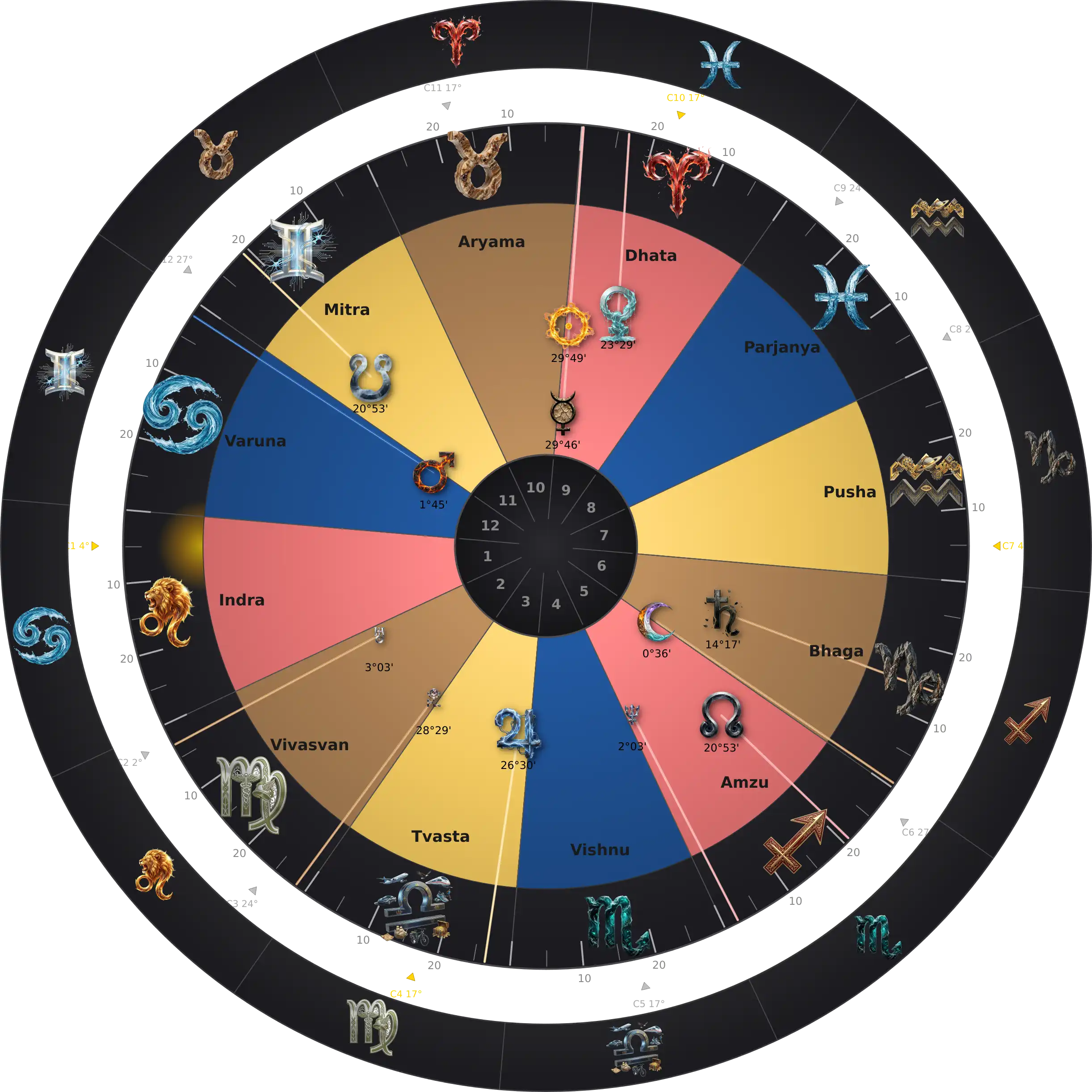
Jordan Peele (Born February 21, 1979) — 1/3 F
Role 1: Rell Williams — Keanu (2016)
Watch scene — Rell hilariously swings between terror and misplaced bravado, coaching his kitten and wildly shooting animatronics.

The Story:
Rell Williams opens the film in emotional freefall — dumped by his girlfriend, he retreats to his couch surrounded by crime film posters, smoking weed in a haze of comfortable melancholy. He is not working harder, not fighting back — he is dissolving into passive feeling. Then a tiny kitten named Keanu appears on his doorstep. The cat becomes everything: Rell bonds instantly, shoots elaborate professional-grade cat photographs, and finds renewed meaning entirely through this connection. When thugs raid his apartment and steal Keanu, Rell does not crumble into pure inaction — he drags his reluctant cousin Clarence into the underworld — but his strategy is thoroughly indirect: persuade, pretend, adopt false identities ("Tectonic" and "Shark Tank"), and charm their way through gang hierarchy rather than fight directly. Rell is warm and sweet, openly admitting he cannot drive; when the moment demands he hijack a car, he does so from sheer desperation for the cat. Throughout, Clarence becomes the unlikely action figure while Rell serves as the emotional engine — the one with a specific, love-fueled reason to see the mission through. The resolution — prison time, but serving as respected figures — shows that Rell's journey was never about defeating enemies; it was about restoring a connection that gave his life meaning.
Key Quotes:
-
"He was placed in my life for a reason." — Rell speaks about Keanu the cat with the language of soul-deep connection and destiny. This is not a strategic assessment; it is a feeling of meaning arriving without being sought. Classic Water receptivity — the connection "just appeared" on his doorstep.
-
"We are Tectonic and Shark Tank." — The entire infiltration strategy is built on pretense, adopted personas, and indirection. Rell does not punch his way into the gang; he performs a false identity to navigate indirectly. This is not tactical-logical misdirection (Fire's strategic feints) — it is social fluidity, borrowing the surface of a threatening identity to slip through.
-
(Behavioral rather than verbal): When Clarence spirals during the drug sequence and Rell becomes "increasingly worried and decides they should leave" — Rell's threat response is withdrawal and anxiety management, not escalation. He is monitoring emotional temperature, not seizing initiative.
How much Fire:
- Rell initiates the entire quest — he decides they will go after Keanu, he pulls the reluctant Clarence along. That is an act of drive; passive characters do not drag companions into danger.
- He hijacks a car despite being unable to drive — raw desperation translating into physical, direct action, however chaotic. Incompetent action is still action (weak Fire expression).
- His refusal to abandon the mission across escalating danger shows a form of persistence under pressure — he does not simply retreat and cry.
- The crime film posters on his wall (Heat, New Jack City) and his romantic idealization of that world show a Fire aspiration — identity built around images of power — though he never lives it authentically.
- Completing prison time as a respected figure is a minimal-effort conquest; the world recognizes him, which borrows Fire's territorial acknowledgment.
How much Water:
- Rell's starting state is pure Water passive grief — couch, weed, no action, dissolving in the feeling of loss after the breakup. He does not resolve to become stronger; he simply stews.
- The cat is an emotional anchor, not a resource — Rell's connection to Keanu is soul-deep, about meaning and presence, not utility. The cat restores his will to live through connection, not through achievement.
- His pain pattern fits Water exactly: intense when the connection is absent (girlfriend gone → collapse; cat stolen → distraught), and presumably relieved the moment Keanu is back. Wave-based, connection-dependent.
- The whole strategy is indirect — fake personas, social navigation, using charm and pretense rather than confronting enemies directly. This is Water's indirection via social fluidity, not Fire's rational tactical feints.
- Rell uses Clarence throughout — manipulates/persuades his more capable cousin to serve as the action agent while Rell provides emotional direction. Classic Water: achieving goals by working through others rather than personally executing force.
- He is described as "warm and sweet" — his natural register is receptive and emotionally available, not driving and dominant.
Confidence: Medium
Role 2: TSA Agent Dooley — Key & Peele / Keanu (2012-2016)
Watch scene — A deadpan airline agent asserts his authority by creating increasingly absurd boarding categories, baffling passengers with his calm defiance.
The Story:
TSA Agent Dooley — Jordan Peele's recurring government screener persona across Key & Peele — is the embodiment of low-grade institutional authority wielded with maximum seriousness. He is the man in the polyester shirt and rubber gloves who treats a four-inch scissor rule as though it were the Maginot Line. The character's comedy derives entirely from the gap between the grandiosity of his self-perception and the pettiness of his actual function. He enforces regulations he did not write, cannot explain, and would not question. He confronts passengers directly, recites policy chapter and verse, and doubles down the moment anyone pushes back. He does not retreat, manipulate from the shadows, or wait for the situation to resolve itself — he plants himself in the obstruction and dares you to move him.
What makes this portrait specific is the identity mechanics at play. Dooley's self-worth is entirely nested inside the uniform. Remove the badge and there is nothing. He is not manipulating the situation indirectly — he is the situation, occupying it with his full body and his full belief in the legitimacy of his post. When satirized by the terrorist characters who praise the TSA as an "elite force of anti-terrorist commandos," the joke lands because Dooley and his type genuinely believe this. He is not ironic about his role. He is earnest to the point of delusion — a weak but fully committed expression of direct, identity-driven enforcement.
Key Quotes:
-
"That is the genius of TSA." — delivered as though the rules were scripture. Direct ownership of institutional logic, no apology or deflection.
-
"A five-inch blade is a deadly weapon. A four-inch blade is no more than a child's plaything." — rote recitation of policy as personal conviction. He is not passing this information along; he IS this information.
-
(Implied from sketch posture): "Sir, step aside." — repeated, flat, immovable. Not a request. Not a manipulation. A declaration.
How much Fire:
- Direct confrontation as default mode: Dooley does not manipulate from the shadows. He plants himself in the obstacle, makes eye contact, recites policy, and dares you to move him. This is direct, embodied confrontation — weak but unambiguous.
- Identity fused to role: His entire self-worth is nested inside the uniform. The badge is not a tool he uses — it IS him. This is Fire's identity-assertion principle: the self is defined by what one stands for and enforces.
- Consistency: Dooley never adapts, negotiates, or reads the room. He recites policy the same way every time, regardless of passenger behavior. Consistency is effort-based; it requires sustained commitment to a position.
- Weak Fire is still Fire: The comedy derives from the pettiness of his domain — but the behavioral register is genuine confrontation. He is not indirectly manipulating outcomes. He is blocking you with his body and his belief.
- Brotherhood through institutional loyalty: His bond is to the TSA as an institution, not to specific individuals. This is the 6j9m brotherhood-of-purpose dynamic: shared mission over personal attachment.
How much Water:
- Bureaucratic indirection as partial evidence: Dooley enforces rules he did not write, cannot explain, and would not question. There is an argument that this is a form of indirection — achieving control through institutional proxy rather than personal assertion. However, the behavioral expression is direct enforcement, not behind-the-scenes manipulation.
- Flatness: His affect is deadpan throughout — no emotional escalation, no visible internal life. This could read as Water's absorption, but it functions here as institutional consistency rather than receptive consciousness.
- Absorbs conflict without escalating: When passengers push back, Dooley does not rage or fight — he simply repeats policy and waits them out. This passive resistance contains a Water-like quality of receiving and outlasting rather than forcefully overcoming.
Confidence: Medium
Role 3: FBI Agent Budge — Fargo Season 1 (2014)
Watch scene — Two bumbling FBI agents get ambushed and killed during a stakeout, utterly failing their mission.
The Story:
FBI Agents Budge (Jordan Peele) and Pepper (Keegan-Michael Key) arrive in Fargo Season 1 as the federal apparatus assigned to investigate the Fargo crime syndicate massacre executed by Lorne Malvo. They are present during the very moment Malvo walks past their surveillance vehicle and massacres 22 people — and they see nothing. They do absolutely nothing. As a consequence, they are demoted to the FBI file room, where they spend their days in abstract philosophical conversation: Budge muses about the "heap paradox" — if you remove one file at a time, at what point does a file room cease to be a file room? Their days are defined by waiting, floating, discussing abstract ideas while doing nothing productive. In the season finale, they are assigned to escort Lester Nygaard as protection. They approach a suspicious vehicle in the dark, misread the situation entirely, and Malvo emerges from the woods and shoots them both in the throat without warning. They never saw it coming, never fought back, and were killed by indirect ambush before they could act.
Key Quotes:
-
Budge: "Now I'm saying that you and I both agree that the file room minus one file is still the file room. Now, let's say you took another one out, and then another. If the file room minus one file is still the file room, and you keep subtracting one at a time, you could end up with zero files."
-
Pepper (to Budge): "You know sometimes you're in the middle of a dream..." Budge: "Do you say everything that comes to your head?"
-
Budge (to Lester, before death): Tries to engage him with the fox-rabbit-cabbage river-crossing riddle — abstract, indirect, cerebral — completely oblivious to the lethal threat forming around them in the dark.
How much Water:
- Circles problems rather than attacking them: Budge spends his days in philosophical abstraction — the "heap paradox" — rather than doing anything productive. He floats through his demotion without resentment or ambition to restore his position.
- Lives in abstraction: His mental life is not about solving cases or restoring order; it is about conceptual riddles and dream logic. The fox-rabbit-cabbage puzzle is not a tool for action — it is a way to pass time while waiting for nothing.
- Killed by indirect ambush: Budge never saw it coming. He was shot in the throat from the woods while approaching a suspicious vehicle — a Water-style death where the threat emerged from the unseen and overwhelmed him before he could act.
- Dreamy, detached tone: His affect throughout is soft, meandering, philosophically curious but never urgent. He does not drive scenes; he drifts through them.
- Results without effort: Budge achieves nothing through sustained work. He is present but not productive. The file room assignment is not a starting point for redemption — it is his permanent resting state.
How much Fire:
- Institutional role framing: Budge is an FBI agent — a role that implies direct enforcement and protective action. However, his behavior completely contradicts the role's implications. The uniform provides only surface-level Fire coding.
- Banter contains mild competitive energy: His back-and-forth with Pepper occasionally has a one-upping quality — "Do you say everything that comes to your head?" — but this is playful deflection, not genuine conflict.
- Attempts riddle engagement: Trying to engage Lester with the river-crossing puzzle could be read as an attempt to assert intellectual dominance. However, it fails completely and feels more like nervous distraction than strategic positioning.
Confidence: Medium
Career Pattern: Only one role (TSA Agent Dooley) aligns with Fire. The majority pattern is Water — indirection, emotional attunement, and proxy-based operation define this actor's most common on-screen mode.
Jordan Peele — Aditya Zodiac Birth Chart Elements
Dominant Element (Aditya): Fire (31.2%)
Jordan Peele — Tropical Classic Birth Chart Elements
Dominant Element (Tropical): Water (31.2%)
Alignment Note: Agent judged 1/3 roles as Fire-dominant. Aditya birth chart shows Fire-dominant (31.2%). Tropical birth chart shows Water-dominant (31.2%). Agent results diverges with Aditya Zodiac, aligns with Tropical.
View Birth Chart — Jordan Peele
Outer wheel: Tropical Classic — Inner wheel: Aditya Zodiac
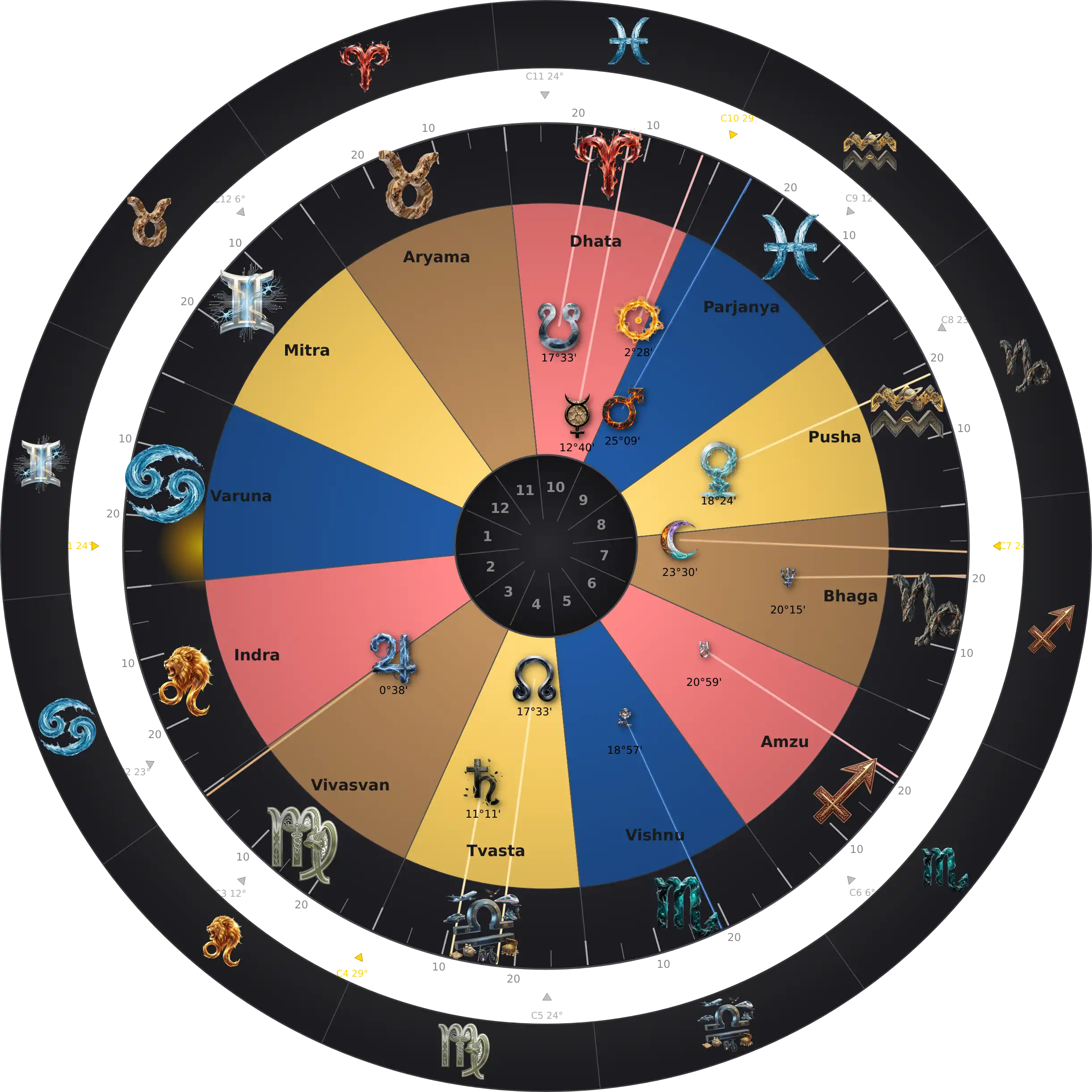
Rebel Wilson (Born March 2, 1980) — 2/3 F

Role 1: Fat Amy — Pitch Perfect (2012-2017)
Watch scene — Fat Amy fiercely asserts her dominance in a high-energy riff-off, culminating in a powerful rap solo.

The Story:
Fat Amy is introduced as an audaciously self-named Australian (Tasmanian) woman who joins the Barden Bellas a cappella group. From her first appearance she projects a loud, unapologetic identity: she names herself Fat Amy not out of shame, but as a preemptive identity-shield against others using her weight against her. This is a direct, confrontational act of self-protection that sets the dominant behavioral tone for everything that follows.
Across the trilogy she is the group's physical disruptor: she improvises a solo at regionals against the group plan, grabs authority symbols (the pitch whistle) when the group stalls, and openly threatens rivals ("finish him like a cheesecake"). Her humor is outward-facing and designed to control rooms, not to seek emotional comfort from them.
In Pitch Perfect 3 her deeper backstory emerges: she fled a gangster father at a young age — a concrete, survival-based break — and when he reappears she is briefly emotionally ambivalent (the stuffed bunny moment offers a small Water window). But when he betrays her, she doesn't grieve the disconnection: she fights. She physically beats through multiple armed henchmen using karate, engineers a bomb, and blows up the yacht. She then watches her father arrested without apparent emotional collapse. The arc from "girl who ran away" to "woman who destroys the problem with her own hands" is Fire expressed in a full narrative arc.
Her connective warmth (loyalty to Beca, "fat hearts" speech) provides genuine Water color but does not drive her screen decisions.
Key Quotes:
-
"I'm Fat Amy. I call myself that so that twig bitches like you don't do it behind my back." Direct, preemptive identity conquest. She names the threat and eliminates it before it can operate. This is not indirection; it is controlled confrontation. Pure Fire.
-
"I'm gonna kill him, I swear. I'm gonna finish him like a cheesecake!" Open, explicit threat issued immediately after being hit. No scheming behind the scenes, no manipulation — a direct retribution statement delivered at volume. Fire threat posture.
-
"Even though some of you are pretty thin, you all have fat hearts, and that's what matters." The one clear Water marker: connective, warmth-radiating presence that uplifts without doing anything physical. She is BEING here, not acting. Brief but authentic Water expression within a dominant Fire character.
How much Fire:
- Direct identity confrontation: She does not wait for others to define her; she names herself first. The entire "Fat Amy" move is an assertive territorial act — she is protecting her identity head-on, the central Fire drive.
- Physical action as the primary tool: The PP3 climax is the clearest indicator. Armed henchmen, hand-to-hand karate, bomb detonation, yacht destruction. These are not indirect schemes born of intuition — they are decisive, physically costly acts requiring sustained effort and courage.
- Strategic plan execution: She coordinates with Beca (Beca distracts with a performance, Amy acts). The division is: Beca does the Water work (using presence/song to hold attention), Amy does the Fire work (physical combat, bomb). The screenplay instinctively assigned roles by profile.
- Brotherhood bond with Bellas: Her loyalty to the group, particularly Beca, is not a soft soul-connection seeking transcendence — it is the concrete "I will fight beside you and protect you" sisterhood that Fire clearly assigns. She carries the group through action, not emotional resonance.
- Open threat posture throughout all three films: Fat Amy does not scheme or undermine quietly. Every conflict results in a loud, direct statement of intent or a direct physical act. Water fights dirty and hidden; Fat Amy broadcasts her aggression.
How much Water:
- Warmth presence moments: The "fat hearts" speech and her general function as emotional tension-reliever (using humor to soothe group friction) shows she can RECEIVE and RADIATE feeling without doing. These moments are brief but real.
- Hidden vulnerability: The "Fat Patricia" shame and the stuffed bunny recognition in PP3 open a window to the Water wound — a craving for nurturing that was absent (a gangster father who ultimately only wanted her money). The disconnection pain is present but it does not drive her screen behavior.
- Self-proclaimed natural gift: She calls herself Tasmania's best singer without apparent rigorous training shown on screen — the effortless gift claim fits Water's "flows naturally" marker. However, she actively performs and competes (Fire effort), so this is a weak reading.
- Comfort food coding: The food humor in the films (cheesecake references, pastry analogies) does carry a mild Water sweet/comfort flavor. Insufficient on its own but consistent with the pattern.
Confidence: High
Role 2: Brynn — Bridesmaids (2011)
Watch scene (00:40) — Brynn, with a new, questionable tattoo, hilariously tumbles over a kitchen counter in a moment of pure chaotic energy.
The Story:
Brynn is Annie Walker's eccentric roommate in Bridesmaids, living in an arrangement with her brother Gil that already crowds Annie out of her own home. She is a background character who appears in a small number of scenes, but each scene is behaviorally distinctive.
Brynn never initiates direct confrontation. She enters Annie's space not through force or planning but through simple, unthinking presence — she drifts into Annie's room, reads her diary (mistaking it for "a very sad handwritten book"), and reports this with no defensiveness and no apparent awareness that it constitutes a violation. There is no strategy here and no aggression — she stumbled into the diary because she was there, drifting. This is the clearest signal of Water: results (intrusion, information, intimate access) achieved without directed effort, through pure proximity.
Her handling of Annie's eviction mirrors this. Rather than a direct "you need to leave," she delivers a soft, meandering, passive-aggressive message framed as a mutual agreement about maturity. She does not fight; she dissolves the conflict sideways.
The tattoo episode also fits: she received a free tattoo in a van in a parking lot. There was no training, no discipline, no creative construction — she was simply there and it happened to her. The symbol she chose (a "worm meaning wasted") reinforces comfort-seeking and sweet/comforting resonance over effort or conquest.
Brynn's entire screen presence is cheerful, oblivious, and receptive. She is not building, fighting, protecting, or driving. She floats.
Key Quotes:
-
"At first I did not know it was your diary, I thought it was a very sad handwritten book." — Quintessential Water: absorbed intimate material through proximity, not intention. No strategy, no aggression. Results without directed effort.
-
"We would like to invite you to no longer live with us." — Conflict handled via indirect, softened phrasing. Not "you're out." Circles around the confrontation, frames it as a collaborative decision.
-
"It's a Mexican drinking worm. It's like a Native American symbol meaning wasted." — Comfort-seeking, sweet/aimless, received without effort (free tattoo in a van). No discipline, no conquest.
How much Fire:
- Brynn does eventually participate in evicting Annie, which involves taking a clear position — a thin trace of direct action, though immediately softened by her indirect delivery.
- She inserts herself into Annie's life repeatedly, which could superficially look like initiative or drive — but it reads as oblivious presence, not purposeful action.
- Her cheerfulness and resilience suggest some identity stability, but not the identity-protection instinct of Fire ("that's not me, deal with it") — she is simply unconcerned with how she is perceived.
- There is no evidence of training, discipline, sustained effort, protection of anyone, fighting directly, or creating anything in her screen time.
How much Water:
- The diary scene is a textbook Water moment: intimate access obtained through pure presence and receptivity, with no plan, no effort, and no awareness of boundary-crossing. She absorbed the private content by being nearby and drifting.
- The eviction is delivered indirectly — passive phrasing, framed as a mutual maturity decision, conflict avoided rather than confronted. This is Water's unhealthy indirection: manipulation through framing rather than direct assertion.
- The tattoo narrative perfectly fits Water's substance/comfort pattern: received for free, in a low-effort situation, with a meaning centered on being "wasted" (comfort, soft reality, escape from tension) rather than strength or conquest.
- Brynn is described as perennially "in Annie's face" through enthusiasm and presence — cheerleader energy, warmth by proximity, not through acts of support or protection. This matches Water's presence-based comfort.
- Her mood is fluid, light, and unanchored. She shifts quickly between topics, shows no grinding consistency of effort, and her obliviousness is not a mask over suppressed rage — she genuinely floats. Rapid adaptability and aimless warmth are Water's healthy baseline.
Confidence: Medium
Role 3: Fraulein Rahm — Jojo Rabbit (2019)
Watch scene — Fraulein Rahm, a comically zealous officer, loudly asserts her authority with bizarre, fanatical suggestions for Jojo.
The Story:
Fraulein Rahm is a League of German Girls instructor stationed at a Deutsches Jungvolk youth camp in Nazi Germany during the final years of World War II. She is a true-believer zealot — not a cynical opportunist but a woman who has fully fused her identity with the Nazi ideology. Her day-to-day role is direct: she commands children, drills them, delivers ideology as though it were fact, and cackles with genuine enthusiasm while they burn books. She is not subtle about any of it.
Her social behavior with officers Klenzendorf and Finkel is loose and comic — she entertains them with absurd, unverifiable stories ("my friend once met a Russian and they ate him") delivered with total confidence. She also serves as an acupuncturist for Jojo, a bizarrely warm gesture that sits alongside her otherwise fanatical conduct.
In the film's climax, with Germany collapsing and American soldiers advancing, Rahm does not flee, hide, or surrender. She arms a child with a grenade with instructions to hug an American soldier, gives another child a gun with orders to shoot anyone who looks different, and then personally charges toward the enemy. She dies in an explosion, still moving forward.
Her defining trait is unwavering, direct, ideologically-anchored action. Nothing hesitates. Nothing waits. Nothing manipulates from the shadows.
Key Quotes:
-
"Now, get your things together, kids. It's time to burn some books." — Direct command, no subtlety, pure action-oriented leadership framing destruction as an organized task.
-
"I've had 18 kids for Germany. Such a great year to be a girl." — Frames her own body's output (childbirth as creative physical act, Fire territory per the profiles) as service and production, identity-bound to the cause.
-
"You must stretch. Does that hurt you? Good. Pain is your friend." — Hardship-affirming, pain-as-toughening rhetoric — the exact substance & food/pain pattern of Fire: endurance, proving strength, forward drive.
How much Fire:
- Her primary mode is direct command and direct action throughout the entire film: she gives orders, she drills, she leads, she charges. There is no waiting, no manipulation from shadows, no circling.
- Her climax behavior is definitionally Fire: she personally charges into enemy fire with a weapon. This is not indirect — it is the most direct act possible, suicide-charge ideological warriorhood. Fire says "even the worst criminal can be deeply protective of what they love" and that direct charge at the enemy is as Fire as a character gets.
- Her quote "Pain is your friend" is verbatim the Fire coping pattern — harsh endurance, pain as a tool for strength, pushing through difficulty. Fire: "pain doesn't come and go — it's a steady pressure that drives action."
- Her 18-children claim frames her body as a productive, creative, generative instrument for the cause — Fire covers physical acts of creation including childbirth under its "massive physical effort" rubric.
- Her identity is totally fused with ideology with zero flexibility or negotiation. She does not adapt — she is constant, consistent, unwavering. This is Fire's consistency signature: "doesn't suddenly shift moods — maintains direction," refuses to adapt or negotiate ("this is who I AM, deal with it").
- She arms children with weapons and sends them into combat — she is managing, directing, and deploying others through direct command structures, not manipulation or indirect schemes.
How much Water:
- Her storytelling is indirect in texture: she does not present verifiable arguments, she tells fantastic anecdotes ("my friend met a Russian and they ate him"). This is not logical persuasion — it is presence-based, anecdote-driven, slightly charming in its absurdity, which has some Water flavor.
- She is socially warm with peers (Klenzendorf, Finkel, even Jojo the acupuncture recipient), suggesting a relational, connective dimension in how she occupies space with others.
- The mythology she teaches the children — that Jews are supernatural/monstrous creatures — uses imagination and narrative rather than hard evidence. Leaning into the fantastic is a soft Water note.
- The comedic, slightly dreamlike quality of her presence (cackling, absurd certainty, tall tales) has a quality of someone who inhabits their own internal world of belief rather than rational strategy.
Confidence: Medium
Career Pattern: Two of three roles align with Fire. The exception — Brynn — operates through Water-mode behavior (indirection, receptivity, connection-seeking), demonstrating range while the dominant pattern remains Fire.
Rebel Wilson — Aditya Zodiac Birth Chart Elements
Dominant Element (Aditya): Air (56.2%)
Rebel Wilson — Tropical Classic Birth Chart Elements
Dominant Element (Tropical): Earth (56.2%)
Alignment Note: Agent judged 2/3 roles as Fire-dominant. Aditya birth chart shows Air-dominant (56.2%). Tropical birth chart shows Earth-dominant (56.2%). Agent results diverges with Aditya Zodiac, diverges with Tropical.
View Birth Chart — Rebel Wilson
Outer wheel: Tropical Classic — Inner wheel: Aditya Zodiac
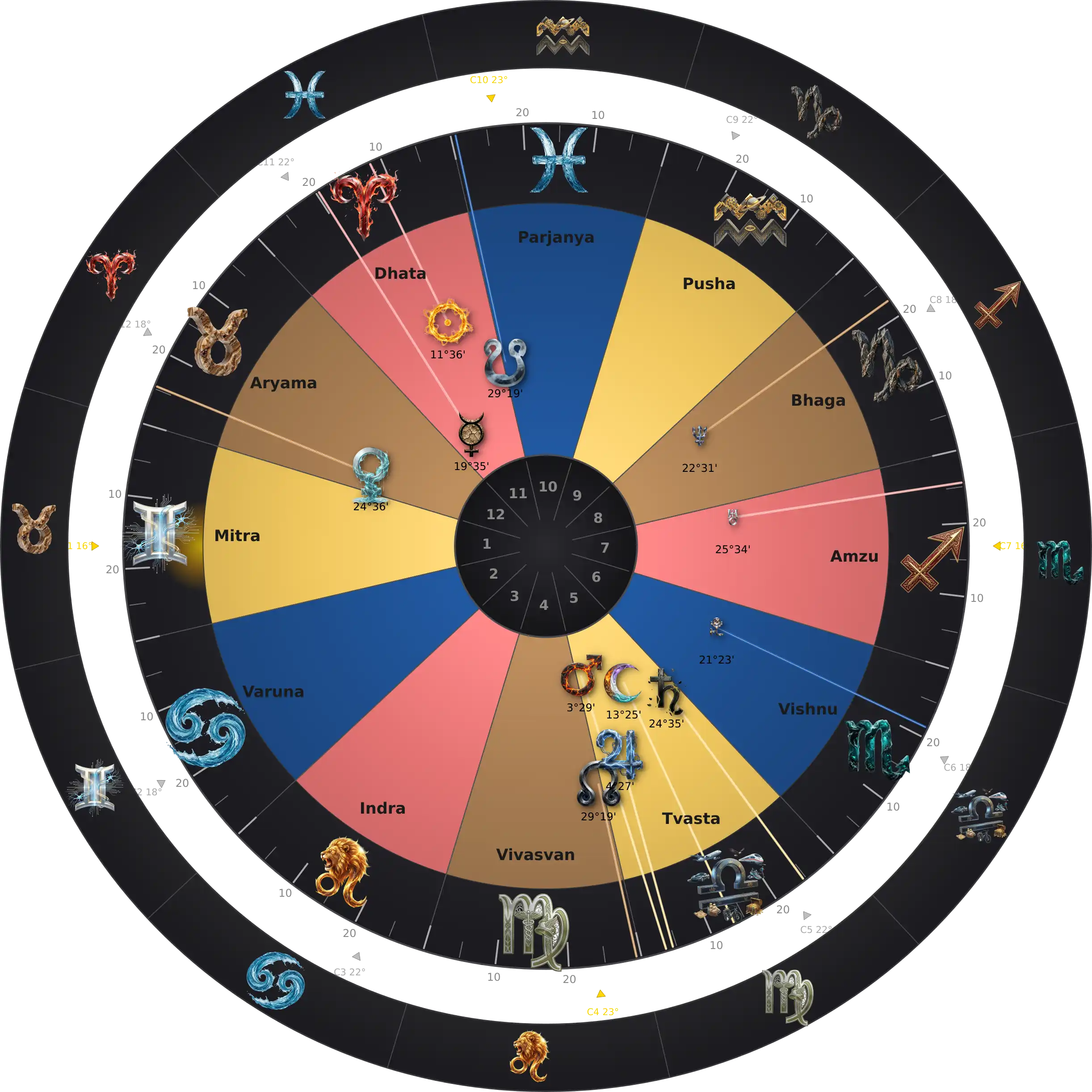
Rashida Jones (Born February 25, 1976) — 1/3 F
Role 1: Karen Filippelli — The Office (2006-2009)
Watch scene — Karen assertively confronts Jim during their breakup, declaring her refusal to leave Scranton despite their split.
The Story:
Karen Filippelli arrives at the Stamford branch as a sharp, self-sufficient sales rep who quickly establishes that she does not absorb the chaos around her — she responds to it directly and with precision. When she detects that Jim has unresolved feelings for Pam, she does not wait, hint, or manipulate indirectly. She confronts Jim face to face and demands an honest answer. When Jim finally admits "yes," she does not collapse inward — she pivots. She even goes directly to Pam and asks the same question, a move that required genuine courage and cost her emotional pain.
When Jim leaves her stranded in New York, she cries — the wound is real and human. But her very next move is to take the Utica regional manager role, build a new branch, and build a new life. By Season 5, she has a husband, a child, and zero resentment. She is not someone who circles, waits, or clings to what was lost. She acts, redirects her force, and moves forward. The pain comes from disconnection (Water moment), but the response is always direct action (Fire dominant).
Key Quotes:
-
"I am the regional manager of Dunder Mifflin Utica branch... when your boss isn't an idiot." — Self-assertion from a position of earned authority. Weaponized directness. Pure Fire identity protection.
-
To Jim in Branch Wars (paraphrase): "You should have called me before showing up here." — Even in an awkward re-encounter with an ex, she sets rules and enforces them professionally. No passive drama, no indirect pressure — just direct expectation.
-
After Jim admits feelings for Pam: She then immediately goes and asks Pam directly. No triangulating, no whisper campaigns, no waiting. She gathers the information herself, through direct confrontation.
How much Fire:
- Direct confrontation as first tool: Every major conflict Karen faces — Jim's lingering feelings, Pam's possible reciprocation, the Branch Wars prank — she addresses by walking up and asking the hard question. She does not maneuver around problems, she goes through them.
- Identity protection: When Michael and Dwight try to tell the women what to wear, Karen speaks up immediately and declares that she and the other female employees deserve respect. Classic Fire: "That is not who I AM."
- Conquest and career expansion: Karen does not stay where she is overlooked. She applies for the corporate position, loses, and immediately pivots to a bigger role elsewhere. She takes territory, does not wait for it.
- Shuts down Todd Packer in five seconds: Described specifically this way — no hesitation, no passive displeasure, no waiting for someone else to intervene. Instant, direct neutralization.
- Rebounds through action, not withdrawal: After a painful breakup, she does not dissolve. She builds a new branch, marries, has a baby. The forward motion is relentless.
How much Water:
- The crying at the fountain: Karen weeps after Jim abandons her in New York. This is a genuine moment of emotional pain centered on disconnection — the wound of losing a connection she invested in. This is Water pain briefly surfacing.
- Wanting the relationship to work despite warning signs: Karen pursues the relationship with Jim even as she senses his emotional unavailability. There is an element of wanting the connection to be real, staying longer than direct logic would dictate. A mild Water clinging pattern.
- Playful warmth in office interactions: Her humor and ease in office games (the chair prank with Jim, the Call of Duty jokes) can read as connective warmth — enjoying shared presence — rather than pure competitive energy.
Confidence: High
Role 2: Ann Perkins — Parks and Recreation (2009-2015)
Watch scene — Leslie Knope makes a heartfelt pinky promise to Ann Perkins, vowing to build a park and cementing their empathetic bond.

The Story:
Ann Perkins enters Parks and Recreation as a disgruntled citizen trying to get a hazardous pit filled — but within an episode she is absorbed into Leslie Knope's orbit, and that absorption defines her for most of the series. She does not push the story forward; she receives it. She is the warm, steady presence that Leslie orbits around, the emotional anchor, the cheerleader, the voice of grounded reason. She works as a nurse — a caring, effort-based profession — but the show does not characterize her through that labor. It characterizes her through her relationships.
Her most discussed and consistent trait is identity dissolution: Ann literally becomes whoever she is dating. With Andy she plays video games; with Chris she takes supplements and obsesses over fitness; with each new partner she adopts a new costume of personality. This is textbook Water receptivity — not strategic adaptation, not tactical calculation, but fluid absorption into another person's energy. She is not doing it deliberately. She simply takes the shape of the container she is placed in.
Her pain is always connection-based: a small void she is trying to fill, a craving for love that makes her stay too long in wrong relationships. Her decisions — accepting the PR job Leslie hands her, drifting back to Chris through the IVF process, following him to Ann Arbor on a gut feeling — arrive through intuition and circumstance rather than through drive and plan. When love is present, her distress vanishes. When it is absent, she floats.
Key Quotes:
-
"I just had a gut feeling that it wasn't right for me." — Ann reflecting on April's advice to trust instinct, the primary mode through which she navigates major decisions (intuition, not strategy).
-
Ann to herself on the breakup with Chris: She did not realize she had been broken up with. She discovered it through later investigation. The passivity here is not comedic exaggeration — it is the character's actual mode of receiving relational reality rather than directly confronting it.
-
Leslie on Ann: "You're a beautiful, talented, brilliant, powerful musk-ox." The show's consistent framing of Ann is as a presence to be celebrated by others — she is the recipient of Leslie's energy, warmth returned to the sender. Ann's primary function in the narrative is to RECEIVE and REFLECT.
How much Fire:
- Nursing career: Ann works as a nurse across the series, and nursing involves direct physical caregiving, effort, and skill. This is genuine Fire content. The limitation is that the show rarely dramatizes her professional effort — it functions as background characterization rather than active narrative weight.
- Late-season decision-making: By Season 5-6, Ann moves toward more direct choices — pursuing single motherhood, eventually co-parenting with Chris, leaving Pawnee. These involve a degree of active intent that is more Fire than pure passive drift. However, the framing remains relational (she does it to fill the void, to be near family, to follow Chris), not identity-driven.
How much Water:
- Identity dissolution into partners: The defining trait of her arc. She does not have a stable self independent of relationship — she absorbs the person she is with. This is not a weak expression of receptivity; it is the central mechanism of her character.
- Waiting and receiving over initiating: Her entry into the Parks Department is Leslie's doing. Her PR job is Leslie's appointment. Her return to Chris is mediated through IVF. Her departure from Pawnee follows Chris's job offer. She is consistently repositioned by external forces rather than self-generated drive.
- Gut feeling as the decision mode: The one moment she claims agency — the decision to leave Pawnee — is described as a "gut instinct," the signature cognitive mode of Water (intuition, sensing without analysis), contrasted directly with Fire's logical, strategic planning.
- Connection-based pain and mood structure: Her distress is always relational. Pain arrives with disconnection and dissolves with love. The pattern of cycling through relationships while seeking to fill a "void" matches the profile's craving for soul-deep connection.
- Presence as her primary gift: She is the show's emotional anchor not through what she does but through what she is — warm, grounded, beautiful. Leslie's stream of affectionate compliments frames Ann as a being whose value is intrinsic, radiant, and received rather than earned through action.
Confidence: High
Role 3: Marylin Delpy — The Social Network (2010)
Watch scene — Marylin Delpy calmly dissects Mark Zuckerberg's character, revealing his hidden vulnerabilities and strategic manipulations.
The Story:
Marylin Delpy is a second-year legal associate attached to Mark Zuckerberg's defense team during the deposition proceedings at the center of The Social Network. She is not the lead attorney — she is present, observing. Her role is technically focused on voir dire: reading juries, assessing how defendants will appear to a panel of ordinary people. That job description is itself an act of pure Water — she does not argue, she reads. She does not fight, she perceives.
Throughout the film's deposition sequences, Marylin sits quietly, watching. She absorbs the emotional dynamics in the room with an almost eerie accuracy. She does not challenge Mark Zuckerberg through confrontation; she simply sees through him. Her insight is not strategic or analytical — it is intuitive. She grasps that the numbers about emotional testimony exaggeration are her way of acknowledging reality without drama. She understands before being told.
The film's emotional peak for her character comes at the very end, when the proceedings wind down. Rather than departing as a professional, she offers Mark a moment of rare humanity: "You're not an asshole, Mark. You're just trying so hard to be." This line is not a directive. It is not a fight. It is a receiving — she has absorbed who he really is across all the hours of legal wrangling and delivers the truth back to him gently, without agenda. Her role in the story is entirely defined by her capacity to be present, to feel what others cannot, and to offer connection without demanding anything in return.
Key Quotes:
-
"You're not an asshole, Mark. You're just trying so hard to be." — Delivered quietly at the end, this line encapsulates the Water gift: she received his truth without him having to say it, and offers it back as compassion rather than judgment.
-
"When there's emotional testimony, I assume 85% of it is exaggeration. / Perjury. Creation myths need a devil." — She reads the narrative underneath the legal proceedings intuitively. She is not analyzing facts; she is sensing the shape of the story. This is consciousness-level reading, not tactical planning.
-
"I know that [you're not a bad guy]." — A simple line, but it lands with weight because she genuinely received and held Mark's humanity across the entire film. She did not work to understand him — she simply did.
How much Fire:
- She is present in a professional, competent capacity. She has a legal job, she performs it. There is a thin layer of active participation — she is licensed, she shows up, she contributes to the team. This minimal action prevents a 0% score.
- Her voir dire specialty involves assessing strategy around jury perception, which has a faint analytical dimension that edges toward Fire's tactical thinking — though even here she reads people through feeling, not logic.
- She speaks plainly and directly when she does speak, without circling or using manipulation. That directness is a Fire quality, even if it is applied sparingly.
How much Water:
- Her entire narrative function is RECEPTIVITY. She sits in depositions, absorbs the dynamics of the room, and understands Mark Zuckerberg emotionally before he understands himself. This is the defining Water act: receiving truth without effort or action.
- She works through INDIRECTION throughout. She never confronts Mark directly about his behavior. She never argues. She circles, watches, and when she finally speaks personally to him, it is gentle and oblique — "you're just trying so hard to be [an asshole]" rather than "you are cruel."
- Her voir dire role is inherently a Water specialty: reading what a jury will FEEL when they see a defendant. Not arguing facts, not building strategic plans — reading emotional reality. Her expertise is in the invisible, the felt, the perceived.
- The film positions her explicitly as the character who "represents the audience" — the empathetic receiver who processes the story on behalf of everyone watching. She is a pure consciousness vessel. She does not shape events; she witnesses and reflects them.
- Her final gesture toward Mark is a gift of PRESENCE and CONNECTION: she offers him the truth of who he is, not to fix him, not to win anything, but because she genuinely saw him. This is soul-deep connective love expressed in the Water mode — "I feel you without words" made concrete.
Confidence: High
Career Pattern: Only one role (Karen Filippelli) aligns with Fire. The majority pattern is Water — indirection, emotional attunement, and proxy-based operation define this actor's most common on-screen mode.
Rashida Jones — Aditya Zodiac Birth Chart Elements
Dominant Element (Aditya): Water (37.5%)
Rashida Jones — Tropical Classic Birth Chart Elements
Dominant Element (Tropical): Air (37.5%)
Alignment Note: Agent judged 1/3 roles as Fire-dominant. Aditya birth chart shows Water-dominant (37.5%). Tropical birth chart shows Air-dominant (37.5%). Agent results aligns with Aditya Zodiac, diverges with Tropical.
View Birth Chart — Rashida Jones
Outer wheel: Tropical Classic — Inner wheel: Aditya Zodiac
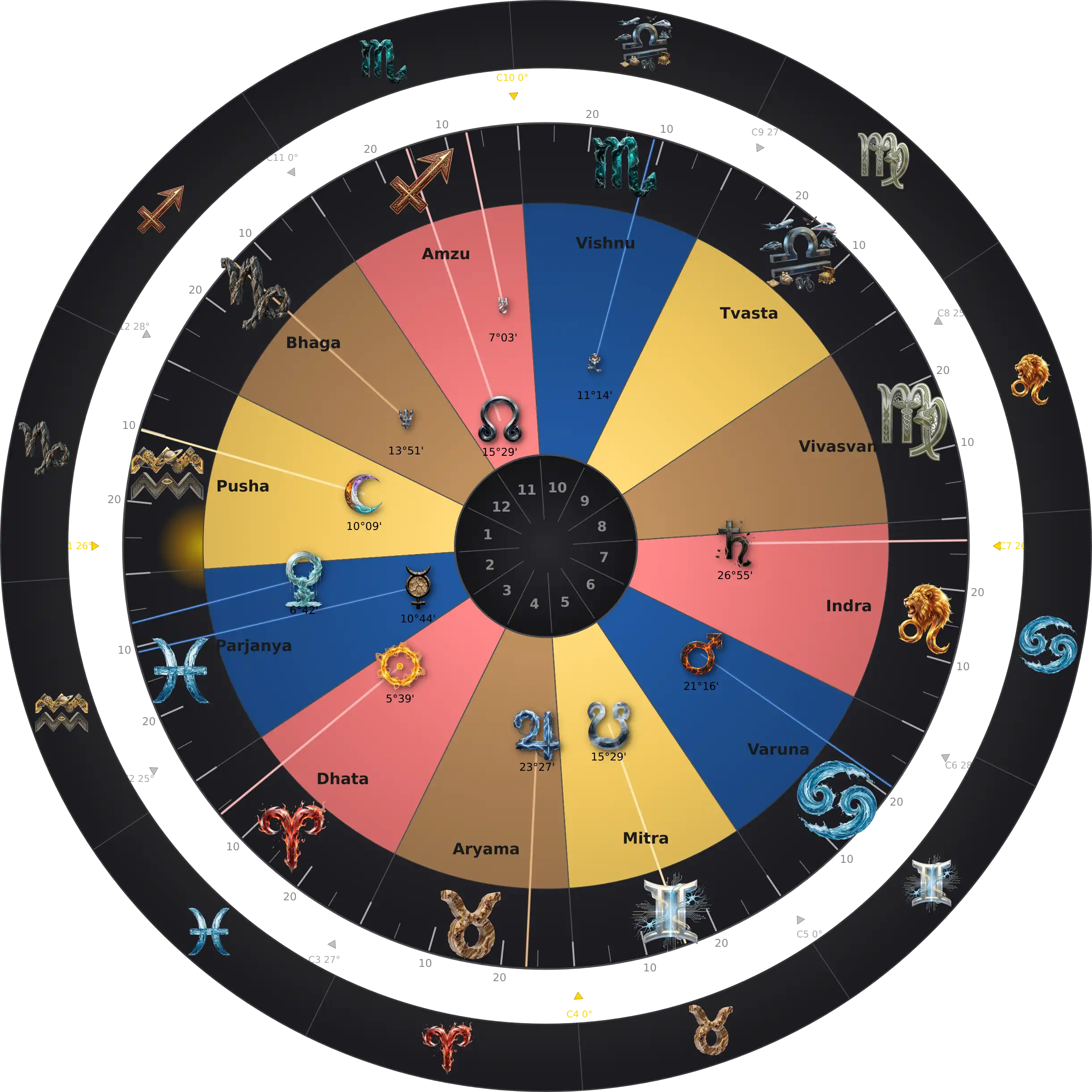
Robert Sean Leonard (Born February 28, 1969) — 0/3 F
Role 1: Dr. James Wilson — House M.D. (2004-2012)
Watch scene — Wilson shares a heartbreaking farewell with Amber as she succumbs to her injuries, embodying profound emotional depth.
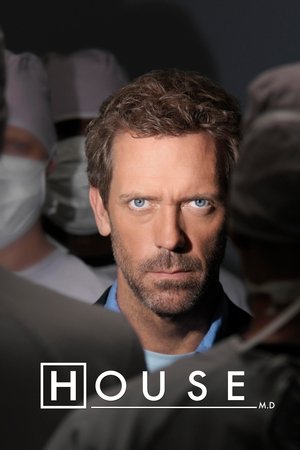
The Story:
James Wilson is the oncology chief at Princeton-Plainsboro and Gregory House's best friend across eight seasons of House M.D. On the surface he appears to be the show's moral compass — calm, generous, compassionate to dying patients. Beneath this warmth lies a man who does not know who he is outside of connection to others.
His three failed marriages all follow an identical arc: he chooses broken women, nurtures them back to health, and then loses interest the moment they no longer need him. The relationship is the point — the FEELING of being necessary to someone in pain. When that pain resolves, the soul-connection Wilson craves evaporates, and he quietly exits. This is not strategic calculation; it is an unconscious, intuitive loop driven entirely by the need to feel deeply connected to suffering.
With House, Wilson enables addiction, lies to police, donates a kidney, and absorbs years of manipulation — all without ever directly confronting the dysfunction. When he does confront House, it is typically via indirect leverage: orchestrating situations through Cuddy, or withdrawing warmth as passive pressure. He circles the problem, rarely driving at it head-on.
When Amber dies, Wilson does not rage. He stills, re-evaluates his entire life, considers leaving medicine. His grief is total re-immersion — the pain floods his consciousness and reconstitutes his identity. This is Water trauma: connection-based, wave-like, existentially disorienting. Wilson is a man who gives everything through presence and feeling, and has almost no independent self beneath it.
Key Quotes:
-
"I'm not sure we ever were [friends]." — Said to House after a breaking point. This quote reveals the core wound: Wilson had been pouring soul-deep connective love into a relationship that House treated as transactional. The pain is not "you failed to protect me" (Fire) — it is "you never truly felt the connection I thought we had" (Water: disconnection as the deepest wound).
-
House's description of Wilson: "Emotional vampire — seeks out people in pain whom he can comfort and provide for."* — This external label nails Water unhealthy expression precisely: using others' suffering as the vehicle for receiving connection, without directly acting to fix anything.
-
House (in the finale): "I'm dead, Wilson. How do you want to spend your last five months?" — Wilson's transformation at the end of the series — choosing to accompany a faking-his-death House on a motorcycle journey instead of taking cancer treatment — is the ultimate Water act: he chooses PRESENCE and MEANING over survival-effort. He does not fight the cancer aggressively; he chooses to feel fully alive in connection rather than fight to endure alone.
How much Fire:
- Moments of direct confrontation: There are isolated scenes where Wilson stands firm — refusing to help House escape the psych ward, refusing to take the fall for vandalism. These brief assertive acts register as weak Fire energy.
- Professional achievement: He is chief of oncology — a position requiring consistent, directed effort and institutional work over years. Sustained professional presence implies some underlying capacity for disciplined action.
- Donating a kidney: The act of donating an organ is a physically effortful, body-involving act that leans toward Fire (direct physical sacrifice). However, the motivation is overwhelmingly driven by connective love, not protective drive.
- Pressuring House to take risky medication (Amber crisis): In "Wilson's Heart," Wilson pushes House into dangerous experimental treatment — a moment of direct, aggressive insistence that serves his connective need (saving Amber). The drive is Water connection; the method briefly resembles Fire direct action.
How much Water:
- Indirect manipulation as default mode: Wilson routinely achieves outcomes by working through third parties (Cuddy, the board, other staff) rather than confronting House or problems directly. When he engineers situations, it comes from intuition about people's emotional states, not tactical strategic planning.
- Connection-dependency as identity: His entire character arc is structured around the terror of not being needed or loved. He cannot define himself outside his relationships. He places himself in the path of others' pain specifically to feel the warmth of being essential to their healing.
- Wave-like emotional pattern: After Amber's death, Wilson's grief does not produce driven action — it produces withdrawal, identity crisis, contemplation of resignation. The pain floods him completely, then gradually recedes. This oscillation (despairing, then slowly re-engaging) matches Water trauma precisely.
- Presence-based patient care: Wilson's famous bedside manner is not about effort or strategy — it is about being present with dying patients. He comforts through emotional availability, warmth, and witnessing. He donates blood and organs from an overflow of compassion, not from a drive to conquer or solve.
- Romantic cycle matches Water unhealthy shadow: Gravitates to broken partners, nurtures via connection, loses interest when they heal (when the soul-deep need-feeling evaporates). He does not conquer or protect through effort; he nourishes through presence, then floats away when the connection loses its emotional charge.
Confidence: High
Role 2: Neil Perry — Dead Poets Society (1989)
Watch scene — Neil Perry's passionate performance as Puck reveals his deep emotional vulnerability and defiance against his father's will.

The Story:
Neil Perry is a senior at Welton Academy, a prestigious and oppressive prep school. Popular, warm, and intellectually alive, he becomes the most fervent disciple of English teacher John Keating, whose philosophy of carpe diem — seize the day — strikes him as a revelation. Neil revives the Dead Poets Society, a secret poetry reading club in a local cave, and in doing so channels something deeper than mere rebellion: a search for meaning, connection, and the experience of being truly alive.
When Neil discovers acting — specifically the role of Puck in A Midsummer Night's Dream — he describes it as the first time in his life he knows what he wants. But his overbearing father has already mapped his future: Harvard, medicine, obedience. Rather than confront his father openly, Neil lies, forges a permission letter, and hides his participation in the play. When his father discovers the truth and appears backstage after the triumphant performance, Neil does not fight. He goes quiet. Later, when his father announces military school, Neil cannot voice a single objection. He retreats to his father's study, puts on his Puck crown — the symbol of the one night he felt fully alive and recognized — opens the window to the winter air, and shoots himself. His final act is private, symbolic, and wordless. He exits rather than confronts.
Key Quotes:
-
"For the first time in my whole life, I know what I want to do. And for the first time, I'm going to do it! Whether my father wants me to or not. Carpe diem!" — A burst of declared passion and momentary resolution that quickly collapses when reality arrives.
-
"I just talked to my father. He's making me quit the play at Henley Hall. Acting's everything to me. But he doesn't know! I can see his point... He's planning the rest of my life for me and he's never asked me what I want." — The wound is clear: not "he doesn't support me," but "he's never asked what I want." He craves being seen and known.
-
[Silence, backstage after the play, confronting his father] — When his father asks what he has to say, Neil produces nothing. The scene is defined by withdrawal, not resistance.
How much Fire:
- Neil takes concrete initiative: he is the one who asks Keating about the Dead Poets Society and personally organizes its revival in the cave. This is a real ACT, not receptivity.
- He pursues acting through actual rehearsal effort, learning lines, performing on stage. The theatrical result involves discipline and effort-based skill, not effortless natural grace.
- His carpe diem declaration has a brief warrior quality — "whether my father wants me to or not" — a momentary refusal to submit to authority.
- He forges a letter and lies to participate in the play, which requires deliberate planning and initiative, even if indirect.
- He is a natural leader whom others gravitate toward — his brotherhood with Todd, Charlie, Knox, and the group has a concrete, doing-together quality.
How much Water:
- Neil's core wound is not physical or survival-based. His pain is entirely about not being known — his father has "never asked what I want." This is the Water wound precisely: absence of love/recognition, not absence of support or effort.
- He handles conflict through indirection and avoidance, not direct confrontation. He lies, forges letters, hides the truth — never fights his father face to face in a sustained way.
- When his father finally confronts him directly, Neil goes completely silent. He cannot produce a word. This collapse is the opposite of the Fire fight-back reflex.
- His emotional experience tracks whether he feels seen: on stage as Puck, he glows; under his father's gaze, he extinguishes. The pain is not grinding and consistent — it shifts with the feeling of connection.
- His final act is profoundly indirect and symbolic. He does not attack, rage, or fight. He puts on his crown (meaning, soul, the role in which he felt real) and quietly exits through a window in the dark of night. This is indirection taken to its ultimate conclusion.
- His relationship with Keating is built on emotional recognition — "I feel seen by you" — not on tactical mentorship. The soul-deep connection with a father figure he never had is a Water longing.
Confidence: Medium
Role 3: Claudio — Much Ado About Nothing (1993)
Watch scene — Claudio publicly shames Hero at their wedding, accusing her of infidelity with cruel, manipulative words.

The Story:
Claudio is a young Florentine soldier who returns from war and immediately falls helplessly in love with Hero, Leonato's daughter. His love is not earned through effort or courtship — it arrives as an overwhelming feeling the moment he sees her, and it is entirely emotion-driven. Rather than approach Hero himself, he asks Don Pedro to woo her on his behalf at a masked ball, an act of quintessential indirection — he cannot even pursue love directly. This delegation of his most intimate desire to another man is the first and loudest signal of his nature.
He is immediately destabilized when Don John plants suspicion that Don Pedro is wooing Hero for himself. He does not confront Don Pedro directly, does not investigate, does not demand proof. He simply collapses inward. Once the engagement is secured, he co-operates passively in the scheme to trick Benedick and Beatrice into love. He does no original planning — he follows Don Pedro's lead.
The catastrophe arrives when Don John arranges a staged deception making Hero appear to have taken a lover. Claudio does not investigate. He does not confront Don John. He does not question the manipulator. Instead he decides immediately — before even witnessing the "evidence" — to publicly shame Hero at the altar. The attack is not physical or direct. It is social, reputational, and devastating. He strikes at Hero's most vulnerable point — her honor — in the most indirect and humiliating fashion possible: through the mouth, in public, before witnesses.
When Borachio confesses and the truth is revealed, Claudio's grief is genuine but brief. The moment Hero is alive and his, his anguish evaporates almost completely. He accepts penance obediently — he will marry whoever Leonato says. He does not take autonomous moral action; he receives his redemption like he received his engagement.
Key Quotes:
-
"Silence is the perfectest herald of joy: I were but little happy if I could say how much." (Act 2.1) — Claudio cannot even articulate joy with his own active voice. His deepest emotion exceeds him, renders him passive and speechless. This is characteristic Water consciousness: feeling so large it overrides direct expression.
-
"If I could see anything tonight why I should not marry her, tomorrow in the congregation, where I should wed, there will I shame her." — Spoken before he even witnesses the planted evidence, this reveals the attack impulse already decided upon: not a direct confrontation, not rational investigation, but a pre-planned indirect social assault on her weakest point. Strikes dirty, aims at reputation, maximum damage with minimum direct engagement.
-
"Oh what men dare do! what men may do, not knowing what they do!" — Even Claudio's self-recognition of fault is framed passively: it was not knowing, not deliberate evil. He positions himself as someone who was acted upon by circumstance, not as an agent who chose wrongly.
How much Fire:
- Military background: Claudio is a soldier who has served in a war. This provides a thin structural association with Fire, but in the film's actual behavior the soldier identity is entirely absent. He never fights, never protects, never acts from martial energy.
- Public act of confrontation at the altar: Claudio does stand before the assembled crowd and makes an open accusation. There is a surface appearance of direct action here — but the method is rhetorical social violence, not honest confrontation. He targets the weakest person in the room (Hero, with no social power to fight back) in a forum designed for maximum humiliation. The profile rules specify: indirect attack aimed at weak points = Water.
- Matchmaking co-conspiracy: He actively participates in the scheme to bring Benedick and Beatrice together. This involves some planning and coordination. However, he is a follower of Don Pedro's scheme, not its originator. The planning, the strategy, the creative conception are not his. He executes as directed. This is a weak Fire signal at most.
- Name and honor culture: Claudio belongs to a world of masculine honor, which can seem Fire. But his concern for honor is entirely about social perception — how he appears to others — not about identity self-defense. It is reputation anxiety (what others see) rather than identity assertion (who I am). This makes it Water: the self is constituted by connection to others' regard.
How much Water:
- Indirection in love: Claudio cannot pursue Hero himself. He uses Don Pedro as a proxy to woo on his behalf. This is textbook Water — getting what he wants through another agent rather than direct action.
- Receives deception passively: When Don John plants the lie about Hero's infidelity, Claudio does not investigate, confront, or reason his way through it. He simply absorbs the narrative and reacts with catastrophic feeling. He is a receiver of impressions, not an actor who seeks truth.
- Strikes indirectly and at weak points: His revenge/reaction is not a duel, not a confrontation with the actual deceiver Don John, not a direct fight. It is a public shaming at the altar — striking at Hero's honor, her social reputation, in front of a crowd. Hidden malice, maximum impact, delivered via words and social ritual. This matches Water unhealthy: "fights dirty, strikes at weak points."
- Mood swings: wave pattern: His grief over Hero's supposed death is intense but dissolves the moment she reappears alive. The pain was real but not grounded — it vanishes instantly when love returns. This oscillation between despair and joy is precisely the Water emotional pattern: "pain comes and goes in waves; when love returns, pain vanishes instantly."
- Redemption through reception, not action: His penance is passive compliance — marry whoever Leonato assigns. He does not design his own redemption. He accepts it as given, like he accepts everything else from external authority.
Confidence: High
Career Pattern: All three roles align with Water — receptivity, indirection, and connection-seeking define Robert Sean Leonard's consistent on-screen behavioral signature.
Robert Sean Leonard — Aditya Zodiac Birth Chart Elements
Dominant Element (Aditya): Earth (56.2%)
Robert Sean Leonard — Tropical Classic Birth Chart Elements
Dominant Element (Tropical): Fire (56.2%)
Alignment Note: Agent judged 0/3 roles as Fire-dominant. Aditya birth chart shows Earth-dominant (56.2%). Tropical birth chart shows Fire-dominant (56.2%). Agent results diverges with Aditya Zodiac, diverges with Tropical.
View Birth Chart — Robert Sean Leonard
Outer wheel: Tropical Classic — Inner wheel: Aditya Zodiac
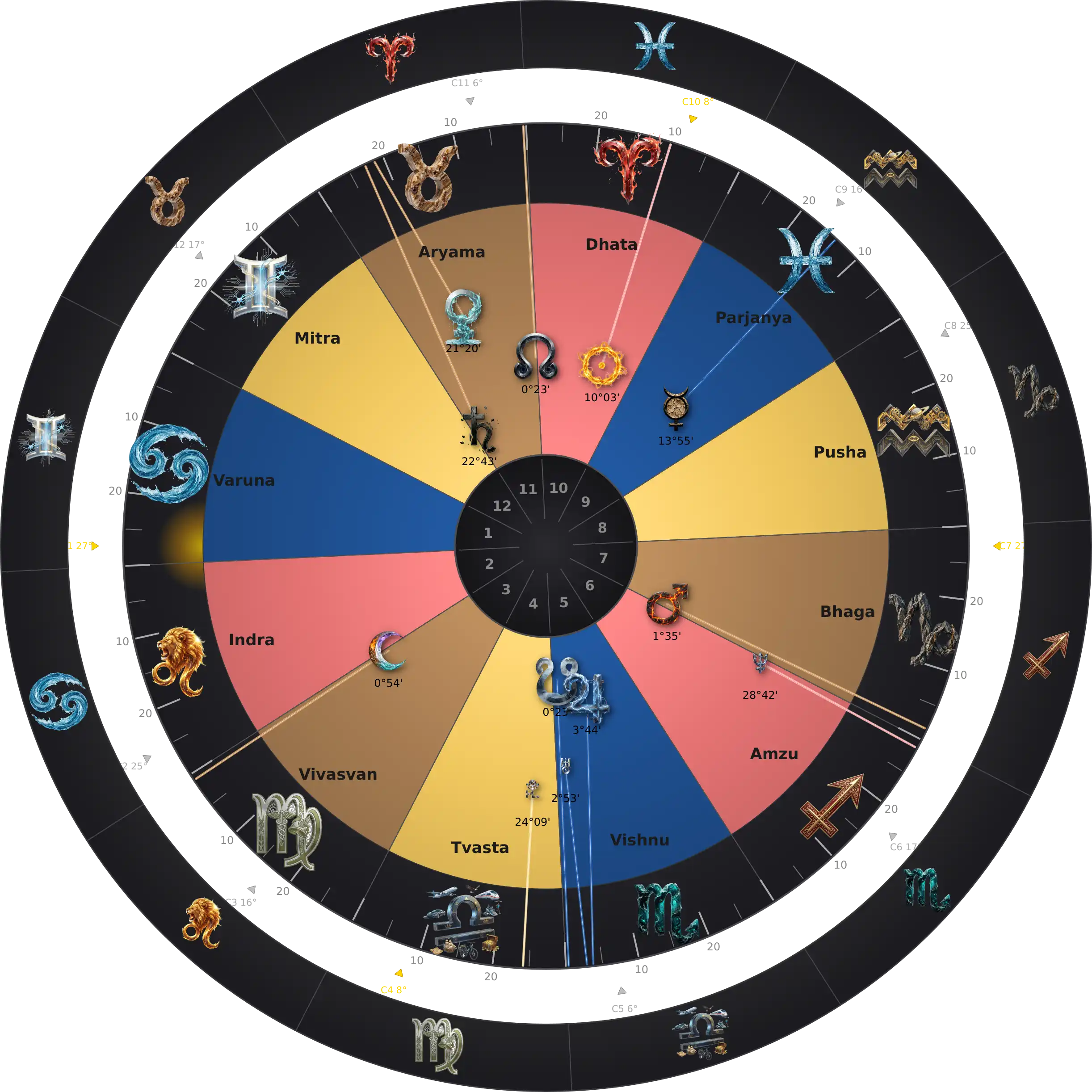
"They call me Mr. Tibbs" is not a Water statement. It is not gentle or receptive or accommodating. It is a direct, unwavering assertion of identity in the face of contempt. Sidney Poitier scored 3/3 Fire across every role we tested. If you wanted a single human argument for why Pisces might map to Fire, he might be it.
Sidney Poitier (Born February 20, 1927) — 3/3 F
Role 1: Virgil Tibbs — In the Heat of the Night (1967)
Watch scene — Virgil Tibbs powerfully asserts his identity and challenges racial prejudice with his iconic declaration.
The Story:
Virgil Tibbs is a Black Philadelphia homicide detective who is passing through Sparta, Mississippi by train in 1967 when a white industrialist is murdered. He is immediately arrested on suspicion simply because of his race. Rather than submitting, he presents his badge and credentials, forcing local police chief Bill Gillespie to accept his presence. Tibbs is then coerced into staying to help solve the case — territory hostile at every turn.
What follows is a systematic dismantling of amateur assumptions. Tibbs spots forensic clues the local police missed, methodically exonerates wrong suspects, and pursues every lead regardless of local social dynamics. When wealthy plantation owner Endicott slaps him across the face during questioning, Tibbs immediately returns the slap — a moment of electric, direct confrontation. He does not strategize around the insult; he meets it head-on. When local men attempt to run him out of town through intimidation and pursuit, he does not flee permanently — he stays and completes the work.
His famous declaration, "They call me MISTER Tibbs!", issued with composed ferocity rather than shouted rage, is the defining signature of his identity: an identity he refuses to let anyone diminish, confiscate, or redefine. By the film's end, through professional action alone, he has earned Gillespie's genuine respect and solved the case.
Key Quotes:
-
"They call me MISTER Tibbs!" — Direct identity assertion. Not a plea, not an appeal to emotion. A statement of who he IS, delivered without flinching.
-
"I'm going someplace you can't go, Gillespie. I can go places in this town that you can't." — Strategic use of his position, but the underlying engine is getting the job done — using every available resource to complete the investigation.
-
[After being slapped by Endicott] — He slaps back immediately. No calculation, no waiting. Direct physical reciprocity, nose-to-nose.
How much Fire:
- Identity as the central battlefield. Every confrontation in this film — the arrest, the "boy" remark, the slap, the attempted intimidation — is an attack on who Tibbs IS. His response is always the same: defend the identity directly, openly, without retreating. This matches Fire's Key Identifier precisely: "That's not ME" and "I won't change who I am for you."
- Tireless sustained action under pressure. He does not simply react. He actively investigates, pursues clues, interviews witnesses, generates leads, and keeps working even when Gillespie withdraws protection and local hostility peaks. This is sustained effort — the signature of Fire.
- Direct confrontation, not indirect maneuvering. When Endicott strikes him, Tibbs does not wait, circle, or plot revenge from the shadows. He returns the slap immediately. When Gillespie insults him, he responds to his face. There is no hidden scheme here — the threat is answered directly, in the open, in the moment.
- Professional excellence through mastery and intelligence. The profiles specify that genius, brilliance, and tactical use of intelligence belong to Fire. Tibbs is "constantly the smartest man in the room," and he uses forensic method and analytical skill — his HEAD — to dominate the investigation. This is effort-based intelligence, not intuitive knowing.
- Protection of his own dignity through standing firm, not through withdrawal. Despite multiple attempts to physically remove or intimidate him out of town, Tibbs does not leave. He persists. This is the "refuses to be expelled" structure — a character who holds the ground of his identity through presence and continued action.
How much Water:
- Composure and controlled delivery. Tibbs does not rage explosively. His defiance is cool and precise — the famous line is not shouted but stated with contained force. This surface quality of controlled stillness reads superficially as Water's receptivity. However, the control is strategic composure in service of identity defense, not indirection or emotional receptivity. It is weighted lightly here as a stylistic trait, not a structural one.
- Relational evolution with Gillespie. By the film's end there is genuine mutual respect — Gillespie tells him to "take care of yourself." This is a soul-level development in a relationship, which has a mild Water texture. However, this is primarily earned through Tibbs' competence and action rather than through emotional presence or manipulative charm.
Confidence: High
Role 2: Mark Thackeray — To Sir, with Love (1967)
Watch scene — Thackeray asserts authority, transforming a chaotic classroom into a respectful learning environment through decisive action.
The Story:
Mark Thackeray is an unemployed Black American engineering graduate who, unable to find work in his field, accepts a temporary teaching post at a rough London East End school. His class — mostly white working-class teenagers rejected from other schools — greets him with relentless disruption, mockery, and escalating provocations. Thackeray initially absorbs these attacks with disciplined calm, resisting bait, maintaining composure through act of will, not passive withdrawal.
The decisive crack comes when a student burns a sanitary towel in the classroom grate. Thackeray explodes with open, direct anger — orders boys out, reprimands the girls face to face using blunt language. He is immediately disturbed not by the students but by himself: "I let kids manipulate me." He returns, not to retreat or circle the problem, but to set new terms entirely. He throws away the textbooks, institutes adult-level courtesy (surnames, "Miss," "Sir"), takes students to museums, discusses sex, marriage, and social reality. He redesigns the entire classroom contract through deliberate, structural action.
When ringleader Bert Denham challenges him to a physical fight, Thackeray does not deflect or report him — he accepts, wins, then immediately tends to Denham's injuries and offers mentorship. This single sequence — direct confrontation followed by decisive, generous follow-through — converts the class's hostility to loyalty. At film's end, a lucrative engineering job offer arrives. Thackeray reads it, receives the students' departing gift (a silver tankard engraved "To Sir, with Love"), tears up the job offer, and pins on his flower. He stays. Not from passivity — from a clear, active, identity-defining choice.
Key Quotes:
"I let them manipulate me." — Said by Thackeray to himself after the stove incident. This is pure Fire internal language: the wound is not "nobody loved me" but "I allowed my competence and self-possession to be compromised." The self-criticism is about identity and control, not emotional disconnection. He immediately acts to repair it.
"I teach you the truths, my truth." — Direct assertion of self and vision. Not an invitation to feel together; a declaration of identity and method. "This is who I am and what I stand for" — the Fire signature: identity protection stated openly.
[To Denham, after the fight] (paraphrased): Rather than punish, he extends mentorship. This appears nurturing but is framed as a Fire brotherhood act — the fight established mutual respect through direct physical effort; the mentorship is its earned continuation.
How much Fire:
- Physical duel with Denham: Thackeray does not redirect, report, or manipulate the confrontation. He accepts the challenge directly and wins through physical action. Classic Fire direct-force response. The follow-up mentorship is a Fire brotherhood move, not soft connection.
- Institutional redesign through deliberate action: Discarding textbooks, instituting new classroom rules, field trips to museums — this is not reactive warmth. It is structural redesign through sustained direct effort and deliberate leadership.
- Identity-based self-critique after stove incident: "I let kids manipulate me" is a Fire wound — his identity as a competent, self-possessed adult was temporarily breached. He treats this as a failure of self, not a failure of connection.
- Job refusal as active identity choice: Tearing up the engineering job offer is a decisive, self-defining act. He does not drift into teaching or wait for a sign — he chooses it in direct, irreversible action. The Fire signature: "this is who I am, deal with it."
- Consistent demeanor under sustained pressure: Fire is CONSISTENT. Thackeray holds his ground through weeks of provocation without mood swings, without fantasy retreats, without manipulating students indirectly. His steadiness is not the fluid, absorptive adaptability of Water — it is the grinding, structural endurance of Fire.
How much Water:
- Warmth as presence: There are moments where Thackeray's effect on the class is conveyed through quiet, radiating dignity rather than visible effort — students drawn to him partly by who he is, not only what he does. This carries a faint Water resonance.
- Self-reflection pause: After losing his temper, he retreats briefly to the staff room. This single beat of withdrawal before re-engaging suggests a brief receptive, inward cycle — though it resolves immediately into direct action, limiting its Water weight.
- Emotional attunement to students: His shift to treating students "as adults" reflects genuine feeling-based reading of who they are beneath the behavior. He senses what they need rather than purely diagnosing it analytically.
- Acceptance of the teaching role: He did not seek out this path — he landed in it. The beginning of the film has a receptive quality (things happening TO him). But this is context, not sustained behavioral pattern.
- Final scene softness: Pinning the flower to his lapel after the decision carries a quiet, almost contemplative quality — more Water in tone than the rest of the film.
Confidence: High
Role 3: Homer Smith — Lilies of the Field (1963)
Watch scene — Homer defiantly asserts his personal will to build the chapel himself, showcasing strong willpower.
The Story:
Homer Smith is a free-wheeling, itinerant Baptist ex-GI travelling the American Southwest alone in his station wagon. He stops at a remote Arizona farm intending nothing more than a quick water refill — and within minutes has agreed to fix the roof of a group of East German nuns who cannot pay him. He stays for days, then weeks. Under the iron will of Mother Maria, who is utterly convinced God sent him to build a full chapel, Homer is gradually drawn from reluctant handyman to committed builder.
His arc is structured entirely around escalating ACTION. He haggles with Mother Maria for wages, loses the argument, but keeps working. He drives the sisters to Sunday Mass. He gives spontaneous English lessons. He buys lollipops for the nuns on a whim. He drives to a diner to get the breakfast he wants rather than eating the nuns' meager rations — establishing his autonomy clearly and without apology. When the chapel project grows beyond what the nuns can fund, he takes a second job to buy materials himself. He rallies the local Mexican-American community, turning the build into a collective labor effort. He teaches the nuns to sing the Baptist hymn "Amen." On the eve of the chapel dedication, he signs the wall — a private mark of pride and identity — and slips away at night rather than endure a formal goodbye. The nuns' voices carry the Amen into the desert behind him.
Key Quotes:
"I'm a free man. I work when I want to." — A direct statement of identity (Fire: "That's not ME, deal with it"). Homer is protecting his sense of self and independence. This is not the language of someone waiting to receive — it is a statement of autonomous will.
[After being quoted "Consider the lilies of the field..." by Mother Maria] Homer argues his right to wages before ultimately conceding — a direct, open negotiation where he states his position plainly. Fire: makes threats and positions openly; you always know where they stand. He argues directly and relents on his own terms, not by being manipulated.
[Signing the chapel wall before leaving] An action of pure identity-preservation — "I built this, I was here." Fire: protects identity. Even in humility, the marker of self (the signature) is placed directly.
How much Fire:
- Tireless physical labor without pay. Homer builds a full chapel by hand over many weeks — mixing concrete, laying foundations, working through material shortages. This is the textbook Fire pattern: effort-based action as the primary mode of self-expression. The profile description says "works 10 years without giving up, refuses to quit" — Homer never quits even when he has no financial incentive to continue.
- Mobilizing and leading the community. He organizes local Mexican-American men to contribute labor and materials. He does not wait for help to arrive; he recruits it actively and directs the effort. This is leadership through action, a core Fire marker.
- Open negotiation and direct confrontation of authority. His exchanges with Mother Maria are not passive or indirect. He hauls back at her, states what he wants (payment), argues scripture with her. When he loses the argument he accepts it and keeps going — the Fire pattern of fighting directly and then channeling energy into continued effort.
- Identity under pressure. His ongoing refusal to be defined by Mother Maria's framework — calling him "Schmidt," assigning him a divine purpose — is a constant Fire identity-defense. He accepts the work on his own terms, not hers. He signs the chapel to place his mark. He leaves on his timetable.
- Active teaching. Homer teaches the nuns English and teaches them to sing "Amen." Teaching as doing, as a gift of skill and effort transferred outward — Fire effort-based caregiving rather than passive emotional presence.
How much Water:
- The quiet, indirect departure. Homer does not confront Mother Maria with a farewell. He slips away at night to avoid what he calls a too-sad goodbye. This one moment of indirection — choosing absence over direct confrontation with emotion — carries a Water trace. It is the only major scene where he works around a situation rather than through it.
- Emotional warmth without a functional goal. The lollipops, the spontaneous English lessons, driving nuns to Mass without being asked — these small acts have no strategic purpose. They emerge from warmth and connection, not from drive or ambition. In a predominantly Fire character, this softness registers as a secondary Water quality: the capacity to give presence as comfort.
- Letting Mother Maria's faith pull him rather than acting on his own conviction. In the early-to-middle arc, Homer does not decide to build a chapel out of his own initiative — he is pulled into it by the nun's certainty. For a window of the film he is in a receptive mode, being moved by someone else's vision. This is a Water quality — receiving an external force and responding to it. However, this phase passes: once he commits, the action is entirely his own.
Confidence: High
Career Pattern: All three roles align with Fire — direct action, identity protection, and sustained effort define Sidney Poitier's on-screen behavioral signature across diverse characters and genres.
Sidney Poitier — Aditya Zodiac Birth Chart Elements
Dominant Element (Aditya): Fire (56.2%)
Sidney Poitier — Tropical Classic Birth Chart Elements
Dominant Element (Tropical): Water (56.2%)
Alignment Note: Agent judged 3/3 roles as Fire-dominant. Aditya birth chart shows Fire-dominant (56.2%). Tropical birth chart shows Water-dominant (56.2%). Agent results aligns with Aditya Zodiac, diverges with Tropical.
View Birth Chart — Sidney Poitier
Outer wheel: Tropical Classic — Inner wheel: Aditya Zodiac
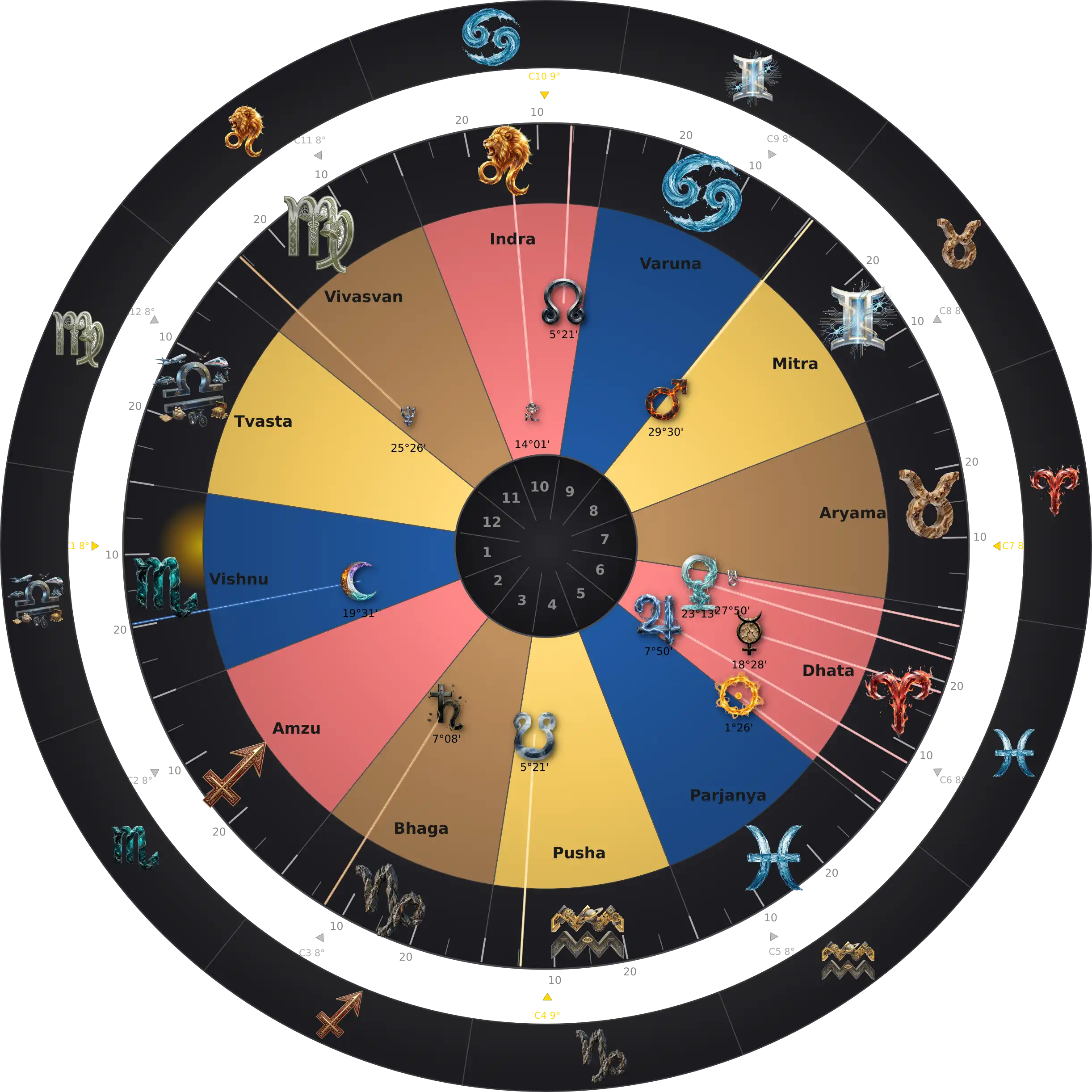
Glenn Close (Born March 19, 1947) — 1/3 F
Role 1: Alex Forrest — Fatal Attraction (1987)
Watch scene — Alex Forrest's turbulent obsession and desperate rage culminate in the iconic 'I'm not gonna be ignored' confrontation.
The Story:
Alex Forrest is a Manhattan book editor who initiates a weekend affair with married attorney Dan Gallagher while his wife and daughter are away. The affair is mutual, intense, and erotic — she does not conquer him so much as draw him in through availability, passion, and presence. When Dan attempts to end the liaison and return to normal life, Alex immediately escalates: she slashes her own wrists to prevent him from leaving, binding him through guilt and emotional crisis rather than any direct demand or confrontation.
What follows is not a campaign of strategic planning but an escalating pattern of emotional manipulation, indirect sabotage, and obsessive intrusion. Alex calls relentlessly. She poses as a home buyer to access his apartment. She pours acid on his car — a poisoning-style act that strikes at property rather than confronting the person directly. She boils the family's pet rabbit and leaves it on the stove: a message delivered through a proxy victim, in silence, without a direct fight. She kidnaps the daughter not to harm her, but to frighten Beth indirectly. Every act is routed through a third party, a symbolic object, or a shadow presence rather than a face-to-face challenge.
In the final bathroom confrontation she does attack with a knife, but the scene is framed as eruption from extreme distress, not a planned offensive strike. She is ultimately drowned by Dan and then shot by Beth — she loses the direct fight. Her entire campaign was one of invisible warfare, emotional blackmail, and clinging terror: a woman trying to force connection back into existence through increasingly desperate indirect means.
Key Quotes:
"I'm not gonna be ignored, Dan!" This is the defining line of the character. Significantly, the demand is not "I will hurt you" or "I will destroy you" — it is "I will not be IGNORED." The wound is disconnection, invisibility, the terror of being cast aside. This is the voice of Water: the deepest fear is not defeat but erasure from someone's consciousness. The violence that follows is a means to force reconnection into being.
"Part of you is growing inside of me, and that's a fact, Dan." Alex uses the pregnancy claim not as a legal or practical argument but as an existential bond — a soul-level connection that cannot be severed. Whether the pregnancy is real or fabricated, the way she frames it is about permanent connection rather than practical consequence. This is classic Water: "I need this connection to last."
"I'm not trying to hurt you, Dan. I love you!" Even mid-escalation, Alex frames her behavior in terms of love and connection, not domination or revenge. She does not say "you deserve to suffer" or "I will make you pay." She insists she loves him. Her actions are, in her own framework, expressions of desperate attachment — not territorial conquest. This framing is squarely Water.
How much Fire:
- Physical violence in the finale: Alex does attack physically in the final act — first Dan with a knife in her apartment, then Beth in the bathroom. These are direct physical acts, which the profiles classify as Fire by method. However, they arrive at the tail end of the film as total breakdown, not as the character's primary mode of operating, and she loses both encounters decisively.
- Sustained campaign over weeks/months: The sheer duration and persistence of Alex's campaign — calling relentlessly, stalking, planning how to access Dan's home — shows a kind of operational consistency. It is not passive. However, the profile distinguishes between Fire's consistent direct drive and Water's escalating indirect campaign, and Alex's persistence is in service of maintaining connection rather than achieving conquest or protecting identity.
- Knife attack on Beth: The bathroom climax involves direct physical confrontation with a weapon. This is the most overt Fire act in the film. It is, however, contained to a single scene of desperation and eruption at the extreme end of a psychological collapse rather than the operational mode of the character across the film.
How much Water:
- Indirect attack method throughout: Alex never confronts Dan with equal-force direct combat until the very last scene. Every tactic — acid on the car, the boiled rabbit, phone harassment, showing up as a fake buyer, spying from bushes — is indirect sabotage. She strikes at symbols, proxies, and property rather than staging a face-to-face confrontation. The profile definition explicitly lists "strikes at weak points, uses poison, attacks from the shadows" as the unhealthy expression of Water, and Alex checks every one of these boxes.
- Self-harm as emotional manipulation (not identity rage): When Dan tries to leave after the affair, Alex slashes her wrists. The profile documents physical self-harm as a Fire act by method, but the motivation and context here shift the weight: it is performed in front of Dan specifically to prevent him from leaving — to make severance impossible through guilt. It is an indirect emotional lever. She is not harming herself out of identity-rage or to prove toughness; she is using her own body as the "weapon" to bind another person to her, which is the Water's indirect strategy in extreme form.
- Fear of disconnection as the central engine: Alex's entire rampage is driven by one wound: the terror of being abandoned. "I will not be ignored" perfectly encapsulates the Water wound profile — "nobody loves me deeply enough." The acid on the car, the rabbit, the kidnapping — none of these make strategic sense as a campaign to WIN Dan back. They make sense only as expressions of someone who cannot tolerate being invisible, who would rather be feared than forgotten. This is the Water spiral: desperate attachment that turns destructive.
- Rapid mood oscillation: Alex shifts within single scenes from sobbing desperation to cold fury to tearful declarations of love. She apologizes, escalates, withdraws, erupts. This is the profile's documented "mood swings are RAPID — super happy, then depressive, then happy again" pattern. There is no consistent grinding drive (Fire consistency) — there are violent emotional waves.
- Pregnancy as soul-bond claim: Her insistence on the pregnancy (and her framing of it as a permanent metaphysical connection rather than a legal obligation) fits the Water pattern of craving connection at the soul level. She is not trying to extract money or social status. She wants Dan to acknowledge that something irreversible binds them together — the ultimate expression of the Water need for a connection that lasts.
Confidence: High
Role 2: Marquise de Merteuil — Dangerous Liaisons (1988)
Watch scene — Merteuil reveals her true nature, declaring cruelty a nobler pursuit than mere betrayal.
The Story:
The Marquise de Merteuil is an 18th-century Parisian aristocrat who governs her world from the shadows. Denied direct power by sex and station, she has built an elaborate system of psychological control, recruiting the libertine Vicomte de Valmont as her instrument. Her opening gambit is a revenge scheme: her former lover has abandoned her to marry the innocent Cecile de Volanges, so she engineers Cecile's corruption — not by acting herself, but by directing Valmont. She bribes him with the promise of her own body in exchange for his compliance. While projecting perfect social virtue, she simultaneously seduces Danceny (Cecile's true love), severing that relationship from yet another angle. When the virtuous Madame de Tourvel becomes a secondary target and Valmont develops genuine feelings for her, the Marquise's control fractures. She refuses him their agreed reward, driving him to destroy Tourvel instead and thereby sending Tourvel to her death. When Valmont is killed in a subsequent duel and releases their compromising correspondence, the Marquise's facade collapses publicly. Stripped of her social mask, she is booed from the opera, flees Paris, and is described as breaking down entirely. She never throws a single direct blow across the entire film; every act of destruction is delivered through intermediaries, whispers, and withheld affection.
Key Quotes:
Quote 1:
"I practiced detachment. I learned how to look cheerful while, under the table, I stuck a fork into the back of my hand. I became a virtuoso of deceit."
Commentary: This is often read as evidence of Fire discipline — the self-harm, the effort, the training. And it contains a small genuine Fire kernel: the physical self-harm is a Fire act per profile rules, and the word "practiced" implies effort. However, the PURPOSE and METHOD are unmistakably Water: the goal was concealment of inner state, not conquest or creation. She was training herself to be INVISIBLE, to receive information without revealing herself. The product is a perfected mask — a Water instrument.
Quote 2:
"I had to invent, not only myself, but ways of escape no one has ever thought of before."
Commentary: This is where superficial analysis misassigns Fire (creation, self-invention). But note the word ESCAPE. Not conquest, not building, not creation for its own sake — escape from an external constraint. The "invention" is a new route around walls, not a structure built with her own hands. This is Water indirection: finding the path no one sees, not battering through the wall.
Quote 3:
"I've always known I was born to dominate your sex and avenge my own."
Commentary: The word "dominate" reads as Fire conquest. But the mechanism is revenge and avengement — reactive, not initiatory. She was wronged first. The domination is in RESPONSE to humiliation. She does not conquer for the joy of expansion; she avenges because she was forced into a submissive position. The drive is Water pain (disconnection, lack of recognition, being made invisible) motivating Water action (indirect attack, sabotage, striking through others at weak points).
How much Fire:
- Self-invention through observed discipline: Her famous monologue describes a years-long practice of training herself, learning to suppress pain (the fork under the table), and mastering social performance. This has a Fire quality — consistent effort applied to craft a self. It is the one genuine Fire strand in the character.
- Physical self-harm detail (fork in hand): Per profile rules, physical self-harm is a Fire act regardless of motivation. The scene she describes is concretely physical.
- Declared drive to dominate: Her stated belief — "I was born to dominate your sex" — carries some Fire energy: territorial, expansive, identity-based. She is not meek or indifferent about power.
- Conquest of lovers as a pattern: She takes serial lovers and discards them, which the Fire profile codes as conquest behavior — taking and expanding. The volume of control she exercises over men has a territorial quality.
How much Water:
- All attacks delivered through proxies: At no point does the Marquise confront an enemy directly. She directs Valmont to seduce Cecile; she advises Cecile to accept Valmont; she seduces Danceny to remove him from Cecile's reach; she uses Valmont's correspondence to destroy him posthumously. Every act of aggression travels through another person — textbook Water indirect attack.
- Scheme relies on reading and manipulating inner states: She does not plan through logic maps or battle strategy. She reads what people are "trying to hide" (her own description), then exploits those hidden points. This matches Water's intuitive, consciousness-based indirection — knowing without being told, sensing the weak point, not calculating it.
- Core wound is Water: Her motivation is revenge against the lover who chose another woman. The injury is abandonment and the denial of recognition — not a physical betrayal or failure of support, but a rejection of love and worth. This is Water's wound precisely: "he didn't love me enough," "he left me for someone else," the absence of soul-deep connection.
- Uses charm and social presence, not effort: She accomplishes everything through her natural social authority, her allure, the power of her position — things she radiates, not things she works to produce in the moment. Danceny falls for her; Cecile trusts her; Valmont returns because of their history. None of this is earned through effort in the film; it simply flows from who she is.
- Downfall is Water collapse: When the hidden architecture is exposed, she disintegrates. She does not fight back openly, does not rally, does not stand firm. She flees Paris and reportedly breaks down entirely. A Fire character fights to the end or rages openly. The Marquise dissolves — the characteristic Water failure mode when the invisible structure is stripped away.
- "Escape" as core metaphor: Her own word for self-creation is "escape." Not building, not conquering — finding a path no one else can see. This is Water movement: invisible, sideways, through gaps.
Confidence: High
Role 3: Albert Nobbs — Albert Nobbs (2011)
Watch scene — Albert Nobbs discovers a kindred spirit, igniting hope for a life beyond hidden survival.

The Story:
Albert Nobbs is a woman living as a man in late 19th-century Dublin, working as a waiter at the Morrison Hotel. Having been gang-raped at age 14 after her adoptive mother died, she bought a suit, passed herself as male, and has maintained this disguise for over two decades. Every coin saved is hidden in her floorboards — meticulously, obsessively — toward one single goal: ownership of a tobacco shop, independence, escape from servitude.
When painter Hubert Page is forced to share Albert's room and discovers her secret, a rare bond forms. Hubert, also female-bodied and living as a man, is married and content — and that glimpse of possible life ignites Albert's hope of marrying Helen, a young hotel maid. Albert courts Helen with gifts and careful maneuvering, entirely unaware that Helen is only playing along under pressure from her actual lover, Joe, who wants Albert's money to fund their emigration to America.
Albert is deceived, used, and ultimately left with nothing to show for the attempt at connection. When Helen and Joe's baby dies and Joe vanishes, Albert reaches out to Helen one final time but is rejected. The film ends with Albert's death — collapsing alone, the savings still hidden, the shop dream unrealized. One brief moment of liberation occurs when Albert, wearing a dress for the first time in decades, runs along a beach with arms spread wide.
Key Quotes:
"I'm going to have my own shop. A tobacco shop." Profile commentary: This is not a vague fantasy or dream-without-action. This is a concrete goal backed by years of physical saving, active planning, and deliberate scoping of real estate. Pure Fire: a plan acted upon consistently over time.
"Would you like to walk out with me on Sunday?" Profile commentary: Albert's courtship is wooden and awkward, but it is direct initiative. She asks. She shows up. She buys gifts. This is effort-based action toward a goal, not passive waiting — weak Fire expression, not Water receptivity.
[Beach scene — no words, arms out, running] Profile commentary: This singular emotional release after decades of rigid suppression reads as the only moment of Water receptivity — a momentary dissolution of the defended self into something open. However, it is an isolated exception, not the dominant pattern.
How much Fire:
- Sustained survival action over 20+ years: Albert has maintained a constructed male identity through daily effort, constant vigilance, and relentless self-discipline for decades. This is not passive waiting — it is grinding, consistent Fire endurance. The profile states: "constant creativity, constant drive, constant pain, constant effort."
- Concrete savings plan: Every earned coin hidden in floorboards toward a specific real-estate acquisition is quintessential Fire behavior — tireless work toward a tangible goal. Albert does not wait for the shop to appear; she earns it incrementally.
- Trauma is physical and survival-based: The gang rape at 14 is the primal wound. The profile is explicit: "Physical pain, physical torture, physical betrayal" = Fire wound. The response — constructing a protective male identity — is also Fire: building a shield through effort and action.
- Identity protection as core drive: Albert's entire existence is organized around protecting who she IS. The male identity is not a manipulation tactic — it is her self. The profile's key identifier: "Their version of 'no' is: That's not ME." Albert will endure any indignity rather than surrender her constructed identity.
- Weak Fire expression throughout: Albert is not powerful or dominant. She is "a kind little man" with "sad eyes and shrinking physical presence." But the profile explicitly states: "A failed plan is still an ATTEMPT. Incompetent action is still ACTION." Albert keeps pushing, keeps acting, keeps trying — weak expression, but still this profile. The consistent grinding drive is Fire even when it produces no result.
How much Water:
- The dream quality: Albert's tobacco shop vision has a wistful, imaginative dimension — she daydreams of a life of companionship and ease. When she describes it to Hubert, there is longing and fantasy present alongside the plan. Partial Water coloring.
- The beach scene: Running with arms spread in a dress is the single most clearly Water moment — a release into receptive joy, a brief touching of something beyond survival. Uncharacteristic but real.
- Indirect manipulation: Albert buys gifts, maneuvers carefully around Helen, and does not confront Joe directly about what is happening — she circles around the problem rather than forcing the issue. Water's hallmark of circling rather than confronting.
- Craving connection: Albert's core longing is for a companion, a partner, someone to share a life with — not purely for conquest or identity-protection but for a felt sense of not being alone. The flavor of the wound touches Water's "nobody loves me deeply enough."
- Withdrawal from conflict: When Joe antagonizes Albert, Albert does not fight back directly. She retreats, endures, absorbs — a passive response to threat that borrows from Water's non-confrontational pattern.
Confidence: Medium
Career Pattern: Only one role (Albert Nobbs) aligns with Fire. The majority pattern is Water — indirection, emotional attunement, and proxy-based operation define this actor's most common on-screen mode.
Glenn Close — Aditya Zodiac Birth Chart Elements
Dominant Element (Aditya): Fire (56.2%)
Glenn Close — Tropical Classic Birth Chart Elements
Dominant Element (Tropical): Water (56.2%)
Alignment Note: Agent judged 1/3 roles as Fire-dominant. Aditya birth chart shows Fire-dominant (56.2%). Tropical birth chart shows Water-dominant (56.2%). Agent results diverges with Aditya Zodiac, aligns with Tropical.
View Birth Chart — Glenn Close
Outer wheel: Tropical Classic — Inner wheel: Aditya Zodiac
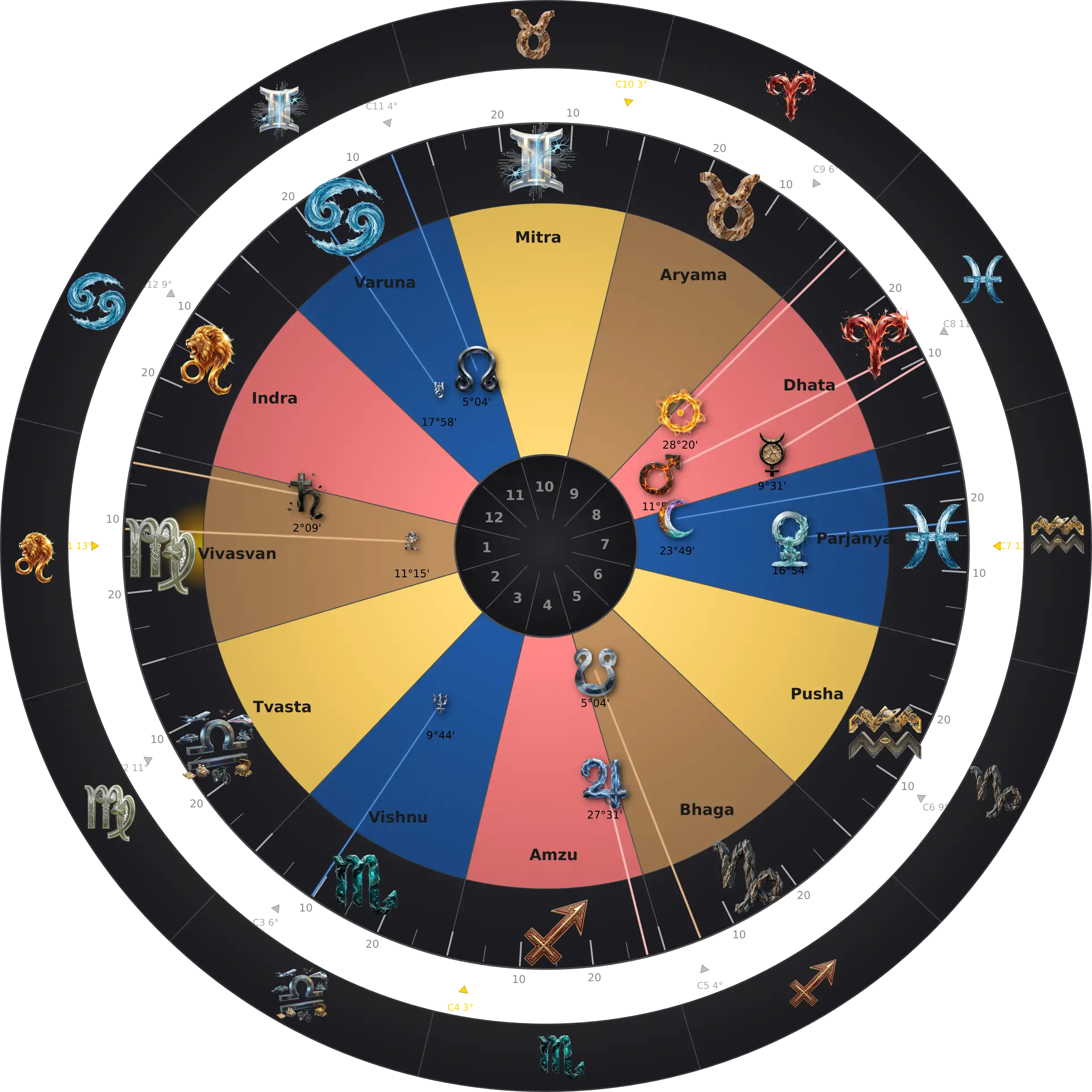
William H. Macy (Born March 13, 1950) — 0/3 F
Role 1: Jerry Lundegaard — Fargo (1996)
Watch scene — Jerry Lundegaard rehearses a frantic, manipulative phone call to stage his wife's kidnapping for ransom.
The Story:
Jerry Lundegaard is a Minneapolis car dealership manager who has quietly embezzled $320,000 from GMAC by filing loan paperwork for nonexistent vehicles. Rather than confess, confront his father-in-law Wade directly, or solve the problem through any form of direct action, he concocts a kidnapping scheme — hiring two criminals to abduct his own wife Jean so he can pocket most of the ransom from Wade while splitting a smaller fraction with the kidnappers. He lies simultaneously to everyone: he tells Wade the ransom demand is $1,000,000 while telling Carl and Gaear they will only receive $80,000. He tells no one the full truth about anything.
When a routine traffic stop triggers three murders, Jerry does not confront the situation — he scrambles, makes small adjustments, tells more lies, and hopes the horror will somehow resolve itself. When Marge Gunderson visits his office, he fakes pleasantry, freezes with a plastered smile, and eventually bolts rather than face questioning. Wade dies trying to handle the ransom drop himself — a consequence Jerry caused but did not control. By the film's end, Jean is dead, Wade is dead, and Jerry is caught mid-flight trying to squeeze out of a motel window, shivering in his underwear in the Minnesota cold. He sobs and struggles as he is arrested — the scheme collapsed not through confrontation but through the cumulative weight of its own indirection and lies.
Key Quotes:
"This was supposed to be a no rough stuff type deal!" Jerry says this to Carl after learning about the murders. This is quintessential Water: rather than taking responsibility or asserting control, he complains that the outcome did not match his imagined scenario. He never had direct control to begin with — he only ever had an idea he outsourced.
"Well, that's... I'm not going into, into... see, I just need money." When pressed for explanation, Jerry cannot articulate a direct position. He circles, stutters, deflects. This is the Water pattern of circling around a problem rather than confronting it head-on, and the inability to speak directly even about his own internal state.
"Heck, if it's not a good time, I can come back..." (approximate — his manner with Marge) Throughout Marge's interrogation, Jerry performs compliance and warmth while providing nothing. He uses social pleasantry as a screen — an indirect defense. Not the Fire response of standing firm and declaring identity, but the Water response of using surface connection to avoid exposure.
How much Fire:
- Initial scheme creation: Jerry does author and initiate a plan. This is a weak Fire credit — a failed attempt at doing. However, the execution immediately outsources all action to others, which cancels most of the credit.
- Protectiveness toward son Scotty: After Wade dies, Jerry does show concern for his son and attempts to reassure him. This brief moment of parental attention through presence (not effort) is arguable — but it is more emotional presence than sustained effort-based protection.
- Physical escape attempt at arrest: Jerry attempts to physically flee through the motel window — a last-ditch, desperate physical act. Even this is botched and pathetic, but it does register as a direct bodily action under the weakest-expression reading of Fire.
- Parking structure business idea: Jerry had a real estate deal (a parking structure) he believed could solve his problems — showing that he does occasionally generate plans and schemes. But this idea was rejected and he failed to fight for it or implement it through direct effort.
- Embezzlement execution: The initial fraud required some administrative action on Jerry's part — filing false paperwork. This is the most concrete "doing" in his arc. Still indirect (paper-based deception), but it shows minimal Fire initiation.
How much Water:
- Indirection as primary operating mode: Jerry never directly confronts any problem. The kidnapping itself IS the Water methodology in its purest form — using proxies (Carl, Gaear) to extract money from a third party (Wade), while remaining invisible in the chain. He does not act; he arranges others to act.
- Multi-layered lying and manipulation: Jerry simultaneously deceives Wade (ransom amount), the criminals (their cut), and police (total innocence). This is not strategic misdirection in the tactical/military Fire sense — it is the Water pattern of hidden schemes, striking at weak points, working from the shadows. No one ever knows where Jerry truly stands.
- Conflict avoidance and circling: When confronted — by Marge, by Carl, by Wade — Jerry never responds directly. He smiles, stammers, deflects, changes subject, agrees vaguely. He circles the problem perpetually. This matches the Water "circles around problems instead of confronting them directly" description exactly.
- Emotional dissolution under pressure: When things collapse, Jerry does not fight back or work harder (Fire trauma response). He freezes, panics, cries, and runs. He sobs during arrest. His pain is not the grinding, consistent weight of Fire — it fluctuates in waves as circumstances change, matching the Water trauma pattern of shifting, emotional, non-grounded responses.
- Passive dependency posture: Jerry's entire life is built on waiting for others to provide. He works at his father-in-law's dealership. His scheme requires Wade to produce the ransom. His solution to embezzlement is not to work his way out but to manufacture an event that causes money to flow TO him from another person. This is the Water "receptivity — things just come to me" pattern in its most dysfunctional, criminal expression.
Confidence: High
Role 2: Donnie Smith — Magnolia (1999)
Watch scene — Donnie Smith's raw, tearful confession of love and loneliness in a bar perfectly embodies the 'WATER' element's emotional depth.

The Story:
Donnie Smith was once a celebrated child prodigy, a "Quiz Kid" on a television game show who won substantial prize money — all of which was promptly seized by his parents. Decades later he is an aging, forgotten man working a mediocre electronics sales job. He is quietly in love with Brad, a male bartender who wears dental braces, and Donnie has convinced himself that if he too wore braces, Brad would love him back. His teeth are perfectly straight; the braces are purely a vehicle for connection, for resemblance, for being seen.
He loses his job early in the film. He pleads to keep it — not to fight back, but because he needs the money to pay for the braces. Drunk and fumbling, he confesses his love to Brad at the bar, vomits in the bathroom, and is rejected. Unable to pay for the braces through legitimate means, he uses secretly-made spare keys to break into his former employer's store and steal the cash. But immediately he is overwhelmed by guilt and reverses his own plan — he tries to return the money the same night. He cannot get back inside, climbs a utility pole toward the roof, and at this moment a biblical rain of frogs begins falling from the sky. A frog strikes him and he falls, shattering his teeth. He is found by a police officer, bleeding, having destroyed the very teeth the braces would have adorned. He finishes the film under arrest but no longer alone — the officer stays with him, offering a kind of witnessed presence.
The entire arc is driven by longing for connection. Every action, including the theft, originates from the need to be loved and to feel.
Key Quotes:
"I really do have love to give; I just don't know where to put it." This is the defining statement of the character. It is not about doing, building, or fighting — it is an excess of feeling with no container for it. Pure Water: love as substance seeking a vessel, connection as the only real motivation.
"I'm sick and I'm in love." / "You seem the sort of person who confuses the two." / "That's right." Donnie openly acknowledges his merger of emotional pain and longing. He does not argue or reframe. He confirms that being unable to separate illness from love is accurate — this is Water's wound made verbal: disconnection expressed as sickness.
"I used to be smart, but now I'm just stupid." The loss he mourns is not power, status, or physical capability — it is his former identity as the gifted child, and more importantly the sense of being seen and celebrated. The grief here is fundamentally about lost connection to his own value, not about concrete survival.
How much Fire:
- The robbery is a physical action, and incompetent action is still action (Fire's weak expression rule): Donnie does plan, execute, and physically carry out a theft. Even if driven by longing (Water motivation), the method involves doing — acquiring keys, breaking in, taking the money. Per the profiles, the method contributes Fire weight even when the motivation is Water. This is the main Fire contribution to the scoring.
- Climbing the pole is direct physical effort: In his attempt to return the money, Donnie physically climbs a utility pole toward the roof at night. This is a concrete, effortful, slightly reckless action — not waiting, not manipulating indirectly, but bodily engagement with a problem. It earns Fire credit.
- The plea to keep his job has a transactional urgency: When fired, Donnie argues that he needs the money for braces. He pushes back, he tries to negotiate, he does not simply accept and walk away in silence. This assertive (if doomed) defense of his position contains a small Fire thread.
- "I used to be smart" — identity damage, not just emotional disconnection: The collapse from celebrated child genius to "stupid" adult resonates faintly with Fire's identity wound — the sense that who one IS has been permanently damaged. However this is outweighed by the fact that Donnie never takes action to rebuild or prove himself; he only mourns passively. So this remains a thin Fire echo absorbed into Water's pain framework.
How much Water:
- The braces scheme is entirely indirect and symbolic: Donnie does not confront Brad directly to build a relationship or pursue him actively over time. Instead, he pursues a physical object — braces — as a magical proxy for connection. The logic is: if I look like what he loves, he will love me. This is the hallmark of Water indirection: working through symbol, resemblance, and receptivity rather than direct effort or courtship.
- The love itself is Water in its purest form: "I love you, Brad — Brad the bartender. You wanna love me back? I'll be good to you." Donnie asks Brad to love him. He does not pursue, seduce, or compete. He waits for the love to be returned. He offers himself as a receiver, not an initiator. This is receptive love — the Water wound expressed as need.
- The theft is immediately reversed by guilt (feeling, not logic): Donnie steals the money and then, within hours, is overwhelmed by the need to undo it. He does not weigh consequences strategically. He acts from a wave of feeling — the guilt is a tidal shift, and he turns it into a desperate midnight attempt to return the cash. This rapid emotional reversal, from transgression to remorse and back to action within a single night, echoes Water's fluctuating emotional landscape.
- Mood swings matching Water's wave pattern: Across the film Donnie moves from sentimental drunk to confessing his love to vomiting in shame to cold-planning a robbery to being undone by guilt — all within roughly one day. These are not the consistent grinding drives of Fire; they are rapid wave shifts driven entirely by how the feeling of connection waxes and wanes.
- The bar confession is passive, not pursuing: He tells Brad he loves him while drunk and overwhelmed, not as part of a coordinated strategy to win him over. He is not running a campaign. He waits and then floods. When rejected, he does not escalate or plan a new angle — he vomits and retreats. Pure Water response to disconnection.
Confidence: High
Role 3: Bernie Lootz — The Cooler (2003)
Watch scene — Bernie's profound bad luck and quiet despair are palpable as he loses repeatedly at the craps table.
The Story:
Bernie Lootz is a "cooler" at the Shangri-La casino in Las Vegas — a man whose bad luck is so contagious that his mere proximity to a gambling table turns winners into losers. He is the living embodiment of Water's unhealthy pattern: he floats through life as a receptacle for misfortune, not as a force acting upon the world. He owes his existence at the casino to Shelly Kaplow (Alec Baldwin), who years ago broke Bernie's kneecap after Bernie's gambling debts spiraled out of control, and then paid off those debts in exchange for six years of servitude. Bernie accepted this arrangement with no resistance — not because he was strategizing, but because he believed he deserved the punishment.
As the film begins, Bernie is days away from the end of his obligation. He intends to leave Las Vegas quietly, with no plan beyond escape. Then Natalie, a cocktail waitress, shows interest in him. Bernie doesn't pursue her — he is pursued. Their relationship develops and, crucially, his bad-luck field reverses: wherever he walks now, luck follows. He is not causing this through effort or willpower; it simply happens because he is loved.
When his estranged son Mikey appears, Bernie is torn and helpless. He cannot protect his son through direct force — he begs Shelly, then surrenders financially by agreeing to cover $150,000 in Mikey's debts and extend his servitude. At the climax, Bernie declares his freedom to Shelly and drives away with Natalie. He does not defeat Shelly — Shelly is killed by his own criminal associates. Bernie is saved not by his actions, but by a drunk driver accidentally eliminating the hired cop sent to kill him. The universe simply delivers good fortune to Bernie once love enters his life.
Key Quotes:
"People get next to me — their luck turns. It's been like that my whole life." Commentary: This is the Water self-concept in its purest unhealthy expression — identity defined entirely by the experience others have in his presence, not by what he does. He sees himself as a passive field, not an agent. Fire would say "I am who I am." Bernie says "I am what happens around me."
"I have never met someone so down on himself." (remark from another character about Bernie) Commentary: Fire's weak expression would produce an identity fight — anger, stubbornness, refusal to adapt. Bernie's self-concept is absent rather than damaged. He doesn't fight for an identity; he has surrendered one.
[After Natalie shows him love, his luck reverses completely — no dialogue needed] Commentary: The defining Water moment. His inner state changes because connection arrives, and the external world reconfigures instantly. This mirrors the profile exactly: "when love returns, pain vanishes INSTANTLY (almost like it was never real)."
How much Fire:
- One direct confrontation attempt: Bernie does go to the basement to confront Shelly when Mikey is being beaten. He places himself physically between his son and danger. This is a genuine Fire act — effort, protection, presence. However, it immediately collapses into begging and financial surrender, weakening its weight.
- Paying the $150,000 debt: Taking on the financial burden to protect his son is an effort-based protective act. It is costly action for someone else's sake, which belongs to the Fire protective category — but it is executed through capitulation to Shelly's authority rather than resistance.
- Walking away from the casino at the end: The decision to leave with Natalie requires a declaration of intent. Bernie does tell Shelly he is no longer under his control. This is the most Fire moment in the entire film — a verbal assertion of self. It is brief and not backed by any force.
- Enduring years of servitude without quitting: A weak Fire reading could see this as grinding endurance, the "constant, grinding weight" of this profile. However, it reads more as the Water pattern of accepting bad conditions passively rather than the Fire drive of working relentlessly toward a goal.
How much Water:
- Defined entirely by receptivity, not action: Bernie does not make things happen. His entire function in the casino is literally the opposite of initiating — he receives luck (bad) and transmits it. His character is constructed around the concept of being a passive field.
- Love transforms him without effort: When Natalie loves him, his luck reverses spontaneously. He does nothing different. This is the Water signature: results manifest through connection, not effort. The transformation is instantaneous and requires no training, no discipline, no plan.
- Mood governed entirely by connection status: When he has Natalie, he glows. When she is taken away or endangered, he collapses. The pain vanishes the moment connection is restored. This is the Water trauma pattern exactly: "when love returns, pain vanishes INSTANTLY."
- Conflict handled through indirection, waiting, and surrender: Bernie never confronts Shelly directly as an equal. He circles the problem (can I leave? can I stay? can I protect my son?), begs, and ultimately waits for circumstances to resolve themselves. A drunk driver — not Bernie's fists or plan — saves his life at the end.
- Self-image rooted in absence, not damaged pride: Fire in pain fights for identity ("I won't change who I am"). Bernie has no identity to protect. His inner wound is "I am empty, unloved, and I deserve nothing." This is the Water disconnection wound, not the Fire "nobody supported me through effort" wound.
- Acceptance of Shelly's beatings and control as deserved: He has internalized that the kneecap-breaking was a gift that saved him. He does not seek revenge, does not plan to reclaim power, does not fight dirty. He simply floats along in a bad arrangement until love changes the gravitational field around him.
Confidence: High
Career Pattern: All three roles align with Water — receptivity, indirection, and connection-seeking define William H. Macy's consistent on-screen behavioral signature.
William H. Macy — Aditya Zodiac Birth Chart Elements
Dominant Element (Aditya): Water (37.5%)
William H. Macy — Tropical Classic Birth Chart Elements
Dominant Element (Tropical): Air (37.5%)
Alignment Note: Agent judged 0/3 roles as Fire-dominant. Aditya birth chart shows Water-dominant (37.5%). Tropical birth chart shows Air-dominant (37.5%). Agent results aligns with Aditya Zodiac, diverges with Tropical.
View Birth Chart — William H. Macy
Outer wheel: Tropical Classic — Inner wheel: Aditya Zodiac
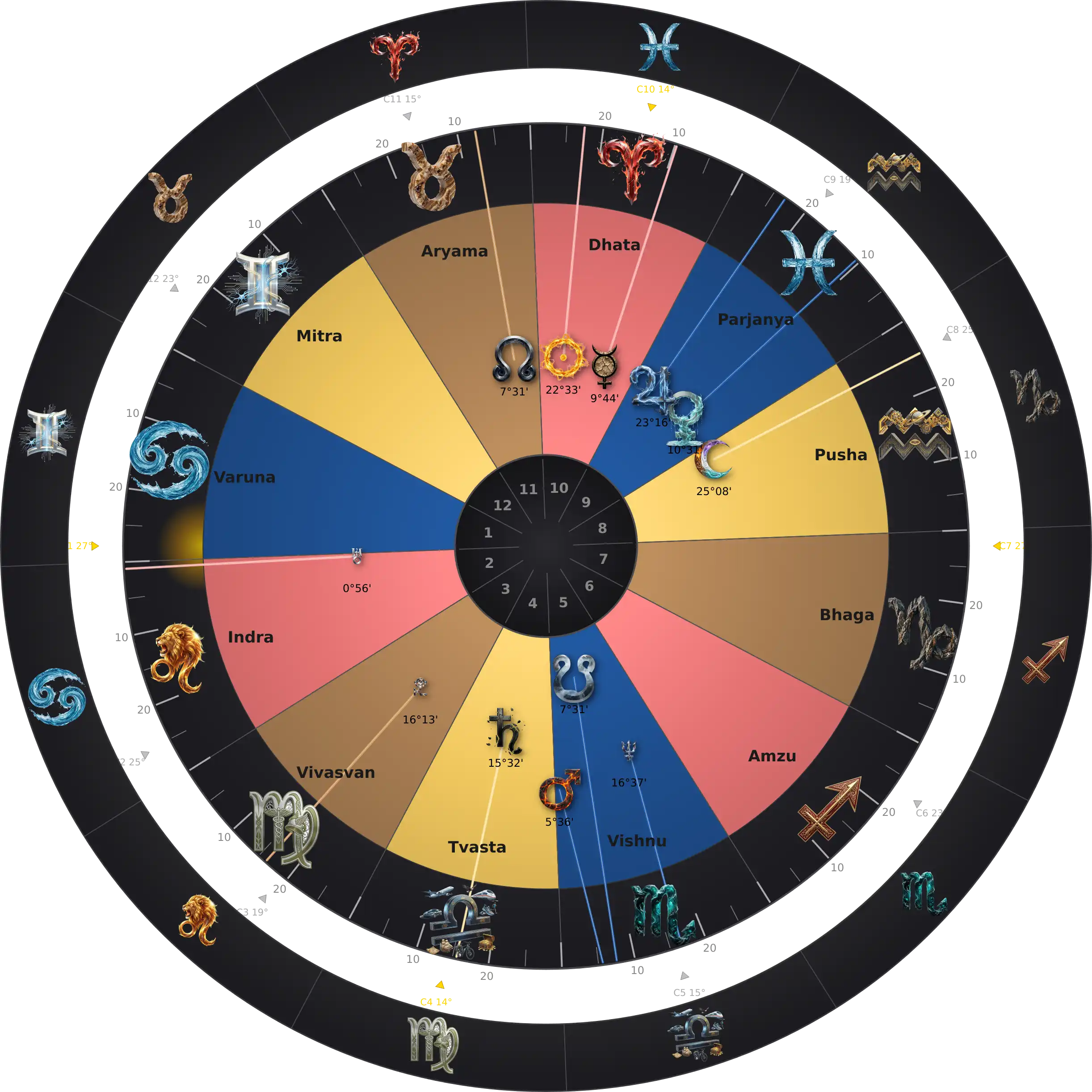
Alan Tudyk (Born March 16, 1970) — 2/3 F
Role 1: Wash — Firefly (2002-2003) / Serenity (2005)
Watch scene — Wash navigates a chaotic space battle and crash landing, embodying adaptability and vulnerability before a sudden, tragic end.
The Story:
Hoban "Wash" Washburne is introduced sitting alone in the cockpit of Serenity playing with plastic toy dinosaurs, narrating a tiny drama between them. He is not training, not planning, not building — he is being, in the most effortless and playful possible way. This opening scene is a near-perfect portrait of Water: joy through pure receptive presence, no action required.
As pilot, Wash does not force the ship through danger — he flows with it. He famously oscillates between near-panic and a Zen-like calm that is inversely proportional to the actual danger. When things get worst, he gets most still. He reacts to the ship's movement rather than imposing his will on it. His legendary "I am a leaf on the wind" is the defining statement of this profile's indirection and receptivity: not "I will cut through this," but "I will let the wind carry me."
His marriage to Zoe is the emotional core of his character. He did not win her through conquest or persistent action — she came around to him after claiming something about him "bothered" her, and he simply persisted by being himself. His jealousy over Mal is not aggressive but is a soft, feeling-based wound: "I feel like I am losing her to something I cannot fight directly." In the torture episode "War Stories," Wash is kept alive by his own anger — but crucially, that anger is ignited reactively by Mal, not generated internally. Mal uses Wash's feelings about Zoe as fuel. The emotion does the work; Wash himself is the recipient.
His death — impaled mid-sentence uttering his iconic phrase — is final proof: no last stand, no fighting back, no rage against the dying of the light. The leaf lands.
Key Quotes:
"I am a leaf on the wind. Watch how I soar." Water commentary: The quintessential formulation of this profile. Not "I will force my way through." Not strategic. Pure surrender to flow, receptivity to the situation, letting results come without direct effort. The leaf does not act — it is carried.
"Curse your sudden but inevitable betrayal!" (to a plastic dinosaur) Water commentary: Wash is alone in the cockpit doing nothing useful, narrating a small imaginative drama for his own pleasure. No goal, no output, no productivity. Pure presence and inner imaginative world. The happiness here costs no effort — it flows from a rich inner life.
"Sweetie, we're crooks. If everything were right, we'd be in jail." Water commentary: Deflection through humor. Rather than confronting the moral tension directly or creating a plan to fix it, Wash reframes it with a quip and lets it dissolve. Circling around the problem with lightness — indirection as a default mode.
How much Fire:
- He does act under extreme pressure. In "War Stories," Wash survives Niska's torture and participates in the rescue of Mal. This is direct physical engagement, not passive waiting. However, it is worth noting that his survival mechanism during torture is reactive — it was Mal's provocations that kept Wash's anger alive, not his own self-generated drive. The action is present but borrowed in quality. ("War Stories," Firefly)
- He enrolled in piloting school through a direct choice. Growing up on a polluted planet where he couldn't see the stars, Wash made a deliberate decision to enroll and pursue piloting. This is goal-oriented effort — a Fire element. However, the profile weight is modest: the effort was a single formative choice that unlocked a natural gift, not a lifetime of grinding self-improvement. (Fandom wiki background section)
- He resists Saffron's seduction actively. In the episode "Our Mrs. Reynolds," Wash rejects a seductive advance and remains loyal to Zoe. This is a direct act of fidelity. It reads as low-level Fire (direct choice, holding the line) but is too minor to shift the overall profile weight significantly. (Firefly, "Our Mrs. Reynolds")
How much Water:
- Effortless piloting genius that flows, not forces. Wash does not train obsessively or grind toward skill. He grew up unable to see the stars and enrolled in piloting school, but once there his ability is presented as natural gift — he enters a Zen state under pressure rather than working harder. The profile's "effortless learning, grasps things by proximity" fits the characterization. (Firefly pilot episode, fandom wiki description)
- Indirection as default conflict mode. Wash consistently advocates for the "cut and run" option in crew debates. He is the calming voice against violence, the one who reframes rather than confronts. When he has a genuine grievance with Zoe about her relationship with Mal, he does not address Mal directly or demand a confrontation — he expresses the feeling to Zoe, circles around it, lets it sit. Pure Water indirect processing. ("War Stories" episode, fandom wiki)
- Connective love, not brotherhood love. The Wash/Zoe relationship is explicitly soul-deep and feeling-based — not forged through shared survival in battle (that is Mal/Zoe). Wash's love is about presence, warmth, private jokes, and the feeling of being seen. He is made vulnerable by love, not strengthened by it. His jealousy does not produce action — it produces feeling. This is Water's connective love in its defining form. (Multiple Firefly episodes)
- Mood pattern swings: panic to Zen, not a steady grind. His response to danger is described explicitly as oscillating between near-panic and deep calm. This wave-like emotional pattern — rapid mood shifts, calm appearing suddenly when love or flow is present — is the Water pattern. It is not the Fire consistent grinding drive. (Fandom wiki, charactour description)
- Playful imagination with no productive purpose. The dinosaur scenes are not a strategy, not a creation, not an effort. They are pure imaginative play — the kind of contented "doing nothing useful but feeling connected to inner wonder" that is the healthy expression of Water. The toys were a gift from his father, a connection to something meaningful. He keeps them because they feel good to have, not because they accomplish anything. (Firefly pilot, Screen Rant article)
Confidence: High
Role 2: K — 2SO — Rogue One: A Star Wars Story (2016)

The Story:
K-2SO is a reprogrammed KX-series Imperial security droid reassigned to serve Rebel Alliance operative Cassian Andor. He enters the story already reprogrammed — his obedience to Imperial command replaced by a self-directed will, a blunt personality, and an unsentimental loyalty forged through combat partnership.
From his first appearance he operates as a direct, unfiltered actor: he physically restrains Jyn Erso when she attempts to escape, then greets her with deadpan sarcasm — "Congratulations. You are being rescued. Please do not resist." He spends the early missions delivering unsolicited probability assessments and openly contradicting senior Rebel officers' decisions, not out of manipulation, but because he calculates they are wrong and says so immediately and loudly.
On Jedha he continues his pattern: scanning threats, announcing them factually, and protecting the team through physical positioning. When Cassian is questioned on his loyalty and capability, K-2SO does not mediate emotionally — he defends Cassian's record directly.
The climax on Scarif is where K-2SO's defining act occurs. He, Cassian, and Jyn infiltrate the Imperial Citadel Tower. K-2SO stays at a terminal actively controlling security and holding the position. When stormtroopers breach his location he fights them physically, at full force, destroying several. When the door controls are the only remaining way to protect Cassian and Jyn from pursuit, he destroys them, locking himself in with the enemy. He is then gunned down holding that position — a direct, physical, effort-based sacrifice with no indirection, no manipulation, no waiting. He chose the action and executed it without hesitation.
Key Quotes:
"Would you like to know the probability of her using it against you? It's high. It's very high." Profile commentary: Pure Fire. He does not soften the assessment, does not work around Cassian's authority, does not hint — he states the threat directly, openly, to the person it concerns. No indirection, no political navigation.
"Congratulations. You are being rescued. Please do not resist." Profile commentary: Fire again. He has just physically choke-slammed Jyn to stop her escape. The sarcasm is a layer on top of direct physical action — not a substitute for it. He acts first, quips second. The action came from him, not from maneuvering others.
"I find that answer vague and unconvincing." Profile commentary: This is the Fire identity pattern in miniature: "That's not ME" / "I won't pretend I believe something I do not." He protects his own truthfulness — his identity as an accurate analytical engine — against evasion. He does not let a weak answer stand because accepting it would compromise who he IS.
How much Fire:
- Direct physical action as the primary tool. Every significant scene involves K-2SO doing something physically forceful or taking a direct stand: restraining Jyn, piloting the ship under fire, fighting stormtroopers in the archive. He never achieves results by getting others to act for him or by working through indirect channels. (Scene: Jedha street, Scarif archive fight.)
- Blunt, unsolicited confrontation. He tells people exactly what he thinks, to their face, without softening or waiting for permission. He contradicts Rebel commanders directly when he disagrees. Water would circle around, imply, wait for a moment to introduce the idea indirectly. K-2SO announces the problem loudly in the room. (Scene: probability assessments throughout the film.)
- Brotherhood bond with Cassian, effort-based. His loyalty to Cassian is not a soul-deep mystical connection — it is built through shared operational experience, mutual survival, and demonstrated reliability. He defends Cassian through action and argument, not through emotional presence or comforting warmth. (Scene: Eadu, when K-2SO positions the ship for extraction without being asked, anticipating Cassian's need.)
- Sacrifice through direct physical effort. His death is a textbook Fire act: hold the door, fight the enemies, destroy the controls, take the hits. There is no manipulation, no sacrifice-by-proxy, no indirect scheme. He plants himself between the threat and his companions and physically absorbs the attack until he cannot anymore. (Scene: Scarif archive, final fight.)
- Identity protection through truthfulness. He resists any instruction that would require him to suppress or distort his own analytical output. "I find that answer vague and unconvincing" is not passive-aggressive indirection — it is a hard boundary on his own integrity. His identity IS accurate analysis, and he will not compromise it even for social smoothness. (Scene: multiple exchanges with Jyn about her blaster.)
How much Water:
- Tactical use of Imperial disguise. On Scarif, K-2SO exploits his original Imperial form to bluff stormtroopers, walking Jyn and Cassian into the facility under cover. This is indirection — using appearance to mislead rather than confronting directly. However, per profile rules, this is strategic-logical indirection (a military feint, from the HEAD), which the profiles assign primarily to Fire. Noted as a faint Water surface color only.
- Dry emotional withdrawal. K-2SO does not express care through warmth, presence, or emotional availability — but occasionally he withholds feeling in a way that creates relational distance rather than connection. This is not actively connective (Water's strength) nor purely driven (Fire's mode). It reads as a minimal passive presence layer, but it is outweighed by his consistent action outputs. (Scene: his flat acknowledgment of Cassian's survival odds without comfort.)
Confidence: High
Role 3: Tucker — Tucker & Dale vs Evil (2010)
Watch scene — Tucker heroically tries to save a burning man, but his cabin explodes, leaving him devastated.
The Story:
Tucker McGee and his best friend Dale drive deep into the West Virginia woods to renovate a run-down lakeside cabin they have just purchased — the dream project Tucker has been planning and is visibly excited to attack with tools, sweat, and physical labor. He is the initiating force of the pair: it is Tucker who urges Dale to approach the college girls at the gas station, Tucker who starts sawing wood the moment they arrive, and Tucker who sets the practical agenda for every day of the trip.
The film's central horror-comedy engine is a cascade of catastrophic misreadings. Tucker's mundane work actions — swinging a running chainsaw to flee a bee nest he accidentally disturbed, pulling a half-torso from a wood chipper after a student dives in, carrying bloodied corpses away from the scene — are each witnessed out of context and interpreted as evidence of homicidal intent. Tucker responds not with passivity or manipulation but with baffled, escalating hands-on problem-solving: he tries to communicate, tries to move bodies, tries to repair the cabin amid the chaos, and keeps pushing forward through the mess. The film's climax involves Tucker being captured by the genuinely deranged college student Chad, tortured (two fingers severed), and used as bait against Dale. Even in captivity Tucker endures rather than schemes — he suffers physically and directly. He is rescued through Dale's direct action, not his own indirect manipulation.
Key Quotes:
"We got a serious situation on our hands." Tucker's standard crisis framing. No emotional spiral, no waiting for someone else to act — he immediately shifts into pragmatic assessment mode. Pure Fire: a problem exists, action is required, let's establish the scope.
"Man, he sure is heavy for half a guy." Said while literally dragging a student's torso halves off Dale after the wood chipper accident. The remark is flat, practical, workman-like — the observation of a man focused on the immediate physical task even in extreme circumstances. Identity and effort even in absurdity. Fire.
"Dale, you gotta stand up for yourself!" Tucker coaching Dale to be more assertive, to make his own moves, to take direct action. Tucker's relational mode is not soft emotional nurturing — it is encouragement toward agency and effort, exactly the brotherhood support pattern of Fire.
How much Fire:
- Hands-on creator and builder: Tucker bought the cabin precisely to have a project. From the moment of arrival he is working — sawing wood, repairing walls, fixing pipes. Tireless physical effort applied to a creative/constructive goal. Textbook Fire effort-based creativity.
- Direct problem-solving instinct: Every crisis — bee nest, wood chipper, bodies piling up — is met with immediate practical action, however bungled. Tucker never waits, never schemes indirectly, never retreats into feeling. He assesses, decides, and does. Failed plans are still Fire (see profile: "incompetent action is still ACTION").
- Physical endurance under torture: When Chad captures Tucker and cuts off two of his fingers, Tucker endures physical, concrete, survival-based trauma. This is the Fire wound precisely: bodily pain, concrete betrayal/attack, not emotional disconnection.
- Brotherhood loyalty through effort: Tucker's entire motivation is to give Dale and himself a good life through work — the shared cabin project is a Fire brotherhood act forged through doing together, not a Water soul-deep mystical bond.
- Identity as the "capable one": Tucker consistently positions himself as the man who knows how to handle things, use tools, and get work done. When Dale shows competence (treating Allison's injuries), Tucker is briefly jealous — a Fire identity-protection reaction: "That's not who I am — I'm the capable one."
How much Water:
- Cheerleader for Dale's romance: Tucker genuinely wants Dale to connect with Allison and nudges him toward her. This is warm, supportive energy — closer to the Water cheerleader/presence mode than a direct Fire push. However, the method is still direct verbal encouragement, not indirect emotional manipulation.
- Not the confrontational lead in crisis: When things go wrong Tucker does not charge headlong into combat — he and Dale mostly retreat, try to explain, or move away. There is a mild tendency to back off from direct confrontation with the college students rather than escalate immediately. Slight Water indirection in conflict avoidance.
- Affectionate friendship: The Tucker–Dale bond has warmth and mutual care that goes beyond pure Fire brotherhood rivalry. Tucker's fondness for Dale reads as genuinely connective, not purely effort-based. Minor Water coloring.
Confidence: High
Career Pattern: Two of three roles align with Fire. The exception — Wash — operates through Water-mode behavior (indirection, receptivity, connection-seeking), demonstrating range while the dominant pattern remains Fire.
Alan Tudyk — Aditya Zodiac Birth Chart Elements
Dominant Element (Aditya): Fire (37.5%)
Alan Tudyk — Tropical Classic Birth Chart Elements
Dominant Element (Tropical): Water (37.5%)
Alignment Note: Agent judged 2/3 roles as Fire-dominant. Aditya birth chart shows Fire-dominant (37.5%). Tropical birth chart shows Water-dominant (37.5%). Agent results aligns with Aditya Zodiac, diverges with Tropical.
View Birth Chart — Alan Tudyk
Outer wheel: Tropical Classic — Inner wheel: Aditya Zodiac
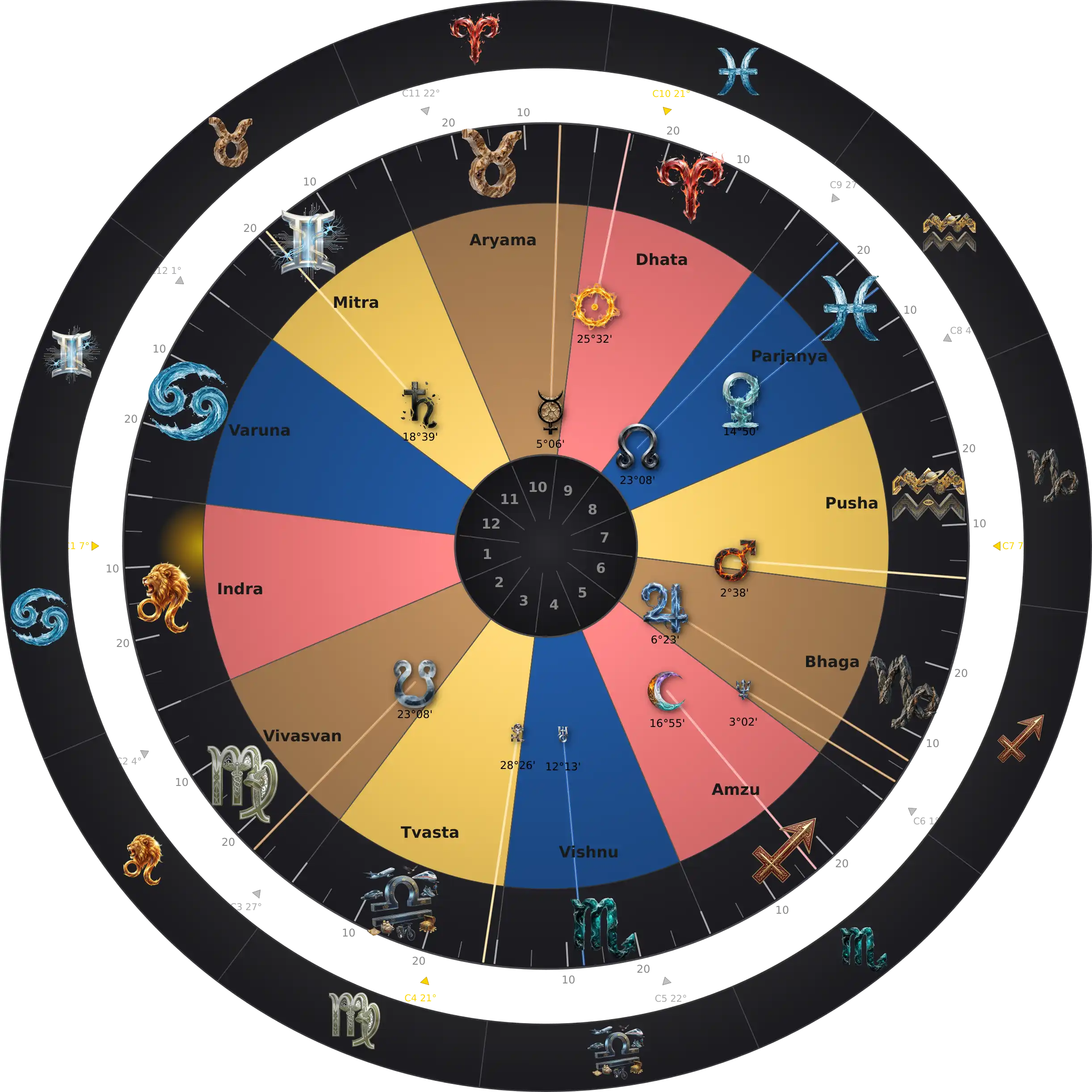
Catherine O'Hara (Born March 6, 1954) — 2/3 F

Role 1: Moira Rose — Schitt's Creek (2015-2020)
Watch scene (04:30) — Moira dramatically laments online negativity from her closet, showcasing emotional depth and a distinct wig.

The Story:
Moira Rose enters Schitt's Creek as a dethroned soap-opera queen — once the face of Sunrise Bay for six-and-a-half seasons, now reduced to a motel room and a town council seat she did not campaign for so much as drift into. She spends the entire series not storming back to fame through heroic labor but waiting for the phone to ring. When the role in The Crows Have Eyes 3 arrives, it comes via Blaire the director; Moira did not hustle for it the way a Fire character would. When the film gets shelved, she collapses into grief; when Interflix rescues it, she rebounds instantly — the classic Water pain-and-joy cycle that flips on the presence or absence of external validation.
Her wardrobe functions less as armor (a Fire warrior's shield) and more as a costume — she is always performing an identity, sliding fluidly between Vivien Blake, Dr. Clara Mandrake, Jazzagal alto, and town council member, adapting her persona to whatever room she enters. She does not confront Johnny, David, or Alexis directly when hurt — she delivers dramatic speeches that circle the wound without landing on it. Her love for her family is real but expressed through presence and feeling rather than sustained effort: she cannot remember Alexis's middle name, yet her farewell speech at Alexis's graduation-style send-off ("Our lives are like little bébé crows...") is genuinely moving because it is emotionally saturated, not because she worked for it. By the finale she follows the Sunrise Bay reboot to California — again receiving an opportunity rather than creating one.
Key Quotes:
Quote 1: "Our lives are like little bébé crows, carried upon a curious wind. And all we can wish, for our families, for those we love, is that that wind will eventually place us on solid ground."
- Profile commentary: Pure Water. The dominant metaphor is being carried by an external force (the wind), not steering or fighting toward a destination. This is receptivity as a life philosophy.
Quote 2: "Gossip is the devil's telephone. Best to just hang up."
- Profile commentary: Indirect moralizing rather than direct confrontation. She does not say "Stop gossiping about me." She wraps the threat in indirection — a Water verbal technique.
Quote 3: "I was very protective of my wigs when we were poor."
- Profile commentary: The one moment that touches Fire — she frames identity-preservation as protection. But note: she protects objects that represent identity, not people. And the action she took was withholding/guarding (indirect) rather than fighting directly. Marginal Fire at best.
How much Fire:
- Identity protection through costuming: Moira's wigs and black-and-white couture function as a declared "this is who I am — deal with it," which fits the Fire refusal to adapt. She resists the town's small-town normalization every season. This is the most consistent Fire feature of her character.
- Town council seat: She does take action in civic life, attending meetings, casting votes, occasionally advocating. This is direct-enough behavior to register as Fire, though it is more performative than strategic.
- Vocal insistence on her own stardom: When her status is threatened — when locals don't recognize her, when her film is shelved — she states loudly and directly who she is. "I was a soap opera star." This identity assertion ("That's not ME") matches the Fire key identifier.
- Jazzagals rehearsals (mild): Moira does show up and put in some effort to lead the Jazzagals choir when she takes it over, which represents at least token effort-based behavior.
- Resistance that never collapses: Unlike pure Water characters who adapt completely to their environment, Moira maintains a consistent refusal to "become" a Schitt's Creek person. That consistency is more Fire than Water.
How much Water:
- Receives opportunities rather than creating them: The soap opera role, the Crows film offer, the Interflix rescue, the Sunrise Bay reboot — in every major career event, the opportunity comes to Moira. She does not grind or campaign the way a Fire character would. This is the clearest Water signal in the entire run.
- Indirect emotional communication: Moira rarely confronts family members head-on. Her speeches to David and Alexis circle around what she actually feels, landing the emotion sideways through theatrical language. She fights dirty with feelings — dramatic exits, tears, conspicuous suffering — not face-to-face ultimatums.
- Pain that vanishes when connection returns: When David gets engaged, when Alexis lands her PR job, when the Crows film is rescued — Moira's despondency lifts instantly. This "ecstatic one moment, collapsed the next, ecstatic again" oscillation is the textbook Water pain signature.
- Presence-based mothering: Moira's eventual warmth toward her children is not expressed through effort (she is famously absent from the concrete work of parenting). What she offers is emotional presence, aura, and validation when she manages to deliver it — the Water parent who gives BEING rather than DOING.
- Fluid identity through performance: She moves effortlessly from soap actress to horror film star to choral director to council member, absorbing each new role with minimal apparent training. This effortless persona-shifting is the Water's sponge-like adaptability — contrasting with the Fire's fixed sense of self-identity.
- Mood oscillation: Her emotional state tracks closely with external events (fame, recognition, family love) rather than being a steady internal drive. When recognition arrives, she radiates warmth. When it vanishes, she collapses. This fluctuation is Water's core emotional signature.
Confidence: High
Role 2: Kate McCallister — Home Alone (1990-1992)
Watch scene — Kate McCallister's fiery realization of forgetting Kevin ignites a desperate, passionate quest to reunite with her son.

The Story:
Kate McCallister is introduced as a highly stressed mother orchestrating the family's Christmas trip to Paris with eight children, extended relatives, and a chaotic household. She is reactive and emotionally volatile from the opening, quickly blaming Kevin during the pizza fight and physically grabbing him — a direct, impulsive action under stress. She is persuaded by Buzz's hollow apology and waves Kevin off to bed, a small moment of passivity.
The core engine of both films is Kate's RESPONSE to catastrophe. In Home Alone 1, the moment she realizes Kevin was left behind, she immediately pivots into relentless action: demanding earlier flights, bartering jewelry and cash to an elderly couple for their seats, and accepting a polka band van ride through the night to get home. She does not wait, fantasize, or float. She physically negotiates, trades material possessions, and pushes forward through every obstacle.
In Home Alone 2, the pattern repeats. Upon discovering Kevin lost at the airport, she faints — one moment of overwhelm — then rises and goes directly to police, coordinates with authorities, separates from the family group to search New York City alone, and uses intuitive knowledge of Kevin's personality (his love of Christmas trees) to physically locate him at Rockefeller Center.
Both films end with reconciliation scenes in which Kate apologizes openly and directly, acknowledging fault without manipulation or deflection.
Key Quotes:
"If it costs me everything I own, if I have to sell my soul to the devil himself, I am going to get home to my son." Profile commentary: This is pure Fire language — tireless action framed as non-negotiable. The drive is total. She does not say "I hope he's okay" or "I trust it will work out." She names direct effort and cost. The declaration is made to an airport gate agent face-to-face: direct, open confrontation.
"I hope you don't mean that. You'd feel pretty sad if you woke up tomorrow morning and you didn't have a family." Profile commentary: A softer moment with emotional content — warning Kevin about disconnection. This has Water coloring (fear of broken connection) but comes from a parent trying to CORRECT behavior, not receive comfort. The emotional warmth is present but it is secondary to her role as an active authority figure.
"Peter, I'll be fine" / "I think if our son can do it, I can do it." Profile commentary: Assertive self-reliance — Fire. She is declaring independence and capability, pushing against the suggestion that she needs protection. A Water character in distress would more likely seek support or accompany the group; Kate separates and goes alone into New York City.
How much Fire:
- Tireless direct action under crisis: The entire arc of both films is Kate doing whatever it physically takes to return to her son — trading jewelry, riding in a polka band van overnight, navigating airports, coordinating with police, walking New York City alone. This is sustained, effort-based, direct action. Scene: airport negotiation and van ride, Home Alone 1.
- Open, direct confrontation: She states her demands directly to airport staff, ticket agents, hotel staff, and police. She does not manipulate from the shadows; she stands at the counter and declares her intentions. Scene: "I am going to get home to my son" speech.
- Physical caregiving as effort: Reuniting with Kevin involves her physically traveling thousands of miles by any means necessary — this is the Fire caregiving pattern (effort, physical protection, carrying the burden) rather than Water's emotional presence alone.
- "I'll be fine" / self-reliance declaration: In Home Alone 2, when warned away from searching alone, she dismisses concern and asserts independent capability. Fire protects its identity — "This is who I am, I can handle it." Scene: separation from family to search NYC.
- Consistent driven response to trauma: Unlike Water's fluctuating mood (sobbing to laughing in minutes), Kate's distress is consistent — she does not suddenly become okay once someone reassures her; she keeps moving until the problem is physically solved. The pain does not vanish on emotional comfort alone — it resolves only when Kevin is physically in her arms.
How much Water:
- Reactive parenting pattern: Kate does not proactively prevent crises; she responds to them after the fact. She blames Kevin during the pizza fight without investigating, and is persuaded by Buzz without scrutiny — this is emotionally reactive rather than strategically directed. Scene: both films' inciting family conflicts.
- Guilt and emotional pain as driver: Her guilt is soft, genuine, and connection-based ("a family argument is no excuse") — she experiences pain as emotional disconnection from Kevin, consistent with Water's wound of failed nurturing connection. Scene: apology to Kevin at end of Home Alone 1.
- Easily swayed by social pressure: In the Christmas pageant scene (Home Alone 2), Kate sides with Buzz and dismisses Kevin — she receives the social signal from others around her rather than independently assessing. This is indirect receptivity.
- Emotional intuition finding Kevin: In Home Alone 2, she locates Kevin at Rockefeller Center not through logical deduction or strategic planning, but by emotionally knowing his heart — "his love of Christmas trees." This resonates with Water's intuitive/connective knowing rather than tactical analysis.
Confidence: High
Role 3: Delia Deetz — Beetlejuice (1988) / Beetlejuice Beetlejuice (2024)
Watch scene — Delia Deetz and her dinner guests are possessed, performing a chaotic, involuntary musical number.
The Story:
Delia Deetz arrives in a quiet Connecticut town having been uprooted by her husband Charles's anxiety breakdown. She did not choose this. She despises the house on sight. Her response is not to grieve, negotiate, or wait — she immediately starts scrawling "mauve" across the walls with paint, issues commands to movers, and partners with her agent Otho to orchestrate a full renovation. Within three months she has completely gutted and rebuilt the interior into an avant-garde showcase. She never stops. She runs elegant dinner parties, manages the entire household logistics while Charles withdraws passively, and maintains an active sculpting practice simultaneously. When the Maitland ghosts refuse to cooperate with her plans, she physically storms the attic herself rather than wait.
Her most revealing line is the ultimatum to Charles: "I will live with you in this hellhole, but I must express myself. If you don't let me gut out this house and make it my own, I will go insane and I will take you with me." This is not a cry for love or nurturing — it is an identity demand backed by a direct threat. Her inner world IS her output.
By 2024 she runs a successful SoHo gallery. When danger re-emerges in the sequel, she takes concrete protective action — chaining the attic shut — and ultimately dies attempting a protective ritual. In death she continues moving: she boards the Soul Train with Charles rather than lingering. Across both films the through-line is unbroken: Delia is always producing, directing, confronting, and protecting through direct effort.
Key Quotes:
Quote 1: "I will not stop living and breathing art just because you need to relax."
- Profile commentary: A direct identity-preservation statement. The structure is Fire at its clearest: she defines herself by her DOING ("living and breathing art"), frames Charles's request as an attack on who she IS, and refuses to adapt. This is the "That's not ME" refusal the Fire profile defines as its signature defense.
Quote 2: "I must express myself. If you don't let me gut out this house and make it my own, I will go insane and I will take you with me."
- Profile commentary: The verb is "gut out" — active, physical, destructive-then-creative. She frames self-expression as survival. Notably she says she will take Charles with her in breakdown — a direct threat, not passive manipulation. Open confrontation, not a hidden scheme.
Quote 3: "You have got to take the upper hand in all situations or people will walk all over you."
- Profile commentary: This is advice she gives to Lydia and it doubles as her own operating principle. "Take the upper hand" is conquest-oriented, tactical, effort-based. It is the language of Fire entirely: direct action as self-defense against being dominated.
How much Fire:
- Relentless creation despite hostile circumstances: Delia arrives at a house she hates and does not sulk or seek comfort — she immediately starts building her version of it. Three months of sustained physical and creative labor produce a complete transformation. This is tireless effort-based output, the core signature of Fire.
- Direct confrontation as her default conflict style: When ghosts obstruct her work, she does not manipulate, scheme, or wait them out — she physically goes up to the attic and confronts them. When Charles questions her renovation ambitions, she issues a direct ultimatum with a threat. No indirection.
- Identity protection as the load-bearing motivation: Her core line "I must express myself" frames all of her behavior as identity-defense rather than connection-seeking. She is not trying to feel loved; she is fighting to remain who she is. This is Fire's key identifier: "I won't change who I am for you."
- Protective action in Beetlejuice Beetlejuice (2024): She physically chains the attic shut when danger appears. She performs a protective ritual. She dies in the attempt. Every protective instinct she has takes the form of direct physical effort, not emotional presence or prayer. Even her death is an action.
- Leadership and domestic management through effort: She runs the household logistics alone, organizes dinner parties, coordinates renovations, and maintains her sculpting career simultaneously — all while Charles is functionally absent. She is the engine of the Deetz family's survival in the first film.
How much Water:
- Aesthetic sensitivity and art as medium: Delia's chosen domain is sculpture and interior design — fields that involve receptivity to form, feeling, and beauty. Her art is an expression of inner sensory experience, not just tactical construction. This small percentage nods to Water's role in shaping HOW she expresses herself, even if the act of expression is pure Fire.
- Emotional availability in the 2024 sequel: In Beetlejuice Beetlejuice, Delia demonstrates something softer — she remains present for Lydia during Charles's death, expresses genuine care for the relationship, and shows awareness of how her earlier behavior affected Lydia. This is not purely action-based; it involves emotional presence and feeling. A mild Water inflection in a predominantly Fire character.
- Partnership with Otho: The creative collaboration with Otho (her agent/designer) involves a degree of receptivity — she absorbs his input, they co-create rather than her simply dictating. However the weight of the partnership is still Delia driving the vision, so this is a minor point.
Confidence: High
Career Pattern: Two of three roles align with Fire. The exception — Moira Rose — operates through Water-mode behavior (indirection, receptivity, connection-seeking), demonstrating range while the dominant pattern remains Fire.
Catherine O'Hara — Aditya Zodiac Birth Chart Elements
Dominant Element (Aditya): Fire (75.0%)
Catherine O'Hara — Tropical Classic Birth Chart Elements
Dominant Element (Tropical): Water (75.0%)
Alignment Note: Agent judged 2/3 roles as Fire-dominant. Aditya birth chart shows Fire-dominant (75.0%). Tropical birth chart shows Water-dominant (75.0%). Agent results aligns with Aditya Zodiac, diverges with Tropical.
View Birth Chart — Catherine O'Hara
Outer wheel: Tropical Classic — Inner wheel: Aditya Zodiac
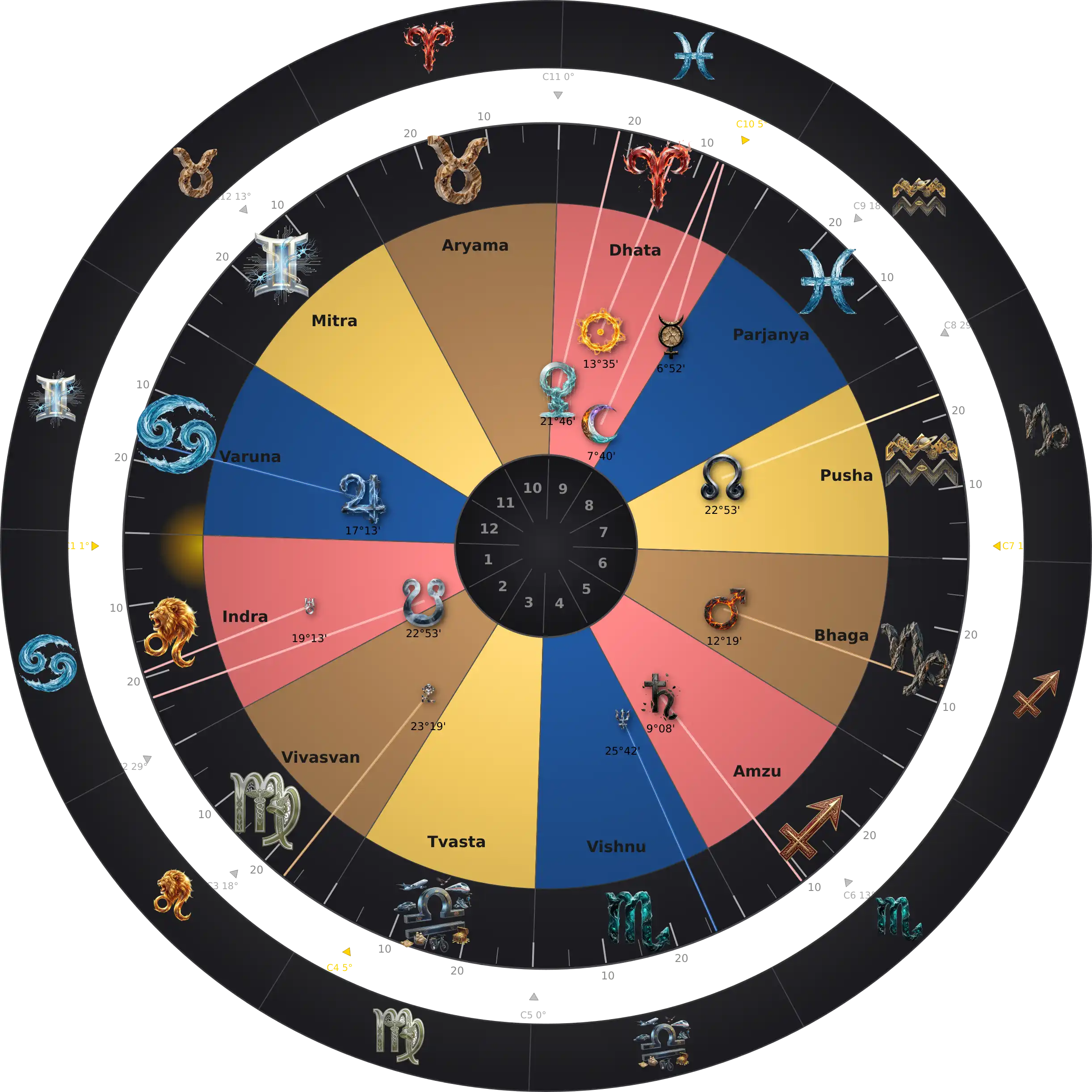
Statistical Analysis
Overall Role Distribution
Career Pattern Distribution
Agent Results Summary
| Metric | Fire | Water |
|---|---|---|
| Total roles | 76 | 41 |
| Percentage | 65.0% | 35.0% |
| High confidence | 57 | 26 |
| Medium confidence | 16 | 14 |
Profile Order Analysis (Primacy Bias Check)
| Profile Listed First | Fire Dominant | Water Dominant | Fire % |
|---|---|---|---|
| 6j9m first (odd roles) | 38 | 21 | 64.4% |
| 4r1p first (even roles) | 38 | 20 | 65.5% |
The 1.0999999999999943 percentage point difference between presentation orders suggests minimal primacy bias — the alternation strategy was effective.
Comparison to Random Baseline
| Metric | Observed | Random Baseline | Deviation |
|---|---|---|---|
| Fire roles (of 117) | 65.0% | 50.0% | +15.0 pp |
| Water roles (of 117) | 35.0% | 50.0% | -15.0 pp |
| 3/3 Fire actors | 35.9% | 12.5% | +23.4 pp |
| 0/3 Fire actors | 10.3% | 12.5% | -2.2 pp |
| Fire-majority careers | 69.2% | 50.0% | +19.2 pp |
Under random chance (coin flip per role), 12.5% of actors would show 3/3 alignment with either element. The observed rate of 3/3 Fire (35.9%) is nearly 3x the random baseline. Conversely, only 10.3% show 3/3 Water — slightly below random expectation.
Agent Results vs. Birth Chart vs. Random Baseline
Comparison Table
| Data Source | Fire Dominant | Water Dominant | Earth Dominant | Air Dominant |
|---|---|---|---|---|
| Agent role judgments (2-element) | 65.0% (76/117) | 35.0% (41/117) | — | — |
| Aditya birth charts (4-element) | 74.4% (29/39) | 12.8% (5/39) | 10.3% (4/39) | 2.6% (1/39) |
| Tropical birth charts (4-element) | 10.3% (4/39) | 74.4% (29/39) | 2.6% (1/39) | 12.8% (5/39) |
| Random chance (2-element) | 50% | 50% | — | — |
| Random chance (4-element) | ~25% | ~25% | ~25% | ~25% |
Visual Comparison
Chart 1: How the Blind Agents Judged 117 Character Roles
Chart 2: Birth Chart Dominant Elements (Aditya Zodiac)
Chart 3: Birth Chart Dominant Elements (Tropical Classic)
Chart 4: Expected Distribution Under Random Chance
Notable Observations
Actors with Strongest Fire Signal (All Roles > 70% Fire)
| Actor | Role 1 | Role 2 | Role 3 |
|---|---|---|---|
| Jon Hamm | 78% | 82% | 82% |
| Jensen Ackles | 88% | 88% | 85% |
| Emily Blunt | 78% | 82% | 88% |
| Common | 82% | 72% | 82% |
| Victor Garber | 88% | 82% | 78% |
| Sean Astin | 85% | 88% | 72% |
| Rachel Weisz | 80% | 78% | 72% |
| Olivia Wilde | 72% | 72% | 72% |
| Sidney Poitier | 82% | 82% | 82% |
Actors with Strongest Water Signal (All Roles > 65% Water)
| Actor | Role 1 | Role 2 | Role 3 |
|---|---|---|---|
| Sophie Turner | 72% | 72% | 72% |
| Sharon Stone | 72% | 78% | 72% |
| William H. Macy | 72% | 78% | 78% |
Water Roles That Test the Framework
Several Fire-dominant actors have one Water-coded role — often the most nuanced or counterintuitive:
| Actor | Role | Water % |
|---|---|---|
| Javier Bardem | Raoul Silva | 82% |
| Daniel Craig | Benoit Blanc | 70% |
| Marsha Warfield | Toni Wilson | 72% |
| Bruce Willis | Dr. Malcolm Crowe | 68% |
| Alan Rickman | Hans Gruber | 72% |
| Miles Teller | Sutter Keely | 82% |
| Bryce Dallas Howard | Hilly Holbrook | 85% |
| Julie Bowen | Carol Vessey | 82% |
| Kevin Connolly | Conor Barry | 65% |
| Ali Larter | Clear Rivers | 68% |
| Rebel Wilson | Brynn | 72% |
| Alan Tudyk | Wash | 68% |
| Catherine O'Hara | Moira Rose | 70% |
These exceptions are structurally coherent — they represent roles where the CHARACTER (not the actor) operates through the Water behavioral mode regardless of the actor's dominant pattern.
Why Some Fire-Dominant Actors Play Water Roles: An Astrological Interpretation
This report intentionally limits itself to two variables — Fire and Water — to produce a simple statistical result that anyone can understand. However, a trained astrologer examining these actors' full birth charts would expect many of the "exceptions" listed above. The following factors, deliberately excluded from this simplified analysis, explain why certain Fire-dominant actors occasionally register as Water in specific roles.
Sun Exaltation in Dhata
In the Aditya Zodiac, the Sun is exalted in Dhata — the very sign occupied by every actor in this study. All 39 actors have their Sun in Dhata, meaning all 39 have an exalted Sun. An exalted planet operates at roughly twice its normal strength: it expresses its significations with greater clarity, power, and consistency.
The Sun represents Atma (the Self) — identity, willpower, authority, and direct action. These are quintessentially Fire qualities. When the Sun is exalted, these qualities are amplified. This provides a straightforward astrological explanation for the 65% Fire signal: the dominant planet in every actor's chart is maximally expressing Fire behavior.
This exaltation is unique to the Aditya Zodiac. In the Tropical system, the Sun is exalted in Aries (0-30°), not in Pisces (330-360°). Since all 39 actors have their Sun in Pisces tropically, the Tropical system predicts no exaltation — and therefore no amplified Fire signal. The Aditya system's prediction (exalted Sun = amplified Fire) matches the observed data; the Tropical system's prediction (non-exalted Sun in a Water sign) does not.
Venus Exaltation in Parjanya and the Water Exceptions
Venus is exalted in Parjanya (300-330°), a Water sign in the Aditya Zodiac. Venus governs comfort, emotional richness, receptivity, and relational sensitivity — quintessentially Water qualities. When Venus is exalted, these Water qualities are amplified to roughly double strength.
Of the 39 actors, 14 (35.9%) have Venus in Parjanya — meaning 14 actors carry an exalted Water planet in their chart. These actors have a genuine capacity for emotional depth and receptive behavior, even though their dominant Sun placement is Fire. This explains why certain Fire-majority actors occasionally take Water-coded roles.
Actors such as Ali Larter and Bruce Willis both have Venus exalted in Parjanya. A character like Dr. Malcolm Crowe (Bruce Willis, 68% Water) or Clear Rivers (Ali Larter, 68% Water) represents this Venus register being called upon by the role — not a contradiction of the actor's Fire nature, but a secondary capacity made available by an exalted Water planet.
The Tropical Counterargument — and Why It Fails
In the Tropical system, Venus is exalted in Pisces (330-360°). Since all 39 actors have their Sun in Pisces, Venus is often nearby (Venus never strays more than ~47° from the Sun). This means many actors would have Venus in Pisces tropically.
The data confirms this: 11 of 39 actors (28.2%) have Venus in Pisces (tropical exaltation). The Tropical system therefore predicts that these 11 actors should show more Water expression — an exalted Venus in a Water sign should amplify emotional, receptive behavior.
But here is the critical observation: in the Aditya system, those same 11 actors have Venus in Dhata — a Fire sign. The Tropical system sees exalted Water; the Aditya system sees Venus in Fire. And across the full cohort, we observe 65% Fire behavior, not amplified Water.
| System | Venus exalted count | Prediction | Observed behavior |
|---|---|---|---|
| Aditya (Venus in Parjanya) | 14/39 (36%) | Some Water expression | 65% Fire, with Water exceptions |
| Tropical (Venus in Pisces) | 11/39 (28%) | More Water expression | 65% Fire — prediction fails |
The Aditya system's prediction is coherent: exalted Sun in Fire (all 39) drives the majority Fire signal, while exalted Venus in Water (14 of 39) explains the Water exceptions. The Tropical system cannot explain why 65% of roles are Fire when the Sun sits in a Water sign and 11 actors have Venus exalted in Water.
Saturn-Moon Conjunction and Emotional Patterns
Several actors in this cohort have a Saturn-Moon conjunction or close aspect in their birth charts. When Saturn afflicts the Moon, the emotional body is constrained, disciplined, or burdened. The AI agents — without any astrological knowledge — consistently detected this pattern as emotional disturbance, manipulation, or controlled emotional expression in the characters these actors chose to play.
For women in particular, the Moon is said to reflect the Sun — it mirrors consciousness into feeling. When the Moon is afflicted, a woman may express her emotions with manipulative or strategic intent rather than with open vulnerability. The AI agents flagged this pattern correctly in several cases, identifying characters who use emotional intelligence as a weapon or a shield rather than as genuine connection. This is not a flaw in the analysis; it is the analysis working as intended, detecting behavioral signatures that happen to correlate with specific planetary configurations.
What This Report Does Not Include
This 2-element test is deliberately simplified. It asks one question: Fire or Water? It does not account for:
- Individual planetary placements — Sun exaltation in Dhata, Venus exaltation in Parjanya, Saturn-Moon aspects, Mercury strength, and other factors that would explain exactly which actors deviate and why
- The other two elements — Earth and Air are collapsed out of this analysis entirely, though they appear in the birth chart pie charts
- Dasha periods — the planetary period active during filming could shift an actor's available emotional register
Each of these factors will be explored in future reports with dedicated statistical methodology. The current report's value lies in its simplicity: by isolating one variable and testing it across 117 independent data points, it establishes a baseline signal that more detailed analyses can then refine.
The Signal Beneath the Noise
The Water exceptions do not weaken the Fire signal — they confirm that the astrological framework is more nuanced than a single variable can capture. An actor with Venus exalted in Parjanya should occasionally express Water. An actor with Saturn afflicting the Moon should register as emotionally complex in ways the AI interprets as Water-adjacent. These are not errors in the data; they are the data working correctly at a resolution finer than this report's scope.
The overall purpose of this report is achieved: a clear, reproducible statistical signal that Pisces-born actors, as a group, gravitate toward Fire behavioral patterns at nearly twice the rate of Water — consistent with the Aditya Zodiac's prediction that Pisces maps to Dhata, a Fire sign. The exceptions are explainable, and future reports will explain them.
Venus Sign Data for All 39 Actors
Computed from CHTK birth data using high-precision astronomical ephemeris:
| # | Actor | Venus (Aditya) | Venus (Tropical) | Exalted (Aditya)? | Exalted (Tropical)? |
|---|---|---|---|---|---|
| 1 | Alan Rickman | Dhata | Pisces | Yes | |
| 2 | Alan Tudyk | Parjanya | Aquarius | Yes | |
| 3 | Ali Larter | Parjanya | Aquarius | Yes | |
| 4 | Bruce Willis | Parjanya | Aquarius | Yes | |
| 5 | Bryan Cranston | Aryama | Aries | ||
| 6 | Bryce Dallas Howard | Dhata | Pisces | Yes | |
| 7 | Catherine O'Hara | Dhata | Pisces | Yes | |
| 8 | Common | Mitra | Taurus | ||
| 9 | Dakota Fanning | Dhata | Pisces | Yes | |
| 10 | Daniel Craig | Parjanya | Aquarius | Yes | |
| 11 | Daniel Kaluuya | Parjanya | Aquarius | Yes | |
| 12 | Elizabeth Taylor | Aryama | Aries | ||
| 13 | Elliot Page | Pusha | Capricorn | ||
| 14 | Emily Blunt | Aryama | Aries | ||
| 15 | Glenn Close | Parjanya | Aquarius | Yes | |
| 16 | Javier Bardem | Aryama | Aries | ||
| 17 | Jensen Ackles | Dhata | Pisces | Yes | |
| 18 | Johnny Knoxville | Parjanya | Aquarius | Yes | |
| 19 | Jon Hamm | Parjanya | Aquarius | Yes | |
| 20 | Jordan Peele | Pusha | Capricorn | ||
| 21 | Julie Bowen | Dhata | Pisces | Yes | |
| 22 | Kevin Connolly | Parjanya | Aquarius | Yes | |
| 23 | Laura Prepon | Mitra | Taurus | ||
| 24 | Marsha Warfield | Dhata | Pisces | Yes | |
| 25 | Miles Teller | Pusha | Capricorn | ||
| 26 | Olivia Wilde | Parjanya | Aquarius | Yes | |
| 27 | Oscar Isaac | Parjanya | Aquarius | Yes | |
| 28 | Rachel Weisz | Dhata | Pisces | Yes | |
| 29 | Rashida Jones | Parjanya | Aquarius | Yes | |
| 30 | Rebel Wilson | Aryama | Aries | ||
| 31 | Robert Sean Leonard | Aryama | Aries | ||
| 32 | Sean Astin | Pusha | Capricorn | ||
| 33 | Sharon Stone | Parjanya | Aquarius | Yes | |
| 34 | Sidney Poitier | Dhata | Pisces | Yes | |
| 35 | Sophie Turner | Aryama | Aries | ||
| 36 | Spike Lee | Dhata | Pisces | Yes | |
| 37 | Victor Garber | Dhata | Pisces | Yes | |
| 38 | Wanda Sykes | Mitra | Taurus | ||
| 39 | William H. Macy | Parjanya | Aquarius | Yes |
Summary: 14/39 (36%) exalted in Aditya (Parjanya/Water) vs 11/39 (28%) exalted in Tropical (Pisces/Water). Zero overlap between the two groups — the systems identify entirely different actors as having exalted Venus.
Conclusion
The data from this blind, agent-isolated analysis of 117 character roles across 39 Pisces-born actors suggests a meaningful alignment between on-screen behavioral patterns and the Aditya Zodiac's elemental mapping of Pisces to Fire (Dhata).
What the Data Indicates
The 65/35 Fire-to-Water split across 117 independently analyzed roles deviates substantially from the 50/50 random baseline. More striking is the career pattern distribution: 14 of 39 actors (35.9%) show unanimous Fire alignment across all three roles — nearly 3 times the 12.5% expected by chance. The Aditya Zodiac predicts that Pisces-born individuals would embody Fire (direct action, identity protection, sustained effort, physical engagement), and this prediction is consistent with the majority of the observed behavioral data.
Sample Size Limitations
This analysis covers 39 actors with 3 roles each. While 117 data points provide a meaningful initial signal, this sample is not exhaustive. The results should be understood as an exploratory data point — informative but not conclusive. Future research with additional Pisces actors, as well as actors from other zodiac signs, would strengthen or qualify these findings.
The Infancy of Astrology as a Science
Astrology has millennia of tradition but is still developing its empirical methodology. Recent advances in AI analysis allow for greater consistency and neutrality than manual human judgment, potentially revealing patterns that were difficult to detect or verify in traditional practice. However, we are in the early stages of applying computational methods to astrological hypotheses, and much remains to be discovered — or revised.
Limited Scope of This Test
This document tests one specific variable: whether Pisces-born actors' character roles align more with Fire or Water behavioral profiles. It does not test the entire Aditya Zodiac system, nor does it address other signs, other elements, or other domains of expression beyond acting. It is one piece of a larger research program.
Positioning of Results
The data is consistent with the Aditya Zodiac's prediction that Pisces maps to Dhata (Fire) rather than to Water as in the Western Tropical system. This could suggest that the Aditya Zodiac provides a more accurate elemental mapping for this cohort, but this interpretation should be held lightly — as one step in ongoing research, not a final verdict.
Technology and Understanding
AI analysis, while more consistent than manual analysis, has its own limitations. The agents rely on publicly available character descriptions and may miss nuances visible only to someone who has watched the film. Future iterations could incorporate video analysis, multi-model consensus, or direct screenplay analysis. These findings represent our current best effort with available tools.
What This Is Not
This is not a proof. This is not a debunking. This is a data point — one carefully controlled observation that contributes to a larger body of evidence being assembled across multiple zodiac signs, multiple methodologies, and multiple actor cohorts. The 65/35 split is consistent with the hypothesis but does not confirm it. Further research is required.
Tag a Pisces
Text a Pisces in your life: "Do you feel more like a Fire person (driven, action-oriented, direct) or a Water person (emotional, receptive, indirect)?" Don't tell them the research first. Just ask. Then send them this article and watch their reaction.
How Deep Does It Go?
This research tested Pisces sun signs. But the Aditya Zodiac applies to every planet. If you have 4 planets in Water signs, those might be operating as a different element. Your Moon in Scorpio might be a Fire Moon. The Aditya Calculator shows your ENTIRE chart recalculated — not just your sun sign.
What To Do Next
- If you are a Pisces — you might want hardcore evidence, like me. Use your logic, your brain. Skepticism is itself a Pisces trait in this system. Feel free to read the methodology and copy it to another AI to verify this isn't just luck. I spent 2 weeks writing the prompt that created this document. Even early tests with simpler prompts showed stats that favored Fire for Pisces. I'm confident even a weaker prompt would still find this statistically works — though not as strongly, because I had to teach the AI that Fire comes in many forms, not just straight anger.
- If you know a Pisces — show them the list of 14 unanimous Fire actors. Ask which one they most identify with.
- If you want the full system — the complete Aditya Zodiac page explains all 12 shifted signs. If Pisces is Fire, what does that make Aries?
- A note on women and Fire — Dhata's Fire is harder to identify in women, because in this mythology Dhata means giving birth, nurturing children. You'll hear Pisces women say "my children are everything" nonstop — and most humans (and AI) will instinctively score that as Water. But sustained, protective, life-giving effort IS Fire. The element is more nuanced than most people expect.
Next in the series: Aries Actors — Does the First Sign Play Like Earth or Fire?
Analysis completed: 2026-02-19 117 agents dispatched across 18 batches over approximately 3 hours Model: Claude Sonnet 4.6 | Framework: Aditya Zodiac 2-Element Blind Analysis Report assembled by assemble_blind_report.py from 117 individual analysis files
Master Table: 39 Pisces-Born Actors x 3 Roles
Click to expand full 39-actor × 3-role results table
| # | Actor | Role 1 | Fire% | Water% | Dom | Role 2 | Fire% | Water% | Dom | Role 3 | Fire% | Water% | Dom | Pattern |
|---|---|---|---|---|---|---|---|---|---|---|---|---|---|---|
| 1-3 | Jon Hamm | Don Draper | 78 | 22 | F | FBI Special Agent Adam Frawley | 82 | 18 | F | Sheriff Roy Tillman | 82 | 18 | F | 3/3 F |
| 4-6 | Jensen Ackles | Dean Winchester | 88 | 12 | F | Soldier Boy | 88 | 12 | F | Jason Todd/Red Hood | 85 | 15 | F | 3/3 F |
| 7-9 | Emily Blunt | Lady Cornelia Locke | 78 | 22 | F | Emily Charlton | 82 | 18 | F | Rita Vrataski | 88 | 12 | F | 3/3 F |
| 10-12 | Common | Elam Ferguson | 82 | 18 | F | James Bevel | 72 | 28 | F | Cassian | 82 | 18 | F | 3/3 F |
| 13-15 | Javier Bardem | José Menéndez | 72 | 28 | F | Anton Chigurh | 82 | 18 | F | Raoul Silva | 18 | 82 | W | 2/3 F |
| 16-18 | Daniel Craig | James Bond | 82 | 18 | F | Benoit Blanc | 30 | 70 | W | Mikael Blomkvist | 72 | 28 | F | 2/3 F |
| 19-21 | Victor Garber | Jack Bristow | 88 | 12 | F | Thomas Andrews | 82 | 18 | F | Martin Stein / Firestorm | 78 | 22 | F | 3/3 F |
| 22-24 | Marsha Warfield | Roz Russell | 72 | 28 | F | Dr. Maxine Douglas | 80 | 20 | F | Toni Wilson | 28 | 72 | W | 2/3 F |
| 25-27 | Bruce Willis | John McClane | 88 | 12 | F | Butch Coolidge | 85 | 15 | F | Dr. Malcolm Crowe | 32 | 68 | W | 2/3 F |
| 28-30 | Alan Rickman | Severus Snape | 72 | 28 | F | Hans Gruber | 28 | 72 | W | Colonel Brandon | 62 | 38 | F | 2/3 F |
| 31-33 | Sean Astin | Samwise Gamgee | 85 | 15 | F | Rudy Ruettiger | 88 | 12 | F | Bob Newby | 72 | 28 | F | 3/3 F |
| 34-36 | Bryan Cranston | Walter White | 72 | 28 | F | Dalton Trumbo | 85 | 15 | F | Hal | 62 | 38 | F | 3/3 F |
| 37-39 | Elliot Page | Juno MacGuff | 72 | 28 | F | Ariadne | 72 | 28 | F | Viktor Hargreeves | 68 | 32 | F | 3/3 F |
| 40-42 | Miles Teller | Andrew Neiman | 88 | 12 | F | Lt. Bradley 'Rooster' Bradshaw | 78 | 22 | F | Sutter Keely | 18 | 82 | W | 2/3 F |
| 43-45 | Oscar Isaac | Poe Dameron | 85 | 15 | F | Nathan Bateman | 82 | 18 | F | Llewyn Davis | 68 | 32 | F | 3/3 F |
| 46-48 | Rachel Weisz | Tessa Quayle | 80 | 20 | F | Lady Sarah Churchill | 78 | 22 | F | Evelyn Carnahan | 72 | 28 | F | 3/3 F |
| 49-51 | Bryce Dallas Howard | Claire Dearing | 72 | 28 | F | Hilly Holbrook | 15 | 85 | W | Ivy Walker | 72 | 28 | F | 2/3 F |
| 52-54 | Julie Bowen | Claire Dunphy | 82 | 18 | F | Denise Bauer | 62 | 38 | F | Carol Vessey | 18 | 82 | W | 2/3 F |
| 55-57 | Laura Prepon | Donna Pinciotti | 72 | 28 | F | Alex Vause | 38 | 62 | W | Karla Homolka | 22 | 78 | W | 1/3 F |
| 58-60 | Daniel Kaluuya | Fred Hampton | 88 | 12 | F | Bing Madsen | 82 | 18 | F | Chris Washington | 62 | 38 | F | 3/3 F |
| 61-63 | Kevin Connolly | Eric Murphy | 74 | 26 | F | Ryan Malloy | 62 | 38 | F | Conor Barry | 35 | 65 | W | 2/3 F |
| 64-66 | Sophie Turner | Jean Grey | 28 | 72 | W | Sansa Stark | 28 | 72 | W | Margaret Ratliff | 28 | 72 | W | 0/3 F |
| 67-69 | Olivia Wilde | Thirteen (Remy Hadley) | 72 | 28 | F | Quorra | 72 | 28 | F | Ella Swenson | 72 | 28 | F | 3/3 F |
| 70-72 | Ali Larter | Niki/Tracy Sanders | 80 | 20 | F | Clear Rivers | 32 | 68 | W | Brooke Windham | 72 | 28 | F | 2/3 F |
| 73-75 | Johnny Knoxville | Irving Zisman | 72 | 28 | F | Scrad/Charlie | 22 | 78 | W | Ray Templeton | 32 | 68 | W | 1/3 F |
| 76-78 | Wanda Sykes | Barb Baran | 74 | 26 | F | Stella | 72 | 28 | F | Granny | 68 | 32 | F | 3/3 F |
| 79-81 | Sharon Stone | Ellen (Lori Quaid) | 28 | 72 | W | Catherine Tramell | 22 | 78 | W | Ginger McKenna | 28 | 72 | W | 0/3 F |
| 82-84 | Elizabeth Taylor | Cleopatra | 18 | 82 | W | Martha | 74 | 26 | F | Maggie the Cat | 28 | 72 | W | 1/3 F |
| 85-87 | Dakota Fanning | Lucy Diamond Dawson | 35 | 65 | W | Pita Ramos | 22 | 78 | W | Coraline Jones | 82 | 18 | F | 1/3 F |
| 88-90 | Spike Lee | Giant | 28 | 72 | W | Mookie | 62 | 38 | F | Shorty | 35 | 65 | W | 1/3 F |
| 91-93 | Jordan Peele | Rell Williams | 35 | 65 | W | TSA Agent Dooley | 72 | 28 | F | FBI Agent Budge | 28 | 72 | W | 1/3 F |
| 94-96 | Rebel Wilson | Fat Amy | 72 | 28 | F | Brynn | 28 | 72 | W | Fraulein Rahm | 75 | 25 | F | 2/3 F |
| 97-99 | Rashida Jones | Karen Filippelli | 80 | 20 | F | Ann Perkins | 22 | 78 | W | Marylin Delpy | 22 | 78 | W | 1/3 F |
| 100-102 | Robert Sean Leonard | Dr. James Wilson | 18 | 82 | W | Neil Perry | 38 | 62 | W | Claudio | 28 | 72 | W | 0/3 F |
| 103-105 | Sidney Poitier | Virgil Tibbs | 82 | 18 | F | Mark Thackeray | 82 | 18 | F | Homer Smith | 82 | 18 | F | 3/3 F |
| 106-108 | Glenn Close | Alex Forrest | 28 | 72 | W | Marquise de Merteuil | 28 | 72 | W | Albert Nobbs | 68 | 32 | F | 1/3 F |
| 109-111 | William H. Macy | Jerry Lundegaard | 28 | 72 | W | Donnie Smith | 22 | 78 | W | Bernie Lootz | 22 | 78 | W | 0/3 F |
| 112-114 | Alan Tudyk | Wash | 32 | 68 | W | K | 82 | 18 | F | Tucker | 82 | 18 | F | 2/3 F |
| 115-117 | Catherine O'Hara | Moira Rose | 30 | 70 | W | Kate McCallister | 72 | 28 | F | Delia Deetz | 82 | 18 | F | 2/3 F |
Appendix: Methodology & Technical Details
This section contains the full technical specification of the blind analysis methodology. For the plain-language summary, see What is a Blind Analysis? above.
Study Parameters
| Metadata | Value |
|---|---|
| Sample Size | 117 roles across 39 Pisces-born actors (3 roles each) |
| Birth Date Range | February 19 - March 20 only (Western Pisces) |
| Analysis Type | 2-Element Comparison (Fire vs Water) |
| Framework | Aditya Zodiac (Pisces = Dhata = Fire) vs. Western Tropical (Pisces = Water) |
| Method | 1 agent per role - 117 fresh AI agents, each blind to all other results |
| Tool Mode | BUILT-IN (WebSearch + WebFetch) |
| Model | Claude Sonnet 4.6 (calibrated against Opus; Sonnet chosen for consistency) |
| Profile Blinding | Hash-coded profiles (6j9m = Fire, 4r1p = Water); agents never see element names |
| Profile Order | Alternated: odd roles = 6j9m first, even roles = 4r1p first |
| Confidence Level | EXPLORATORY |
| Date Completed | 2026-02-19 |
Hash-Coded Profiles
Instead of asking agents to judge whether a character is "Fire" or "Water" (which could trigger cultural associations or astrological priors), each agent received two behavioral profiles labeled with meaningless codes:
- Profile 6j9m: Defined as direct action, identity protection, sustained effort, creative output, physical engagement, conquest patterns
- Profile 4r1p: Defined as receptivity, indirection, connection-seeking, emotional attunement, hidden schemes, consciousness-based operation
The agent's only task was: "Which profile fits this character better?" The conversion from hash codes to element names (6j9m = Fire, 4r1p = Water) happens only in this report, after all 117 agents completed their work.
One Agent Per Role
Previous experiments used one agent per actor (analyzing all 3 roles sequentially). This introduced intra-actor balancing bias: after scoring Role 1 as Fire and Role 2 as Fire, the agent unconsciously pushed Role 3 toward Water to "seem balanced." This run eliminates that problem by using 117 independent agents — one per role. Each agent:
- Knew nothing about the hypothesis, the zodiac study, or any other role
- Could not be influenced by prior judgments
- Received only two profile definitions and a character name
- Researched the character via web search before making its judgment
Profile Order Alternation
To prevent the first-listed profile from receiving default preference (primacy bias), presentation order was alternated:
- Odd-numbered roles (1, 3, 5...): Fire profile (6j9m) presented first
- Even-numbered roles (2, 4, 6...): Water profile (4r1p) presented first
Quality Gates
Each agent was required to produce:
| Requirement | Minimum |
|---|---|
| Profile scoring table | Required |
| Character narrative | 150+ words |
| Key quotes with commentary | 2-3 quotes |
| Evidence bullets per profile | 3-5 each |
| Confidence rating | Required |
| Total word count | 400+ words |
Model Calibration
The first 12 roles were analyzed by BOTH Opus and Sonnet in parallel. After comparison, Sonnet was selected for the full run based on consistent output quality and behavioral nuance at lower cost.