Solar Eclipse February 17, 2026 - Global Analysis (48 Countries)
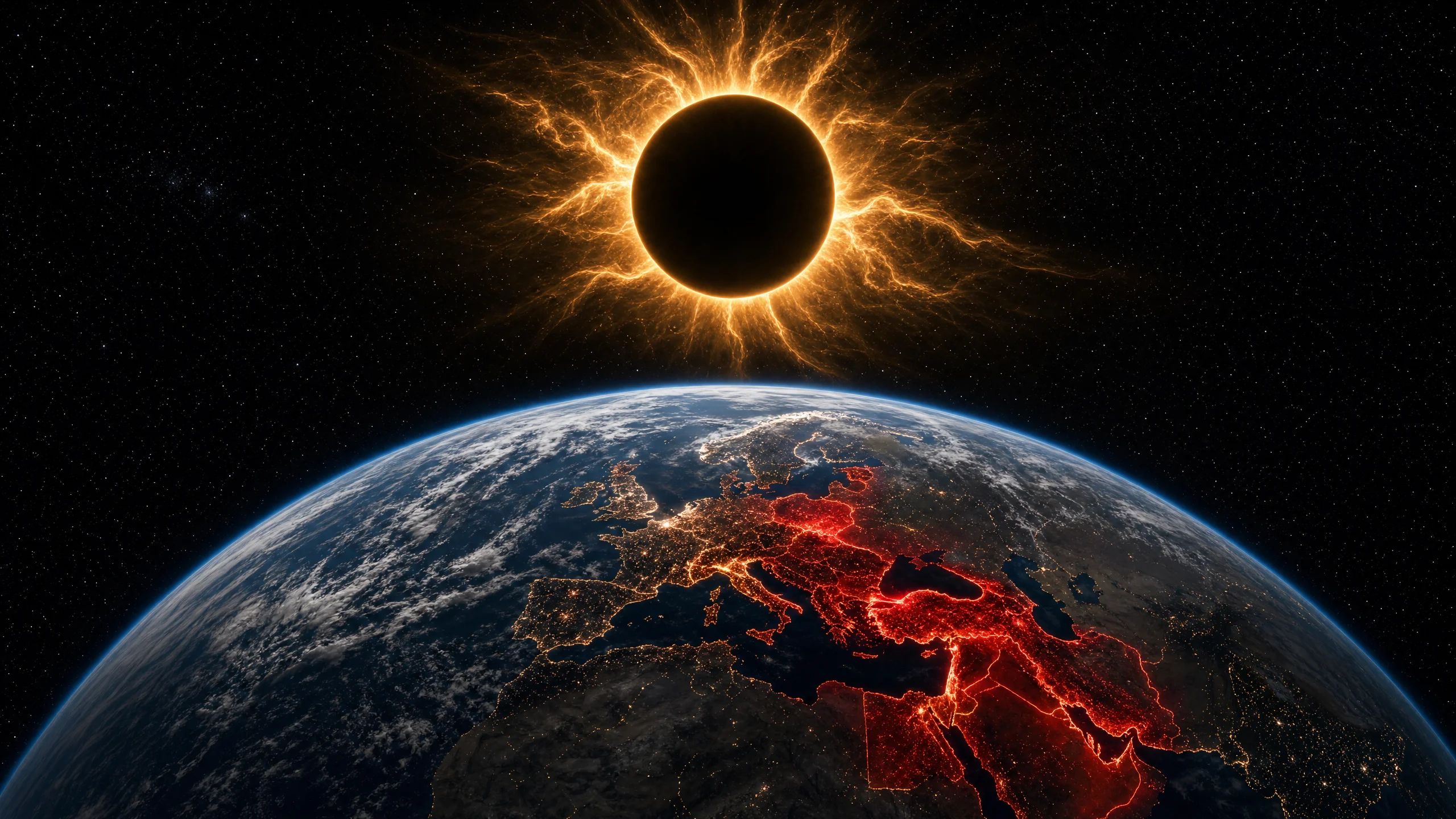
Eclipse Date: February 17, 2026 at 12:11:53 UTC Eclipse Position: 28° 50' Parjanya (28.84° Tropical Aquarius) Saros Series: 121 (Member #61 of 71) Analysis Date: January 2026 Method: High-precision astronomical calculations with whole-sign house system Countries Analyzed: 48
Sit back and enjoy this relaxed overview of the February 17, 2026 solar eclipse and its astrological impact across 48 world capitals.
Executive Summary
This report analyzes the solar eclipse of February 17, 2026 from the perspective of 48 major world capitals, focusing on nations with geopolitical importance, current conflicts, or potential tension points. The analysis uses the Aditya Zodiac system and evaluates house placements and planetary exchanges (Parivartana yoga).
Key Finding: Geographic Risk Distribution
A remarkable 46% of analyzed nations (22 out of 48) have the eclipse falling in their 8th house with a dangerous 1st-8th house exchange, marking them as high-risk zones for significant transformation or crisis. This includes nearly all of Europe from the United Kingdom to Ukraine, the entire Middle East conflict zone, as well as Greece, Poland, Romania, Serbia, Belarus, Moldova, Egypt, Ethiopia, Sudan, and Madagascar.
Sun-Jupiter Exchange (Universal Pattern)
This eclipse creates a universal Sun-Jupiter exchange (Parivartana yoga) visible from every location on Earth:
- Sun is in Parjanya (Jupiter's sign) at 28°50'
- Jupiter is in Indra (Sun's sign) at 18°44'
This mutual exchange ties the eclipse energy to Jupiter's expansive and philosophical nature — but its effect varies by house placement.
Exchange Severity by House
| Severity | Houses Involved | Count | Effect |
|---|---|---|---|
| BAD | 1st ↔ 8th | 23 | 8th house transformation themes infect national identity (1st) |
| MODERATE_BAD | 7th ↔ 12th, 5th ↔ 12th | 9 | 12th house losses affect partnerships/creativity |
| LESS_BAD | 6th ↔ 11th, 1st ↔ 6th | 9 | 6th house conflict themes extend to gains/identity |
| None | Non-dusthana pairs | 7 | Exchange exists but without dusthana involvement |
Risk Level Classification
Risk Assessment Criteria
| Risk Level | Criteria | Exchange |
|---|---|---|
| CRITICAL | Eclipse in 8th house | 1-8 exchange BAD |
| HIGH | Eclipse in dusthana (6th, 7th, 12th) | MODERATE or LESS_BAD exchange |
| MODERATE | Eclipse in neutral house | No dusthana exchange |
CRITICAL RISK Nations (22 Countries)
These nations share the most volatile eclipse configuration: Indra Ascendant with the eclipse in the 8th house and a dangerous Sun-Jupiter exchange linking the 1st and 8th houses.
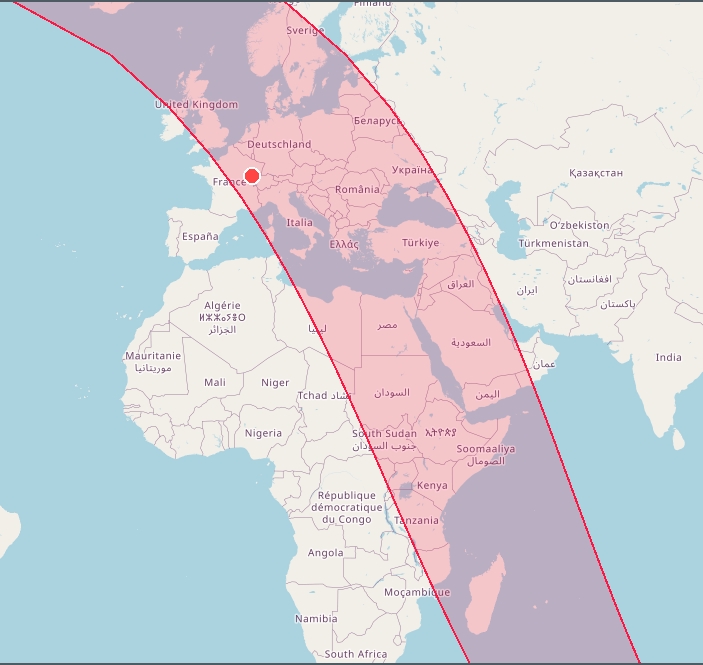
Critical Risk Nations List
Europe (10 countries):
- EU/Belgium, Germany, France, United Kingdom, Ukraine, Poland, Romania, Serbia, Greece, Moldova
Middle East (7 countries):
- Israel, Saudi Arabia, Turkey, Syria, Lebanon, Iraq, Yemen
Africa & Others (5 countries):
- Belarus, Egypt, Ethiopia, Sudan, Madagascar
Detailed Analysis: Critical Risk Nations
| Country | Capital | Ascendant | Local Time | Eclipse House | Exchange |
|---|---|---|---|---|---|
| EU/Belgium | Brussels | Indra | 13:11 | 8th | 1-8 BAD |
| Germany | Berlin | Indra | 13:11 | 8th | 1-8 BAD |
| France | Paris | Indra | 13:11 | 8th | 1-8 BAD |
| United Kingdom | London | Indra | 12:11 | 8th | 1-8 BAD |
| Ukraine | Kyiv | Indra | 14:11 | 8th | 1-8 BAD |
| Israel | Jerusalem | Indra | 14:11 | 8th | 1-8 BAD |
| Saudi Arabia | Riyadh | Indra | 15:11 | 8th | 1-8 BAD |
| Turkey | Ankara | Indra | 15:11 | 8th | 1-8 BAD |
| Syria | Damascus | Indra | 15:11 | 8th | 1-8 BAD |
| Lebanon | Beirut | Indra | 14:11 | 8th | 1-8 BAD |
| Iraq | Baghdad | Indra | 15:11 | 8th | 1-8 BAD |
| Yemen | Sanaa | Indra | 15:11 | 8th | 1-8 BAD |
| Belarus | Minsk | Indra | 15:11 | 8th | 1-8 BAD |
| Egypt | Cairo | Indra | 14:11 | 8th | 1-8 BAD |
| Ethiopia | Addis Ababa | Indra | 15:11 | 8th | 1-8 BAD |
| Greece | Athens | Indra | 14:11 | 8th | 1-8 BAD |
| Moldova | Chisinau | Indra | 14:11 | 8th | 1-8 BAD |
| Poland | Warsaw | Indra | 13:11 | 8th | 1-8 BAD |
| Romania | Bucharest | Indra | 14:11 | 8th | 1-8 BAD |
| Serbia | Belgrade | Indra | 13:11 | 8th | 1-8 BAD |
| Sudan | Khartoum | Indra | 14:11 | 8th | 1-8 BAD |
| Madagascar | Antananarivo | Indra | 15:11 | 8th | 1-8 BAD |
Significance of This Configuration
The 8th house represents:
- Transformation and endings
- Revelation of hidden matters
- Inheritance and shared resources
- Crises and emergencies
- Death/rebirth cycles
The 1st-8th exchange (Sun in Jupiter's sign, Jupiter in Sun's sign) creates:
- Direct link between national identity (1st) and crisis/transformation (8th)
- Leadership exposed to existential challenges
- Potential for dramatic governmental changes
- High-stakes situations demanding transformation
HIGH RISK Nations (15 Countries)
These nations have challenging configurations involving dusthana houses (6th, 7th, 12th) but without the critical 8th house placement.
High Risk Nations by House
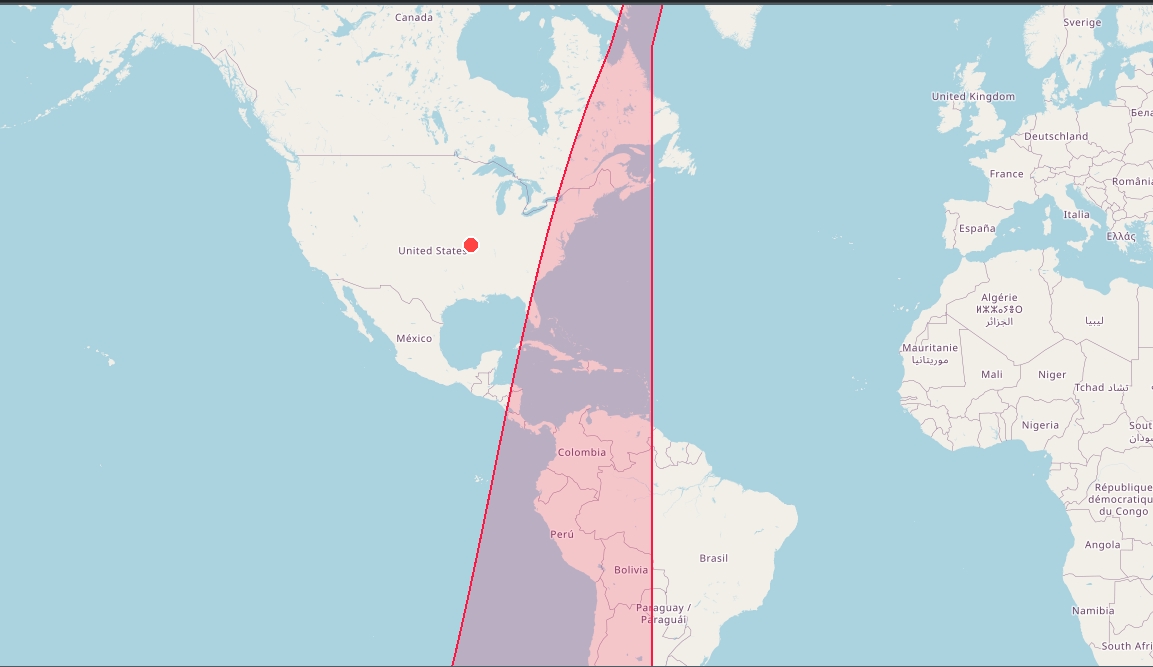
12th House (Losses) - Dhata Ascendant: United States, Colombia, Venezuela
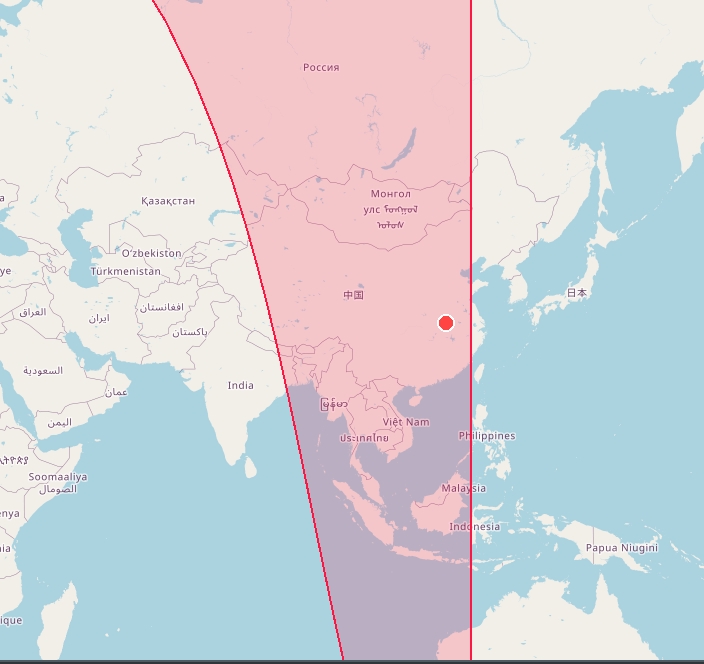
6th House (Conflict) - Tvasta Ascendant: China, Indonesia, Myanmar, Thailand, Vietnam, Bangladesh
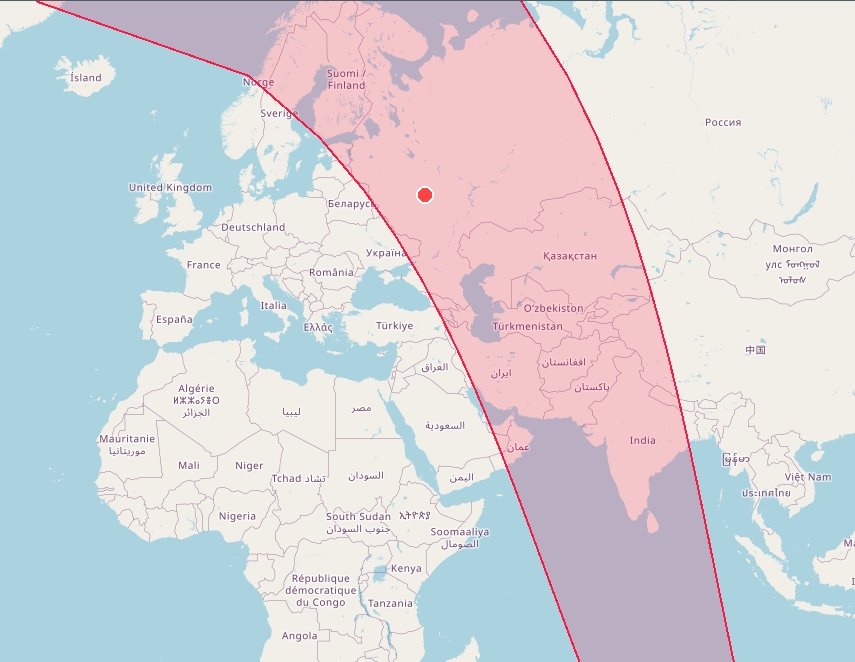
7th House (Partners) - Vivasvan Ascendant: Russia, Iran, India, Pakistan, Afghanistan, Nepal
Detailed Analysis: High Risk Nations
| Country | Capital | Ascendant | Local Time | Eclipse House | Exchange |
|---|---|---|---|---|---|
| United States | Washington D.C. | Dhata | 07:11 | 12th | 5-12 MOD |
| China | Beijing | Tvasta | 20:11 | 6th | 6-11 LESS |
| Russia | Moscow | Vivasvan | 15:11 | 7th | 7-12 MOD |
| Iran | Tehran | Vivasvan | 15:41 | 7th | 7-12 MOD |
| India | New Delhi | Vivasvan | 17:41 | 7th | 7-12 MOD |
| Pakistan | Islamabad | Vivasvan | 17:11 | 7th | 7-12 MOD |
| Afghanistan | Kabul | Vivasvan | 16:41 | 7th | 7-12 MOD |
| Colombia | Bogota | Dhata | 07:11 | 12th | 5-12 MOD |
| Indonesia | Jakarta | Tvasta | 19:11 | 6th | 6-11 LESS |
| Myanmar | Naypyidaw | Tvasta | 18:41 | 6th | 6-11 LESS |
| Thailand | Bangkok | Tvasta | 19:11 | 6th | 6-11 LESS |
| Venezuela | Caracas | Dhata | 08:11 | 12th | 5-12 MOD |
| Vietnam | Hanoi | Tvasta | 19:11 | 6th | 6-11 LESS |
| Bangladesh | Dhaka | Tvasta | 18:11 | 6th | 6-11 LESS |
| Nepal | Kathmandu | Vivasvan | 17:56 | 7th | 7-12 MOD |
Specific Interpretations by House
12th House (United States, Colombia, Venezuela) - Dhata Ascendant
- Theme: Losses, endings, foreign affairs, isolation, hidden expenses
- 12-5 Exchange: Links losses to speculation/creativity
- Manifestation: Financial concerns, foreign policy challenges, political upheavals
- Note: These three Americas nations share the same configuration
6th House (China, Indonesia, Myanmar, Thailand, Vietnam, Bangladesh) - Tvasta Ascendant
- Theme: Enemies, conflicts, health crises, service, labor issues
- 6-11 Exchange: Links conflicts to gains/alliances
- Manifestation: Trade disputes, alliance tensions, internal challenges
- Note: These 6 nations form a regional bloc across South/Southeast/East Asia
7th House (Russia, Iran, India, Pakistan, Afghanistan, Nepal) - Vivasvan Ascendant
- Theme: Partnerships, open enemies, diplomacy, treaties
- 7-12 Exchange: Links diplomacy to hidden matters/losses
- Manifestation: Secret negotiations, diplomatic surprises, alliance shifts
- Note: The India-Pakistan-Afghanistan-Nepal corridor and Russia-Iran axis share this pattern
MODERATE RISK Nations (11 Countries)
These nations have the eclipse in non-dusthana houses with less volatile exchanges.
Moderate Risk Nations by House
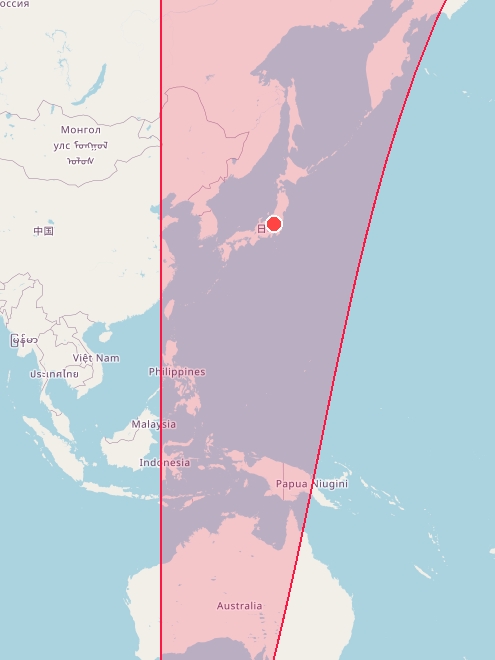
5th House - Vishnu Ascendant: Taiwan, South Korea, North Korea, Japan, Philippines
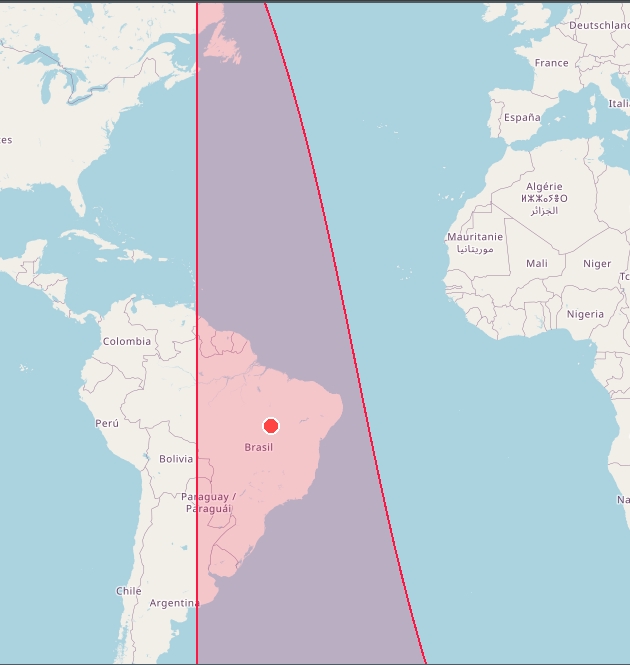
11th House - Aryama Ascendant: Argentina, Brazil
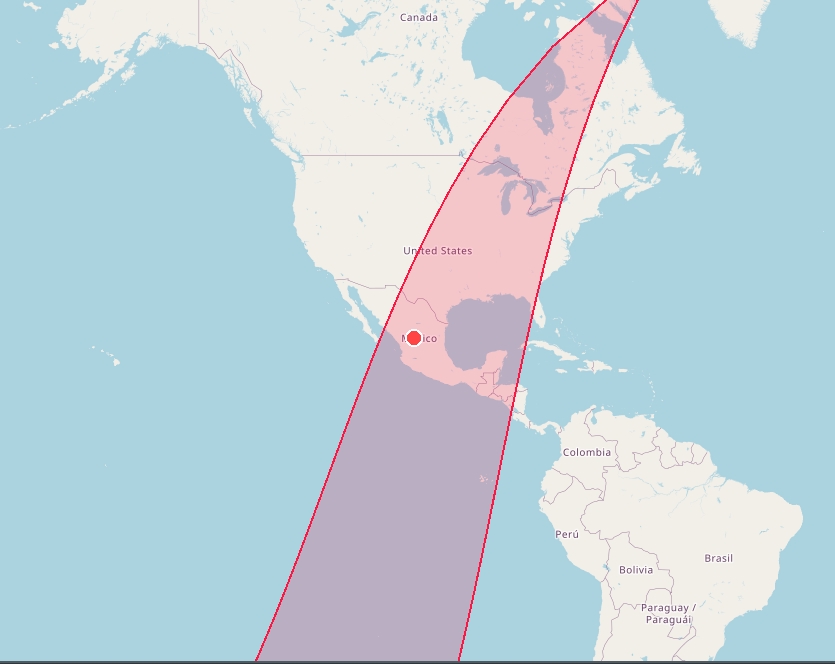
1st House - Parjanya Ascendant: Mexico
9th House - Varuna Ascendant: Nigeria, South Africa
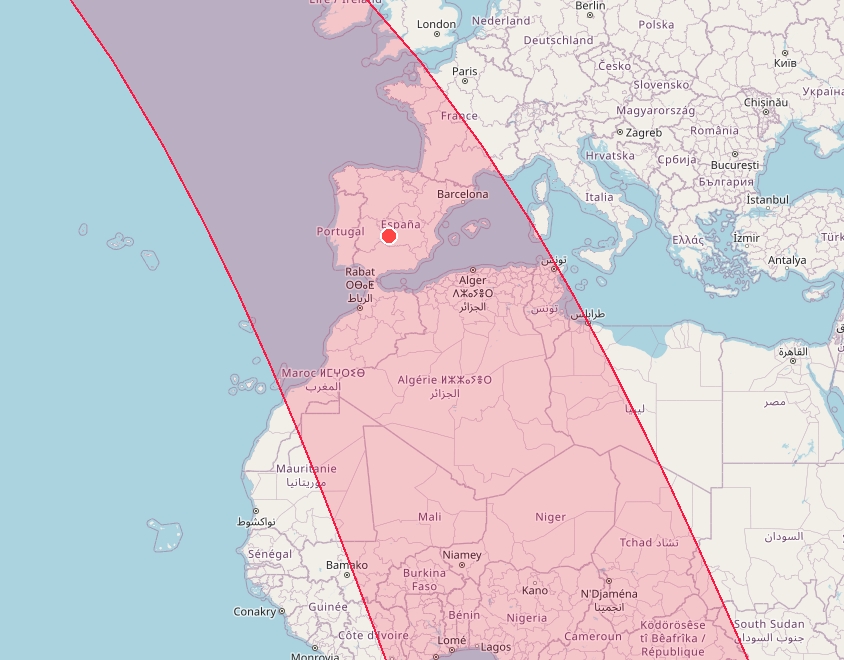
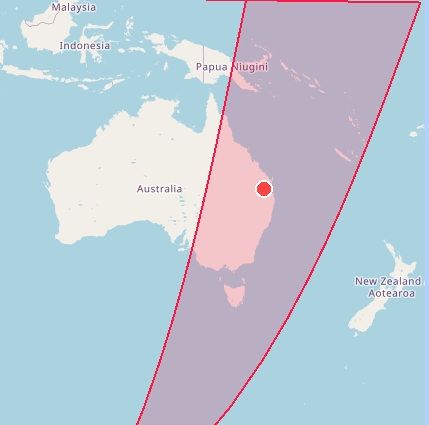
4th House - Amzu Ascendant: Australia
Detailed Analysis: Moderate Risk Nations
| Country | Capital | Ascendant | Local Time | Eclipse House | Exchange |
|---|---|---|---|---|---|
| Taiwan | Taipei | Vishnu | 20:11 | 5th | 5-10 None |
| South Korea | Seoul | Vishnu | 21:11 | 5th | 5-10 None |
| North Korea | Pyongyang | Vishnu | 21:11 | 5th | 5-10 None |
| Japan | Tokyo | Vishnu | 21:11 | 5th | 5-10 None |
| Argentina | Buenos Aires | Aryama | 09:11 | 11th | 4-11 None |
| Brazil | Brasilia | Aryama | 09:11 | 11th | 4-11 None |
| Mexico | Mexico City | Parjanya | 06:11 | 1st | 1-6 LESS |
| Nigeria | Abuja | Varuna | 13:11 | 9th | 2-9 None |
| Philippines | Manila | Vishnu | 20:11 | 5th | 5-10 None |
| South Africa | Pretoria | Varuna | 14:11 | 9th | 2-9 None |
| Australia | Canberra | Amzu | 23:11 | 4th | 4-9 None |
Regional Analysis
Europe: Critical Zone
The critical zone extends from the United Kingdom to Moldova, covering NATO's eastern flank. Belarus (outside NATO) also shares this pattern, creating a potential tension zone along all of Eastern Europe.
Middle East and North Africa: Crisis Zone
The Red Sea corridor (Yemen, Saudi Arabia, Egypt, Ethiopia, Sudan) forms a continuous critical-risk band. This region is already experiencing tensions related to shipping, civil conflicts, and regional power struggles.
Asia-Pacific: Three-Tier Risk Pattern
Southeast Asia (Indonesia, Myanmar, Thailand, Vietnam) joins China in the 6th house pattern - all face internal conflicts or external adversary pressures. The India-Pakistan-Afghanistan corridor shares the 7th house emphasis. Japan, Korea, Taiwan, and the Philippines share the 5th house - political change without crisis.
Americas: Split Pattern
North America (United States) and the Andean region (Colombia, Venezuela) face 12th house challenges. South America's giants (Argentina, Brazil) have the 11th house - potentially more favorable for alliances and economic gains.
Statistical Summary (48 Countries)
Eclipse House Distribution
| House | Count | % | Countries |
|---|---|---|---|
| 8th | 22 | 46% | EU, Germany, France, United Kingdom, Ukraine, Israel, Saudi Arabia, Syria, Lebanon, Iraq, Yemen, Turkey, Belarus, Egypt, Ethiopia, Greece, Moldova, Poland, Romania, Serbia, Sudan, Madagascar |
| 7th | 6 | 13% | Russia, Iran, India, Pakistan, Afghanistan, Nepal |
| 6th | 6 | 13% | China, Indonesia, Myanmar, Thailand, Vietnam, Bangladesh |
| 12th | 3 | 6% | United States, Colombia, Venezuela |
| 5th | 5 | 10% | Taiwan, South Korea, North Korea, Japan, Philippines |
| 11th | 2 | 4% | Argentina, Brazil |
| 9th | 2 | 4% | Nigeria, South Africa |
| 4th | 1 | 2% | Australia |
| 1st | 1 | 2% | Mexico |
Risk Level Summary
| Risk Level | Count | % | Key Factor |
|---|---|---|---|
| CRITICAL | 22 | 46% | 8th house + 1st-8th exchange |
| HIGH | 15 | 31% | Dusthana 6th, 7th, or 12th house |
| MODERATE | 11 | 23% | Non-dusthana houses |
Historical Context: Saros Series 121
This eclipse belongs to Saros Series 121, which began on April 30, 944 AD in Mitra (Gemini). Notable patterns of this series:
| Event | Date | Position | Historical Note |
|---|---|---|---|
| Series Origin | Apr. 30, 944 | Mitra | Early medieval period |
| Previous Member | Feb. 7, 2008 | 17° Parjanya | Year of the global financial crisis |
| Current Eclipse | Feb. 17, 2026 | 28° Parjanya | Under analysis |
| Series End | ~2206 AD | — | 71 eclipses total |
The 2008 eclipse from this same series occurred during the global financial crisis, suggesting thematic resonance for major systemic challenges.
Planetary Positions at Eclipse Maximum
Universal Positions (12:11:53 UTC)
| Planet | Position | Aditya Sign | Notes |
|---|---|---|---|
| Sun | 28° 50' | Parjanya | Eclipsed |
| Moon | 28° 50' | Parjanya | New Moon |
| Mars | 28° 12' | Parjanya | Combust with Sun |
| Mercury | 15° 32' | Dhata | In Dhata (Aries sector) |
| Venus | 28° 46' | Dhata | Approaching Aryama |
| Jupiter | 18° 44' | Indra | In the Sun's sign (exchange) |
| Saturn | 24° 48' | Aryama | Stable, grounded |
| Rahu | 27° 20' | Dhata | North Node |
| Ketu | 27° 20' | Tvasta | South Node |
Combust Mars - Amplified Intensity
Mars is in close conjunction with the Sun during this eclipse (within 1°), making this eclipse particularly intense. Mars adds:
- Potential for aggression and conflict
- Military tensions
- Sudden and forced events
- Engineering/technical crises
Conclusion
This 48-country analysis reveals several significant patterns:
- Europe's eastern flank is unified in risk: From the United Kingdom to Moldova, including Greece and Serbia, sharing the critical configuration
- Africa in the critical zone: Egypt, Ethiopia, Sudan, and Madagascar extend the danger zone to the Red Sea, the Horn of Africa, and the Indian Ocean
- Southeast Asia forms a conflict belt: China, Indonesia, Myanmar, Thailand, Vietnam, Bangladesh all face 6th house challenges
- South Asia remains diplomatically tense: The India-Pakistan-Afghanistan-Nepal-Iran corridor unified in 7th house emphasis
- The Americas divided: North (12th house losses) vs South (11th house gain potential)
- Pacific nations more stable: Australia (4th house) shows domestic focus without major crisis indicators
77% of analyzed nations (37 out of 48) have the eclipse in dusthana houses (6th, 7th, 8th, 12th), indicating widespread challenging conditions globally. Only 11 nations have more favorable placements.
Generated: January 2026 Calculator: Varuna360 (high-precision ephemeris + Aditya Zodiac) Reference: Ernst Wilhelm's February 17, 2026 eclipse analysis Verification: All astronomical data validated against professional ephemeris
Comparison: Eclipse vs Lunar New Year 2026
The solar eclipse and the 2026 Lunar New Year occur on the same day, only ~10 minutes apart:
- Solar Eclipse: February 17, 2026 at 12:11:53 UTC
- Lunar New Year: February 17, 2026 at 12:01:10 UTC
This proximity allows comparing the two charts to assess whether certain countries might be less affected by the eclipse thanks to a more favorable configuration in their Lunar New Year chart.
Comparison Summary
| Metric | Count |
|---|---|
| Same Ascendant | 43 |
| Different Ascendant | 5 |
| Total Countries | 48 |
This Eclipse vs Lunar New Year comparison was not the main focus of this analysis. It is possible that other countries also have different ascendants that have not yet been identified. A more thorough verification will be carried out later to complete this data.
For the 43 countries with the same ascendant, a separate analysis is not necessary as their configurations are similar to those of the eclipse.
Countries with Different Ascendants
| Country | Eclipse Asc. | New Year Asc. | Worse Chart |
|---|---|---|---|
| United States | Dhata | Parjanya | Eclipse |
| France | Indra | Varuna | Eclipse |
| Argentina | Aryama | Dhata | New Year |
| Taiwan | Vishnu | Tvasta | Eclipse |
| Philippines | Vishnu | Tvasta | Eclipse |
Detailed Analysis
France (Indra → Varuna)
| Event | Problematic Exchange |
|---|---|
| Eclipse | BAD: Sun-Jupiter (8th-1st) |
| New Year | None |
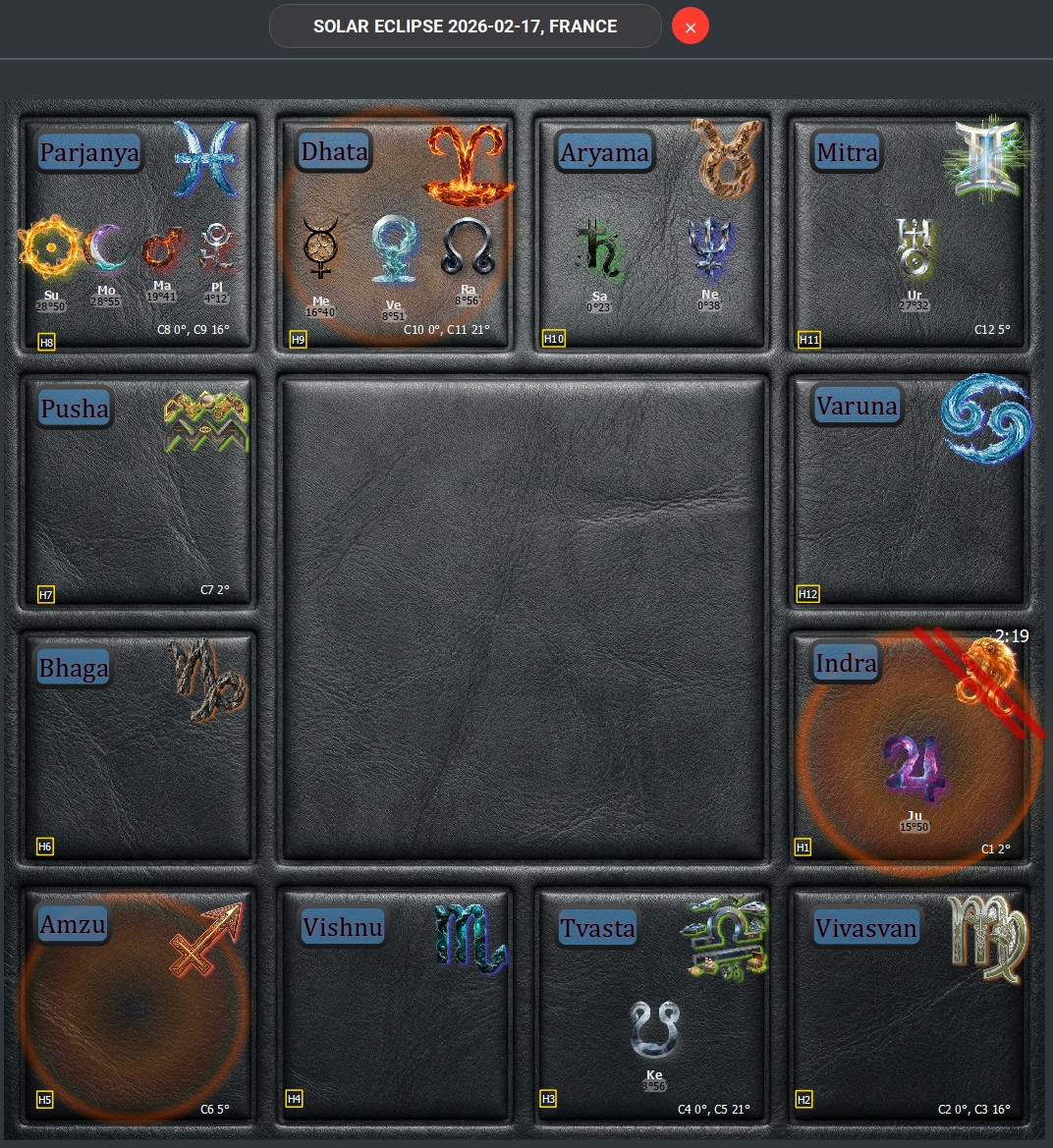
France might suffer less from the eclipse's effects because its Lunar New Year chart does not have the difficult 8th-1st Parivartana exchange. The Lunar New Year is "clean" without problematic configurations, which could mitigate the overall impact of 2026.
United States (Dhata → Parjanya)
| Event | Problematic Exchange |
|---|---|
| Eclipse | MODERATE: Sun-Jupiter (12th-5th) |
| New Year | LESS BAD: Sun-Jupiter (1st-6th) |
The eclipse places the Sun in the 12th house (losses, isolation), while the New Year places it in the 1st (identity, leadership).
Argentina (Aryama → Dhata)
| Event | Problematic Exchange |
|---|---|
| Eclipse | None |
| New Year | MODERATE: Sun-Jupiter (12th-5th) |
Reversed situation - the eclipse is clean, but the New Year has the 12th house exchange.
Taiwan & Philippines (Vishnu → Tvasta)
| Event | Shame Avastha | Exchange |
|---|---|---|
| Eclipse | 5th House: Moon + Mars shamed by Sun | None |
| New Year | None | LESS BAD: 6th-11th |
The eclipse has Shame Avastha - the Sun shaming the Moon and Mars in the 5th house (children, creativity severely afflicted).
Comparison Conclusion
4 out of 5 countries with different ascendants have more difficult indications in the Eclipse chart compared to the Lunar New Year. Only Argentina has a better configuration for the eclipse.
This suggests that for the majority of analyzed countries, the eclipse represents the main challenge of 2026, but some countries like France could see their difficulties mitigated by a more favorable Lunar New Year chart.
TikTok Video - The Friendship Eclipse
Discover the complete analysis of this eclipse in Parjanya and its global implications.
Acknowledgments & Video Source
This eclipse analysis would not have been possible without the work of Ernst Wilhelm. To understand the general effects of this eclipse at a personal and global level, watch his full video:
Summary of Ernst Wilhelm's Video
The summary below is based on an AI-generated transcription. To confirm the author's exact intent, please watch the original video.
Exceptional Convergence
February 17, 2026 is significant because two major cycles converge with only ~10 minutes apart:
- Solar Eclipse - End of an 18-year cycle, beginning of a new one
- Lunar New Year (Chinese / Aditya) - Annual cycle reset
"It's a huge year. It's not hard to predict. We know so many things are moving forward, changing, and transforming."
Saros Series 121 - A "Productive" Eclipse
This eclipse belongs to Saros Series 121:
- First eclipse: April 30, 944 AD in Mitra (Tropical Taurus)
- Current member: #61 of 71
- Previous eclipse: February 6, 2008 at 17° Parjanya
- Last eclipse: June 7, 2206 AD
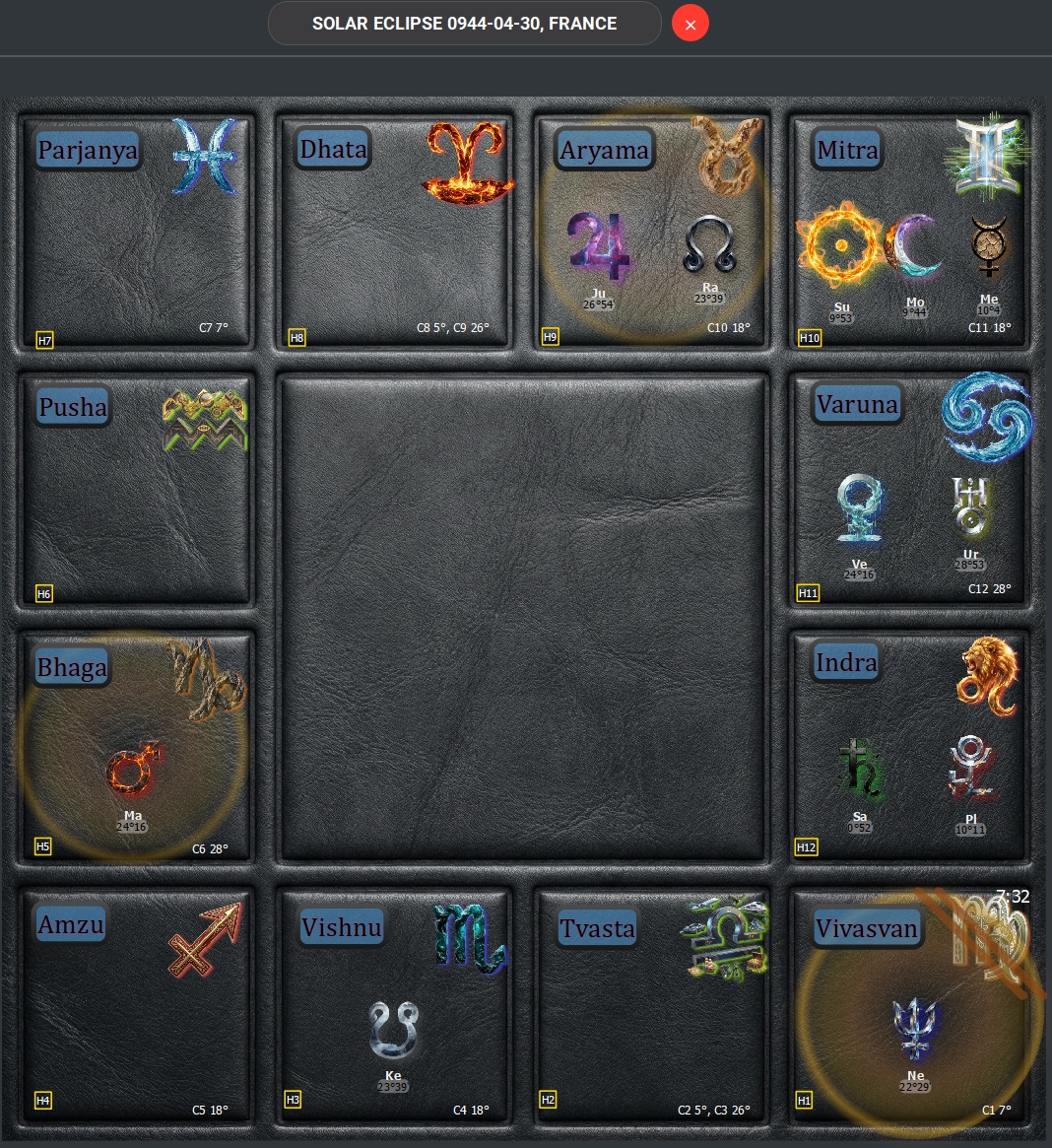
Ernst describes this series as a "productive and useful" eclipse, unlike destructive eclipse cycles. The original 944 eclipse in Mitra (the sign of friends and potential) had retrograde Mercury conjunct the eclipse point in its own sign - an exceptionally favorable configuration.
"Mitra means friends. The idea is that friends help each other bring out people's potential. This rishi symbolizes the law of potential - that everything has within it great potential."
Current Eclipse Chart (February 17, 2026) - France:
Original Eclipse Chart (April 30, 944) - France:
The Role of Mercury - Permanent Work in Progress
Retrograde Mercury in the original eclipse is crucial. Because it is retrograde, it is between Earth and the eclipse, meaning we have access to this Mercury energy.
"For Mercury, everything is a work in progress. We are constantly learning, trying to figure out how to make something work. And once it works, we try to make it work better. And when it works better, we try to make it work even better. That's the entire function of Mercury."
"The way we've been trying to make things work for the past 18 years hasn't worked and we need to find a better way. And this time, we will actually find good ways."
Saturn - Delays, Not Blockages
Saturn in the original eclipse forms a semi-sextile - it is not a serious problem, but it indicates delays:
"Saturn is not going to stop it. Saturn is not going to destroy it. Saturn is just going to show the reality that even this thing that's going to work, it's not instant. It's not as fast as your imagination. You're going to have to take your time."
What this means: The new methods you discover will work, but not overnight. It is a long game.
Pluto & Saturn - Ego Transformation
The Pluto-Saturn conjunction shows that realizing one's potential requires deep ego transformation:
"Our ego really hates this - acknowledging that we've been doing something wrong for a very long time. But you're stuck. You're not realizing your potential."
What you will need to face:
- Fear of rejection and humiliation
- Attachments to what no longer works
- The "devil you know" vs "the angel you don't know"
- Eating your pride and reversing past decisions
"Sometimes doing something in a better way causes stress. This eclipse, yes, is going to cause stress when you start doing things in a better way. But it doesn't matter."
Saturn's analogy: Ernst uses a powerful metaphor - Saturn rules "going to the bathroom." If you never let go of anything, you can never welcome something new. A bad Saturn is someone who clings to things out of fear of having nothing, and therefore can never reach their potential in love, money, career, or inspiration.
"Until you put something down, you can't pick up a new one."
Uranus - The Key Planet (The Awakener)
Ernst considers Uranus the most important planet in this particular eclipse. Uranus is only 1 degree from the eclipse point:
"What's great about Uranus is when it's part of an eclipse, it really helps bring out your best. Uranus says: there are things in me that are better, that need to be lived, that need to be expressed."
The dual process:
- Uranus = ADDITIVE - brings out the TRUE SELF (adds what you truly are)
- Pluto = SUBTRACTIVE - destroys the FALSE SELF (removes what you are not)
- Together, they form a perfect picture of your true being
"Uranus is the planet I'm least afraid of. I don't fear any planet, but the one I desire... yeah, Uranus is going to hit me. That's what I want. It's the best planet."
Uranus-Mars Square: This square creates a "righteous anger" - the feeling that "this is the truth of my being, I cannot live any other way." Squares are "secretly hostile" - you don't know it's there until it suddenly surges up.
"Expect this to happen suddenly. Where did that come from? Wow, that was buried so deep that I didn't feel it at the surface enough for it to come up, but boom, now it came up."
Mars - The Frustration Factor
Mars is only 9 degrees from the eclipse in the same sign, creating a more intense eclipse:
"If you are hit by this eclipse because you haven't been living your potential in certain areas... there's frustration. That frustration has built up and could explode."
Two types of anger:
- Righteous anger (Uranus-Mars): "This is the only way I can live"
- Frustrated anger (Pluto-Mars): Anger at things because you haven't done what you needed to do for yourself
"Be careful who you blow up at because we chose to put ourselves in these positions. Realize that this frustration is really something directed at yourself. You are frustrated at yourself for staying in a place, staying in a job where you've been going in circles."
Advice: Own your anger. If you blow up at someone, apologize when you realize it's your own fault for being in that situation.
Previous Eclipse - February 2008
The last eclipse of this series was February 6, 2008 at 17° Parjanya:
"I always like to look at my chart and say, did this eclipse affect me 18 years ago? And if so, you have an idea. The things that happened because of that eclipse... you might find a theme of what's happening now."
Note: 2008 was the year of the global financial crisis, suggesting thematic resonance for major systemic challenges.
Countries with 1st-8th House Exchange
Ernst expresses concerns for countries where this eclipse creates an exchange between the 1st and 8th house (Indra/Tropical Cancer ascendant):
"An exchange between the first and eighth house is a serious change, a serious possible destruction, just a collapse of culture, a collapse of the country, possibly a breaking of the building, of territory, etc."
He specifically mentions that the entire Russia-Ukraine region and surrounding smaller countries have an Indra ascendant with this 1st-8th exchange.
Economic Concerns
Ernst has concerns about the US economy due to the 12th-5th house exchange:
"It's not good for the American economy. I have huge concerns about the American economy."
"In the long run, many countries are going to really, really struggle at the economic level. This has nothing to do with the economy. This has to do with countries really living as something worth existing for."
Optimistic Vision
Despite the challenges, Ernst sees significant positive potential:
"Expect this year to end with the world actually in a better place in the context of cultures aligning with something more true for them."
"This eclipse can help countries realign to live as something you'd be proud of and where you'd want to live."
On the potential for world peace:
"The potential for world peace is greater than it has ever been in our day. Yet why aren't we achieving it? Because people are trying things the wrong way. This is the kind of eclipse that says: let's try a new method."
Key Message
"Don't be afraid of the things this eclipse takes away. These are things that by losing, you will bring out more of your potential. There is something better for you. Whatever you lose, there is something better."
"More of yourself emerges. You are going to live at a higher potential. You are going to figure out how to live at a higher potential, but it's going to take time."
"This is the time to move past your ego-related limitations, your fears, etc. Fears are simply ego-related limitations."
Connection to the Agricultural Crisis in France
This eclipse occurs at 28° of Parjanya - the Aditya associated with rain, growth, and fertility. In Vedic tradition, Parjanya is the rain god who nourishes the earth and allows crops to grow.
The current French agricultural crisis could be symbolically linked to this eclipse in Parjanya. The difficulties facing French farmers - between climate change, droughts, and economic pressures - resonate with the theme of an eclipse that temporarily "obscures" Parjanya's energies of growth and fertility.
This eclipse could mark a transformation point for French agriculture - the end of a cycle of methods that no longer work, and the beginning of a search for "better ways" of farming, as suggested by Mercury's energy in this eclipse series.
Author's Personal Note
By Lorris Turpin
This eclipse in Parjanya has a particular resonance for me. Parjanya is the Aditya of growth, and I have experienced a personal symbol of this energy over the past few years.
About 1 and a half years ago, I started growing a plant called Moringa - a sacred plant in India, known for its exceptional nutritional properties. At the time, I was suffering from digestive difficulties, and this plant helped me heal.
Moringa is very popular in Reunion Island, where it grows very quickly and is extremely nutritious. Historically, it was often cultivated by modest families because it offers so many benefits with few resources - a true gift from nature.
I followed this plant closely for years, and it finally reached its full maturity recently - exactly at the same time as this website and its new Aditya Zodiac calculator also reached maturity.
This synchronicity strikes me: just as the Moringa took its time to grow (due to some issues) and reach its potential, recalling Saturn's message in this eclipse - "it's going to take time," this Aditya Zodiac documentation project has also been a work in progress that bore fruit just as this eclipse arrives.
The eclipse in Parjanya seems to mark this moment when seeds planted long ago finally reach maturity.