Rama “Dark” – Avatara of the Sun
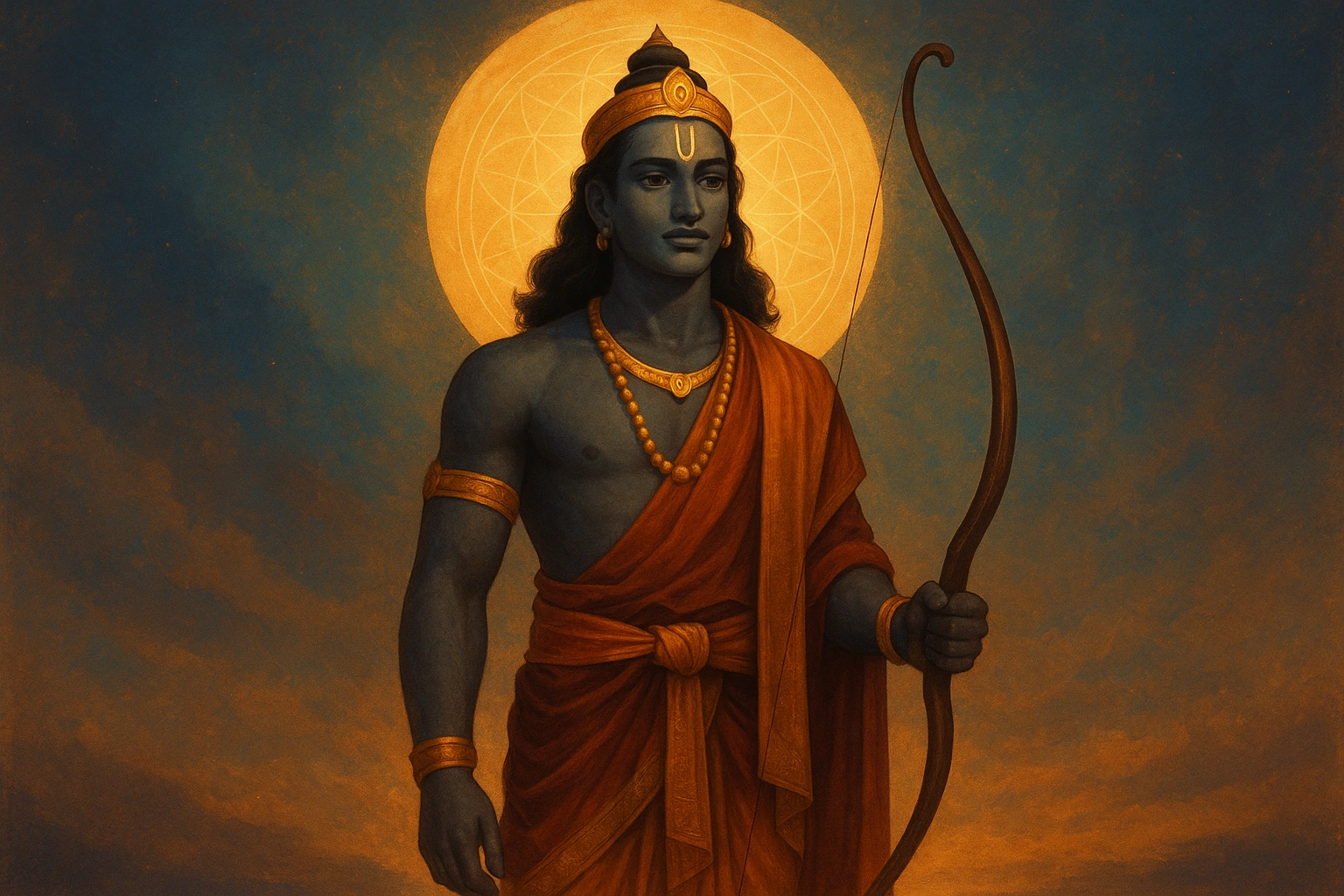
Though there are many, many divine incarnations, Hindu mythology gives primary importance to nine of them – one for each Graha. As a student of astrology it is well worth studying the lives of these Avataras as they shed some important light upon the nature of the Grahas. The lives of these Avataras are portrayed in the Srimad Bhagavatam, the reading of which is highly recommended as it provides spiritual, philosophical, psychological and even astronomical insights. For now, I will briefly describe the Avataras associated with the Grahas as there is much to be learned from the Avataras about the Grahas.
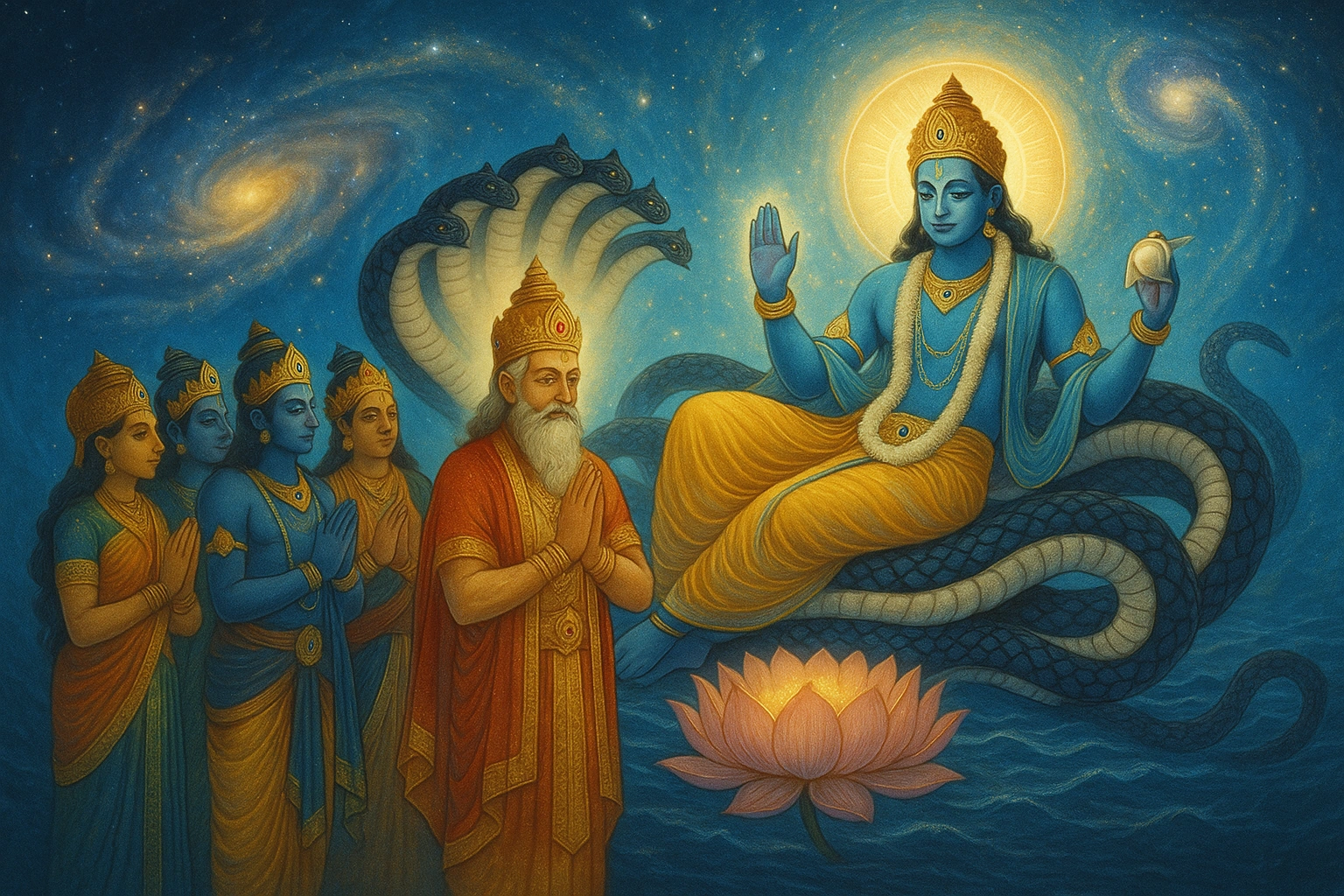
Long ago during the Treta Yuga (the second highest age) there was an Asura (titan) king by the name of Ravana who was displaying great selfishness and arrogance, and who was fast breaking every code of Dharma. Ravana, though arrogant, had won many boons due to the strict penance he had performed. These boons made him so powerful that no one could conquer him or end his display of unrighteousness and so Adharma (unrighteousness) was becoming rampant in the world. Brahma and the Devas (the gods) went to the all-pervading Vishnu to request his appearance in ridding the world of Ravana. Vishnu promised to incarnate as a lord in the Solar Dynasty and put an end to Ravana and his unrighteous rule.
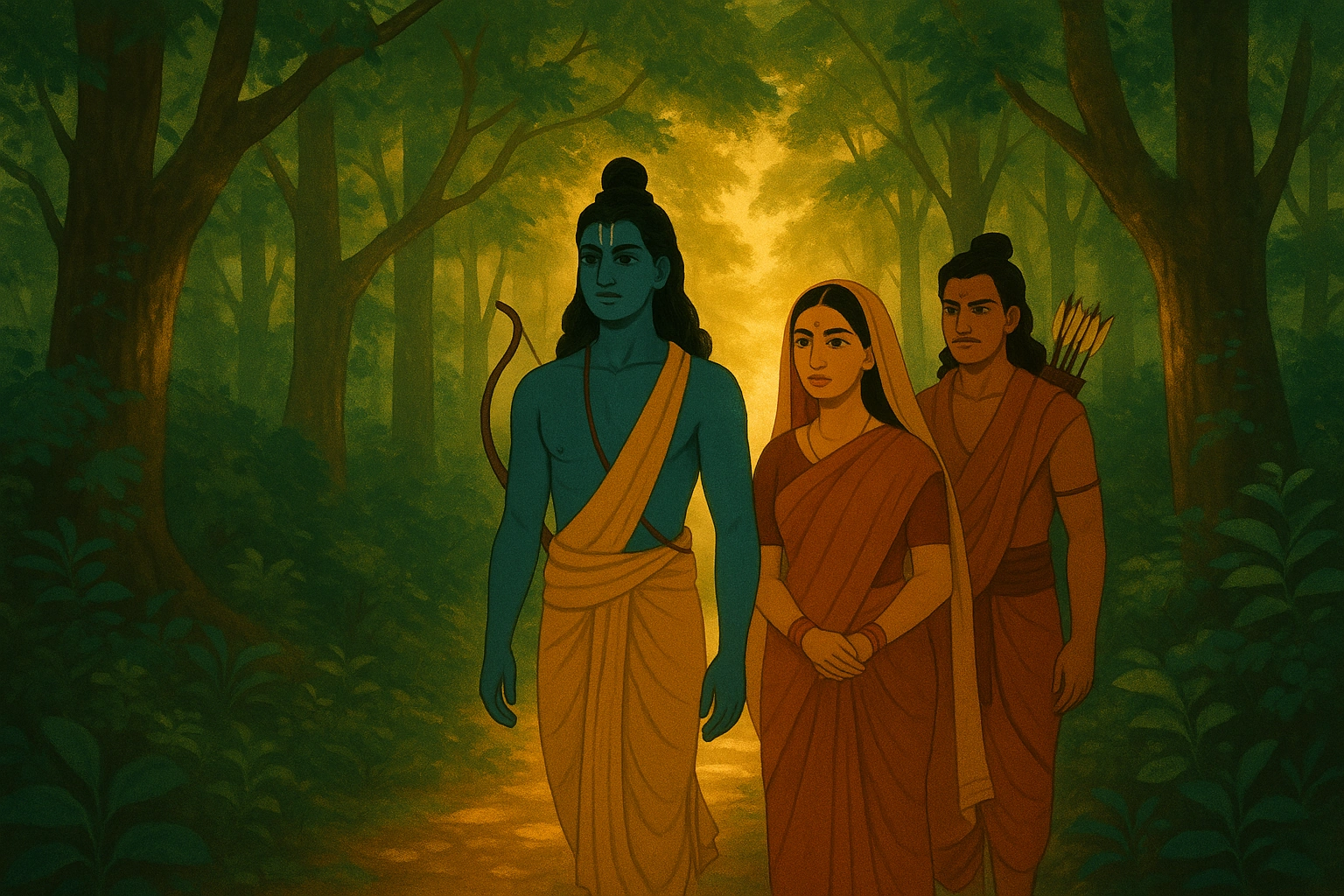
Vishnu was thus born as Rama, who exemplified all of the ideals of Dharma throughout the entirety of his life. Rama was of royal birth and was the crown prince of Ayodhya, however through the scheming of one of his father’s wives the throne was unjustly taken from him and he was exiled to the forest for fourteen years. To insure that his father’s good name would remain unblemished, Rama willingly accepted the exile with even-minded calmness and detachment, even though his father had already died due to the grief caused by Rama’s exile. Rama’s wife, Sita, and his brother Lakshman would not part from Rama and followed him to the forest. Many adventures befell Rama during his exile and not even once did he stir from the strict path of Dharma.
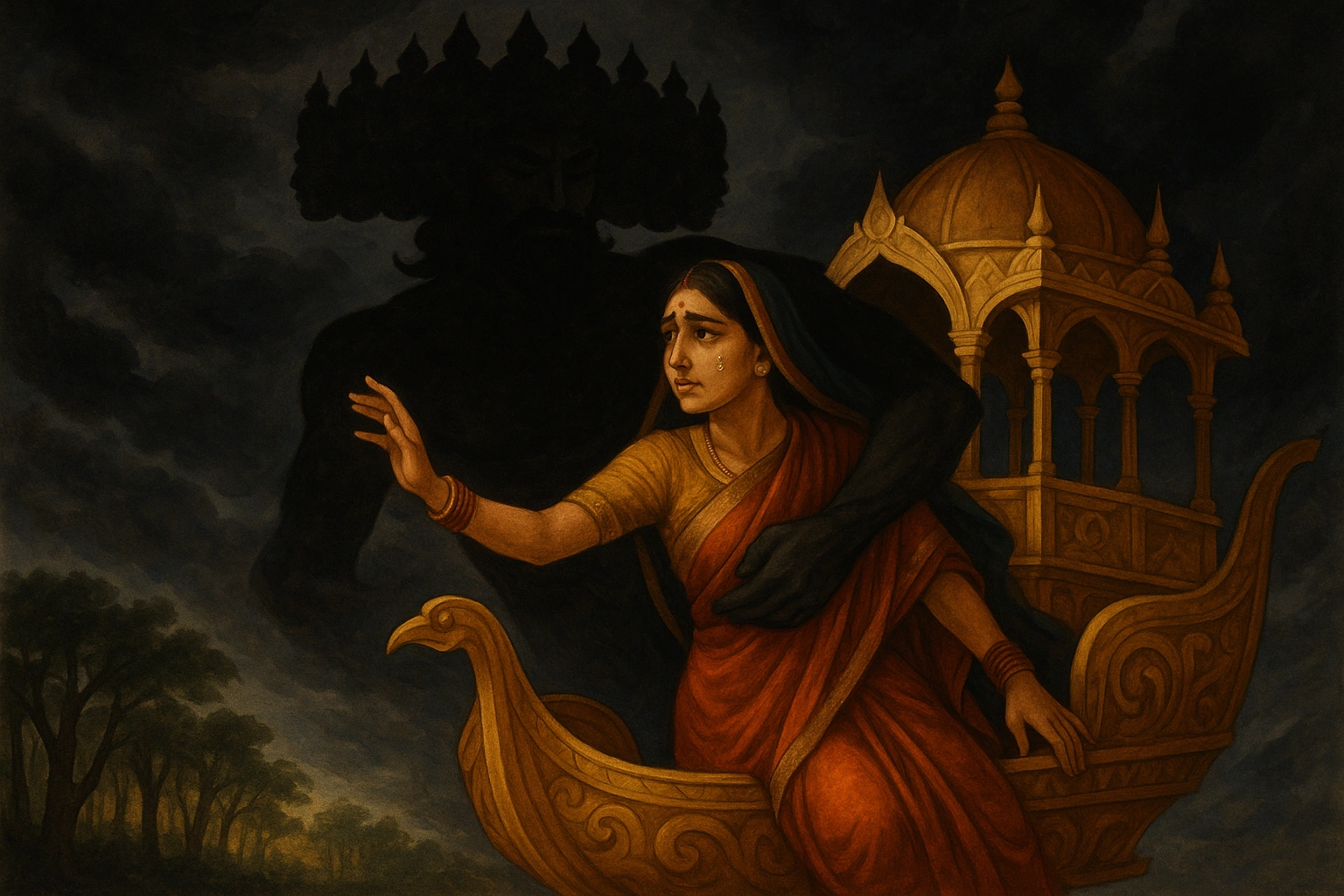
After many years of living and wandering in the forest, news of Sita’s beauty reached the ears of the titan Ravana, who then abducted Sita, hoping to make her his wife. Rama was heartbroken and made every effort to find Sita and rescue her from Ravana.
After much time and effort, Rama destroyed Ravana, and Sita was returned to him. At that point the purpose of Rama’s incarnation had been fulfilled; he had destroyed Ravana and exemplified Dharma.
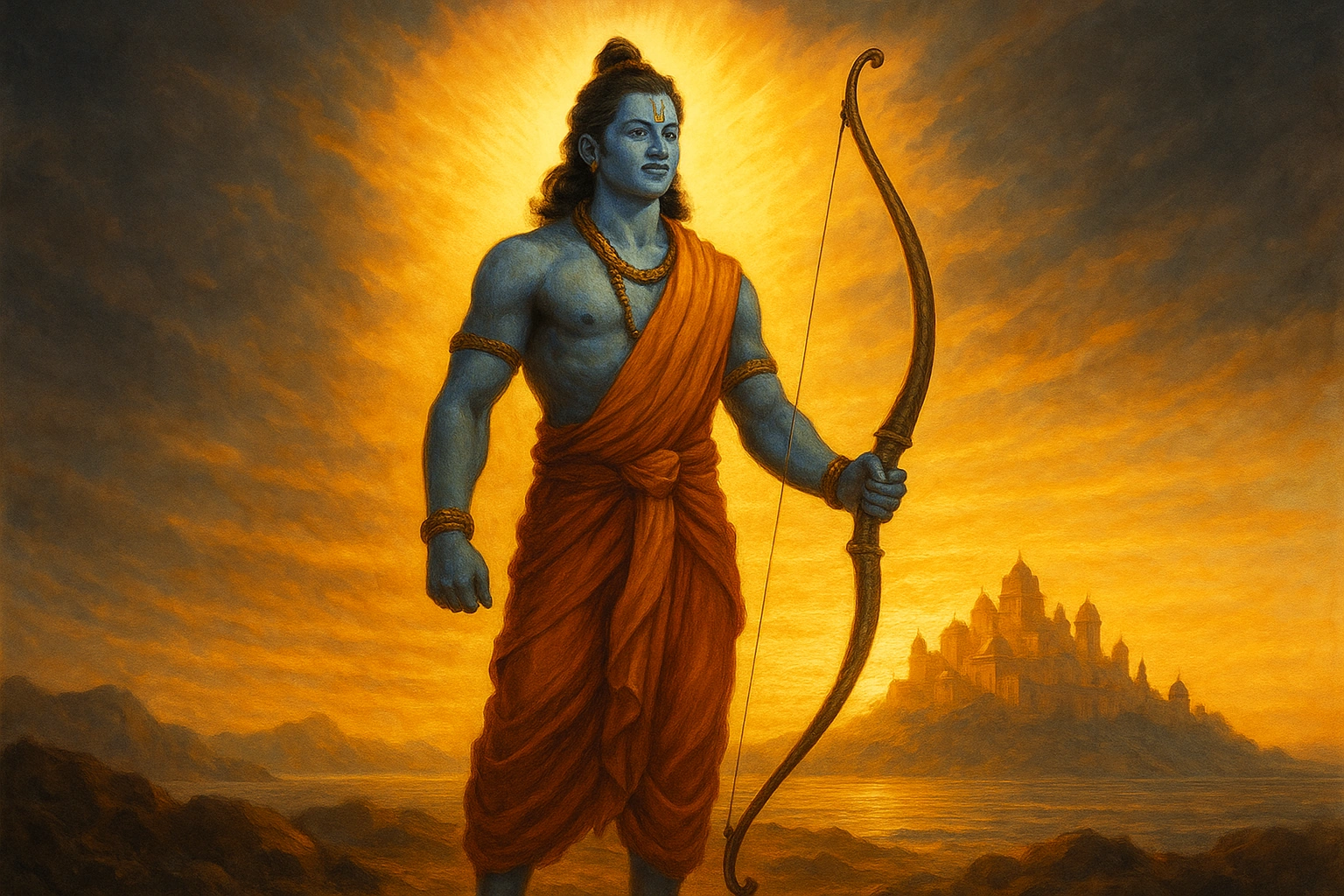
The trials of Dharma, however, are hard and Rama, after conquering Ravana, still had one more ideal to establish. After returning to his native city and becoming crowned, Rama heard that one of his subjects spoke ill of his wife. His subject declared that once a woman resides under the care of another man she should not be allowed to return to her husband, though Rama might accept her because he was infatuated with her, he would never accept her. That Sita was taken against her will, that she remained outside Ravana’s palace, only eating roots and fruits so as to eat what her husband Rama was eating in the forest while she waited for him to rescue her, was not considered by this critic. Rama, feeling that as king his highest duty was to please his subjects, abandoned Sita to the ashram of Rishi Valmiki. Sita was pregnant at the time and after giving birth to Rama’s twin sons she died. At hearing of Sita’s death Rama was sunk in sorrow, but he remembered that a king has no right to have feelings of his own so he concentrated on ruling the earth until his death.
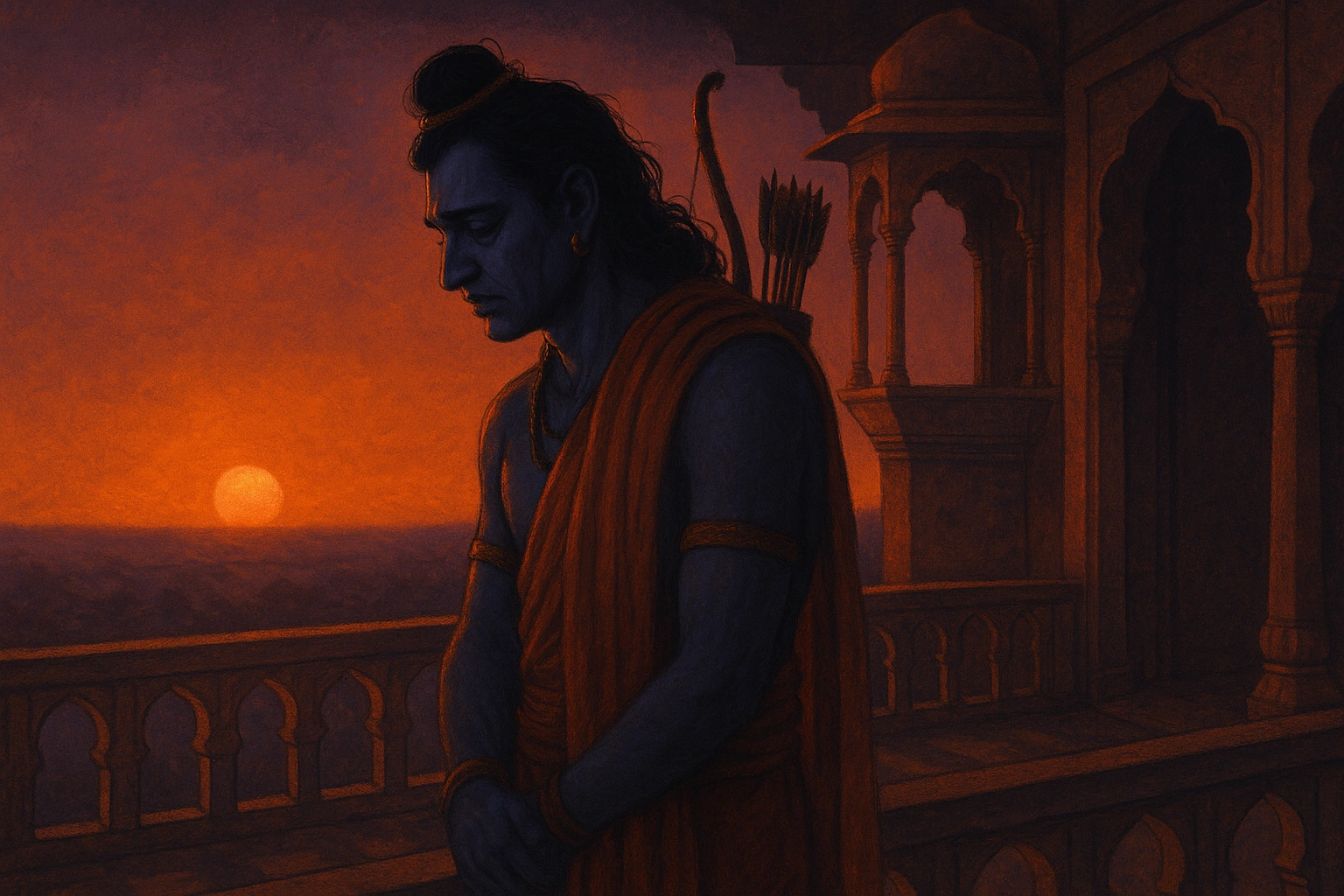
Rama’s life was marked by sacrifice – the sacrifice of his kingdom, which once regained led to the sacrifice of his beloved. It is the Sun that provides the strength to make the hard sacrifices in life. The Sun also demands personal sacrifices for the sake of duty, the well-being of others, and for one’s spiritual development. If the Sun is strong and well disposed in the horoscope, an individual will have the ability to make the necessary sacrifices.
Rama means “dark,” and lord Rama was named this on account of having a dark cast to his skin. While the Sun is not, of course, dark, those people and races living on Earth that are exposed to the Sun darken.